A Brave Writer's Life in Brief - Page 95 of 783 - Thoughts from my home to yours A Brave Writer's Life in Brief
  • Start Here
    • For Families
      Multiple Ages
    • Ages 5-7
      Beginning Writers
    • Ages 8-10
      Emerging Writers
    • Ages 11-12
      Middle School Writers
    • Ages 13-14
      High School Writers
    • Ages 15-18
      College Prep Writers
  • Shop
    • Product Collections
    • Bundles
    • Writing Instruction Manuals
    • Literature & Grammar/Punctuation
    • Composition Formats
    • Literature Singles
    • Homeschool Help
    • Book Shop
  • Online Classes
    • Class Descriptions
    • Class Schedule
    • Classroom
    • How Our Classes Work
    • Our Writing Coaches
    • Classes FAQ
  • Community
    • Brave Learner Home
    • What’s Happening
    • Blog
    • Podcast
    • Calendar
  • Cart
  • My Account
    • My Online Classes
    • My Account
  • My Account
    • My Online Classes
    • My Account
  • Start Here

    If you’re new to Brave Writer, or are looking for the best products for your child or family, choose from below:

    • For Families
      Multiple Ages
    • Ages 5-7
      Beginning Writers
    • Ages 8-10
      Emerging Writers
    • Ages 11-12
      Middle School Writers
    • Ages 13-14
      High School Writers
    • Ages 15-18
      College Prep Writers
  • Shop

    If you’re already familiar with Brave Writer products, go directly to what you’re looking for:

    • Product Collections Browse the full catalog in our shop
    • Bundles Everything you need to get started
    • Writing Instruction Manuals Foundational Writing Programs
    • Literature & Grammar/Punctuation Grammar, Punctuation, Spelling & Literary Devices
    • Composition Formats Writing Assignments for Every Age
    • Literature Singles Individual Literature Handbooks
    • Homeschool Help Homeschooling Tools and Resources
    • Book Shop Books associated with Brave Writer Programs
  • Online Classes
    • Class Descriptions
    • Class Schedule
    • Classroom
    • How Our Classes Work
    • Our Writing Coaches
    • Classes FAQ
  • Community
    • Brave Learner Home
    • What’s Happening
    • Blog
    • Podcast
    • Calendar
  • Search
  • Cart

Search Bravewriter.com

  • Home
  • Blog

A Brave Writer's Life in Brief

Thoughts from my home to yours

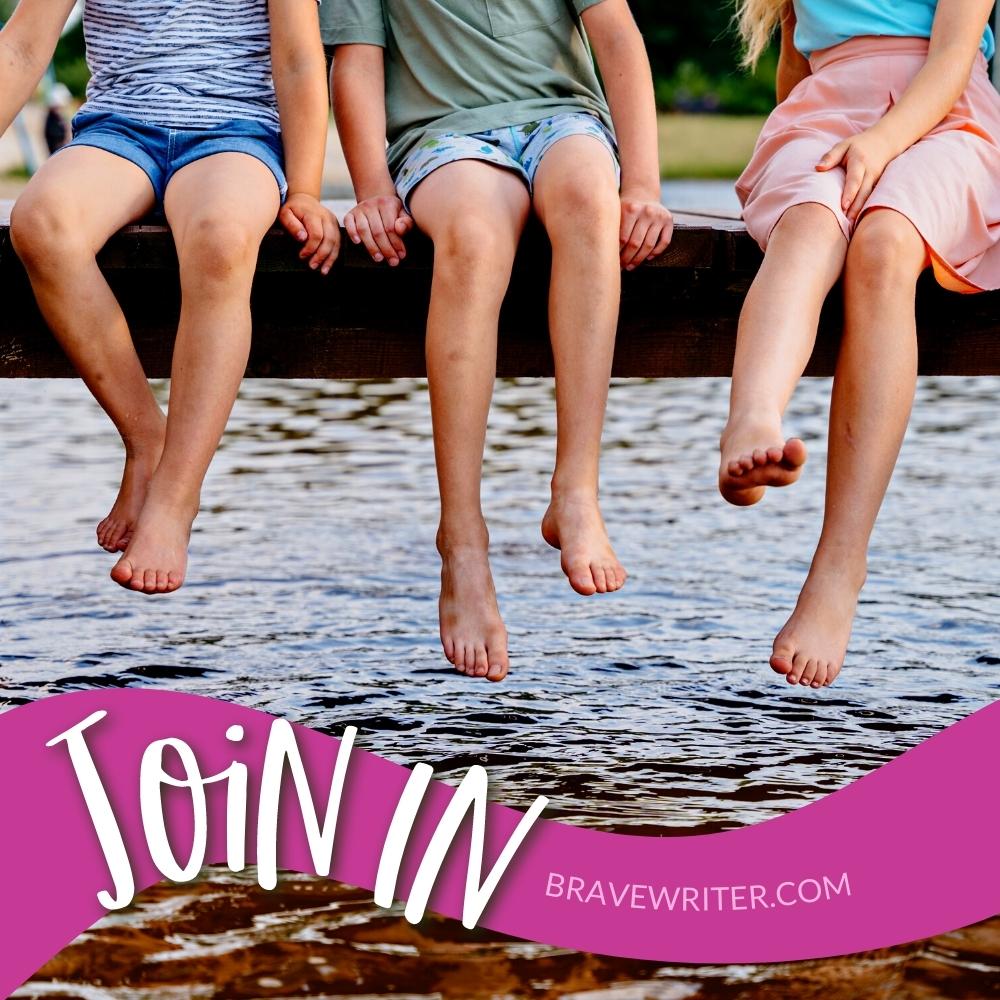
Join In

Brave Writer Join In

Join your child in the adventure of living! In the end, what leaves the best impression on your kids is your hearty, enthusiastic participation in the stuff of life.

Last year I spent a weekend with family—especially my five adult kids and their dad. Caitrin, my youngest, got married. What I noticed about all of our family interactions? The stuff Jon and I enjoyed doing the most WITH them is what they still love to do and talk about.

For instance, they’re all readers—big ones! They continue to play games, particularly word games that require lots of nuanced (read: playfully argumentative) discussion around definitions.

Each child is an activist for their values and beliefs. They are attachment parents and aunts and uncles. They believe they can learn to do anything they want to learn and then they teach each other. In fact, Caitrin did all her own flowers for the wedding because she thought she could learn—and then did!

They travel easily and two of them even live abroad. Also: they’re so funny!

Jon and I loved words, books, movies, discussions about our beliefs and values, inside jokes, living in other countries, and marching (at demonstrations!).

So do they.

We aimed to raise good citizens—adults with values and competencies. That’s who we got! It’s impressive and humbling and so satisfying.

You’re forming the culture of your family right now! What do you love to do and do well? That’s the HOME education you are best at giving and it’s the easiest to give.

Lean in. You’re doing so much more right than you even realize!

Remember, habits are often caught more than taught.


This post is originally from Instagram and @juliebogartwriter is my account there so come follow along for more conversations like this one!


Brave Learner Home

Posted in Homeschool Advice | Comments Off on Join In


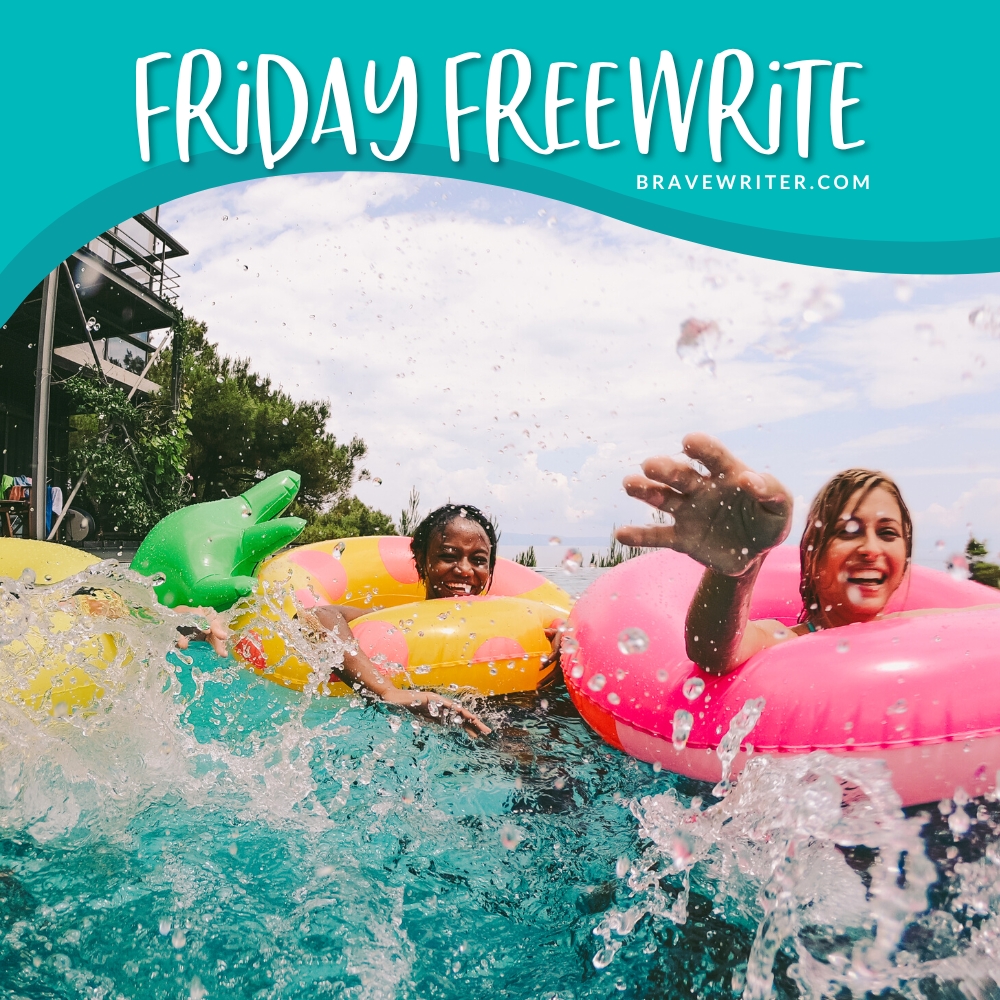
Friday Freewrite: Floats

Friday Freewrite

Imagine pool floats could communicate with each other. What might they have to say about their interactions with humans?

New to freewriting? Check out our online guide.

Tags: Writing prompts
Posted in Friday Freewrite | Comments Off on Friday Freewrite: Floats


[Podcast] The Value of Effort in Learning

Brave Writer Podcast

In today’s homeschooling environment, misconceptions about learning often cloud our judgments. Key among these misconceptions – one I may be guilty of contributing to – is the belief that struggle is counterproductive to learning.

It’s essential, however, to understand that effort can contribute to an effective recall process. Drawing a line between unnecessary suffering and purposeful effort becomes crucial.

Effort, in this context, embodies:

  • commitment,
  • focused attention,
  • and stamina.

And all are foundational for effective learning—what we call “retention.”

As Melissa and I navigate this topic on today’s Brave Writer podcast, we will introduce methods of learning that might seem challenging initially but promise richer, more immersive learning experiences with better results.

Show Notes

Ease vs. Effort

Striking the right balance between ease and effort can be likened to choosing between writing with a ballpoint pen and a fountain pen. While one might offer convenience, the other provides a satisfying experience, demanding more attention but yielding better engagement. Think about the comparison between reheating pre-cooked food in a microwave and cooking a meal from scratch. The latter, though demanding more effort, provides a deeper sense of accomplishment. It’s no surprise then that children often increase the difficulty levels in their games or why video games continuously switch activities to keep players engrossed.

Interleaving and the Benefit of Variety in Learning

In Make It Stick by Peter C. Brown, the author delves deep into strategies for effective learning, such as “interleaving.” Traditional math programs, for example, often linger on one method exhaustively before transitioning to another. Such a linear approach can be less effective than interleaving different processes, and blending workbook sessions with real-world applications. This multifaceted approach offers a more dynamic and holistic learning environment.

Games and Play in Learning

From board games to video games, gaming holds immense potential as a learning tool. For instance, a child’s fascination with a computer game like “Roller Coaster Tycoon” can seamlessly merge with projects involving handwriting, research, math, and even physics. Another game, “Harvest Moon,” can lead to complex calculations and in-depth research. These real-world applications underline the importance of experiential learning and position children as the ‘experts’, sometimes even teaching the parents.

Tying Real-Life Application to Learning Concepts

How do we make abstract concepts tangible for young learners? The bridge between workbook time and playtime is crucial here. Learning addition becomes more personally valuable when immediately followed by a game of Monopoly. Simple tasks, like adding chocolate chips to the completion of each problem can add a tiny incentive to stick with a challenge.

Sewing is a good example of how a child can be taught a variety of skills to accomplish a larger overall project like a string dress or doll quilt. Learning that involves a variety of processes may feel more difficult initially, but it leads to better retention overall.

When teaching, consider various forms of:

  • measurement,
  • historical context,
  • and practical applications.

Activities that include context, whether understanding the length of a blue whale or the vastness of the universe, and that emphasize hands-on experiences and real-world applications, lead to the best learning outcomes.

The Truth About Your Child’s Attention Span

Surprisingly, according to SCALE, a child’s focused attention span equates roughly to a child’s age plus one minute. This finding debunks many preconceived notions about children’s attention spans. It’s pivotal to appreciate the cognitive and physical strains kids undergo when acquiring new skills, like handwriting. Recognizing what revitalizes or depletes a child’s energy can help adapt learning strategies.

Tools and Techniques to Galvanize Attention

Sometimes, it’s the allure of a fresh notebook or a new pen that can rekindle motivation. Brave Writer programs like the Quill, Dart, Arrow, and Boomerang tap into this idea of novelty by introducing new content monthly, thereby stimulating interest and engagement. A change in the environment or tools, or even a switch in timing, can provide that necessary jolt to reignite a child’s attention.

Creating a Learning Culture

When we want to understand the effort it takes to learn, Julie recommends approximating that learning experience for yourself as best you can. Julie’s personal experiment of copying text in unfamiliar languages, Dutch and Hindi, helped her understand what it might be like to do copywork in English as a new reader and writer. When parents model learning behaviors—be it drawing, music, or even diving deep into history—they demonstrate that learning is a continuous, shared journey.

Tips for Educators/Parents

For educators and parents, embracing varied learning methodologies is paramount. Instead of repetitive handwriting drills, they could incorporate diverse methods like copywork or tracing over highlighted content. Teaching handwriting can also be interactive, using materials like sand, rice, or even chocolate chips. Shifting between fine and gross motor skills can be immensely beneficial for younger kids. Traditional drilling methods should be reconsidered in favor of more experiential approaches like “learning by doing” or “learning by teaching.”

Lastly, it’s essential to recognize and respect a child’s energy levels, adjusting the learning schedule accordingly, and avoiding strictly regimented plans.

Resources

  • Start a free trial of CTCmath.com to try the math program that’s sure to grab and keep your child’s attention!
  • We’re starting our Story Switcheroo class right at the end of August! Take class fairytales and flip them on their heads with your whole family. Learn more at https://bravewriter.com/online-classes/story-switcheroo.
  • Sign up for our Text Message Pod Ring to get podcast updates and more!
  • Send us podcast topic ideas by texting us: +1 (833) 947-3684
  • Want help getting started with Brave Writer? Go to bravewriter.com/getting-started
  • Sign up for the Brave Writer newsletter to learn about all of the special offers we’re doing in 2022 and you’ll get a free seven-day Writing Blitz guide just for signing up: https://go.bravewriter.com/writing-blitz
  • The book Julie referenced is Make It Stick by Peter C Brown: https://bravewriter.com/book-shop/book/make-it-stick

Connect with Julie

  • Instagram: instagram.com/juliebogartwriter
  • Twitter: twitter.com/bravewriter
  • Facebook: facebook.com/bravewriter

Produced by NOVA Media

Brave Writer Podcast

Posted in Podcasts | Comments Off on [Podcast] The Value of Effort in Learning


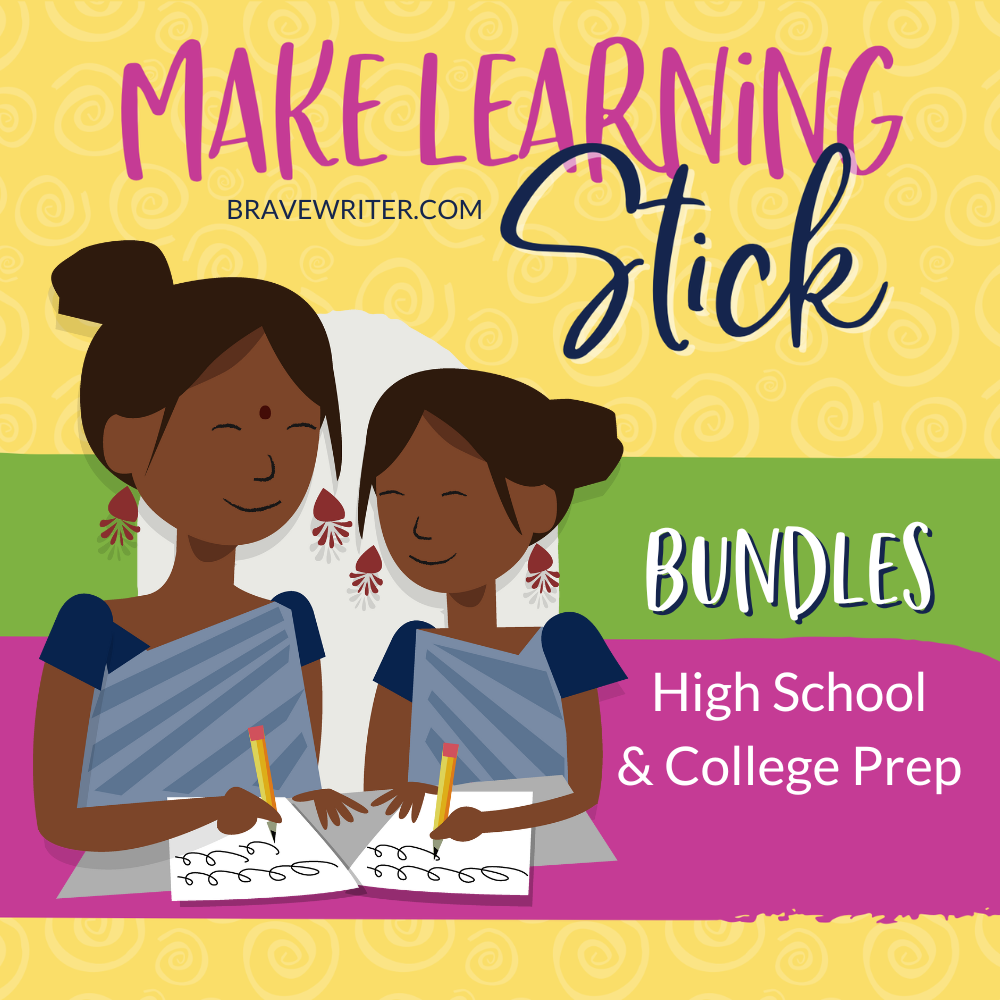
Make Learning Stick: High School and College Prep Writers

Brave Writer Bundles

Your high schoolers are ready for risks and adventures! You know, like D R I V I N G!

But they also like to entertain risky thoughts and go on literary adventures. Your hope is that all this education you are giving them will stick! You want them ready for college (if they go) and beyond! But maybe you’re overwhelmed with how to plan for high school! (It’s the homeschool Big Leagues, after all!).

To that end, Brave Writer has programs designed to give:

  • your teens the best experiences in reading and writing they could ask for
  • you, the support and training you need

No more:

  • dusty old books 
  • boring examination of themes
  • tedious exercises in grammar
  • predictable writing exercises
  • red pen critiques that don’t improve the writing

With Brave Writer, we help teens:

  • deep dive into making powerful associations between what they read and the social, historical, and cultural contexts of the literature we teach
  • discover the role grammar plays to add power and insight to literature
  • develop their own writing voices
  • draw out ideas of their own as they write reflection pieces
  • discern credible research from poppycock
  • determine what sort of writing form matches the aim of the writing task

We do all of this and more in our High School and College Prep Bundles.

Both bundles include Help for High School (you only need to buy HHS once no matter how many kids you have).

  • The High School Writers bundle uses our Boomerang Literature program.
  • The College Prep Writers bundle uses our Slingshot Literature program.

Learn more: High School Writers and College Prep Writers Bundles

We’d love to have you along for the ride this year! It’s not too late to start!

I can’t wait to hear all the great stuff your teens learn through our program.


Brave Writer Bundles

  • Beginning Writers
  • Emerging Writers
  • Middle School Writers
  • High School Writers
  • College Prep Writers

If you’re looking for some additional support, check out our online classes for teens. We teach how to write essays and fiction, as well as how to analyze movies and books using the tools of literary criticism!


Psst: Do you have new-to-Brave-Writer friends? You can get a discount for them and for yourself using our Refer-a-Friend program!


Brave Writer Bundles

Posted in BW products, Help for High School | Comments Off on Make Learning Stick: High School and College Prep Writers


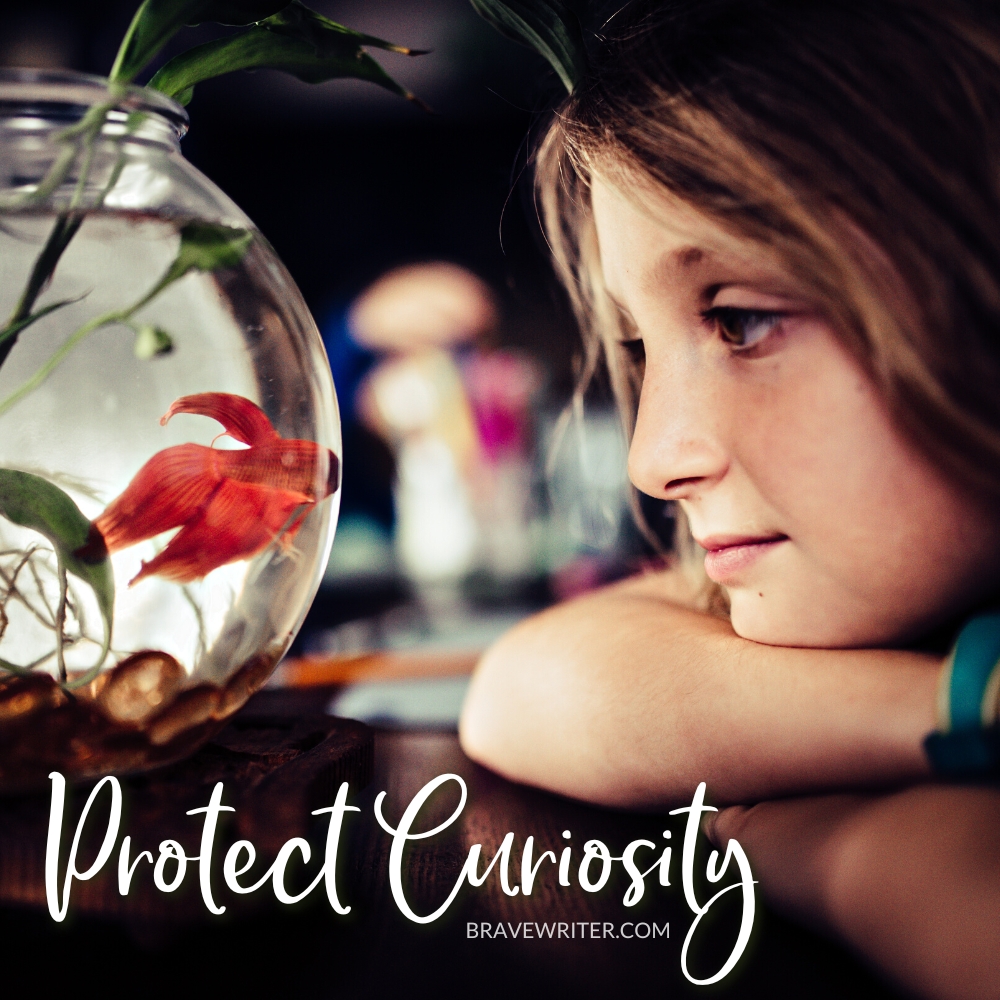
Protect Curiosity

Brave Writer Protect Curiosity

Traditional education models train kids to devalue their own thinking in favor of right answers and a teacher’s instructions. Little children who are used to exploring the world with their hands and wild imaginations are gradually conditioned to save those impulses for “after school” until they give them up all together before they even get to junior high.

And then we wonder why our teens appear to be inflexible, unable to grasp nuances. They’ve been conditioned by tests and homework to know that there is a right answer. They’ve lost their capacity for wonder. Teens who have retained their imaginations and their wide-eyed wonder are often seen as “not serious” about school or as “immature” or “socially inept.”

A Gift

If there were one gift I could give parents, it would be the ability to protect their children’s natural, not-jaded curiosity through the teen years. To:

  • have a teen boy who is delighted by knitting or a teen girl who wields a power saw,
  • converse with a teen who is enamored of fantasy novels to the point of writing their own and imagining that it could be published,
  • know a teen who becomes so tender to the plight of abused animals, that teen chooses to volunteer at a shelter,
  • raise a teen who plays with LEGO, who climbs trees, who secretly enjoys reruns of the PBS cartoon Arthur.

It’s one of the gifts of home education.

Let’s preserve conditions that promote wonder no matter what ages our children are.


Brave Learner Home

Posted in Homeschool Advice | Comments Off on Protect Curiosity


« Older Entries
Newer Entries »
  • Search the Blog

  • Julie Bogart
  • Welcome, I’m Julie Bogart.

    I’m a homeschooling alum -17 years, five kids. Now I run Brave Writer, the online writing and language arts program for families. More >>

    IMPORTANT: Please read our Privacy Policy.

  • New to Brave Writer? START HERE

  • FREE Resources

    • 7-Day Writing Blitz
    • Brave Writer Lifestyle Program
    • Brave Writer Sampler: Free Sample Products
    • Freewriting Prompts
    • Podcasts
  • Popular Posts

    • You have time
    • How writing is like sewing
    • Best curriculum for a 6 year old
    • Today's little unspoken homeschool secret
    • Do you like to homeschool?
    • Don't trust the schedule
    • You want to do a good job parenting?
    • If you've got a passel of kids
    • You are not a teacher
    • Natural Stages of Growth in Writing podcasts
  • Blog Topics

    • Brave Learner Home
    • Brave Writer Lifestyle
    • Classes
    • Contests/Giveaways
    • Friday Freewrite
    • High School
    • Homeschool Advice
    • Julie's Life
    • Language Arts
    • Movie Wednesday
    • Natural Stages of Growth
    • One Thing Principle
    • Our Team
    • Parenting
    • Philosophy of Education
    • Podcasts
    • Poetry Teatime
    • Products
    • Reviews
    • Speaking Schedule
    • Students
    • Writing about Writing
    • Young Writers
  • Archives

  • Brave Writer is a participant in the Amazon Services LLC Associates Program, an affiliate advertising program designed to provide a means for sites to earn advertising fees (at no extra cost to you) by advertising and linking to amazon.com

    Content © Brave Writer unless otherwise stated.

What is Brave Writer?

  • Welcome to Brave Writer
  • Why Brave Writer Works
  • About Julie
  • Brave Writer Values
  • Frequently Asked Questions
  • Speaking Schedule

Brave Writer Program

  • Getting Started!
  • Stages of Growth in Writing
  • The Brave Writer Program
  • For Families and Students
  • Online Classes
  • Brave Writer Lifestyle

…and More!

  • Blog
  • Classroom
  • Store
  • Books in Brave Writer Programs
  • Contact Us
  • Customer Service
  • Brave Writer Staff
© 2026 Brave Writer
Privacy Policy
Children's Privacy Policy
Help Center