
Homeschool Advice Archives - A Brave Writer's Life in Brief A Brave Writer's Life in Brief
  • Start Here
    • For Families
      Multiple Ages
    • Ages 5-7
      Beginning Writers
    • Ages 8-10
      Emerging Writers
    • Ages 11-12
      Middle School Writers
    • Ages 13-14
      High School Writers
    • Ages 15-18
      College Prep Writers
  • Shop
    • Product Collections
    • Bundles
    • Writing Instruction Manuals
    • Literature & Grammar/Punctuation
    • Composition Formats
    • Literature Singles
    • Homeschool Help
    • Book Shop
    • Special Offers
  • Online Classes
    • Class Descriptions
    • Class Schedule
    • Classroom
    • How Our Classes Work
    • Our Writing Coaches
    • Classes FAQ
  • Community
    • Brave Learner Home
    • What’s Happening
    • Blog
    • Podcast
    • Calendar
    • Brave Writer Lifestyle
  • Cart
  • My Account
    • My Online Classes
    • My Account
  • My Account
    • My Online Classes
    • My Account
  • Start Here

    If you’re new to Brave Writer, or are looking for the best products for your child or family, choose from below:

    • For Families
      Multiple Ages
    • Ages 5-7
      Beginning Writers
    • Ages 8-10
      Emerging Writers
    • Ages 11-12
      Middle School Writers
    • Ages 13-14
      High School Writers
    • Ages 15-18
      College Prep Writers
  • Shop

    If you’re already familiar with Brave Writer products, go directly to what you’re looking for:

    • Product Collections Browse the full catalog in our shop
    • Bundles Everything you need to get started
    • Writing Instruction Manuals Foundational Writing Programs
    • Literature & Grammar/Punctuation Grammar, Punctuation, Spelling & Literary Devices
    • Composition Formats Writing Assignments for Every Age
    • Literature Singles Individual Literature Handbooks
    • Homeschool Help Homeschooling Tools and Resources
    • Book Shop Books associated with Brave Writer Programs
    • Special Offers
  • Online Classes
    • Class Descriptions
    • Class Schedule
    • Classroom
    • How Our Classes Work
    • Our Writing Coaches
    • Classes FAQ
  • Community
    • Brave Learner Home
    • What’s Happening
    • Blog
    • Podcast
    • Calendar
    • Brave Writer Lifestyle
  • Search
  • Cart

Search Bravewriter.com

  • Home
  • Blog

A Brave Writer's Life in Brief

Thoughts from my home to yours

Archive for the ‘Homeschool Advice’ Category

« Older Entries

Home Education and High Expectations

Brave Writer

In this moment of gentle parenting, the idea of high academic expectations seems almost abusive. Can we really expect our kids to work hard, achieve excellence, perform well?

The words expectation, excellence, and performance feel loaded with pressure, scrutiny, evaluation, and tension. The “good parents” nurture. They create space, are helpful and kind, never raise their voices, allow a child to quit, and put a child’s comfort ahead of achievement. They support a child’s pace and avoid comparisons to peers.

I like to help parents become good at seeing the world through a child’s eyes. I encourage making room for mess, creativity, curiosity, and rest. I believe that rushing doesn’t lead to the best academic outcomes. I trust children to grow and learn when they feel supported and free. All of this is true.

That said, sometimes it’s worth slipping over to the other side of the teeter-totter to see how the world looks through a different prism.

  • Is there room for “expectations” in parenting and home education?
  • Is there ever a time when “pushing” a child to work a little harder is appropriate?
  • Do our kids benefit from being called on to “perform”?

In 1968, a study (that came to be known as The Pygmalion Study) revealed that teachers influenced an improvement in their students’ IQ scores simply by having higher expectations of those students than they had previously. The study has not been duplicated effectively, but the net result of that study and its lingering influence is the idea that whether high or low, a teacher’s expectations of their students influence academic performance.

How does that translate to teaching at home?

Parents are not trained teachers, usually. They’re oriented to family harmony. They want peace, they want warmth, they want cooperation with family culture and values.

Home education is built from parenting skills more often than teaching tactics. What worked for potty training, we surmise, ought also to work for teaching a child to read or divide fractions.

The soft underbelly of homeschooling, though, is the defensive posture that when our children aren’t performing at “grade level” (determined by the state), it is because they aren’t ready. We rarely wonder if our own attitude toward their education is a part of the equation.

While we can take more time than schools to teach school subjects, sometimes our family lifestyle is a mismatch for the consistent intentional instruction that some skills require for mastery. We have to ask ourselves if we are giving the skill enough attention in collaboration with our child.

When a child is, for instance, struggling with phonics, one of the most common responses of the homeschooling community is that the child will read when ready. A kernel of truth lives in that belief. We can’t force a child to “catch on” to reading.

But, sometimes in our desire to preserve harmony and to prevent distress, we back away from a challenging subject. We think time will be an effective teacher. We avoid supporting that struggling during the struggle and remove the challenge all together.

In fact, phonics instruction requires consistent practice, patiently delivered over time with faith that the child will read. It requires being a bit of a detective to identify what is blocking a student from catching on! Sometimes it means involving a specialist with training to help determine whether or not there is an underlying disability.

Swapping the word “faith” for “expectation”

It’s not that I expect my child to read, now, without struggle. It’s that I have faith that regular practice and instruction will lead to the important breakthrough.

  • There’s a difference between pushing and coaching.
  • There’s a difference between honoring a child’s feelings and leadership.
  • There’s a difference between forcing a style of learning and providing regular chances to see the skill with fresh eyes.
  • There’s a difference between the thought that time will lead to the breakthrough and activity of using that time to offer instruction.

Your kids are so smart. They are absolutely capable of learning everything they need to learn, if they have adults in their lives who stand beside them with faith in their abilities and regular opportunities to address the challenging skills.

Will your kids sometimes whine or express distress? Yes! Working hard is annoying. It’s tiring. A child expressing fatigue or annoyance may simply need validation, not to back away.

“Yes! It’s tedious to keep sounding out. Let’s do one more sentence. I know you can do it! Then we’ll take a break.”

Avoiding struggle is not necessarily the goal of good instruction. Sometimes that moment of effort may simply need support. Offer a shoulder rub, a glass of orange juice, and then one more try. Helping your kids build stamina for learning when they feel challenged is as much the job of homeschooling as learning to handwrite, read, or add.

I have faith in you!

This post was originally shared on Substack.
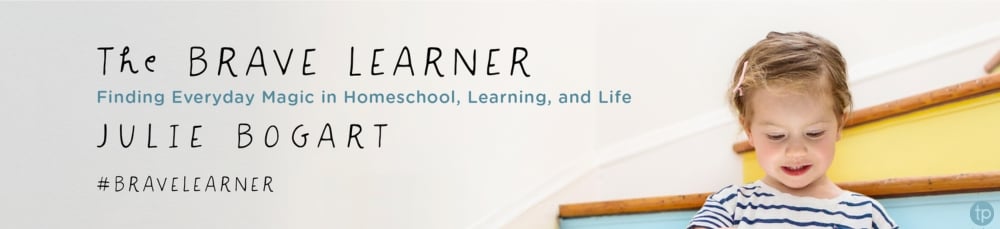

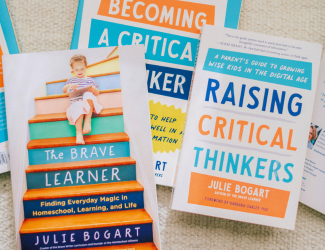
The Brave Learner

Posted in Homeschool Advice | Comments Off on Home Education and High Expectations

An Involved Parent

Brave Writer

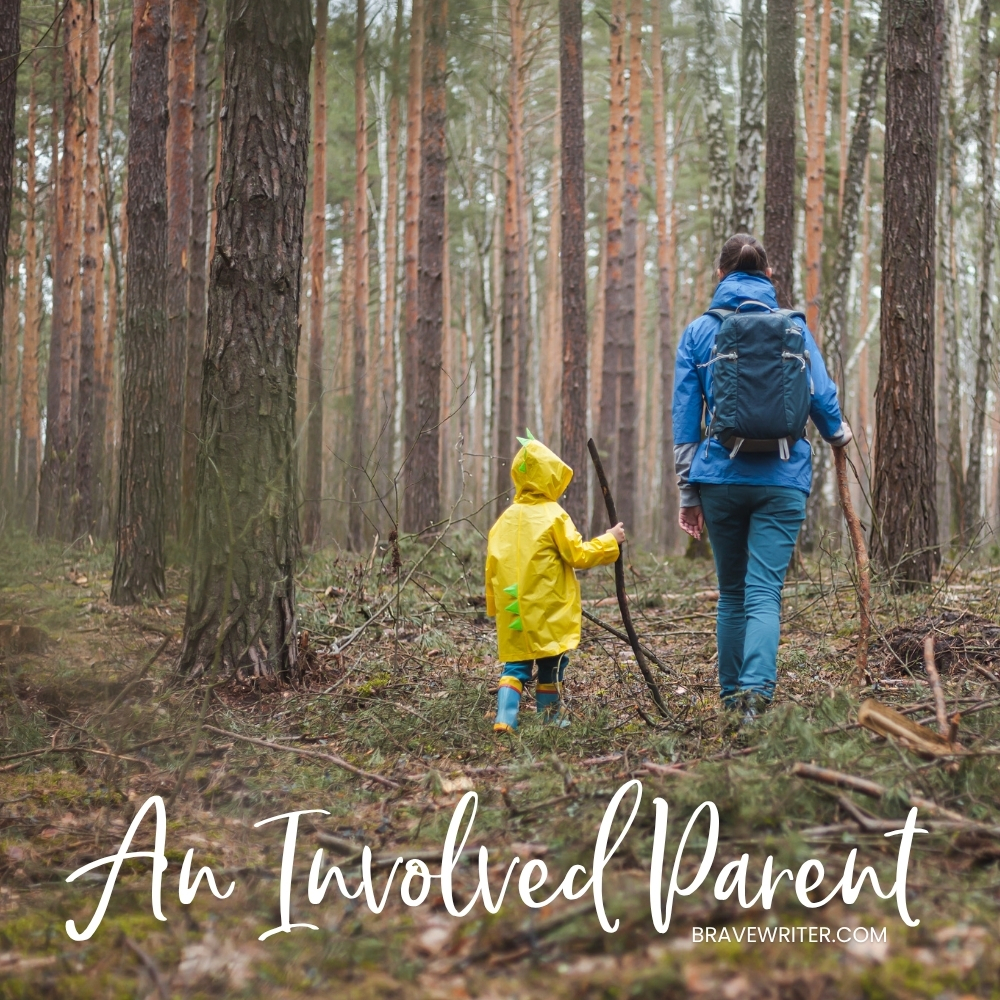
Sometimes we crave to provide an idyllic childhood for our kids. We:

  • picture them happily tramping through mud in a forest.
  • imagine them playing without prompting, using hand crafts and art supplies.
  • hope they care more about reading a book than watching TV.
  • dream of contentment and creativity, rather than restlessness and boredom.
  • want natural learning (that doesn’t require workbooks!) that the child values.

To create a childhood that includes nature, the arts, crafts, reading, and an appetite to learn requires an involved parent or adult. Kids can’t shop for craft supplies. They can’t walk in the woods alone (usually). They don’t have books unless someone takes them to the library. They aren’t aware of all they could learn unless they are exposed to topics unfamiliar.

How do they get these things?

Some person—someone—has to participate with them on some level.

We all want things for our kids but then we are timid to become the learners we envision our children becoming!

To homeschool means that you will:

  • tramp through the mud in a forest with your children
  • play with your children without prompting, pulling out art supplies and craft materials, and exploring them together
  • read a book instead of watching TV or listening to a podcast because you value reading
  • find contentment for yourself, test your own creativity, rather than giving in to restlessness and boredom and the endless trap of “productivity”
  • learn more about children and learning because you want not, not because you have to

The life we want for our children can also be ours. Homeschooling can be, without a doubt, one of the richest pathways to wholeness and profound learning for you, not just your children.

You really can do this. Millions of us have. And so many parents work while providing this childhood for their kids.

Plus Brave Writer is here to help!


Brave Learner Home

Posted in Homeschool Advice | Comments Off on An Involved Parent

The AI Crisis for Writing

Brave Writer

We’re in a bit of an AI crisis for writing in public high schools and colleges. Students are letting ChatGPT write their essays for them. Instructors are using ChatGPT to help them grade those essays. In some cases, we literally have AI writing and grading itself!

The current solution being offered by many people who are from the previous generation is a return to Blue Books (or handwritten, timed essay writing in class). Many of us remember the tiring practice of clutching a pencil, gripping it tightly, writing as quickly as possible, for sixty to ninety minutes in a classroom.

This generation? Not so much.

Sure, there are some classrooms and schools that prioritize handwriting and penmanship, but that is not true for the many students today. Worse: solving a tech crisis by rolling back to an earlier technology rarely lasts.

Still, we love handwriting at Brave Writer, and we train students to freewrite by hand for copywork and dictation (we even have a FREE Copywork Guide). Your kids should be prepared for whatever may come.

But, also, keep in mind that today’s kids want two things: a challenge and an audience! They like to work hard (for instance, the amount of time they spend learning editing tools to make a compelling short video for social media is proof), and they want to be heard. So watch a make-up tutorial on TikTok or a political rant by a teen on YouTube. Read their screeds about tech, religion, and gaming.

Rethink how students demonstrate learning.

  • Can they produce short films and upload them online?
  • Can they create a “zine”—an analog magazine with pages, artwork, and a variety of article types?
  • Can they give oral presentations or host debates?

Humans love learning, and they love sharing what they learn.

Technology moves us forward, and the solution for how to manage technology can’t be moving backwards. Blame and shame never work. Catching cheaters never works. Comparing the era you went to college to today’s college students misses the mark.

It’s time to adapt.


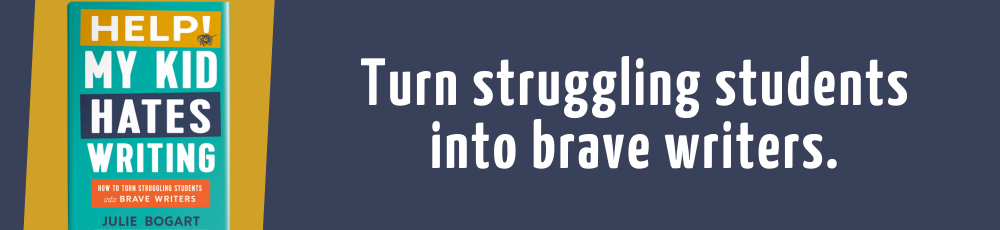
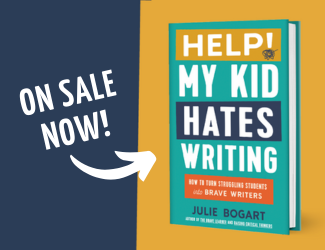
Help! My Kid Hates Writing

Posted in Homeschool Advice | Comments Off on The AI Crisis for Writing

« Older Entries
  • Search the Blog

  • Welcome to Brave Writer!

    Help your kids make breakthroughs in writing. Brave Writer, founded by Julie Bogart, helps parents raise confident writers through freewriting, copywork, dictation, living literature, Poetry Teatime, and more!

    IMPORTANT: Please read our Privacy Policy.

    Start here.

  • FREE Resources

    • 7-Day Writing Blitz
    • Brave Writer Lifestyle Program
    • Brave Writer Sampler: Free Sample Products
    • Freewriting Prompts
    • Podcasts
  • Popular Posts

    • You have time
    • How writing is like sewing
    • Best curriculum for a 6 year old
    • Today's little unspoken homeschool secret
    • Do you like to homeschool?
    • Don't trust the schedule
    • You want to do a good job parenting?
    • If you've got a passel of kids
    • You are not a teacher
    • Natural Stages of Growth in Writing podcasts
  • Blog Topics

    • Brave Learner Home
    • Brave Writer Lifestyle
    • Classes
    • Contests/Giveaways
    • Friday Freewrite
    • High School
    • Homeschool Advice
    • Julie's Life
    • Language Arts
    • Movie Wednesday
    • Natural Stages of Growth
    • One Thing Principle
    • Our Team
    • Parenting
    • Philosophy of Education
    • Podcasts
    • Poetry Teatime
    • Products
    • Reviews
    • Speaking Schedule
    • Students
    • Writing about Writing
    • Young Writers
  • Archives

  • Brave Writer is a participant in the Amazon Services LLC Associates Program, an affiliate advertising program designed to provide a means for sites to earn advertising fees (at no extra cost to you) by advertising and linking to amazon.com

    Content © Brave Writer unless otherwise stated.

What is Brave Writer?

  • Welcome to Brave Writer
  • Why Brave Writer Works
  • About Julie
  • Brave Writer Values
  • Frequently Asked Questions
  • Speaking Schedule

Brave Writer Program

  • Getting Started!
  • Stages of Growth in Writing
  • The Brave Writer Program
  • For Families and Students
  • Online Classes
  • Brave Writer Lifestyle

…and More!

  • Blog
  • Classroom
  • Store
  • Books in Brave Writer Programs
  • Contact Us
  • Customer Service
  • Brave Writer Staff
© 2026 Brave Writer
Privacy Policy
Children's Privacy Policy
Help Center