Writing about Writing Archives - Page 9 of 17 - A Brave Writer's Life in Brief A Brave Writer's Life in Brief
  • Start Here
    • For Families
      Multiple Ages
    • Ages 5-7
      Beginning Writers
    • Ages 8-10
      Emerging Writers
    • Ages 11-12
      Middle School Writers
    • Ages 13-14
      High School Writers
    • Ages 15-18
      College Prep Writers
  • Shop
    • Product Collections
    • Bundles
    • Writing Instruction Manuals
    • Literature & Grammar/Punctuation
    • Composition Formats
    • Literature Singles
    • Homeschool Help
    • Book Shop
  • Online Classes
    • Class Descriptions
    • Class Schedule
    • Classroom
    • How Our Classes Work
    • Our Writing Coaches
    • Classes FAQ
  • Community
    • Brave Learner Home
    • What’s Happening
    • Blog
    • Podcast
    • Calendar
  • Cart
  • My Account
    • My Online Classes
    • My Account
  • My Account
    • My Online Classes
    • My Account
  • Start Here

    If you’re new to Brave Writer, or are looking for the best products for your child or family, choose from below:

    • For Families
      Multiple Ages
    • Ages 5-7
      Beginning Writers
    • Ages 8-10
      Emerging Writers
    • Ages 11-12
      Middle School Writers
    • Ages 13-14
      High School Writers
    • Ages 15-18
      College Prep Writers
  • Shop

    If you’re already familiar with Brave Writer products, go directly to what you’re looking for:

    • Product Collections Browse the full catalog in our shop
    • Bundles Everything you need to get started
    • Writing Instruction Manuals Foundational Writing Programs
    • Literature & Grammar/Punctuation Grammar, Punctuation, Spelling & Literary Devices
    • Composition Formats Writing Assignments for Every Age
    • Literature Singles Individual Literature Handbooks
    • Homeschool Help Homeschooling Tools and Resources
    • Book Shop Books associated with Brave Writer Programs
  • Online Classes
    • Class Descriptions
    • Class Schedule
    • Classroom
    • How Our Classes Work
    • Our Writing Coaches
    • Classes FAQ
  • Community
    • Brave Learner Home
    • What’s Happening
    • Blog
    • Podcast
    • Calendar
  • Search
  • Cart

Search Bravewriter.com

  • Home
  • Blog

A Brave Writer's Life in Brief

Thoughts from my home to yours

Archive for the ‘Writing about Writing’ Category

« Older Entries
Newer Entries »

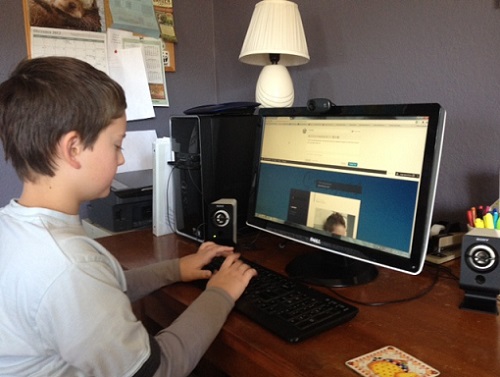
More kids are writing today than in the history of the world!

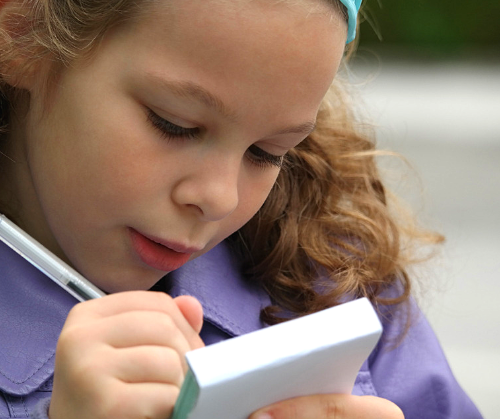
Image by HollyBrave Writer student creating a blog post. Image by Holly.

Actually more human beings are writing today than in the history of the world.

In my college class at Xavier, we looked at the dead sea scrolls website. It was fascinating to see the handwritten papyrus, the “added” letter above a word when it had been accidentally left out, the markings for vowel sounds, the literal puzzle pieces of fragments that archaeologists attempt to piece together into a whole. These precious parchments had somehow survived for centuries and represented early religious writings that were cherished and protected as the rare items they were!

In class, we discussed “writing”—how long it has been around, who could read, who could write! For centuries, many of the beloved stories/histories we know today were handed down through oral performance. Oral tradition relied on story-telling features that made the language easy to memorize and urged participation in recitation. Oral tradition relied on a community of reciters and story-tellers, not just a single source.

Over time, the development of written language catalyzed a desire to record some of these stories/narratives/laws/histories. Still, the primary mode of communication from writing to a community came through reading aloud. Written scrolls were copied by hand; eventually handwritten books replaced scrolls. Books were few and prized.

The Printing Press brought a revolution—the masses could be taught to read and write and they would have books to read, and paper on which to write!

From 1439 until about 1993, paper became the context for the written word. Publishing was in the hands of the ones who could print the words and distribute them. While the Enlightenment brought about education for the masses and writing for all, publishing houses became the gatekeepers of what words became books to read and which didn’t. You could try to self-publish but how would you distribute your work? How would you find your audience?

Naturally, being published became a “status” symbol. It meant someone with authority and money outside yourself deemed you worthy of an audience to read your writing. Writing went from being sacred, to elite!

Fast Forward to: The Internet!

Suddenly publishing is for everyone—it is what the Internet does best! It’s not just a tool for transmitting the written word (paper, machine type), but is a delivery system as well—connects writers with readers effortlessly.

The rise of Twitter is an incredible historic achievement! Suddenly ANYONE on the globe can communicate with the entire world in 140 keystrokes, and those tweeters will find a receptive and responsive audience. Never has writing been more democratic, more available, more compelling than now!

What does that mean? Your kids are already published writers! If they update a status on Facebook, caption an Instagram photo, keep a blog, participate on a discussion board for games or movies, write fan fiction, or tweet their lunches, they are writers with audiences because that’s how the Internet works.

No more do they have to rely on oral tradition to retell their stories. No longer do they have to wonder if they are “good enough” writers to “get published.” They write, freely, in front of an audience and find out directly whether or not what they share is interesting enough to compel a comment or a thumbs up or a smiley face. They get to find out the direct impact of their rant or their self-pitying whine. They discover how to shape an argument, how to do research when they are humbled by someone’s, “Did you bother to Google that first?”

Your kids, mine, you and me—we’re all writing all the time every day for all sorts of people, published and out in the world of ideas and words. More than at any point in the HISTORY OF THE WORLD, we are writers and we are writing non-stop!

Put that in your pipe and smoke it!

If you are connected to the Internet, have a keyboard, and take the time to express yourself once a day in writing, you are a GENIUS writer compared to the rest of the world’s population since the dawn of time.

How about that?

Keep going.

Use this tool called online writing and celebrate all the ways your kids are becoming wonderful writers just by virtue of being fully themselves, in writing, on the Internet, let alone all the other ways they are writing too!

Well done! We are so lucky to live at this point in history!

Cross-posted on facebook.

Image (cc)
Posted in Homeschool Advice, Writing about Writing | Comments Off on More kids are writing today than in the history of the world!

Adverbially speaking, use them sparingly

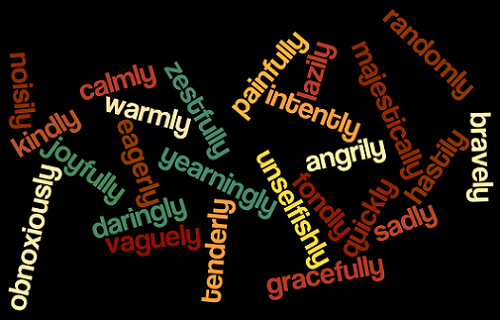
Adverbs

Brave Writer mom, Tara, shared how her kids put a Daily Writing Tip into practice. The tip was:

Adverbs (those “ly” words – and others – that dress up your verb and take it to dinner) ought to be used about as often as an evening gown: special occasions, or special sentences. But on the whole, go for a more direct description.

It’s too easy to slap on a descriptor and give up the hard work of making the image, event, idea, or person spring to life through action or concrete language.

For instance, if you write:

She cuddled the dog gently.

The reader is left to imagine what you mean by a gentle cuddle. If you instead SHOW me the cuddle, I create a firmer image in my mind:

She cuddled the dog, stroking his soft ears with her fingertips and resting her tummy on his back.

Each time you write an adverb, ask yourself if you are “showing” or “telling.” Then choose to “show.” You’ll be glad you did.

Tara emailed:

Julie –

Loved yesterday’s Daily Writing Tip. Here are the sentences we started with…and our modified sentences:

I loudly said to my brother, “Get off the computer!”
I said to my brother in my loudest inside voice, “Get off the computer!”
I said to my brother in a voice loud enough for him to hear with his headphones on, “Get off the computer!”

She walked quietly into the room.
She tiptoed into the room, trying not to make any sound at all.
She came into the room, her feel making no noise as she walked.

I carefully walked on the balance beam.
I top toed across the balance beam, trying my best not to fall.
I walked across the beam, using my balance so as not to fall off.
I walked across the balance beam, each heel landing directly in front of the other toes.

I threw the ball quickly.
I there the ball with such a ferocious speed the bater saw only a blur whizzing by his face.

My two youngest were totally engaged. Fun stuff.

Thanks for the great ideas. We are using and loving them.

Best,
Tara

That’s exactly how it’s done! Bravo!

Also, if you haven’t already, check out our new product, 100 Writing Tips: Volume 1!

Image above created using Wordle.com

Posted in Email, Writing about Writing, Writing Exercises | Comments Off on Adverbially speaking, use them sparingly

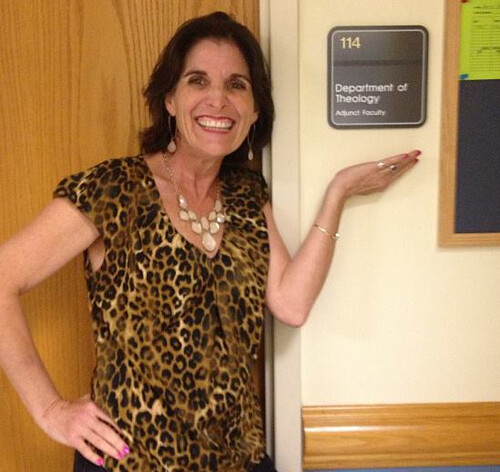
Notes from teaching at Xavier

Xavier University

Opening hooks are valuable in college writing. Being able to bring your personal experience to bear on the information being digested in humanities classes is a very worthwhile skill to cultivate in writing. When professors talk about how bored they are by the five-paragraph stiff lifeless essay, they mean that they can’t find a trace of the human who writes the essay. There are transitions and assertions galore, but none of the insight or imagination or wrestling that show critical thinking and growth.

The structure is not to blame. What is to blame is the lack of cultivation of writing voice. Kids need many many opportunities to explore their ideas in writing, tying their experience and thought lives to the information they are evaluating and narrating.

If a student does this well, and structures the essay in a recognizable format, you’ll have a student who hits a home run in college writing. When I read a writer who has command of his or her own writing voice, as a professor/teacher, I relax. I feel comfortable. I trust the writer.

Cross-posted on facebook.

Posted in Homeschool Advice, Julie's Life, Writing about Writing | Comments Off on Notes from teaching at Xavier

Squeezing Writing into the Holidays

Writing during the Holidays

1. Have your young writers make place cards for the holiday table. We liked using the American Girl Letter Art books.

2. Write a holiday newsletter: let the kids be the editors-in-chief! Interviews, anecdotes from the year’s activities, funny memories, photos—these can be complied in a patchwork quilt way. No need to write a single long narrative. Put each piece in its own box or section, like a newspaper.

3. Keep a holiday record book. You might want to start one that has the name of the holiday and the date (with year). On the record page, put the names of the guests who were with you or where you went to celebrate. If gifts are involved, list the presents and the “to” and “from” for each one. You might also recall foods eaten (with recipes! – makes it easier for next year), football scores (ha!), games played, funny conversations or jokes told. You might select a different scribe each year to be the note-taker for the event/holiday.

Writing during the Holidays

4. Put a basket on the hall buffet or mantle. Leave a set of beautiful pens and odd slips of paper (various colors and shapes). Instruct kids and parents to write a message of gratitude each day or every couple days. Then on the chosen holiday, pour them out in front of a fire, while sipping hot cider, and read them to each other.

5. Make home made gift tags! Then write names for gifts on them.

6. Thank you notes: yes, these can be wonderful. They can be texts, FB messages, tweets, instagrams, or genuine handwritten notes. The key is to remember to thank the givers (something even I am not good at). But make use of whatever technology helps you get it done!

Enjoy! There are so many ways to make writing a natural part of life, but holidays take it up a notch!


Brave Learner Home

Posted in Homeschool Advice, Writing about Writing | Comments Off on Squeezing Writing into the Holidays

Cherish the people you love—and put it in writing

WriteIn the last nine months, I’ve lost four friends (one online friend and three from high school). These friends were in their forties and early fifties. Each one “dropped dead” out of nowhere (no warning, no long illness). To say I’m still in shock is an understatement.

Each day I log onto Facebook, I see references to these friends (their profiles are still up and people pay tribute). The most recent high school friend, Alison, died, leaving behind two kids and a much loved husband, not to mention all of us—her friends. Breathtaking how quickly she is gone and not coming back—and how much we all miss her.

The rest of us live with the illusion that we’ll all get 70+ years on the planet. Today, with advances in medicine, it seems as if we all deserve 80 or more!

But the truth is: we just don’t know when our time will come. When I read the lovely notes written to the ones who’ve gone on before me, after they are gone and unable to read them, I’m reminded of how important it is to reach out to the people in our lives now, in writing, to say “I love you. I value who you are and have been to me.”

Ironically, my college boyfriend did that for me. It had been 30+ years since we had last spoken. In his note, he reflected back to me who I was at the time and compared that image of me to who I am today. It was powerful to read his words and to take stock of all the changes, all the growth, and even some of the losses. His writing = gift, to me, at this time.

These experiences (so much more common in our fifties, I’m sure) have given me pause. I’ve put a lot of who I am in writing (there would be a lot to read from me, if I were to pass suddenly, and that writing might be a comfort to the family and friends I would leave behind). But it occurred to me also that it’s important to express *to* those we value just how much we do love them, and why—and how they’ve been precious to us in our lives.

My mother, Karen O’Connor, has kept “grandchildren journals” for each of her grandchildren. Each time she sees any of them, she makes an entry (unless they are local, then she makes entries after special events). On the 18th birthday of the grandchild, she presents this journal as a snapshot of how her relationship with this person has grown and been cherished for 18+ years. Writing. Love. Personal and concrete. Able to be read again and again, even after she eventually leaves us (sob – don’t want to think about it!).

I say all this today so you might pause and cherish someone right in front of you, or even remotely. Maybe it’s a long lost friend, maybe it’s a relative, maybe it’s the child sitting across from you behind your computer screen right now. It’s good to say “I love you” and to mean it. It’s even better to put it in writing sometimes—to do the soul excavation of why this person has value in your life and how grateful you are to know this friend, parent, spouse, child.

Why wait until the loved one is gone to express all in your heart to say? Say it now. Write it now. Cherish the people you love, and let them have a concrete, tangible record of your love for them.

Pick one person today.

Cross-posted on facebook.

Image by Jose Roco

Posted in Julie's Life, Writing about Writing | 1 Comment »

« Older Entries
Newer Entries »
  • Search the Blog

  • Julie Bogart
  • Welcome, I’m Julie Bogart.

    I’m a homeschooling alum -17 years, five kids. Now I run Brave Writer, the online writing and language arts program for families. More >>

    IMPORTANT: Please read our Privacy Policy.

  • New to Brave Writer? START HERE

  • FREE Resources

    • 7-Day Writing Blitz
    • Brave Writer Lifestyle Program
    • Brave Writer Sampler: Free Sample Products
    • Freewriting Prompts
    • Podcasts
  • Popular Posts

    • You have time
    • How writing is like sewing
    • Best curriculum for a 6 year old
    • Today's little unspoken homeschool secret
    • Do you like to homeschool?
    • Don't trust the schedule
    • You want to do a good job parenting?
    • If you've got a passel of kids
    • You are not a teacher
    • Natural Stages of Growth in Writing podcasts
  • Blog Topics

    • Brave Learner Home
    • Brave Writer Lifestyle
    • Classes
    • Contests/Giveaways
    • Friday Freewrite
    • High School
    • Homeschool Advice
    • Julie's Life
    • Language Arts
    • Movie Wednesday
    • Natural Stages of Growth
    • One Thing Principle
    • Our Team
    • Parenting
    • Philosophy of Education
    • Podcasts
    • Poetry Teatime
    • Products
    • Reviews
    • Speaking Schedule
    • Students
    • Writing about Writing
    • Young Writers
  • Archives

  • Brave Writer is a participant in the Amazon Services LLC Associates Program, an affiliate advertising program designed to provide a means for sites to earn advertising fees (at no extra cost to you) by advertising and linking to amazon.com

    Content © Brave Writer unless otherwise stated.

What is Brave Writer?

  • Welcome to Brave Writer
  • Why Brave Writer Works
  • About Julie
  • Brave Writer Values
  • Frequently Asked Questions
  • Speaking Schedule

Brave Writer Program

  • Getting Started!
  • Stages of Growth in Writing
  • The Brave Writer Program
  • For Families and Students
  • Online Classes
  • Brave Writer Lifestyle

…and More!

  • Blog
  • Classroom
  • Store
  • Books in Brave Writer Programs
  • Contact Us
  • Customer Service
  • Brave Writer Staff
© 2026 Brave Writer
Privacy Policy
Children's Privacy Policy
Help Center