Learning about Native American Nations, First Nations, or Indigenous Peoples of the Americas
Are you looking to learn more about Native American Nations, First Nations, or Indigenous Peoples of the Americas?
As you research, evaluate resources, and plan your homeschool lessons, we’d like to offer a few points to help you facilitate respectful planning, discussions, and activities while learning about Native American Nations, First Nations, or Indigenous Peoples of the Americas.
Along with these tips, please use the links provided to access direct information from members of Native American Nations, First Nations, and Indigenous communities. These links lead to resources that we have found helpful.
Points to Consider
When evaluating resources, start with these foundational questions:
- Who created the resource? (Try to use resources created by the people you are learning about.)
- Whose story is being told?
- Is it historically accurate? (You may need to do more research.)
Across the Western Hemisphere, there are hundreds of federally recognized Nations and Indigenous peoples. When discussing Native or Indigenous peoples, it is respectful to use the specific name of the nation, tribe, band, or people, whenever possible. When lesson planning, work to learn more about a specific nation, tribe, band, or people rather than learning about Native or Indigenous peoples as a monolithic group.
When planning activities for your homeschool or book club, it is considered best practice to avoid crafts and activities that use
- sacred objects (such as feathers),
- sacred stories,
- or reenactments of sacred ceremonies.
If you are unsure which activities may be part of the sacred tradition, conduct research to learn more about the craft or activity in question. You could also learn more about cultural appropriation, how it’s different from cultural appreciation, and how to avoid it.
Incorporate information about the current activities of citizens and the nation, tribe, or band you are learning about. During discussions with your children, use present-tense language when referring to the citizens of nations, tribes, or bands.
Please let these tips serve as an introduction and explore more at the resources below.
Resources
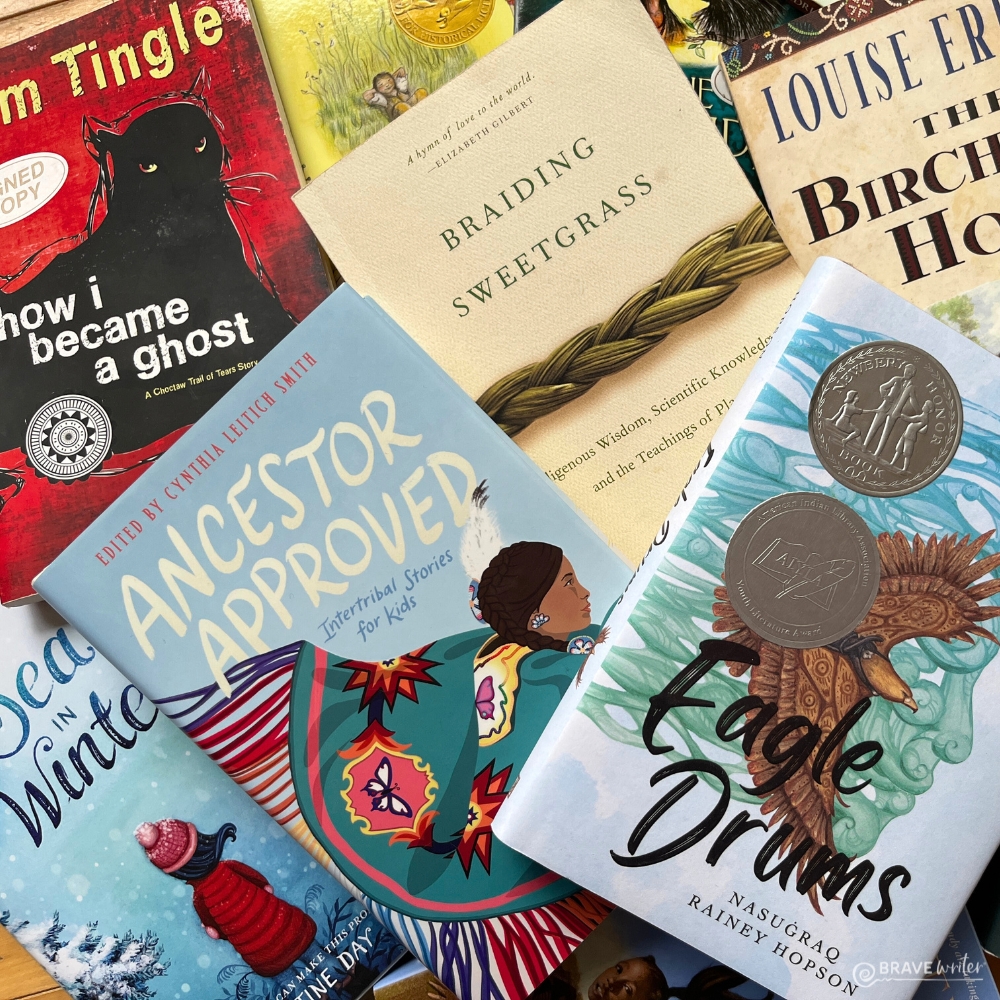
- Ancestor Approved by Cynthia Leitich Smith (Arrow)
- The Birchbark House by Louise Erdrich (Arrow)
- Eagle Drums by Nasuġraq Rainey Hopson (Arrow)
- The Game of Silence by Louise Erdrich (Arrow)
- Sisters of Neversea by Cynthia Leitich Smith (Arrow)
- The Barren Grounds by David A. Robertson (Boomerang)
- How I Became a Ghost by Tim Tingle (Boomerang)
- The Sea in Winter by Christine Day (Boomerang)
- A Snake Falls to Earth by Darcie Little Badger (Boomerang)
- Braiding Sweetgrass by Robin Wall Kimmerer (Slingshot)
The following online tools provide guidance for engaging in respectful discussions and activities:
- American Indians in Children’s Literature Tips for Teachers from Dr. Debbie Reese (download the tips PDF)
- National Congress of American Indians: Tribal Nations and the United States (download the helpful PDF)
- Indigenous Foundations (Canada) terminology guide
We encourage you to continue to incorporate learning about Native Nations, First Nations, and Indigenous Peoples of the Western Hemisphere as part of your regular lesson planning throughout the year.