Archive for the ‘General’ Category

What you can do when you want to give up?

Wednesday, March 31st, 2010

It’s April. Spring break is just around the corner, and happens to come at the right time every year (the moment when I want to collapse from the drain of winter quarter)… except for one thing. Sometimes when I allow myself to let down during the break, I lose all my energy to finish the year strong. Our homeschool dribbles to the end of May and ekes into June with just enough sluggish energy to feel we have completed the year’s work. Or in those “let’s just hurry up and get to summer” years, the dribbling and eking maybe didn’t even occur and we hope no one from the state shows up at our door in July looking for work samples from seven subjects.

I used to put it this way: in the fall, I was a classical educator. In winter, I shifted to a Charlotte Mason-unit study kind of school style. But by spring, radical unschoolers.

If this is you and right now you’re wondering how you can get to the end without the end coming too soon, here are a few Brave Writer suggestions that may help.

  1. Change the routine. Maybe you let everyone sleep in longer than usual and you start the day outside (weather permitting). Start with an entry in a nature journal or tending seedlings you plant. If you usually begin with math, start with grammar. Save math for later in the day. Maybe you can kick a soccer ball before you do any school work at all!  Do something utterly different than you have been. Look at the Brave Writer Lifestyle to trigger ideas.
  2. Get ready the night before. Best piece of advice, hardest to follow. Don’t labor over it. Before bed, pick one thing to use as your centerpiece the next day. It might be a book of poetry, perhaps flowers to plant. Maybe you find a DVD that the kids can enjoy in the afternoon, or you decide to bake brownies so that during read aloud time, there are fresh munchies. Stay simple. Just plan one thing (maybe all you do is stack the school books on the table so they are easily found and no one has to complain that they “can’t find the grammar book”).
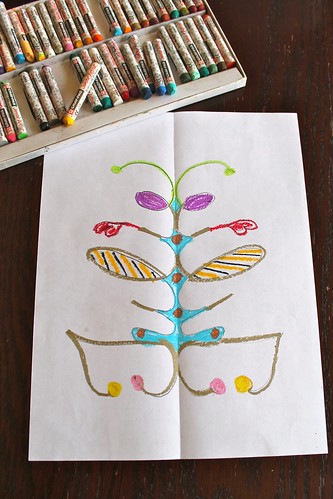
  3. Play music. We forget how powerful music is in creating mood. If you’ve got an iPod and a speaker set, put that out the night before. You can throw it on shuffle and let the tunes roll, or you can be more deliberate and create a morning playlist conducive to studying. You might even pick a song (instrumental) to use for either freewriting or free drawing. For freewriting, allow the mood of the music to guide the writing. For free drawing, put a variety of writing elements on the table (markers, crayons, colored pencils, high lighters, pens). Your kids will express the mood of the music as they listen.
  4. Poetry. Perhaps you’re already good at poetry teatimes. If you’re not, this is meant for you. Spring is the perfect time to develop/cultivate the habit of reading poetry, sipping tea and eating treats. Read about it here.
  5. Shakespeare. May is the month of Shakespeare in Brave Writer. Take advantage of the fact that we have already structured into our world a focus you can usurp and use in yours! We have a Shakespeare class for high schoolers available and we offer some suggestions of ways to introduce Shakespeare to your kids in the Brave Writer Lifestyle. The blog will also feature some specifically Shakespeare-y kinds of things to do with your family too.
  6. Take classes. We have good ones. Kidswrite Basic, Kidswrite Intermediate and Literary Analysis start next week. Don’t miss your chance to get these in before the year ends.
  7. Take a day off just for you. Plan a hike in the local hills, go to an art museum alone for a morning, see a movie no one wants to see with you, spend a day wandering a labyrinth, get a massage, get a mani-pedi in bright red. Do something to recharge that takes you away from the burden of daily planning. You deserve it. You’ve been working hard all year.

Bottom line: Each year feels like you re-invent your homeschool. That’s because you do. You’ve got kids changing ages and stages, your income fluctuates, your home routine is up-ended by some sports schedule or dance or acting. You find that what worked one year is just not going to work the next. You’re at the end of one of those years now. What things can you do now, that you may not ever get to do again? What opportunities does this year offer that will vanish come September? Do those now. If that means going to Disneyland while you still have kids under 10, do it. If it means having teatimes outside in your backyard because next year you’ll be living in a condo, have as many as you can. If it means that you have leisurely mornings now but next year will be driving someone to school, enjoy sleeping in and reading together in pajamas these last few weeks.

Whatever phase of life you’re in, savor it. Look ahead and consider today. What can I do today that makes a memory, that preserves what I love, that enhances our well-being? Then do that. Math can wait (unless of course math IS that thing <g>).

Spring Class Registration opens at Noon EDT

Monday, March 15th, 2010

Check out the class schedule. We keep registration open until classes fill.

Sign up early!

You gotta be home to homeschool

Thursday, January 21st, 2010

There are two kinds of “being home” that I want to explore in the blog. Today’s post focuses on the physical choice to be “home” more than away. For families with young kids (particularly if you’ve got kids under 12), cultivate a home life, in your house. For families with teens, be choosy. Outside activities are important, but consolidate when you can. If you’re in that awkward phase of life where you have some of each (little kids and big ones), your choices have to be that much more creative and deliberate. I’ve got a special section just for you further down.

The second kind of “being home” has to do with attitude—how do we treat each other when we are home as opposed to away? What does it look like/feel like to be educated in a home? We’ll look at “home” as a way of being tomorrow.

Choosing to be at home:

The first step in creating a better homeschool environment is to be home. Long stretches of time that go uninterrupted by orthodontists, trips to the tutor, vet appointments for the dog and shopping for food are essential to create a feeling of time and space to learn. One of the best bits of advice I received early on is to not make my doctor or dental appointments in the mornings. Just because I’m “home” doesn’t mean I’m free! If my kids were in a school building, I wouldn’t want to take them out for a check up. I’d wait until the afternoon. Likewise, my time at home is full and therefore I’m not available for appointments before noon, either. Better to schedule all such meetings after lunch. (If you have napping kids, then you have to wait until naps are done or let them nap in the car or stroller.)

Additionally, limit outside activities. We had a rule in our family of five kids that only two kids could be playing on a sports team at any given time. That meant that some of our kids couldn’t do their sport year-round. We had no prodigies so I didn’t have to weigh the merits of possible college scholarships against my decision for sane living, so your mileage may vary. But we discovered early on we could only support two weekend games and two sets of practices per week, per season. The same could be said for musical instruments, tutorials, co-ops, dance lessons and so on. When you have lots of kids, this becomes even more important. You do not want your youngest children to spend their early childhoods sipping Juicy Juice boxes in a car seat watching DVDs in the back of the van while they are schlepped along with hockey pads to the next practice!

Hire people who will come to you or live within walking distance. The midwife I chose on my fifth birth traveled to me to do my check-ups. That’s the sole reason I picked her over my previous midwife. When my youngest decided she wanted piano lessons, I sent her across the street. Our piano teacher isn’t my favorite as far as technical skill to teach, but for the early stages, living two minutes from my doorstep outweighed all other concerns. We hired a violin teacher who drove to our house. We also hosted literature discussion groups, writing groups and study sessions so that we could stay home.

Carpool. Do activities that other families do so that you don’t have to do all the driving.

Save some activities until your kids can drive themselves. We didn’t have our kids get jobs outside the home until they could drive themselves. Three of them, however, earned money while at home babysitting and selling cookies in our neighborhood. Neither of these required me to drive anyone anywhere (except when one of them ran out of chocolate chips and forgot to tell me… grrrr!).

Consolidate activities. It’s better to have one long busy day of appointments than to have 30-60 minute trips three or four times per week that interrupt your time at home.

Make one day your inviolable day that you never go anywhere. Once you decide to do this, it will feel nearly impossible to make happen. You’ll find all kinds of reasons you can’t keep this commitment. Of course. Just like dieting or exercise. It’s a discipline. But just as you would clear your schedule to be available weekly for a co-op day, you can do the same in reverse. Make Tuesdays or Fridays (or whatever) the day you never leave the house. You always have the full day at home and are ready for it with good food, a lesson plan, fun TV programming to watch and no pressure to go anywhere. Even if you pull this off three Tuesdays of the month, that’s wonderful! You’ll be amazed at how jealously you guard that day once you commit to it. (Tuesday has traditionally been that day for me since we have co-op on Mondays which is all-day away from home.)

Teens: I’ve shared before that teens need to sense that they are getting out into the big world, evolving into young adults. Home can feel confining, redundant, risk-free. What felt safe and nurturing as a young child becomes confining and tedious past 13. These feelings are normal; they aren’t signs of rebellion or an inability to be happy. I recommend that your teens get involved in something much bigger than they are. One of my Brave Writer students became enamored of low cost, energy efficient housing and built eco-friendly homes in her backyard! Another started a fish breeding farm in the creek neighboring her house. These activities kept these students home, obviously. But home had become a bigger world!

And that’s the point. Home is either the refueling station between community college and aiding at the local elementary school three days a week, or it’s the means to pursuing a dream (writing a novel, inventing a language, crafting a quilt, remodeling the basement).

In our family, two of our teens joined a Shakespeare company that met downtown with professional actors and a wide variety of students once a week on the weekends with performances at the end of the year. I know teens who’ve gone on mission trips, have built computers from scratch, are on high level sports teams, acted in plays, started parttime high school or junior college, worked for the first time, gone to art institutes, joined community or high school music programs, written for publication, and started businesses. Doing written narrations by themselves at the kitchen table is not enough for a teen’s education. Supervising the small children in the family is not a teen’s daily responsibility. We had the babies; they didn’t.

Teens need driver’s licenses and money. They need peers and challenges. And they need a home. That home is their anchor. They tack between feeling bold and anxious, mature and needing a mommy. Home is the place where they can suck their thumbs, curl up and recharge. Each teen is different so remember that some need more down time than others. You can monitor this by evaluating how well they manage emotionally. Paring down the outside activities can be one way to help them reconnect to themselves. But be cautious here. Sometimes we moms imagine they will be happier with less, when what they crave and need is more. Teens have a remarkable capacity to juggle many demands and some need that stimulation to become the competent people they want to be.

So what do you do if you have teens needing adventure and little kids needing a stable home routine? This is the trickiest period, but it’s important to be intentional. There are a couple ways to help your teens get out without sacrificing the little kids in the process (and there are ways to keep a nice, vibrant home life without forcing teens to sit home all day). Try some of these ideas and see how they work for you.

  1. Commit to one big “out of the house” project for your teen. Support one big project (Shakespeare, biology class, refurbishing a car, All Star soccer). Pay for it, help get the teen to that project, show up for performances or whatever is required. Then, above that one big project, put the responsibility on your teen to make the other stuff happen. That means if it requires money, they earn it. If it requires rides, they coordinate (create the car-pooling, or drive themselves, or work it out with you so that it doesn’t interfere with your routine with the younger kids). They take responsibility for making the stuff they want… happen. That’s part of adventure, responsibility and risk. They choose to make their lives more interesting, richer.
  2. Find one big project to work on at home. This can be as sophisticated as constructing a language (I have one kid who did this) or as simple as becoming really good at World of Warcraft. It’s great if your teens have a goal that can be pursued at home: watching all the top AFI films, writing a novel, studying art history, planting a vegetable garden, rebuilding the engine of a car, building a website, learning photography. School work (the stuff that goes on the transcript) is necessary, but if it’s all that your teen does at home, home will quickly become a chore rather than a place your teen wants to be.
  3. Protect your mornings. Let your teens know that you need the mornings with your younger kids. That means you will resist being a ride between 8:00 and 11:00 every day. (If a teen needs a ride home from school or something routine like that and it doesn’t take you more than 15 minutes round trip to make it happen, then that’s not unreasonable… but be wary of interruptions that take a half hour or more.)
  4. Triangle in other teen families. It’s sure nice if your daughter and her best friend are both in the play together. Car-pooling! It’s great if a group of kids takes biology together so they can study, ride-share and have friends all at the same time.
  5. Pass home responsibilities down to the younger kids; free your teens to do less at home. Remember when your oldest was 10? You expected a lot (cleaning a bathroom, laundry, setting and clearing the table). But now that your youngest is 10, you still expect the 16 year old to do those chores while the 10 year old seems “too young.” Nonsense. Get your younger kids to do the chores and free the teen to study, have a social life, work a job, and pursue extra-curricular activities. This helps your teen want to be home, too.
  6. Keep a computer in the family room. This enables you to be with your youngers while your teens have a reason to leave their bedrooms.

More ideas? Post them in the comments section.

Friday Freewrite: Tongue Twisters

Friday, January 15th, 2010

Pcik a letter and string together a sentence with as many words that start with that sound as possible. If you run out, pick another letter. Don’t worry about sense! Be nonsensical. Ready, go!

Email: Homeschooling through grief

Wednesday, January 13th, 2010

Hi Julie-

I am really struggling with the recent death of my Mom. She has been ill off and on for the past few years and my 9 year old son Sam and I have spent much time traveling out to Vancouver from Calgary to care for her in that time. We recently returned from spending 5 weeks caring for her as she died. I am extremely weary and worn out. My poor son spent most of those 5 weeks watching (crap) tv and playing computer games. (He is a right-brained learner and a late reader.)

Now that we are home I’ve been expecting ‘big things’ from myself in terms of ‘getting back on track’ with our homeschooling. I’m burnt out. We fortunately have a very loose hsing rhythm–based largely on your bravewriter lifestyle so it is rather gentle anyway, but I still just don’t have much left at this point to give to him. Do you have any experience with grief in this way? Any words of wisdom for me/us?

many thanks,
Kelly

Hi Kelly.

First: hugs. Grief is such a strange thing. You can be perfectly calm at a memorial service and then burst into tears in the supermarket line. You feel energetic from a good night’s rest, but can’t remember phone numbers. Your brain feels scrambled. Sometimes you’re living under water, all actions slow motion and blurry, hard work, yet the pain is dull not sharp. Then guilt jumps you and you wonder why you can’t pull yourself together to get things done when you’ve already cried your tears and the event that triggered the grief was so long ago (whatever amount of time that is: six hours, four weeks, one year).

Homeschooling under those conditions is grueling. You feel responsible yet unable. It happens to school teachers too. My American Literature teacher in 11th grade lost his fiance in a freak tidal wave on the California coast. It derailed our class for the rest of the year. He spent one session telling us the vivid details of what happened to her, through his tears. From that day on (early fall), he never did get himself together. We limped our way through The Great Gatsby, Steinbeck and Hemingway without much insight or clearly defined writing projects. He missed many classes. Yet we survived. He did too.

One benefit to homeschooling is that you literally are in a house. Taking breaks, napping, crying in the bathroom are more viable than in a school setting. Remember that. Give yourself a break. Additionally, if you’re grieving the loss of someone in the family dear to you (as you are Kelly), chances are your kids are too. They can understand if you say, “I need this morning to just lie down and rest because I’m sad.”

I’ve been through one of the toughest years of my life (2009). My grief was not induced by death, but it’s been a process of loss anyway. I can’t say I survived it well, but I will share with you a few things I know about living with grief and adjusting homeschool to that unhappy rhythm.

  • “You can’t cheat the dark gods.” If you’re sad, you’re sad. Don’t pretend not to be or it will squirt out in irritability or anger when one of your kids spills the orange juice or giggles too loudly. If you feel blank and unfocused, chances are supporting a rigorous routine will elude you. Then you will heap guilt on your already weary spirit. Start by recognizing that you’re in a process that will take some time to get through. Acknowledge your feelings, in a journal if nothing else, and find ways to slow down the pace of life to accommodate your sadness.
  • Get a support system. Don’t rely on your kids to talk to you or to help you through the blues. Pick a friend you can call any time of day or night. Then talk to that person. Or if you prefer, create an email dialog with someone who understands your pain. Exchange emails. Don’t keep your emotions in. Find an outlet of support. (Hint: Husband may not be the best person for this if he is going through a similar grieving process.)
  • Pace yourself. This is when it helps a lot to go back to basics. What aspects of homeschool are most nurturing to all of you? What can you do with your kids that is the lowest stress? I found that reading aloud was a great way to stay on track and to be restful. I also liked using DVDs and the computer for some of our education. I relied more on tutors and group learning (co-op) so that I wasn’t in charge of so much. Remember: you can catch up next year. No need to press too hard this year.
  • Go vanilla. This is not the year for glitzy memorable unit studies complete with parties and field trips. Think 3 R’s. How can you keep reading, ‘riting and ‘rithematic going? Let history and science slide (if your kids are not in high school). If they are in high school, rely more on self-study and movies, group learning and tutors (if you can). Recognize that sometimes just keeping up with the basics is about all you can muster, but it is enough. Some years, it’s more than enough. Teatimes are one way to keep a routine that is nurturing. See if these can continue to be in your weekly lifestyle without too much stress.
  • Let them watch crap TV and play computer games. I know, I know. That sounds so cynical. Here’s something I know from experience. Kids learn because that’s what they do. I’ve discovered from having been through a rough year myself that my kids have learned stuff I never taught them from Seinfeld episodes, from reality TV, from music (spending big quantities of time listening to and copying lyrics). Your kids need space to recover too, so let them do some of these “lesser forms of learning” without guilt. Remember the summers of your youth when you vegged out all day watching game shows or old movies? It’s okay. They’ll be okay. A little bit of learning combined with a lot of technology and TV for a period of time (a season) may be the easiest way to recover from such a blow as losing your mother. You’ll all get restless and sick of that lifestyle when your energy revives. You will. Trust it.
  • Deliberately take time for you. Get away from the house, the family, your responsibilities. If you can spend time each week alone at a library or in nature or at a spiritual center, do it. I go to church alone (my kids go to a different church). In warm weather, I take time after church to go to a look out over the Ohio river. I read, journal, sit quietly, and watch coal barges float by. In the cold weather, I ski each week. Be good to you. Restore yourself. Love yourself.
  • Evaluate your recovery not by days or weeks, but by months and quarters. Change your measurements to longer spans of time. If you get a writing project done per quarter or maybe per semester, be glad. Affirm what you do. Ignore what you don’t do.

Over time, you’ll heal. You’ll know you’re healing because your energy will rebound. As it does, add in some of the missing pieces. But don’t be afraid to throw stuff out or to have a month where you lapse. Grief isn’t linear. It’s cyclical. You can get a lot of energy back and then one visit from family can send you back into the spiral. And of course, if you find that your grief turns into depression, you know (I’m sure!) to get professional help. Therapy has helped me tremendously and sometimes anti-depressants are the difference between drowning and swimming to safety.

Here’s hoping that each day gets a little better for you, just as the sun’s rays are lengthening a little bit every evening.

Friday Freewrite: Snow memories!

Friday, January 8th, 2010

Write about snow: playing in it, skiing on it, watching it fall.

Conversely, if you have never experienced snow, write about rain!

We’ll reopen the blog on January 4

Tuesday, December 29th, 2009

Taking a winter break to work on new products and to be with my family. Hope your holidays are happy!

Friday Freewrite: Break

Friday, December 18th, 2009

Write about what you’ll do on winter break.

What a philosophy of education looks like

Sunday, December 13th, 2009

If you were to fill out the questionnaire from the previous blog entry, you may come up with a profile like this (this is theoretical – your answers will vary):

What kind of person am I?
I like structure. I make “to do” lists, I organize my files by alphabet and I empty my email in-box each day. I prefer to have tangible evidence that I’ve gotten a lot done.

What are the learning styles of my kids (look at each one individually)?
The oldest likes lots of interaction and enjoys working hard at things he loves. The second child prefers to know exactly what to do each day so he can check it off. The third child is artistic and will commit to any project that includes markers.

Recall a time when you felt that all of you were happy.
We had a great day when I planned an afternoon for learning how to draw. We had all the materials out, we sat outside, we had interesting objects to draw and I had clear instructions to present. Each one was engaged and the end products were really great to look at.

Recall a time when you all felt miserable.
We had been doing workbooks every day for a month without any field trips or change of pace. By the end of the month, two of my kids said they hated school. I noticed that they got sloppier in their work too.

Begin with the end in mind. Ask yourself: How would I know I had had a successful year of home education?
I would know the year had been successful if I had a handful (5-7) of completed writing assignments and I could tell that my kids enjoyed at least producing one of them. I’m looking for them to improve in both attitude and competence.

What does your partner/spouse expect?
My husband is a school teacher and sometimes I feel like he measures our progress by how many minutes we spent at the kitchen table. That makes me feel nervous about taking the day off to explore something in depth or to go to a museum.

Recall a favorite learning moment of your own.
I loved learning how to quilt. I got books, bought a sewing machine, took a class at the local store and made my first quilt. It felt really good to focus on one thing and to get help. I liked working at my own pace and figuring out how to apply the ideas I learned in class. I liked having a teacher.

How frequently do you check in with your children?
I haven’t done that for awhile. In fact, I don’t know if I ever have. I realize that I expect them to be on board without my ever talking to them about my ideas, asking their input on how they’d like the schedule to look or asking them what they’d like to learn. I’m also wondering if I could ask them what their favorite learning experiences are and when they felt happiest and most miserable. That seems like a good idea.

The overall thrust of this profile doesn’t address classical education or Charlotte Mason, unit studies or historically oriented lessons. What it does is help you to notice your habits, your tendencies and your preferences as they balance against your children’s. When you’re designing your year, you want to take everyone into account (even a spouse who has his/her own ideas of what success looks like). Take each person seriously. Recognize that sometimes you will work outside your comfort zone, accommodating a child’s learning style that is in conflict with yours. Likewise, help your kids to understand that sometimes they are meeting your needs to reassure yourself that learning is happening, that you are making progress toward a goal you see and feel (even though they may not value it the way you do). You need to balance these so that everyone is aware of what is happening.

Remember: the more you share your needs with your kids, the better chance they have of helping you to reach your goals too. You can say something like this: “I’ve noticed that I like to have some physical samples of your work by year’s end that let me see these things (list them: punctuation, nice handwriting, completed math chapter tests, a couple of writing samples that went through the revision process). I realize that you love to have free-flowing days with time to do art, play the piano and get on the computer. Let’s see how we can get all of these done. How about this….?

Then make a plan with your kids. Remind them when you get off-track or need to adjust the plan. Check in with them to find out if it’s working. The point is, get everyone on the same page acknowledging what they need/want while at the same time sharing what you need/want. The reason so many learning systems fail is that they either major on what the parent wants (often overriding a child’s natural learning style, leading to resentment and tedium) or they focus on accommodating a child’s learning style (meanwhile the mom feels like she’s constantly revising her expectations… until she panics and cracks!). Every homeschool must take each person into account to be successful.

An educational philosophy is about the idea that learning transcends specific methods and tactics. It’s the belief that learning takes place at all times, but that the most effective ways to deliver a body of information will vary child to child, parent to parent, family to family. Knowing how your family functions well will help you sort through the mountain of information about homeschooling you encounter in groups, online and in books.

New post coming

Friday, December 11th, 2009

about how to use the philosophy of education rubric. Just not finished yet.