A Brave Writer's Life in Brief - Page 558 of 780 - Thoughts from my home to yours A Brave Writer's Life in Brief
  • Start Here
    • For Families
      Multiple Ages
    • Ages 5-7
      Beginning Writers
    • Ages 8-10
      Emerging Writers
    • Ages 11-12
      Middle School Writers
    • Ages 13-14
      High School Writers
    • Ages 15-18
      College Prep Writers
  • Shop
    • Product Collections
    • Bundles
    • Writing Instruction Manuals
    • Literature & Grammar/Punctuation
    • Composition Formats
    • Literature Singles
    • Homeschool Help
    • Book Shop
  • Online Classes
    • Class Descriptions
    • Class Schedule
    • Classroom
    • How Our Classes Work
    • Our Writing Coaches
    • Classes FAQ
  • Community
    • Brave Learner Home
    • What’s Happening
    • Blog
    • Podcast
    • Calendar
  • Cart
  • My Account
    • My Online Classes
    • My Account
  • My Account
    • My Online Classes
    • My Account
  • Start Here

    If you’re new to Brave Writer, or are looking for the best products for your child or family, choose from below:

    • For Families
      Multiple Ages
    • Ages 5-7
      Beginning Writers
    • Ages 8-10
      Emerging Writers
    • Ages 11-12
      Middle School Writers
    • Ages 13-14
      High School Writers
    • Ages 15-18
      College Prep Writers
  • Shop

    If you’re already familiar with Brave Writer products, go directly to what you’re looking for:

    • Product Collections Browse the full catalog in our shop
    • Bundles Everything you need to get started
    • Writing Instruction Manuals Foundational Writing Programs
    • Literature & Grammar/Punctuation Grammar, Punctuation, Spelling & Literary Devices
    • Composition Formats Writing Assignments for Every Age
    • Literature Singles Individual Literature Handbooks
    • Homeschool Help Homeschooling Tools and Resources
    • Book Shop Books associated with Brave Writer Programs
  • Online Classes
    • Class Descriptions
    • Class Schedule
    • Classroom
    • How Our Classes Work
    • Our Writing Coaches
    • Classes FAQ
  • Community
    • Brave Learner Home
    • What’s Happening
    • Blog
    • Podcast
    • Calendar
  • Search
  • Cart

Search Bravewriter.com

  • Home
  • Blog

A Brave Writer's Life in Brief

Thoughts from my home to yours

Poetry Teatime: Rekindling the tradition

Poetry Teatime

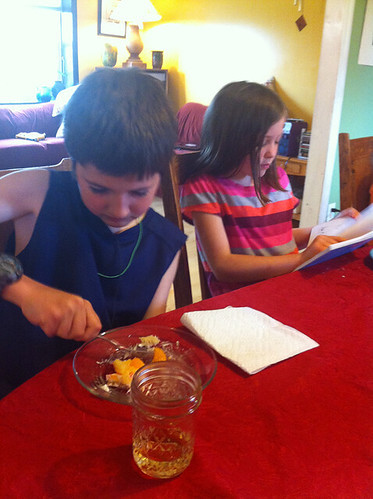
Our first Tuesday Teatime was back in 2005. We enjoyed it, but for some reason didn’t do one again until recently. Alas, I have a whole new group of kiddos that didn’t remember that long-ago tea experience or who weren’t here to experience it!

I gathered several poetry books from the library and the children enjoyed looking through them to find something to share. They took turns reading, as did I, and we all enjoyed the snacks.

I look forward to continuing this tradition, hopefully more frequently than every 8 years!

Thanks,
Erica

Poetry Teatime

Visit our Poetry Teatime website!

Posted in Poetry Teatime | Comments Off on Poetry Teatime: Rekindling the tradition


Anger can be liberating

Evil JoannaImage by Javier Ignacio Acuña Ditzel

In the context of mutual respect, the healthy discharge of anger has a place:

Anger says, “This far, and no further.”

Anger says, “Step off” or “Step back.”

Anger alerts the room: “Something’s not right. Someone’s not happy. Something needs to change.”

Anger clocks your own immobilizing depression to the floor while the secret you-that-has-needs shows up, ready to handle what must be done.

Anger sends a power surge—suddenly you are your own advocate, standing for your point of view, come what may!

Anger lets the people who take you for granted know that you are, in fact, here—”You show up” when angry.

My kids have a word to describe me when I hit that wall—when my tolerance and goodwill, my empathy and earnestness are depleted. They say, “Mom is pa-dunk-ah-dunking.” It’s their signal to each other: Back up and help Mom.

What they mean is that my eyes go a little crazy-cross-eyed, my tone of voice ratchets up an octave, and my desperation to be heard leads me to shout and stride all over the room, pointing at what must be done RIGHT NOW.

In those moments, I’m not my “best self.” Or at least, I’m not my ideal self.

But I’ve come to see that if I don’t notice the build up of resentment or the fact that I had given so much, I ran out of stuff to give, it is inevitable that a mini pa-dunk-ah-dunk chain reaction is on its way.

Sometimes I’m in the middle before I know I’m in at all! The outburst shocks me as much as the kids.

What I’ve come to understand about anger:

You rarely discharge anger carefully or correctly. The books that tell you how to do it “the right way” assume that in your moment of anger, you have the wherewithal to remember the right words! If you’re good at that, my hat is off to you! For me, I don’t call my kids names and I don’t abuse them, but I do get mad sometimes, and I say it the way it comes because anger is like that—it’s a fire that sweeps through. It’s the last straw—I don’t have other straws to offer.

Anger is a sign to me that I forgot I’m part of the equation in this family. I give, and give, and give, and try to understand and care and support and create space… and then all of the sudden, I discover no one has done that for me, not even me. And bam! Out it rolls. Translating my anger, you would hear this subtext: “Make room for me! Notice my needs! Help me feel respected!”

Anger enables you to set a boundary as a last resort. When you set a boundary, you can’t also take care of someone else’s feelings at the same time so anger helps you to care more about the boundary than the reaction of the people you love. Anger in this context is self-care.

Occasional anger is NOT the same as a habit of anger. If you use anger every day, if you resort to anger any time you feel misunderstood or the external world doesn’t match how you need it to be in order to feel peaceful, it’s possible that your anger will become cruel (or in some cases abusive). Anger cannot be the go to emotion for coping with frustration. No one else is responsible to make your life good. Anger is not the emotion to use to get other people to manage your life for you. You must do that for yourself.

Finally, anger doesn’t have to involve yelling. If you notice the creeping signs of “I’m frustrated,” or “I feel disrespected,” or “I’m needy,” a straight forward declaration can be far more effective in resetting the dial in your home. “I’m getting resentful that no one has heard my need to be ready to go in 10 minutes. I need to see some evidence of that now. I can feel my jaw tightening and I don’t want to yell. Help me.”

I’ve spent most of my life terrified of anger. Truly. The thought of someone yelling at me can cause me to tremble, even now. Psychologists say that depression is anger turned inward. Women have a greater tendency to do this than men.

Anger can be liberating, and it can take away that powerlessness that goes with depression.

I’ve had to learn that:

Anger directed at me isn’t always personal.

Rage is not the same as anger (rage is the uncontrolled violence of anger that is intended to damage/harm/destroy the object in its path).

The rising feeling of anger is a sign to me that something is not right.

Our kids use anger in much the same ways we do, but with less reflection and sometimes less self-control. It helps to know that they are experiencing exasperation, frustration, a sense of violation, or a loss of self when they shout or scream or kick or throw tantrums. We can teach them to express it without abusive language.

The bottom line is that all parents get angry at their kids, at each other. Homeschoolers have more opportunities to create the friction that leads to anger simply because we’re all together so much and so much has to get done.

See if you can identify what kind of anger you are feeling. Notice it. Take a moment to let the feelings ride through you before discharging it (if you can). Get familiar with your triggers. Practice meeting your own needs. Always ask for help.

If anger is a problem for you, do get help. The professional kind. You and your family deserve it.

Posted in Homeschool Advice, Julie's Life | Comments Off on Anger can be liberating


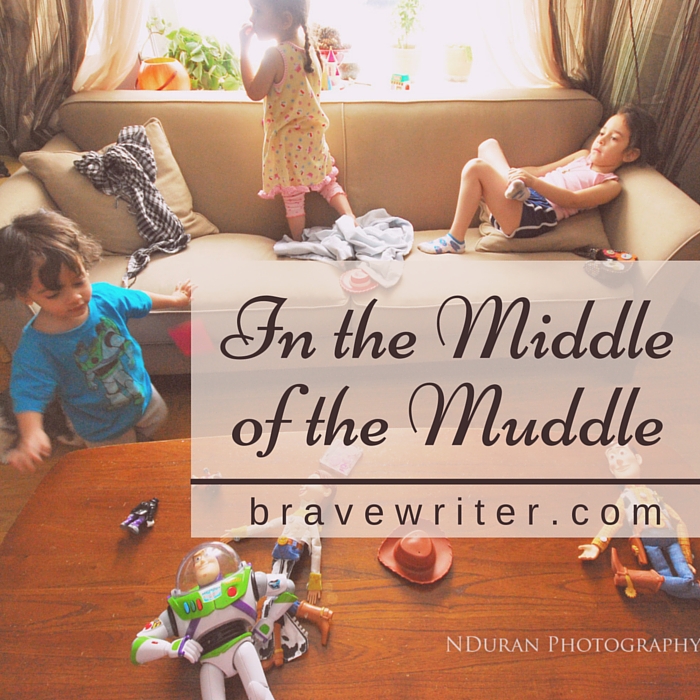
In the Middle of the Muddle

In the middle of the muddle

I had a conversation with Joanna in private message after I posted about my dislike of the word “obedience” in parenting. It was fruitful. I told her that I like hearing from mothers who are “in the middle of the muddle,” because it’s too easy for mothers with older kids (like me) removed from those toddler years to get a bit glassy-eyed about those struggles.

Here’s one of her comments:

“You’re right, I am in the “middle of the muddle” (I like that) — I have five kids, 3-14 (straddling preschool to 8th grade). I think you do an amazing job “remembering” motherhood, but yes… perhaps the earliest years are pleasantly fuzzy, those years when any mom will tell you that a battle of wills is just par for the course. It’s being patient and empathetic in the midst of it that makes the difference, I think. Tonight, in our house, it was “I want to go bed without brushing my teeth.” Well, it’s not a matter of impossibility, danger or hurting someone else… but the answer is still “no” and I didn’t feel badly about that. There was a short melt-down before he came around (this time the tactic was distraction… Blueberries for Sal awaits, hurry!).

“This is the thing… if I thought that his meltdown was evidence that I hadn’t adequately built a bridge of trust, I would feel condemned — just as condemned as if I felt it was due to my unfaithfulness with “the rod.” I think part of sensible little-kid parenting is just embracing that sometimes (lots of times, because preschoolers excel at making requests/demands) you have to say no, that sometimes your sweetheart will be angry/devastated as a result, that sometimes your wills will clash, but that at the end of the day, love can win and you can come out friends. I love the vision you communicate of coming alongside, of coaching, of understanding and empathizing and saying “yes.” I think it works with older kids and I think it works with schooling. I’m just concerned that it has the potential to create more condemnation when applied (without qualification) to little ones — and I know that’s the farthest thing from your heart.”

I responded to her and want to develop those thoughts.

The key is being mindful and attentive.

I don’t know what you’re like in your home, but what you share here is careful and kind. I agree about the love covering the “no’s.”

One of the things I had to learn (as a highly empathetic mother) was how to support a child in taking greater and greater responsibility. What happens for less empathetic parents is they have to learn how to let go of more and more control.

These are the two axes of mothering—either too much “control” or too much “understanding.”

One of the tricky parts of reading about parenting is the tendency of all the advocates of any one style to act as though a “pure” system will cover all personalities and family dynamics. That turns out not to be true.

What works is to be attentive, to be willing to be wrong, to trust your hunches, to at times let things go (after a day at Disneyland with a burnt out child, skipping the toothbrushing is not a big deal one night), to support consistent practice to develop a habit (expecting toothbrushing most every night and finding a way to help that happen)… Parents offer strength (the backbone of good practices) and tenderness (the compassion for childishness and the perspective of maturity).

That balance is one that gets tweaked throughout childhood.

I like to recommend that everyone start with compassion—getting behind the eyes of the child to see the world as that child is currently seeing it. This takes a pause – you have to stop your own racing thoughts to enter into that empty space of observation, without prejudgment.

Once you are there, it’s easier to see what the child needs and what your role should be. If your heart is pounding and you feel anger rising, you are not there yet.

But even when you are being the backbone on behalf of a child who is struggling to take ownership of his responsibilities (no matter how big or small these are), you can be kind.

“We’re going to register for the ACT test now. I’m standing here until you open the browser and I see you logging in.”

That’s different than anger shouted from another room:

“Hey I told you six times to register for the ACT. The deadline is today. I’m not paying for that late fee. It will come out of your paycheck. Now stop that darned game and register!”

Empathy helps you to keep your attitude in check—to realize that childishness (even in big kids!) runs against emerging personal responsibility. You can remember this feeling, if you tap into it. That helps you determine how you will support the growth necessary without caving (“Here, I’ll do it for you”) versus punishment (“You can’t have the car this weekend if you don’t do it”).

Even small children benefit from this kind of empathy + backbone strategy.

“Toothbrushing happens every night. Sometimes we’re going to go into the bathroom singing and laughing and sometimes I may have to carry you in. But I promise to be gentle with your teeth and as soon as you get the hang of it, you can do it all by yourself.”

These ideas all factor heavily into both homeschooling and the teaching of writing, by the way.


The Homeschool Alliance
Image by Nori (cc tinted, text added)

Posted in Homeschool Advice, Julie's Life, On Being a Mother | 1 Comment »


Friday Freewrite: First Friend

Old FriendsImage by Nathan Jones

Your very first friend. How did you meet?

New to freewriting? Check out our online guide.

Posted in Friday Freewrite | Comments Off on Friday Freewrite: First Friend


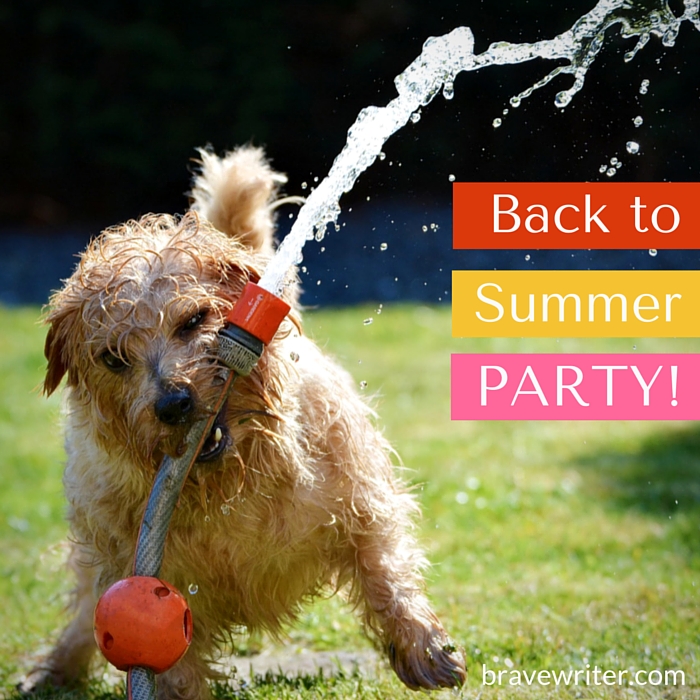
Plan a “Back to Summer” party!

Back to Summer Party

You know how we often hear about “back to school” sales events, or themes? As homeschoolers, learning is far more seamless than the traditional brick and mortar style educations of school. Sometimes you don’t even have an official start and stop date.

Summer, however, is especially welcome with its relaxed schedules, a hospitable outdoors (at least in most places), and new energy for activity.

Use this momentum in your homeschool now. Here’s how.

Plan a party!

Make a guest list (family may be enough, if you have lots of kids, but you can also include a friend for each one, or you can host another family or two).

Pick a date and time. (My bias: daytime is great to take advantage of the wonderful blue skies and sunshine.)

Summer Theme (pick and choose)

  • Blow up beach balls (can work as party favors!)
  • Small wading pool (even if you have older kids – good for splashing and reloading water guns and water balloons)
  • Croquet set (to play!)
  • Badminton net, birdies, and racquets
  • Beach towels to sit on
  • Cheap sunglasses hanging from tree limbs
  • Pails and shovels can hold party favors
  • Nail Polish for pedicures
  • Balloons for water balloon fights (get the right kind – they are their own type of balloon)
  • Nerf Water Guns (ask guests to bring their own, but also supply a few in addition to your family just in case)
  • Everyone wears water-worthy clothing (bathing suits or t-shirts and shorts)
  • A Sprinkler

Games

A free-for-all water fight is always awesome (save til last). Kids can use water guns, balloons, scoopers like measuring cups or big pitchers.

Filling a bucket with water by racing across a preset length of yard, using a teaspoon to carry the water. The most water at the end of the predetermined time limit wins. (Do this in teams, line up and race.

The traditional Water Balloon Toss is always fun! Pair the kids, have them face each other, and on the count of 3—toss the water balloon to the other person. Step back a pace, toss again, on cue. Keep going until one pair is left without a broken balloon.

Water Limbo: A parent holds a hose with a long powerful stream and kids make their way under it without getting wet. The stream of water is lowered each round. You’re out if you get wet. Last one dry, wins!

Non-water games

Not all the games have to be water related. Use the croquet and badminton sets, provide magnifying glasses to hunt through the yard looking at bugs, bring a huge bunch of flowers from the store or your yard and provide tiny vases. Suggest kids trim the stems and make little floral arrangements to decorate the yard. Other ideas:

  • Water colors and paper with an easel
  • Sidewalk chalk
  • Face-painting station with designs
  • Basket of dress up clothes
  • Popsicle-finishing race
  • Music to dance to
  • Fizzy drinks with little umbrellas in them

Preparing a party is a great summer activity. You’ve got hospitality, handwriting, counting, planning, keeping to a budget, shopping, setting up, execution, and clean-up. These are wonderful skills to teach your kids and to experience together. Plus, really fun.

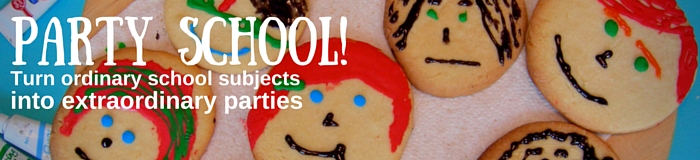
Party School!

Posted in Brave Writer Lifestyle | Comments Off on Plan a “Back to Summer” party!


« Older Entries
Newer Entries »
  • Search the Blog

  • Julie Bogart
  • Welcome, I’m Julie Bogart.

    I’m a homeschooling alum -17 years, five kids. Now I run Brave Writer, the online writing and language arts program for families. More >>

    IMPORTANT: Please read our Privacy Policy.

  • New to Brave Writer? START HERE

  • FREE Resources

    • 7-Day Writing Blitz
    • Brave Writer Lifestyle Program
    • Brave Writer Sampler: Free Sample Products
    • Freewriting Prompts
    • Podcasts
  • Popular Posts

    • You have time
    • How writing is like sewing
    • Best curriculum for a 6 year old
    • Today's little unspoken homeschool secret
    • Do you like to homeschool?
    • Don't trust the schedule
    • You want to do a good job parenting?
    • If you've got a passel of kids
    • You are not a teacher
    • Natural Stages of Growth in Writing podcasts
  • Blog Topics

    • Brave Learner Home
    • Brave Writer Lifestyle
    • Classes
    • Contests/Giveaways
    • Friday Freewrite
    • High School
    • Homeschool Advice
    • Julie's Life
    • Language Arts
    • Movie Wednesday
    • Natural Stages of Growth
    • One Thing Principle
    • Our Team
    • Parenting
    • Philosophy of Education
    • Podcasts
    • Poetry Teatime
    • Products
    • Reviews
    • Speaking Schedule
    • Students
    • Writing about Writing
    • Young Writers
  • Archives

  • Brave Writer is a participant in the Amazon Services LLC Associates Program, an affiliate advertising program designed to provide a means for sites to earn advertising fees (at no extra cost to you) by advertising and linking to amazon.com

    Content © Brave Writer unless otherwise stated.

What is Brave Writer?

  • Welcome to Brave Writer
  • Why Brave Writer Works
  • About Julie
  • Brave Writer Values
  • Frequently Asked Questions
  • Speaking Schedule

Brave Writer Program

  • Getting Started!
  • Stages of Growth in Writing
  • The Brave Writer Program
  • For Families and Students
  • Online Classes
  • Brave Writer Lifestyle

…and More!

  • Blog
  • Classroom
  • Store
  • Books in Brave Writer Programs
  • Contact Us
  • Customer Service
  • Brave Writer Staff
© 2026 Brave Writer
Privacy Policy
Children's Privacy Policy
Help Center