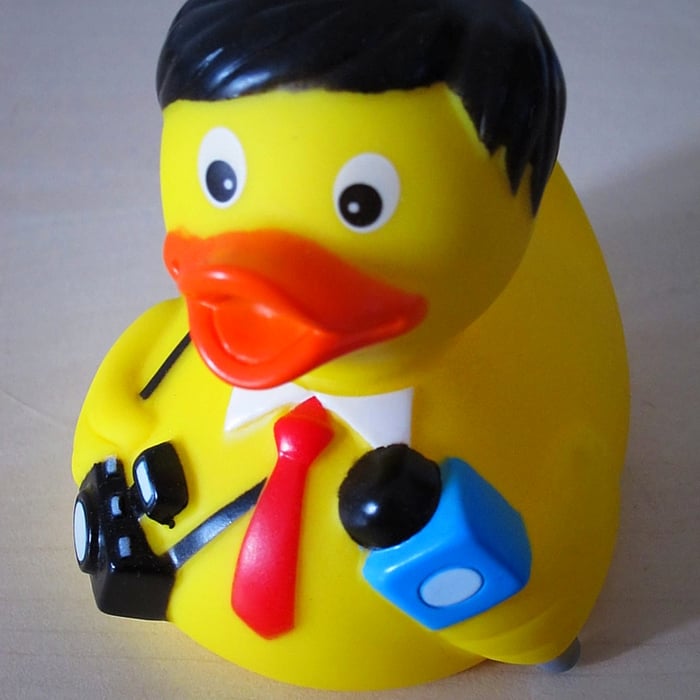
What if your favorite toy interviewed you? What questions would be asked and how would you answer? Or turn it around and interview your toy.
New to freewriting? Check out our online guide.
Image by Keith Williamson (cc cropped, tinted)

What if your favorite toy interviewed you? What questions would be asked and how would you answer? Or turn it around and interview your toy.
New to freewriting? Check out our online guide.
Image by Keith Williamson (cc cropped, tinted)
It’s easy to get turned around by all the various strategies for managing this unruly beast: the two horned monster of homeschool and child-rearing. Like most homeschoolers, I meandered between a variety of programs, plans, and philosophies, trying them out. When my kids were small, I plunged into the curricular zeitgeist of the day: KONOS. It was a kinesthetic curriculum that focused on developing character as it taught academics. Tall order for my little rascals! We loved it, though. From the start, we immersed ourselves in activities paired with school subjects. We made a model of an ear canal using a turkey baster, cookie sheets, and rubber hoses. We held a Japanese luncheon for neighbors making tempura, sitting on cushions at a low table, and putting chopsticks in our hair buns!
The pattern of making our learning hand’s on was firmly established. It became my primary objective: to see if I could coax a school subject into an activity or set of activities. For instance, I remember when we read Farmer Boy, we served pie for breakfast alongside both ham AND bacon. Eggs and pancakes too. It was a feast of yumminess followed by a food coma which sent the morning’s math lesson out the window.
When Johannah fell in love with American Girl Dolls, she started a club with her best homeschooling friends. Each one picked a doll and each family hosted a party with foods, dress-ups, crafts, and games suited to the doll and period in history. When we fell in love with the night sky, my best friends and my family created a solar system teatime after dark—complete with star cut-outs of cheese and crescent moon apple slices. The oldest daughter from the other family came dressed up as Jupiter, bearing a painted red eye. We read poetry and sang songs.
Homeschooling does include skill building. There are a gazillion suggestions (official count) from every quarter about how to manage these necessary tasks, particularly in large families. Try them all! See which ones fit. But remember: this year’s solution may lose traction next year. Or, what makes one child feel secure and successful makes another child feel oppressed. And even more baffling: the moment you subdue the loose threads of housekeeping, car trips, and homeschool into your neat binder, it may all unravel due to ticks, the flu, or an unexpected hail storm!
It’s maddening! And exhilarating. I wouldn’t rob you of the journey and all you will learn on your own.
The truth is: our homeschools wind up looking like us for better or worse. I’d say: for better. It can’t be helped! I have friends who are homeschool parents and both are in the medical field. One is a transcriptionist for a laboratory and the other supervises medical tests for P&G products. Is it shocking that their three kids are now a doctor and two nurses? No. Is it surprising that my kids are into foreign languages, reading, writing, the Internet, and Shakespeare? Um, no.
Indulge what you are good at, right in front of your children, so that they may carry on the family genetic dispositions with even more competence than you had! It’s one of the ways we make the world better. Play with homeschool philosophies the way your kids play with soccer balls—kick them around, aim them for the goal, pass them off between children, and then take a rest and see if you want to do that again.
There’s no formula that works for everyone—every homeschooler or every child. But somewhere in all that investigating and cheerful exploration is your homeschool! Relish it!

What is being learned, exactly, when your kids walk with you on a trail in the woods?
What’s educational about visiting Disneyland or the zoo with an annual pass?
Is there educational benefit to meandering through a farmer’s market or picnicking by a pond?
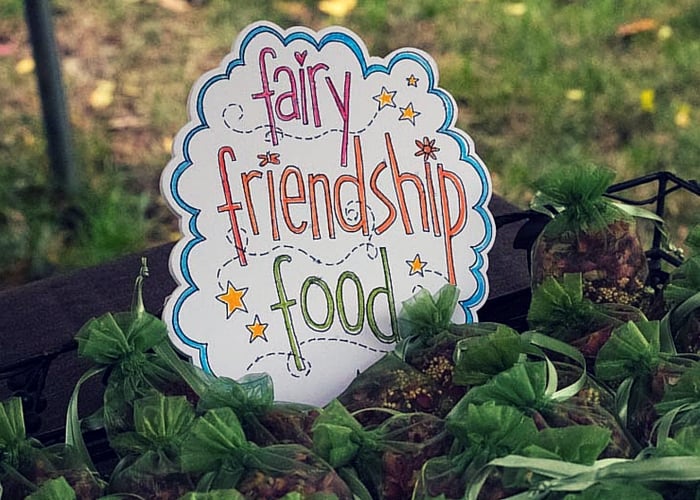
I remember days of enchantment. There was the afternoon my girls made fairies out of fabric and pipe cleaners. They created little houses out of leaves and sticks, and then planted the fairies in their homes in the nooks and crannies of tree branches and bushes.
Our little homeschool brood took trips to the art museum so frequently, each child had a favorite painting. The quiet, the color, the high ceilings, the Chihuly chandelier, the post cards in the gift shop… magical.
In those outings and experiences, time moved molasses slow, deliberately, peacefully (for the most part), with pleasure and focus.
And yet…were these outings, these experiences ‘educational’?
I’m certainly not the first home educator to strip an event of magic through ‘adding information.’
Fairies? Here’s a book about the history of fairies. The act of making little houses isn’t enough. We need information to legitimize the craft. Let’s read, narrate, and discuss fairies, and then write about it.
The woods? Shouldn’t we pluck wild flowers (by name) or make bark tracings or compare birds to a field guide? We walk quietly, together. Is pleasure and fresh air enough? Surely not! Here—use these binoculars, draw this tree, note the temperature in your notebook.
We can’t quantify them. Books and records ruin the spirit—the shared purpose, invisible, intangible, yet felt by all.
The enchanted education. Collect these moments like treasures.
Set them on a shelf in your heart—the time you all soaked your tennis shoes in the tide pools; the trip to the frozen yogurt stand that led to sitting side-by-side on a wall in the sunshine; the weekly visit to the zoo where the lions and tigers nearly became your family pets.
You can’t say or know what is being learned. You know it by heart, by feel, by love, by pleasure, by shared memory.
These little wisps of attentive focus without an intended program lay the rails for so much learning that is by the book. It’s just that you won’t always see the correlation—because this is a work happening on the interior, person by person, connection to connection, created through peace.
The threads of happiness and opportunity, creativity and exposure in outings and long stretches of focused attention forge connections, invisible to you. Education results.
For more about an Enchanted Education, watch the broadcast below
or check out my book, The Brave Learner
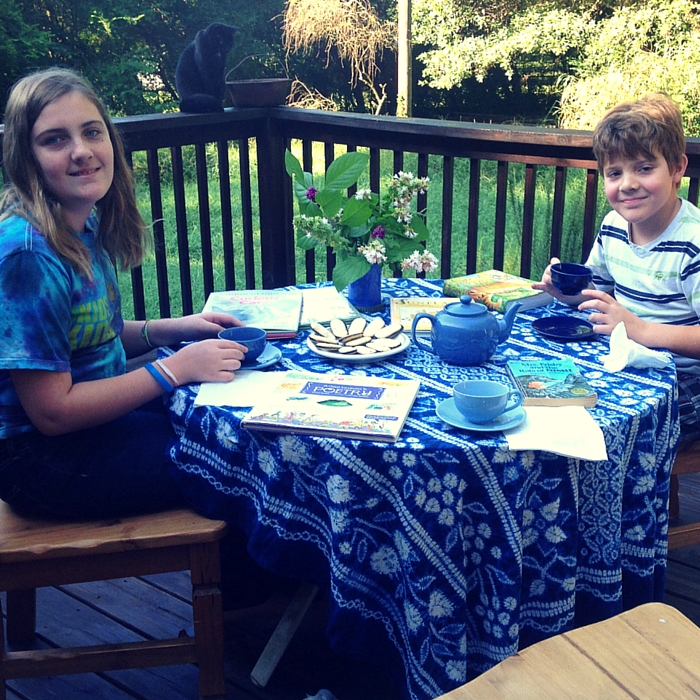
Thanks so much for inspiring us to tea time! Here are the kids at our first. They chose a theme and read poems about cats while one of ours joined in.
We were eating Peppridge Farm cookies, which I had carefully hidden in the pantry. I knew homemade was not going to happen and these were a great treat. In the pot – hot chocolate.
John, 9, read The Owl and the Pussycat. Hannah, 11, read The Cats Have Come to Tea by Kate Greenway. I have had a lot of fun keeping my eyes open for poetry books with illustrations at used bookstores and library sales, and they opened one called Curious Cats in Art and Poetry.
I read a poem about fairies and then went on with our read aloud. I didn’t really think the kids were that enthralled at the time, but later comments about how much they loved the teatime really encouraged me to keep this up. It was a lovely break from more traditional activities. The animals loved it, too!
My husband has sweet childhood memories of reading poetry as a family at holidays, so I hope the kids will enthusiastically participate this Christmas.
Kristin

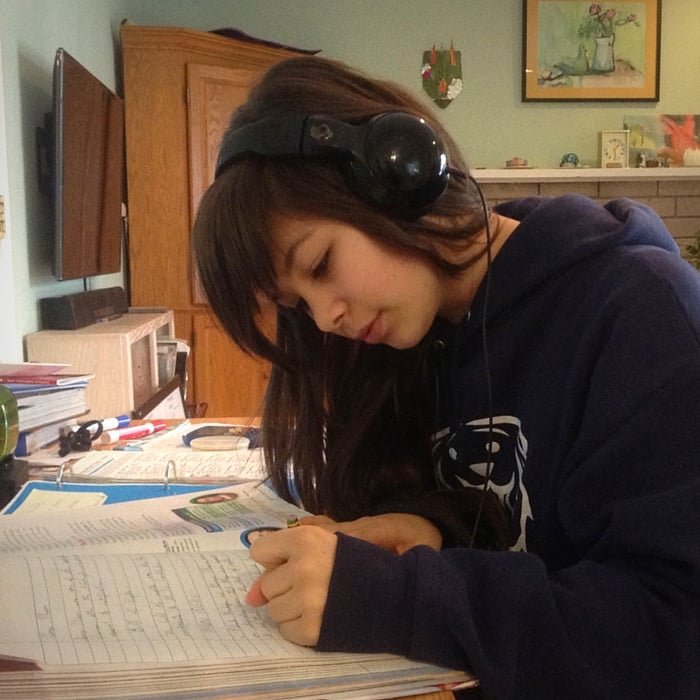
It’s difficult to draw out a quiet young person who is determined not to share.
A quiet teen might keep a literature journal where she records her thoughts about the books she’s reading (like in response to Boomerang questions) that she keeps privately. Perhaps she can select and share 2-3 of her responses with you at the end of the month (and not share others).
Is your teen’s goal college? Perhaps ask him how he is preparing for that experience. Sometimes kids are surprised when we turn the tables gently. You might say something like, “You’re in your junior year. I’d love to know how you are planning to prepare for college and where you’d like to apply. Let me know when you need help.”
Then back away. See what happens. I remember a counselor saying to me about Noah: He’s already formed at 16. Now it’s time for him to feel the responsibility of his fully formed self.
It was difficult to let go (and I went back on that deal several times before he moved out at 18). But I did get there and saw with my younger kids that by 16, they really were in charge of what they were getting out of their educations.
I hope that helps. No magic here. Just empathy for the challenge.
Top image by Brave Writer mom Andrea