Isn’t this fun? I am loving our new season of the podcast. In Week 3, we went over 17,000 downloads. Whaaaat?! Thank you. So glad the podcast is meeting a need.
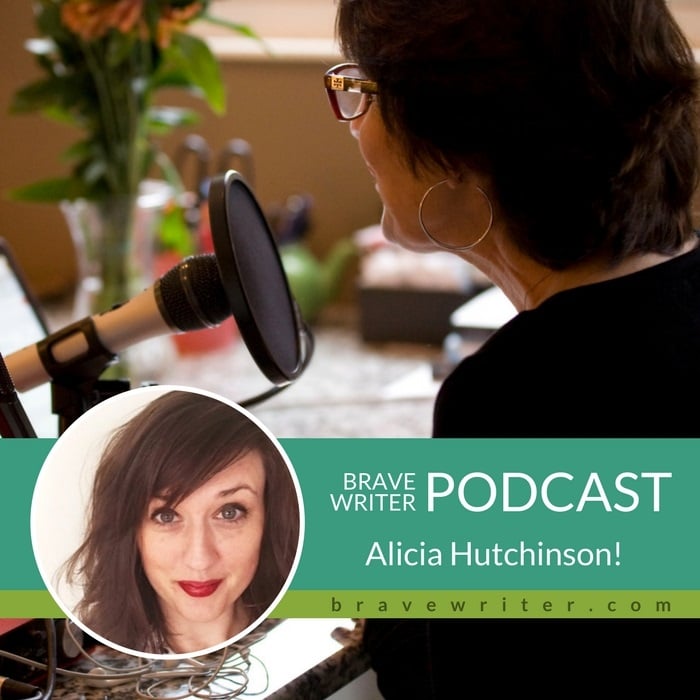
The wonderful Alicia Hutchinson is up next. She’s a powerhouse of support and help to homeschoolers. Her community called “Learning Well” offers parents practical imaginative ideas to create a great homeschool experience without fussiness or the scourge of perfectionism.
The funny thing about Alicia is that she never really saw herself as a mom – much less a homeschooling mom. Now she can’t imagine life without homeschool. She blends her natural artistic flair with curiosity and creativity to engage her children. Her Instagram feed is also gorgeous! Be sure to follow her (@learningwell).
Want to be notified when a new podcast is released? Sign up here.
Would you please post a review on Apple Podcasts for us? You’ll help a homeschooler like you find more joy in the journey when you do. Thanks in advance!
[This post contains Amazon affiliate links. When you click on those links to make purchases, Brave Writer receives compensation at no extra cost to you. Thank you!]
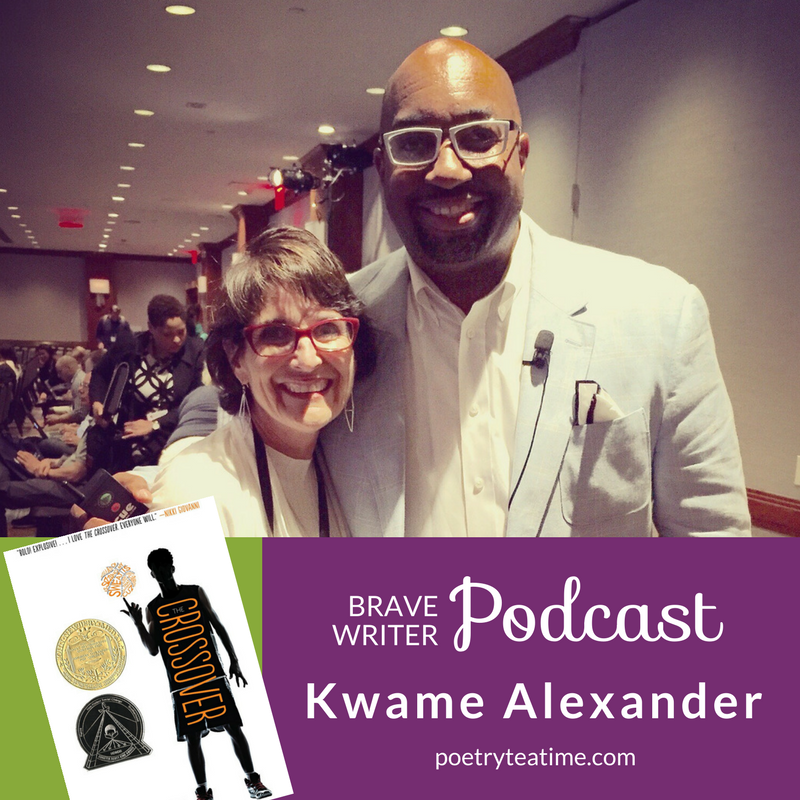
We have a BONUS podcast for you! We had the opportunity to chat with Kwame Alexander, the Newbery winning poet whose books are turning a whole generation of Internet gamers and readers into true-blue lovers of poetry!
We featured Kwame’s book, The Crossover, in February’s Boomerang Book Club. It’s is a coming-of-age story told through a mix of free verse and hip-hop poetry that uses basketball as its subject. Publishers turned down Kwame’s book proposal dozens of times. I asked Kwame about it in the interview. His answer is hilarious! You’ll want to hear it.
Tune in to the Brave Writer podcast on Apple Podcasts, Stitcher (or your app of choice), and also here on the Brave Writer blog. Please post a review on Apple Podcasts!
One more thing! Brave Writer offers a Boomerang (the language arts tool that uses living literature to teach writing mechanics and literary devices through copywork and dictation) specifically for The Crossover. You can purchase it now as a single issue. Geared toward 7th to 10th graders, this Boomerang pops and sizzles with a wild variety of punctuation choices, font sizes and styles, and rhythmic language.
Posted in Boomerang, Podcasts | Comments Off on Poetry, Sports, and The Crossover with Kwame Alexander
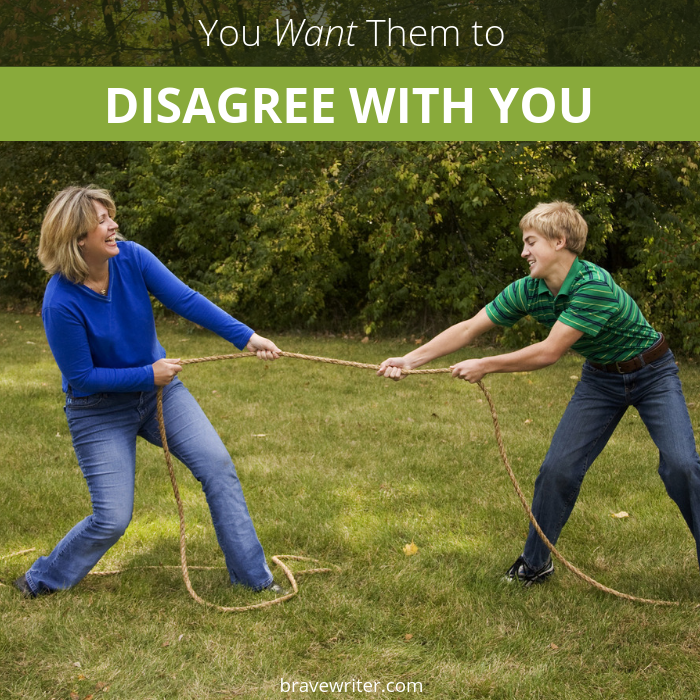
When you get that inevitable push back to your great ideas from one of your kids, the initial energy surge is, well, about like this:
“Wait, what? Why are you not cooperating with my genius plan for your life? If you simply do as I say, we will all be happier.”
Your “genius plan” includes a whole slew of practices and beliefs that wind up in disputes with your kids. You might ask them to:
Wear shoes rather than slippers to the store
Hang up coats before they sit to watch TV
Agree that brushing teeth prevents cavities
Choose to go to bed before 3:00 am without nagging
Realize that the family can’t add two ferrets to the pet menagerie
Accept the family budget limits; no big dreams
Enjoy G rated films rather than PG and R films
Support the family politics and religious viewpoint
Date the right people
Eat the food the parent prepares even if the child doesn’t like it
Help around the house without ever being asked
Finish every book, even if the child loses interest
Complete assigned schoolwork without ever complaining
Suck it up when having a bad day
Reserve silliness for the “appropriate” times
Put on a jacket because it’s cold
Never argue with a sibling
Always show gratitude properly to everyone
Be polite, kind, and generous no matter what
… you can think of more.
These seem like perfectly reasonable requests of a child—until you see them in a list… And then, don’t they feel like a straight jacket of good manners and expectations rather than the organic growth of a human soul? Is it possible to be kind, polite, cooperative, and helpful all the time, every day, no matter what? Yet this is what we ask!
Kids know (intuitively) that they grow when they challenge authority, when they ask big questions, when they resist what doesn’t feel right to them. They push back not to make a parent’s life miserable. They push back to explore the boundaries of the ideas that inform the request.
For instance, why is it better to hang up a coat when you first get home rather than an hour later after watching TV? Is one choice morally superior? Is one action more necessary? According to whom?
If we pause and consider why a child resists our plan, we discover that a whole different calculus is at work. The child has different priorities—and these priorities make a natural, personally-arrived-at-sense for the child. The choice to “civilize” a child into the family standards can be experienced as stifling, as nonsensical, as irritating.
When kids have had too many commands in a day, sometimes the child simply picks the latest one to resist, “But why? Why does it matter when I hang up my coat?” This question feels like disrespect when in fact it is the self standing up and asking to be noticed.
We respond, “Don’t try to get out of it.”
We say, “Coats need to be hung up immediately or you will never do it and then I get stuck with the task.”
We chide: “I’m tired of your stubbornness.”
We give up: “Fine. Leave it out. See if I care.” (Except that we do.)
What’s needed is engagement! Think instead: Aha! There’s a child thinking, processing, wondering.
“Good question! I like it when we hang up coats because it keeps the house a little neater for me and I am a nicer mother when my field of vision isn’t cluttered with stuff. How do you see it?”
If we share our truth and then invite comment, we give our children a chance to witness our own priorities and how we came to them. We allow them to mull over their own. It’s so tempting to play parent rather than to connect!
When your child challenges the plan, pause and remember: This brilliant child of mine is using her mind, is exercising his will and choices. Draw them out—”Tell me more about why you believe tooth-brushing is a waste of time and doesn’t prevent cavities. I want to hear more about where you learned that and why you believe it.” Then really listen!
Big debates on topics of moral importance to your family go much better if you’ve cultivated a habit of listening to your child’s pushback in the early years over things like bedtimes, jacket wearing, and what to eat for dinner.
Children and teens become self-regulating when they are allowed to challenge parental regulation. BoomRight? How are they self regulating if we tell them what to do ALL the time? The only way they learn how to form their own priorities is if we take them seriously when they tell us what those are!
If a child isn’t polite or doesn’t say thank you? What happens? What does that child experience? Sometimes they need to find out through action, not blame and shame.
A child who wants to stay up until 3:00 am to play an online game with a friend in another time zone is creating a new life habit—going to bed later, sleeping in. Is it worth it to find out if this is a boon to that child’s happiness and thus life before considering it from a parent’s point of view? We’re so quick to say, “You’ll be too tired tomorrow. So no.”
Your kids grow in direct proportion to how well you allow them to explore their own understanding of why they do what they do.
The more children get to expose and articulate their own thinking, the more power they have to create meaningful lives. They may not always side with your interpretation of what creates a great life, but they will be better able to negotiate with you when they know that you respect their efforts to communicate their own vision.
Next time one of your kids argues with you, stop and think: “This is great! I see a mind at work. I must be doing it right.”
Then enter into the conversation with curiosity and love.
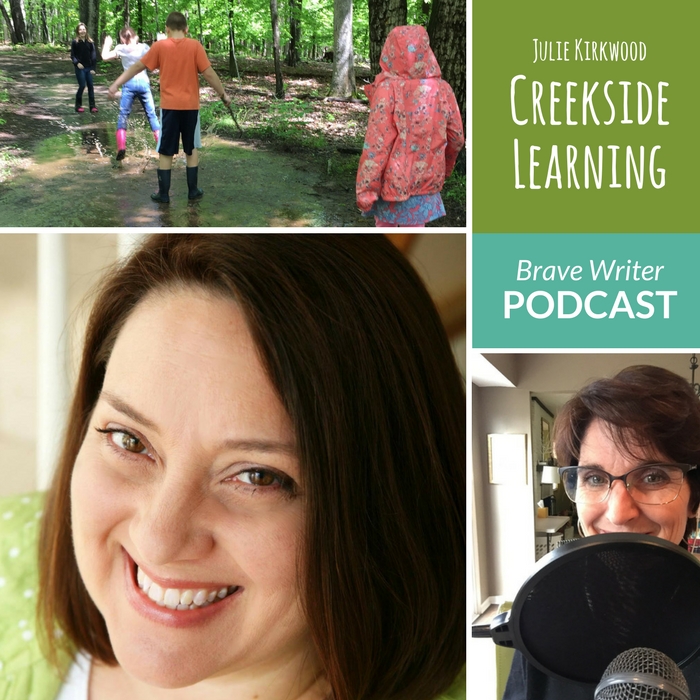
On today’s podcast I sit down to discuss how the Brave Writer Lifestyle draws on diverse experiences to provide excellent home education.
Julie Kirkwood, our guest, is a mom to three kids who believes in the value of curiosity, exploration and a daily dose of nature in her homeschool world. She created the fantastic home education website Creekside Learning.
Creekside Learning is a space to share STEM and Naturalist learning resources for adventurous kids, as well as inspiration for homeschooling parents.
Julie also shares a number of tools that she and her children developed, including Positive Thought Cards. They are positive affirmations for learning that can act as a reset button when you get to a point where learning stops. It’s a unique, effective tool. And it’s FREE until through Feb. 28, 2017—Learn More!
Want to be notified when a new podcast is released? Sign up here.
Would you please post a review on Apple Podcasts for us? You’ll help a homeschooler like you find more joy in the journey when you do. Thanks in advance!
Posted in Brave Writer Lifestyle, Podcasts | Comments Off on S2E3: Homeschooling Diverse Children Through Diverse Experiences – with Julie Kirkwood
Brave Writer is a participant in the Amazon Services LLC Associates Program, an affiliate advertising program designed to provide a means for sites to earn advertising fees (at no extra cost to you) by advertising and linking to amazon.com