A Brave Writer's Life in Brief - Page 100 of 783 - Thoughts from my home to yours A Brave Writer's Life in Brief
  • Start Here
    • For Families
      Multiple Ages
    • Ages 5-7
      Beginning Writers
    • Ages 8-10
      Emerging Writers
    • Ages 11-12
      Middle School Writers
    • Ages 13-14
      High School Writers
    • Ages 15-18
      College Prep Writers
  • Shop
    • Product Collections
    • Bundles
    • Writing Instruction Manuals
    • Literature & Grammar/Punctuation
    • Composition Formats
    • Literature Singles
    • Homeschool Help
    • Book Shop
  • Online Classes
    • Class Descriptions
    • Class Schedule
    • Classroom
    • How Our Classes Work
    • Our Writing Coaches
    • Classes FAQ
  • Community
    • Brave Learner Home
    • What’s Happening
    • Blog
    • Podcast
    • Calendar
  • Cart
  • My Account
    • My Online Classes
    • My Account
  • My Account
    • My Online Classes
    • My Account
  • Start Here

    If you’re new to Brave Writer, or are looking for the best products for your child or family, choose from below:

    • For Families
      Multiple Ages
    • Ages 5-7
      Beginning Writers
    • Ages 8-10
      Emerging Writers
    • Ages 11-12
      Middle School Writers
    • Ages 13-14
      High School Writers
    • Ages 15-18
      College Prep Writers
  • Shop

    If you’re already familiar with Brave Writer products, go directly to what you’re looking for:

    • Product Collections Browse the full catalog in our shop
    • Bundles Everything you need to get started
    • Writing Instruction Manuals Foundational Writing Programs
    • Literature & Grammar/Punctuation Grammar, Punctuation, Spelling & Literary Devices
    • Composition Formats Writing Assignments for Every Age
    • Literature Singles Individual Literature Handbooks
    • Homeschool Help Homeschooling Tools and Resources
    • Book Shop Books associated with Brave Writer Programs
  • Online Classes
    • Class Descriptions
    • Class Schedule
    • Classroom
    • How Our Classes Work
    • Our Writing Coaches
    • Classes FAQ
  • Community
    • Brave Learner Home
    • What’s Happening
    • Blog
    • Podcast
    • Calendar
  • Search
  • Cart

Search Bravewriter.com

  • Home
  • Blog

A Brave Writer's Life in Brief

Thoughts from my home to yours

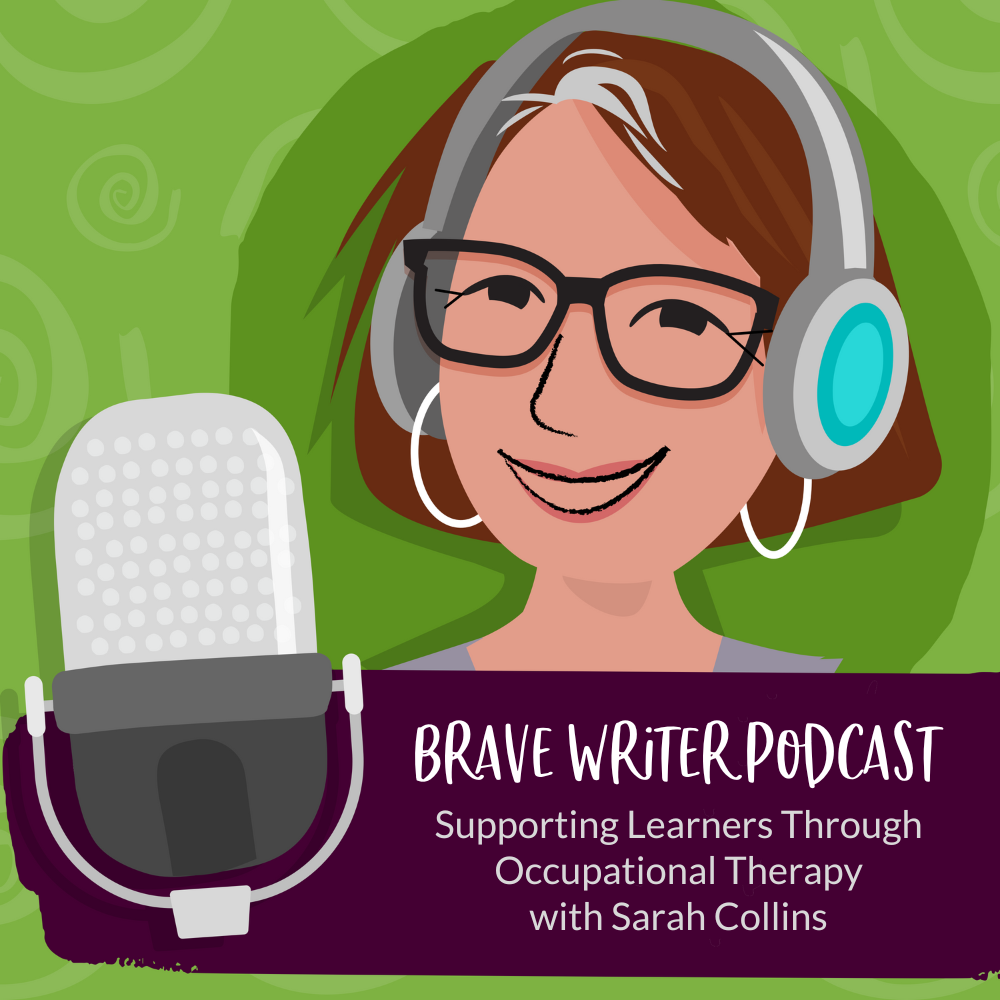
Podcast: Supporting Learners Through Occupational Therapy with Sarah Collins

Brave Writer Podcast

Dive into a captivating conversation with our special guest Sarah Collins, a skilled occupational therapist turned homeschooling consultant. I met Sarah, known for her lively and engaging conversations, at the Michiana Homeschool Conference and there began an insightful dialogue about the powerful impact of her work.

Sarah shares her transformative journey from being introduced to homeschooling in 2016 while working with a client, to pioneering Homeschool OT in 2019. She uncovers the rich learning environment homeschooling offers and how this unique educational model motivated her to homeschool her own family.

Ever been perplexed about how to homeschool your children effectively? You’re not alone. Sarah shares how she identified with parents who grappled with similar questions. It’s this shared struggle that spurred her to use her expertise to consult with homeschooling parents around the globe.

Sarah Collins
Sarah Collins

In the context of homeschooling, we discuss:

  • handwriting,
  • sensory processing,
  • and executive function.

Prepare to gain comforting insights that will ease the journey of families with non-traditional learners.

Show Notes

Understanding the Role of an Occupational Therapist in Learning

An Occupational Therapist (OT) is a crucial figure in the field of education, particularly in homeschooling. The term “occupation” is not solely focused on professional work; it represents all activities that occupy one’s time, such as daily living activities, work, leisure activities, and so on.

OTs provide valuable insights when an individual experiences difficulties in their occupation. They focus on resolving these issues by addressing individual skills, environmental factors, and the occupation itself. This process extends beyond physical skills to encompass social, cognitive, and motor skills as well.

Consider handwriting, for example. To encourage a child to learn this skill, it’s essential to focus on the foundational skills that need to be in place: core strength, fine motor skills, visual motor skills, and motor planning. But above all, it’s crucial to help the child understand the value of the written word and its implications. For instance, documenting a child’s thoughts in a journal can underscore the importance of their words, keeping them motivated.

Recognizing When to Seek Help

Learning challenges are unique to each child, and it’s important to notice when your child’s behavior is obstructing their desired activities. If your child exhibits a strong desire to master a skill but consistently struggles with it, it may be time to seek professional help.

When it comes to handling learning difficulties, there’s no one-size-fits-all solution. The strategy should be customized to the individual child’s needs. Remember, homeschooling is not “alone schooling”—you can always reach out to professionals and build a supportive team.

Creating a Tailored Plan Around a Child’s Diagnosis

Once you have a diagnosis, it can be used as a launching pad to create a specialized learning plan at home. This plan could include a range of activities from targeted therapies to changes in the home environment.

For example, to support vision development and reading ability, you could arrange games on a shelf from left to right to promote visual scanning. Other methods could involve writing on vertical surfaces or using different writing implements. Even daily activities such as grocery shopping or hiking can be used to practice visual scanning.

John Stilgoe’s “Outside Lies Magic” is a recommended resource that encourages the reader to observe and notice things in their environment that they typically overlook. These practices can enhance reading skills, observation, and working memory.

Enhancing Fine Motor Skills Through Fun Activities

Fine motor skills can be developed outside the confines of pencil and paper. Activities like writing on a window, climbing trees, jumping, and crawling can all contribute to the development of core strength and shoulder stability.

Additionally, cleaning activities like wiping floorboards are functional ways to help a child move, provide sensory input, and contribute to family chores. Engaging in physical activities like playing on monkey bars or Leapfrog can also be beneficial for learning and development.

Taking a Person-Centered Approach to Learning

Rather than focusing on skills, a person-centered approach makes the learning process more enjoyable and relatable. This strategy involves observing children to understand their individual needs and desires and adjusting the teaching approach accordingly.

A person-centered approach celebrates the uniqueness of each learner and their interests. It ensures that learning becomes an enjoyable process, not a burdensome chore.

Reaching Out for Help

As parents and educators, we don’t have to navigate these challenges alone. Websites like HomeschoolOT.com offer valuable resources, including blogs, classes on various topics like handwriting, sensory processing, and executive functioning, and even memberships for live weekly sessions.

Remember, every child’s learning journey is unique. As we tailor our approach to their individual needs and strengths, we create an environment that promotes joy and excitement in learning.

Resources

  • Learn more at homeschoolOT.com
  • Instagram: @homeschoolOT 
  • Facebook group: www.facebook.com/groups/homeschooltherapyideas
  • Start a free trial of CTCmath.com to try the math program that’s sure to grab and keep your child’s attention!
  • Begin your bilingual adventures by visiting TalkBox.Mom/Brave. Choose your language and use the coupon code BRAVE for $20 off your first box and phrase book bundle. Start talking from day one with TalkBox.Mom and add a whole new language dimension to your brave journey!
  • Sign up for our Text Message Pod Ring to get podcast updates and more!
  • Send us podcast topic ideas by texting us: +1 (833) 947-3684
  • Want help getting started with Brave Writer? Go to bravewriter.com/getting-started
  • Sign up for the Brave Writer newsletter to learn about all of the special offers we’re doing in 2022 and you’ll get a free seven-day Writing Blitz guide just for signing up: https://go.bravewriter.com/writing-blitz

Connect with Julie

  • Instagram: instagram.com/juliebogartwriter
  • Twitter: twitter.com/bravewriter
  • Facebook: facebook.com/bravewriter
Brave Writer Podcast

Posted in Podcasts | Comments Off on Podcast: Supporting Learners Through Occupational Therapy with Sarah Collins


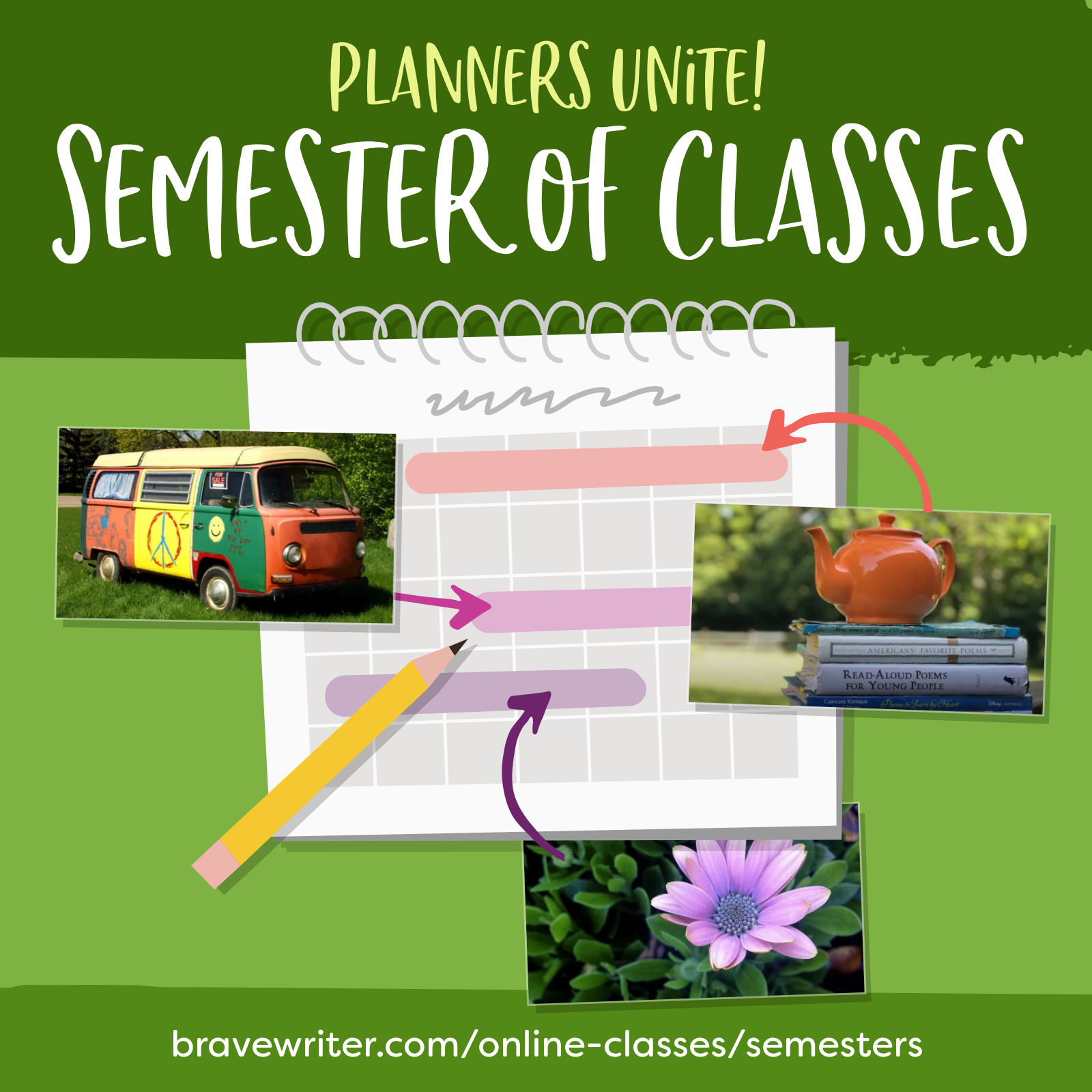
Semester of Classes!

Brave Writer Semester of Classes

You love:

  • Our individualized instruction
  • Freedom to log on “whenever”
  • Our radical, compassionate approach
  • Methods that reflect the latest research in education

You want:

  • A ready-made plan
  • Consistent progression in skill building
  • Less guesswork in picking classes
  • Discount for multiple registrations

Picture me, waving my fairy godmother wand! Bippity boppity boo, we hear you!

Introducing our FULL SEMESTER OPTION for online study at Brave Writer!

Now you can register your child into one cohesive plan, semester by semester.

We’ve mixed and matched to curate the perfect combinations of:

  • Solo, partnership, and family participation
  • Core and interest-based classes
  • Classes built around individualized needs

Just pick and click!

No rush on registration day! No stress to find dates that fit all the classes you want to take. No worries if you picked the right ones. Each semester plan takes care of that for you. 


How It Works

  • Keep an eye out for when the Semester of Classes offer is available (during the weeks before a class registration).
  • Visit our semester page.
  • Choose the age level appropriate for your child.
  • View your options!

Most importantly: put your feet up and let Brave Writer take care of the rest!


Brave Writer Semester of Classes

Posted in Online Classes | Comments Off on Semester of Classes!


Friday Freewrite: Hide or Seek?

Friday Freewrite

When playing Hide and Seek, would you rather be the one who hides or the one who seeks (or neither…or both!)? Explain your answer.

New to freewriting? Check out our online guide.

Tags: Writing prompts
Posted in Friday Freewrite | Comments Off on Friday Freewrite: Hide or Seek?


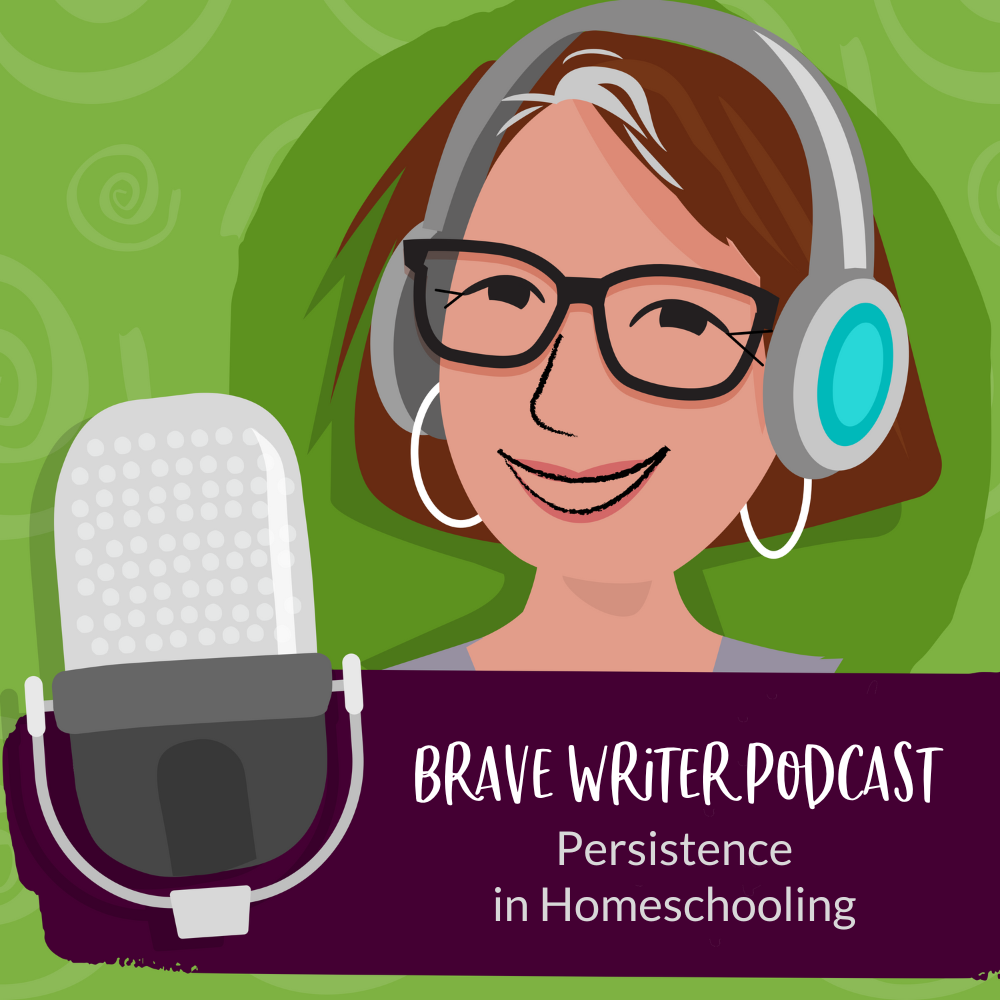
Podcast: Persistence in Homeschooling

Brave Writer Podcast

On today’s Brave Writer podcast, we discuss a topic that I believe is fundamental to the homeschooling journey: persistence.

Regardless of where you are in your homeschooling adventure—whether you’re still contemplating the idea, just embarking on your first year, already ten years deep, or even approaching your final year—it’s essential to understand what it takes to persevere.

My most frequently shared piece of advice is a simple but powerful one: “Keep going, keep going.”

But how exactly does one maintain momentum? How do we cultivate persistence?

Let’s explore this together today.

Show Notes

How do you persist in homeschooling?

Persistence has to do with having enough resources and training to be able to carry out an objective or goal. Leah talked about having a purpose as the undergirding foundation of your homeschool. We have to know why we are choosing to stay home with our kids. Once we do, then we want to create a context for how we create the conditions for learning to happen.

Naturally, we want:

  • serenity,
  • joy,
  • and intimacy.

We want to learn and grow. We want our children to WANT to be home with us, to want to learn, to want us to be their companions on the journey.

The trick is: we sometimes expect our kids to want all of what we offer even when they don’t. We blame them for not wanting to learn or cooperate or behave. We don’t think about what we can do to create the conditions for learning to thrive.

Sometimes we don’t notice that we are persisting with our wills but not with our hearts. And that’s okay: our job is to just notice, not to shame ourselves.

Take a moment to remember what it felt like to be a kid in your home. What is the lingering felt experience? What is the experience you want for yourself now? What is the experience you hope your children take away from being home with you?

We can’t pretend a healthy home life into being. Persistence depends on honesty because to sustain a homeschool, we have to like our lives together.

First, it must be understood:

The priority of school is: achievement.

Achievement means matching the expectations of the school system. We feel it as a shadow in the background no matter how well we lead our homeschools. We wonder: Have I done enough? How do I know that what I’m doing is preparing my kids for the future? I know—I’ll measure myself by schools! But there’s a problem with that. The measures in school come through assessments. That doesn’t work in the same way at home.

The priority of home is: connection.

Everything you want to accomplish can be accomplished through connection. Connection IS the priority of your homeschool. It is your top priority of family life. Through connection, you can address every single need for achievement!

To persist means to create the framework that allows you to pivot, grow, and immerse yourself in your children’s education.

So let’s dive into what those conditions are. I am going to talk about 6 concepts that all start with the letter C.

  1. Compassion: We are usually good at compassion for struggle. What about compassion for lost drive, for changed mind, for losing one’s nerve, for outbursts of anger, for sneaking, for lying, for breaking the rules? What would it be like to be loved and known for our limits, not just for our strengths?
  2. Collaboration: I talk a lot about partnering—the essential to great mentorships is the presence of the mentor! We don’t “get a mentor” so that we can work independently! We ask for mentors and coaches specifically to have the presence of the person who will teach us, help us, lead us. Being with our kids helps sustain our joy in homeschooling—ironically. The more we disengage, the more we lose the thread of why we are doing what we do. If you get to the point where being in your homeschool as an active mentor is no longer your priority, it’s important to notice that and either: admit you are done, or reconceive of your homeschool to make it vibrant again.
  3. Communication: Not the sterile, perfectly worded kind. The honest kind. The “I can’t take it any more” kind or the “I’ve been blaming you and I’m sorry” or the “Looks like we’ve got a conflict in our expectations. Can we talk about it?” (Share about the “Art of the Sulk.” When we sulk, we are communicating that we need support and a place to confidentially express our lack of motivation. Sulking is a safe way to express disapproval and discontent)
  4. Creativity: Considering ideas that are currently not apparent. You can wait for creativity to come. One idea is to say: “Right now, I don’t know how to address how much you hate math and how much I feel you must learn it. Let’s give it a week and see if a new idea comes to either of us.” Await creativity—the muse—to help you! Open space for an alternative to your current “not working” practice. Be open-minded.
  5. Cognition: When we engage the mind, we create the context for learning. When you see disconnection in subject matter, it means the mind has not yet apprehended the topic enough to muse, mull over, ponder, consider. Give your kids the chance to engage a subject that is currently “caught the blahs” by finding ways to engage the mind.
  6. Consistency: Consistent connection is what creates the predictability of emotional safety. Many parents worry about their ability to be consistent. I hear from them. They worry that their children don’t have a perfectly routine schedule or that they are getting behind because the child regularly balks at doing a particular subject. There are a couple ways to be consistent that I want to share. There’s a predictable pattern (like a routine) and there’s a randomly created pattern (like a bingo card).

Citing the wisdom of T.S. Eliot, William May tells the story of a student pressing the poet with a question following his lecture, “Mr. Eliot, what are we going to do about the problem you have discussed?”  To which Mr.Eliot replied, “You must understand that we face two types of problems in life.  One kind of problem provokes the question, ‘What are we going to do about it?’  The other kind poses the subtler question, ‘How do we behave towards it?’” (May, 3)

The first type of problem evokes strategies and tactics so the problem can be solved – so it can “go away.”  The second admits of no solution because the problem will not go away: “The problem will persist.  It requires behavior that sensitively, decorously, and appropriately fits the perduring challenge…. it demands a response that resembles a ritual repeated more than a technique” (May, 4).

The shift is important—not all the troubles you experience in your homeschool need to be done away with. You and your kids have limits.

The enemy of a healthy home is pretense. We pretend that we have a certain kind of family. We pretend we aren’t worried. We pretend that we have solutions in six easy steps. We pretend that the pain we are feeling personally is not bleeding out on our children. We pretend that homeschooling is better than public school in all circumstances to avoid dealing with our limits and fears. We pretend that we agree with our spouses against our children to make peace.

Sometimes we are pretending with the highest motives—as if we can will our homeschools into our imagined fantasy.

Resources

  • Are you a new or fledgling homeschooler who needs some support? Join the waitlist for Jumpstart Your Homeschool with Julie here: bravewriter.com/jumpstart
  • Sign up for our Text Message Pod Ring to get podcast updates and more!
  • Send us podcast topic ideas by texting us: +1 (833) 947-3684
  • Want help getting started with Brave Writer? Go to bravewriter.com/getting-started
  • Sign up for the Brave Writer newsletter to learn about all of the special offers we’re doing in 2022 and you’ll get a free seven-day Writing Blitz guide just for signing up: https://go.bravewriter.com/writing-blitz

Connect with Julie

  • Instagram: instagram.com/juliebogartwriter
  • Twitter: twitter.com/bravewriter
  • Facebook: facebook.com/bravewriter
Brave Writer Podcast

Posted in Podcasts | Comments Off on Podcast: Persistence in Homeschooling


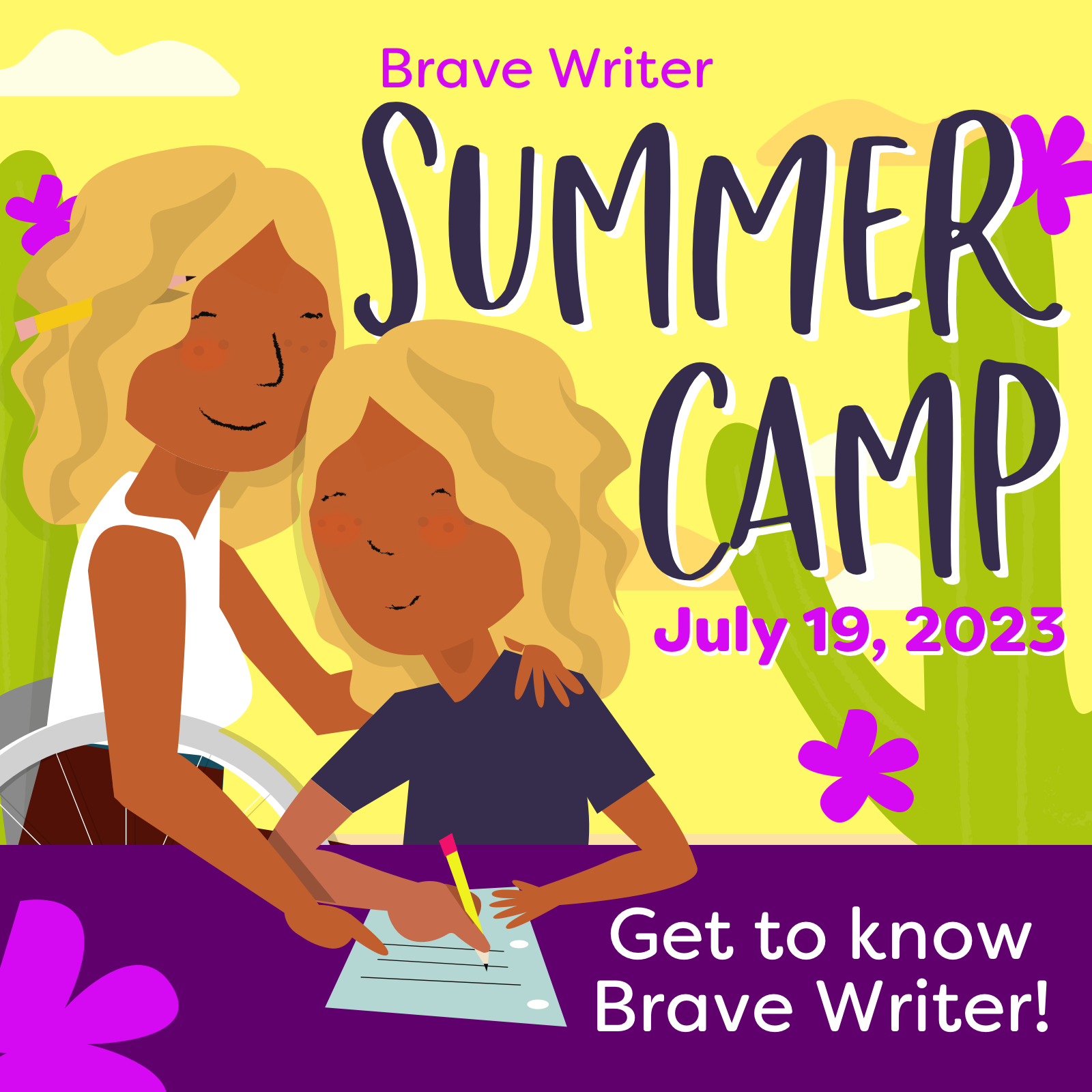
Replays: Summer Camp 2023

Brave Writer Summer Camp

It’s Summer Camp time!

Our Brave Writer camp is designed for homeschool parents like you who need a little extra boost of support!

The day-long camp is packed with useful information about

  • homeschooling
  • writing
  • all things Brave Writer

Replays are available below.


WEBINARS

Note: the discount has expired.

How to be a Happy Homeschooler (Julie Bogart)

What does it take to be a happy homeschooler? The answer may surprise you. Join Julie to get the inside scoop on creating the homeschool that’s just right for you and your family! With joy, delight, and yes, happiness!

REPLAY

Stress-Free Class Planning (Kirsten Merryman)

Planning a year of education can feel daunting. You may feel overwhelmed with the bounty of choices as you try to find the best class fits for your child over the course of an entire school year. Kirsten Merryman (Director of Online Classes) is here to help! Join us for a conversation about where to start and how to pace the learning for a rewarding and stress-free language arts experience.

REPLAY

Poetry Teatime (Melissa Wiley)

The incomparable Melissa Wiley (children’s novelist, homeschool veteran of six, Brave Writer podcast co-host and product writer) will host a Poetry Teatime! Melissa has been writing children’s books since 1995, including her Brave Writer featured books, The Prairie Thief and The Nerviest Girl in the World.

REPLAY

Unlocking Learning Through Literature (Dawn Smith)

Whether fiction, nonfiction, poetry, or fantasy, literature opens doors to a wide range of school subjects and learning adventures. Discover how grammar, punctuation, spelling, and literary devices can be taught naturally, while also inviting children into science, history, math, geography, and imagination. Dawn Smith (Director of Publishing) shares how!

REPLAY

Jumpstart Your Homeschool (Julie Bogart)

You’re ready to take the leap into homeschooling! Wish you had a safety net? A guide? A mentor? Jumpstart your homeschool with Julie to get all that and more. Six-weeks of hand-holding content with intimate sessions that will give you practical tools and implementable guidance—along with a supportive community!

Come learn more about how to Jumpstart Your Homeschool with Julie and our 14,000+ membership community, Brave Learner Home.

REPLAY


Brave Writer Summer Camp

Posted in Webinars | Comments Off on Replays: Summer Camp 2023


« Older Entries
Newer Entries »
  • Search the Blog

  • Julie Bogart
  • Welcome, I’m Julie Bogart.

    I’m a homeschooling alum -17 years, five kids. Now I run Brave Writer, the online writing and language arts program for families. More >>

    IMPORTANT: Please read our Privacy Policy.

  • New to Brave Writer? START HERE

  • FREE Resources

    • 7-Day Writing Blitz
    • Brave Writer Lifestyle Program
    • Brave Writer Sampler: Free Sample Products
    • Freewriting Prompts
    • Podcasts
  • Popular Posts

    • You have time
    • How writing is like sewing
    • Best curriculum for a 6 year old
    • Today's little unspoken homeschool secret
    • Do you like to homeschool?
    • Don't trust the schedule
    • You want to do a good job parenting?
    • If you've got a passel of kids
    • You are not a teacher
    • Natural Stages of Growth in Writing podcasts
  • Blog Topics

    • Brave Learner Home
    • Brave Writer Lifestyle
    • Classes
    • Contests/Giveaways
    • Friday Freewrite
    • High School
    • Homeschool Advice
    • Julie's Life
    • Language Arts
    • Movie Wednesday
    • Natural Stages of Growth
    • One Thing Principle
    • Our Team
    • Parenting
    • Philosophy of Education
    • Podcasts
    • Poetry Teatime
    • Products
    • Reviews
    • Speaking Schedule
    • Students
    • Writing about Writing
    • Young Writers
  • Archives

  • Brave Writer is a participant in the Amazon Services LLC Associates Program, an affiliate advertising program designed to provide a means for sites to earn advertising fees (at no extra cost to you) by advertising and linking to amazon.com

    Content © Brave Writer unless otherwise stated.

What is Brave Writer?

  • Welcome to Brave Writer
  • Why Brave Writer Works
  • About Julie
  • Brave Writer Values
  • Frequently Asked Questions
  • Speaking Schedule

Brave Writer Program

  • Getting Started!
  • Stages of Growth in Writing
  • The Brave Writer Program
  • For Families and Students
  • Online Classes
  • Brave Writer Lifestyle

…and More!

  • Blog
  • Classroom
  • Store
  • Books in Brave Writer Programs
  • Contact Us
  • Customer Service
  • Brave Writer Staff
© 2026 Brave Writer
Privacy Policy
Children's Privacy Policy
Help Center