A Brave Writer's Life in Brief - Page 570 of 781 - Thoughts from my home to yours A Brave Writer's Life in Brief
  • Start Here
    • For Families
      Multiple Ages
    • Ages 5-7
      Beginning Writers
    • Ages 8-10
      Emerging Writers
    • Ages 11-12
      Middle School Writers
    • Ages 13-14
      High School Writers
    • Ages 15-18
      College Prep Writers
  • Shop
    • Product Collections
    • Bundles
    • Writing Instruction Manuals
    • Literature & Grammar/Punctuation
    • Composition Formats
    • Literature Singles
    • Homeschool Help
    • Book Shop
  • Online Classes
    • Class Descriptions
    • Class Schedule
    • Classroom
    • How Our Classes Work
    • Our Writing Coaches
    • Classes FAQ
  • Community
    • Brave Learner Home
    • What’s Happening
    • Blog
    • Podcast
    • Calendar
  • Cart
  • My Account
    • My Online Classes
    • My Account
  • My Account
    • My Online Classes
    • My Account
  • Start Here

    If you’re new to Brave Writer, or are looking for the best products for your child or family, choose from below:

    • For Families
      Multiple Ages
    • Ages 5-7
      Beginning Writers
    • Ages 8-10
      Emerging Writers
    • Ages 11-12
      Middle School Writers
    • Ages 13-14
      High School Writers
    • Ages 15-18
      College Prep Writers
  • Shop

    If you’re already familiar with Brave Writer products, go directly to what you’re looking for:

    • Product Collections Browse the full catalog in our shop
    • Bundles Everything you need to get started
    • Writing Instruction Manuals Foundational Writing Programs
    • Literature & Grammar/Punctuation Grammar, Punctuation, Spelling & Literary Devices
    • Composition Formats Writing Assignments for Every Age
    • Literature Singles Individual Literature Handbooks
    • Homeschool Help Homeschooling Tools and Resources
    • Book Shop Books associated with Brave Writer Programs
  • Online Classes
    • Class Descriptions
    • Class Schedule
    • Classroom
    • How Our Classes Work
    • Our Writing Coaches
    • Classes FAQ
  • Community
    • Brave Learner Home
    • What’s Happening
    • Blog
    • Podcast
    • Calendar
  • Search
  • Cart

Search Bravewriter.com

  • Home
  • Blog

A Brave Writer's Life in Brief

Thoughts from my home to yours

Less is more

Less is moreYou’ll always be tempted to think more is more.

For instance, your child shows interest in planting seeds. You think, “We can create a garden! We can till away part of the yard, start a compost heap, get a variety of seeds, and grow berries while we’re at it. Then my kids can take notes about the rate of growth, they can draw pictures as the plants emerge, they can water the plants and learn which need shade and which need sun, then we can harvest the vegetables and I can teach them to make ratatouille… after they write recipes on notecards, converting the French Metric measurement system to our cups and ounces…”

Right? Or some nutty version of that.

The child wanted to stick a little seed in the ground to see what would happen, and you are imagining starting an organic farm with a restaurant.

Your child asks about one artist, and you envision weekly art lessons combined with study of each period of art, organized by month, with narrations and illustrations, culminating in a trip to Florence! Yes, I did some version of this one and my youngest daughter said at the end of the trip to Italy, “I hate art.”

This was our daughter who could not get enough of the Cincinnati Art Museum before that very expensive trip. But I killed art. I overdid it. I plunged the knife into the chest of art and it bled out.

We did rekindle a love of art years later through fashion and today this 16 year old can say she loves art again and wants to visit the Art Institute in Chicago…. but it took 8 years.

Less is more.

If your child asks to bake cookies, bake cookies with your child. Don’t expect to now go through each cookie recipe one at a time until he hates baking.

If you see a glimpse of interest in computers, don’t assume that means your child wants to be a web designer, developer, or programmer. Most likely your kid wants to be a computer game-player. Understanding a little about how all that works is great and if it leads to genuine interest, offer some resources to look at when she’s ready, when he feels like it! Don’t pile on lessons and requirements, thinking you can turn “computer-love” into a Valuable Lesson.

If you find yourself excited about potting, quilting, the history of music, birding, hiking, bathroom remodeling, even —composting—, you do it! Do what feels good to you (you’ll find that you have a rhythm to your interest and parts of the subject will not interest you at all). That model will help you remember the pace and process of how interests grow. Then you can gently support the interests your kids have without jumping on the bandwagon so heavily, you launch them accidentally over the other side and right out of the wagon!

Trust the process of your passion more than the organization of your lessons.

Less is more.


image by !anaughty!
Posted in Homeschool Advice | 3 Comments »


Poetry Teatime: Outside!

Poetry Teatime

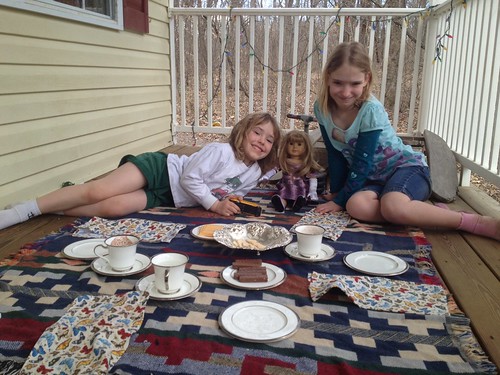
Warm enough for an outdoor tea time today with poetry by Michael Rosen. Yes, we still have Christmas lights up.

The book was titled “Mustard, Custard, Grumble Belly and Gravy”. The illustrations in this book are by Quentin Blake. My five year old son Cooper liked the poem “Shorts” because of the funny pictures accompanying it. He also liked “Something’s Drastic” because of the funny pictures.

Charlotte, age 9, liked “Bathroom Fiddler” because “it had a good rhythm.”

I wasn’t as fond of these poems as other books we’ve read, but the kids liked them. The pictures helped. By the end I had Cooper on my lap and Charlotte hanging on my back so they could see better.

We were pretty rushed today so food was quick and simple-some chocolate wafer cookies, animal crackers, and American cheese slices. None of us like tea so I had water and the kids had chocolate almond milk. I pull out the good china and cloth napkins and we make a toast. Today’s toasts were all related to the beautiful, warm weather.

~Ann

Poetry Teatime

Posted in Poetry Teatime | Comments Off on Poetry Teatime: Outside!


April: National Poetry Month

SPECIAL OFFER THIS WEEK!

To get you started, check out our SPECIAL:

The Arrow Poetry Guide is only $4.99 this week (April 1-8). Regular price: $9.95.


    You Read to Me...


If you’ve never tried the Tuesday Poetry Teatimes, this is the month to start! There are many benefits to reading poetry, not the least of which is the sugar-sweet fun of rhyme, and the playful pop of alliteration and consonance as words trip their way over your tongue.

For the intimidated (you know who you are—you worry that you don’t “get” poetry or that you’ll fail at discovering meanings and themes and imagery), I have tips to make it easy for you to wade into these (I promise) friendly waters.
 

    Bapa


  1. Start with limericks and nursery rhymes. They’re easy to read/say, easy to understand (insofar as understanding even matters), and easy to repeat (leading your family in reciting them together. I don’t know why Jack jumped a candlestick or how an old woman turned a shoe into a family home, but for children, these images are direct and delightful. And that’s all that matters in this poetry ready. You’re delighting in sound, silly images, words, and linguistic music. You get to “go dense” on meaning for a change and know that that’s okay!
  2.  

  3. Jack Prelutsky and Shel Silverstein. Get their books, ready them, enjoy them. One poem at a time— no need to read like a chapter book. Note that these two “get” children. They share the same sense of humor and level of insight that children enjoy.
  4.  

  5. Riddles and jokes are a kind of poetry. They may not rhyme and they don’t follow poetic structure, exactly. But they are all about puns and language play. Include them in your poetry teatimes.
  6.  

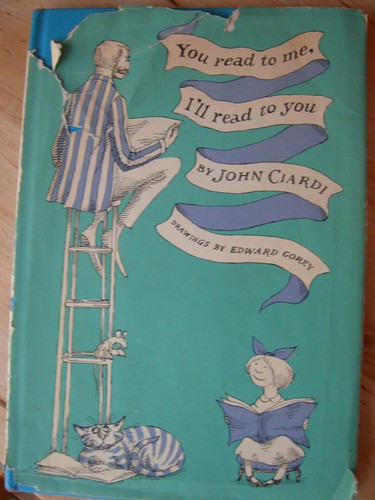
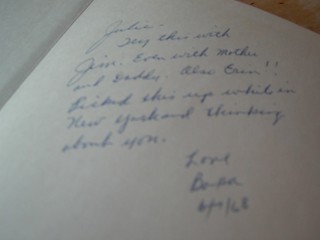
  7. Read poems in tandem. The poetry book featured above is one my grandfather gave me in junior high (you can tell it was well-loved as the frayed paper cover indicates). In it is a collection of poems that are written in alternating blue and black ink. Each reader picks a color and together, two people read a poem aloud! This book You Read to Me, I’ll Read to You is still in print, if you want to try it.

That’s enough to get your started. Seriously!

Set the table for tea, pull out the Oreo cookies or bake a batch of brownies or slice Pippin apples! Whatever is your family’s pleasure. Then, read aloud, laugh, read to yourself, try your hand at making your own rhymes, and notice all the while that you’re doing what you always say you want to do—bringing learning to life.

We’ll post some poetry resources on the blog over the course of the month so stay tuned!

SPECIAL OFFER THIS WEEK!

To get you started, check out our SPECIAL:

The Arrow Poetry Guide is only $4.99 this week (April 1-8). Regular price: $9.95.

Posted in General, Poetry, Poetry Teatime | 2 Comments »


Friday Freewrite: April Fool Girl with Shopkeeper

Stubborn
 
Image by WikiPaintings

April Fool’s Day is just around the corner. Look at this Norman Rockwell painting closely. How many foolish things can you find? How would you describe the color palette: is it cool or warm, bright or dull? What about the composition: is it realistic or fantastical or a combination of both? Why? And what do you think the artist is trying to say?

Now set the timer for ten to fifteen minutes and write the thoughts that pop into your mind about this painting.

New to freewriting? Check out our online guide.

Posted in Friday Freewrite | 1 Comment »


Reading Aloud Matters

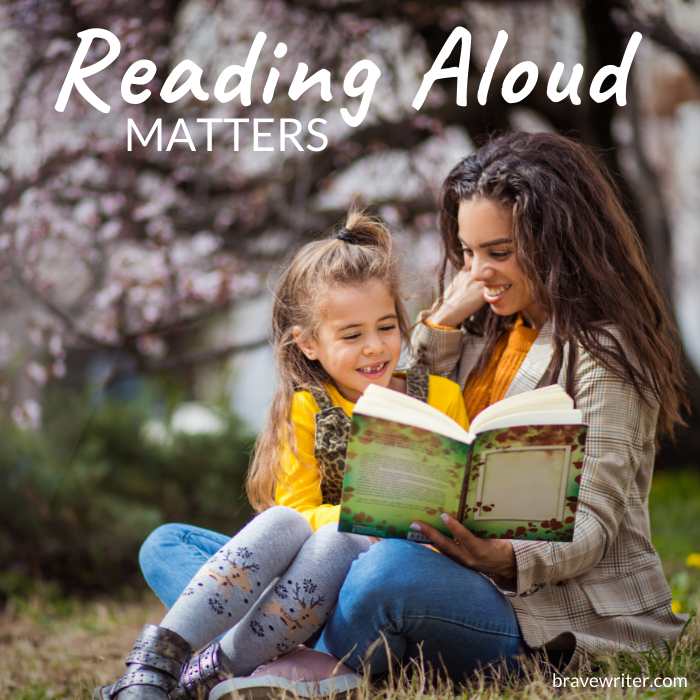
Reading Aloud Matters

I spent hours of my adult life nestled in the corner of the sectional, feet tucked under me, with a book in my hands. Sometimes a baby sucked on a bulging breast at the same time, and one of those babies didn’t like to listen to my voice resonating through my chest cavity. Some well-timed nips to the nipples drove home that message. Ouch!

Other times a toddler couldn’t be calmed or a middler would knock over the orange juice onto the carpet and the book would get flung back into the library basket. Reading time over! Waving the white flag.

But those were exceptions.

We made it a daily priority to read together for an hour. Read aloud time signaled the start to our homeschool day. It was the “coming together” of all of us of all the ages in all our stages, and it told us: “Yes, we homeschooled today.”

Over hummus and olives one Friday night in my friend’s kitchen (homeschoolers really rock the social scene), a bunch of my mom friends and I became animated as we swapped titles and our various reactions to the children’s novels we had read over nearly 10 years time. Better than a book club! We drank wine, we got misty over Anne of Green Gables, and had a wide variety of reactions to Moccasin Trail and Across Five Aprils.

We also laughed about the books that bored us but that thrilled our kids. For instance, I have no idea what happens in any Redwall book. I got through (operative phrase there) the first one (not as delighted by the woodland feasts and feisty creatures in chain mail as my kidlets), but then somewhere during the second installment, I discovered I could make a shopping list, consider the benefits of dying my hair, and respond to angry posters online all in my head while reading, without skipping a sentence. So I’d merrily read along and space out, until that one moment that was sure to give me away at the end of any given chapter:

“Mom what do you think is going to happen next?’

Blink. “Um…” I scrambled. “I have a hunch the bad guys are preparing to attack the Abbey.”

Yes! That is what they thought! They knew it!

And that, friends, is the correct answer to any question about plot in Redwall. You’re welcome. You may return to kitchen remodeling in your mind.

While in this vigorous conversation about kids’ lit, one of the moms made a remarkable statement:

“I can’t figure out how you all have time to read aloud. We never have time. That’s the one thing we’ve never done in all our years. I just don’t see how it could be fitted in.”

For a tense moment, you could have heard an olive drop to that tiled floor. We were stunned, because what quickly became clear is that there were even a few us (I plead guilty to this charge) who sometimes got little more done in a day than reading aloud. I couldn’t imagine what homeschool would be if you didn’t read books to your kids.

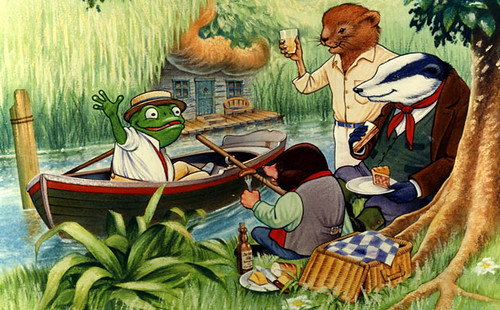
If I had been forced to supervise workbooks all day, every day, for 5 kids, for 17 years without fiction? Without discovering Seamus Heaney’s Beowulf or Robert Peck’s Soup? Not getting to read The Shadow Spinner or become enchanted by Toad and Mole and Badger in The Wind and the Willows?

The-Wind-in-the-Willows-the-wind-in-the-willows-30730319-630-390
The Wind in the Willows

My laundry basket of library books, the wide array of reading lists, the hours spent using my voice to share my emotional reactions in real time to the plights and adventures of heroes and heroines I grew to love as my own possession… This was/is the teaching that is/was homeschool to me… to us.

Homeschoolers rightly think reading to our children is about getting them to hear quality language or to learn about history in a story-format or to become familiar with great literature. It is those.

But it’s also this: When you read aloud, your children discover your values and your humanity. They see tears form in the corners of your eyes. They notice the catch in your throat as you describe a tender scene of connection between two estranged characters. They hear you roar with laughter over an inside joke or a cultural touchstone and they want “in” and expect you to help them “get it.”

Big, Juicy Conversations

And then you talk. About the book! About that awesome story and your surprise at the ending or how glad you are that it did end well. Forget that odious word “narration” for a moment (it has been used to drub tedious recounting out of children when a Big, Juicy Conversation will do so much more).

  • You talk about who you liked and who you believed and who you rooted for to get what he or she wanted.
  • You talk about the evil stoat or the wicked prince or the confusion that goes with a troubled character who has both admirable qualities and also real flaws.
  • You compare today to then, and here to there. But you do it, filled with emotion and connection, and the sense of your own place in history and on the planet, all in front of your children—showing them a way to interact with each other, with their neighbors, with their fellow country-persons, and even with how they perceive other times and places.

Reading aloud is the chief way in the homeschool you show who you are to your children—and they show themselves to you. It’s the core of education.

I can’t think of any more important practice in the homeschool than the sacred read aloud time.

Read to your children every day that you can. You won’t regret it.


Stuff Every Parent Needs to Know About Reading


Stages of Growth in Writing

Posted in Brave Writer Lifestyle, Brave Writer Philosophy, Homeschool Advice, Language Arts, Living Literature, Reading | 7 Comments »


« Older Entries
Newer Entries »
  • Search the Blog

  • Julie Bogart
  • Welcome, I’m Julie Bogart.

    I’m a homeschooling alum -17 years, five kids. Now I run Brave Writer, the online writing and language arts program for families. More >>

    IMPORTANT: Please read our Privacy Policy.

  • New to Brave Writer? START HERE

  • FREE Resources

    • 7-Day Writing Blitz
    • Brave Writer Lifestyle Program
    • Brave Writer Sampler: Free Sample Products
    • Freewriting Prompts
    • Podcasts
  • Popular Posts

    • You have time
    • How writing is like sewing
    • Best curriculum for a 6 year old
    • Today's little unspoken homeschool secret
    • Do you like to homeschool?
    • Don't trust the schedule
    • You want to do a good job parenting?
    • If you've got a passel of kids
    • You are not a teacher
    • Natural Stages of Growth in Writing podcasts
  • Blog Topics

    • Brave Learner Home
    • Brave Writer Lifestyle
    • Classes
    • Contests/Giveaways
    • Friday Freewrite
    • High School
    • Homeschool Advice
    • Julie's Life
    • Language Arts
    • Movie Wednesday
    • Natural Stages of Growth
    • One Thing Principle
    • Our Team
    • Parenting
    • Philosophy of Education
    • Podcasts
    • Poetry Teatime
    • Products
    • Reviews
    • Speaking Schedule
    • Students
    • Writing about Writing
    • Young Writers
  • Archives

  • Brave Writer is a participant in the Amazon Services LLC Associates Program, an affiliate advertising program designed to provide a means for sites to earn advertising fees (at no extra cost to you) by advertising and linking to amazon.com

    Content © Brave Writer unless otherwise stated.

What is Brave Writer?

  • Welcome to Brave Writer
  • Why Brave Writer Works
  • About Julie
  • Brave Writer Values
  • Frequently Asked Questions
  • Speaking Schedule

Brave Writer Program

  • Getting Started!
  • Stages of Growth in Writing
  • The Brave Writer Program
  • For Families and Students
  • Online Classes
  • Brave Writer Lifestyle

…and More!

  • Blog
  • Classroom
  • Store
  • Books in Brave Writer Programs
  • Contact Us
  • Customer Service
  • Brave Writer Staff
© 2026 Brave Writer
Privacy Policy
Children's Privacy Policy
Help Center