A Brave Writer's Life in Brief - Page 556 of 780 - Thoughts from my home to yours A Brave Writer's Life in Brief
  • Start Here
    • For Families
      Multiple Ages
    • Ages 5-7
      Beginning Writers
    • Ages 8-10
      Emerging Writers
    • Ages 11-12
      Middle School Writers
    • Ages 13-14
      High School Writers
    • Ages 15-18
      College Prep Writers
  • Shop
    • Product Collections
    • Bundles
    • Writing Instruction Manuals
    • Literature & Grammar/Punctuation
    • Composition Formats
    • Literature Singles
    • Homeschool Help
    • Book Shop
  • Online Classes
    • Class Descriptions
    • Class Schedule
    • Classroom
    • How Our Classes Work
    • Our Writing Coaches
    • Classes FAQ
  • Community
    • Brave Learner Home
    • What’s Happening
    • Blog
    • Podcast
    • Calendar
  • Cart
  • My Account
    • My Online Classes
    • My Account
  • My Account
    • My Online Classes
    • My Account
  • Start Here

    If you’re new to Brave Writer, or are looking for the best products for your child or family, choose from below:

    • For Families
      Multiple Ages
    • Ages 5-7
      Beginning Writers
    • Ages 8-10
      Emerging Writers
    • Ages 11-12
      Middle School Writers
    • Ages 13-14
      High School Writers
    • Ages 15-18
      College Prep Writers
  • Shop

    If you’re already familiar with Brave Writer products, go directly to what you’re looking for:

    • Product Collections Browse the full catalog in our shop
    • Bundles Everything you need to get started
    • Writing Instruction Manuals Foundational Writing Programs
    • Literature & Grammar/Punctuation Grammar, Punctuation, Spelling & Literary Devices
    • Composition Formats Writing Assignments for Every Age
    • Literature Singles Individual Literature Handbooks
    • Homeschool Help Homeschooling Tools and Resources
    • Book Shop Books associated with Brave Writer Programs
  • Online Classes
    • Class Descriptions
    • Class Schedule
    • Classroom
    • How Our Classes Work
    • Our Writing Coaches
    • Classes FAQ
  • Community
    • Brave Learner Home
    • What’s Happening
    • Blog
    • Podcast
    • Calendar
  • Search
  • Cart

Search Bravewriter.com

  • Home
  • Blog

A Brave Writer's Life in Brief

Thoughts from my home to yours

The secret to happy homeschooling is…

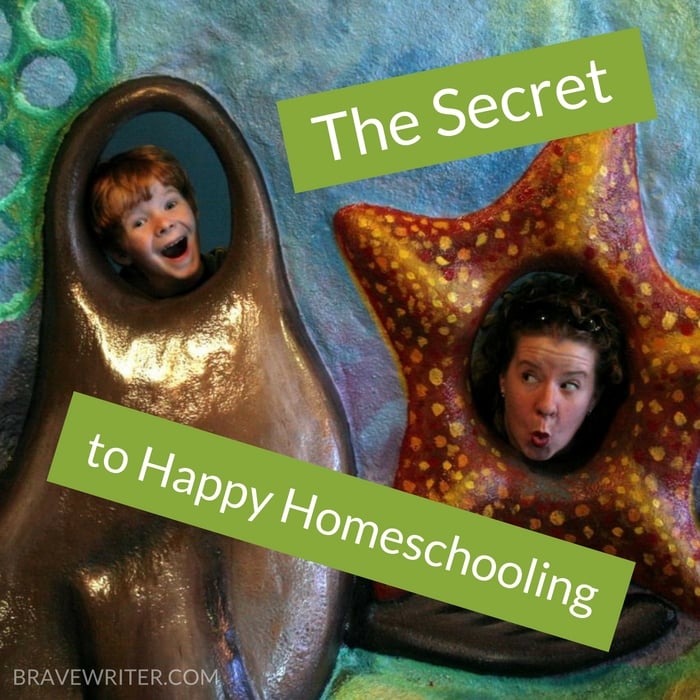
The Secret to Happy Homeschooling

…being present.

What it looks like:

  • doing the hard work together
  • creatively exploring subjects (depth investigation, field trips, recording milestones, using art to teach history and history to teach art, science projects, playful writing, using your imagination to create depth experiences that excite you)
  • providing the tools and materials to support your children’s creativity (cameras, computers, iPads, paints, calculators, measuring tape, hammers, digital recorders, Lego, sewing machines, trampolines, binoculars)
  • paying attention to what your children say, do, think, express, feel—and responding in kind
  • learning alongside your children, so that you know as much about Ancient Egypt as they do, you know as much about Degas’s sculptures as your kids do, you know how to divide fractions and spell “serendipity” and play Ultimate Frisbee as well as your children.
  • reading books together, aloud, so you go on the same journey, inhabit the same imaginary world, and share the anxiety and thrill of the narrative as a group, a family.
  • showing your enthusiasm; it’s contagious
  • helping because help, helps
  • talking, talking, talking
  • eating together at the same table or on the same blanket or in the same car or near the same beautiful view.

What gets in the way:

  • expecting independent learning so you don’t have to work so hard
  • trusting a curriculum more than your own philosophy of education
  • putting pressure on your kids to meet expectations set by the state or your spouse or the curriculum or (even) yourself.
  • wishing your homeschooled kids were older or could read already or had mastered their math facts or weren’t so messy, silly, resistant
  • being bored by education
  • homeschooling because you hate the public schools, not because you love learning
  • farming out education to too many tutors, co-ops, and online classes rather than being a home educator
  • “driveschool” – too many hours in the car, not enough at home
  • hating a subject area
  • continuing to homeschool after the spirit and energy of the lifestyle are gone and you (honestly) can’t muster it again
  • homeschooling when grief or family pain are too great (home should be a safe, peaceful space; not a war zone, not a constant reminder of sadness)

The secret to homeschooling is being present—the full you:

  • the happy-to-be-with-your-kids you
  • the invested-in-the-exciting-journey-of-learning you
  • the willing-to-make-the-huge-investment you
  • the empathetic-companion you
  • the creative-confident-in-charge you
  • the researcher-learner-find-the-best-new-ideas you

…the unique you that is the Mom your kids know and adore.

Be present to this moment, to learning right now, to your kids’ experiences and growth today.

Trust your hunches, follow through, take care of yourself (take breaks), and Be There while you home educate.

That’s all it takes.

Which is everything you’ve got.

Image by Olaf Gradin (cc cropped, text added)
Posted in Homeschool Advice | 4 Comments »


Friday Freewrite: The Library

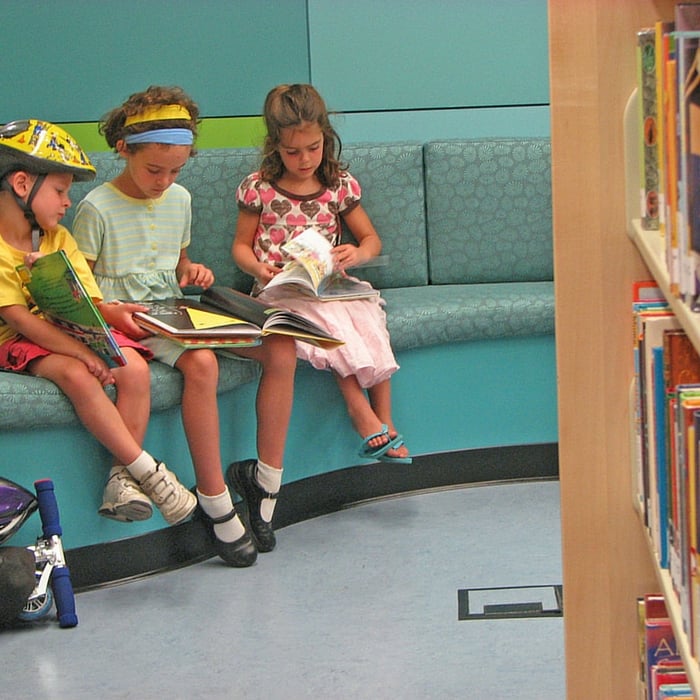
Friday Freewrite: Library

What if there were no libraries?

New to freewriting? Check out our online guide.

Image by San José Library (cc)

Posted in Friday Freewrite | Comments Off on Friday Freewrite: The Library


What are they doing now: Noah

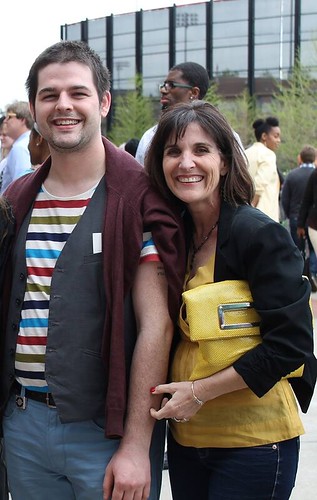
What are they doing now: NoahJune 18, 2013 was Noah’s 26th birthday so it seems entirely appropriate that I finish this series about my kids with him, my first born and oldest son.

When I first became pregnant, I hoped for a boy. As I told Jon (Noah’s dad), I assumed that if I had a boy first, he’d naturally have the “first born” characteristics—he’d excel in academics, he’d want to please his parents, he’d “go with the program.” I was nervous about raising a boy. Since I was a firstborn, I thought having my boy come first would give me a headstart on parenting.

I could not have been more wrong.

Whether or not birth order factors into how your children develop, I can’t say. But what I will say about Noah is that from the beginning, he’s very much known who he is and what he can and can’t, will and won’t do. Noah did not have a “strong will” of the kind you read about in parenting books. He wasn’t a rebellious kid or an angry kid or even a disobedient one. Rather, Noah always had a strong sense of two things:

1. The limits of his body. Noah was incredibly clear-sighted about his abilities and proved reliably aware of what he could do/attempt and what he couldn’t. However, as a parent, that sense of power and competence in his body meant watching him climb the outside railing of a two-story stairwell at age 2, and shimmying up tall trees by age 4, indoor rock climbing at ages 9-10, and playing lacrosse in high school (after no previous sports experience whatsoever), and eventually doing urban gymnastics as a young adult (like jumping off two-story buildings and flipping over hand railings).

2. The unlimited power of his mind. Noah never met an idea he didn’t want to chase. He read voraciously from 8 years old and hasn’t stopped. His curiosity about language led him to study Klingon, Esperanto, and constructed languages for what would have been his junior and senior years in traditional high school. Instead, as a homeschooler (unschooler, really), Noah pursued what interested him.

I often say that Noah is the child sent to teach me to be human. He was playful, free-spirited, curious, not interested in rules for no reasons, confident in his abilities, willing to talk about anything, and utterly guileless. Rewards and punishments never worked with Noah, though believe me, I was suckered into trying both, frequently.

What worked for us was to become close to each other, for me to become a student of his temperament and a friend to his spirit. Noah showed me the value of learning for its own sake—for self-directed, absorbing, pursuit of a topic because you must wrestle it to the ground and know it intimately.

Noah never did go to high school (like a couple of his siblings). He did take Algebra 2 at the local high school (we couldn’t afford tutoring for him at the time). When I picked him up after his first test, he jumped in the car and I said to him: “How was the test? Did you feel okay about it?”

Noah replied: “It was okay, but guess what? I wrote two poems.”

“Excuse me? You mean during the test?”

“Yeah. I got done quickly and then wrote these two really awesome poems. Want to hear them?”

That in a nutshell is all you need to know about Noah.

He is currently in college (for a second time – first time quit due to frustration with the system, but is now ready) studying computer science. He is moving to Connecticut with his longterm girlfriend who will be in a Master’s program there. Noah will study at the local college.

Noah was, as all firstborns are, the guinea pig. I’m so grateful for his energy, his ability to forgive me when I overstepped, his cheerful optimism about life, his passion for self-directed learning, and for teaching me how to be a mother and a compassionate human being.

Posted in Family Notes, Julie's Life | 2 Comments »


Revision is Not Editing

Revision is Not Editing

In Brave Writer, we separate the ideas of revision and editing. Revision is “casting new vision” for the original piece of writing. It’s a “re-imagining” of the original content. You have what you want to say, now you are considering all the various ways it can be said.

Your freewrite/draft is the jet stream of thought. It’s all of it rushing out of the writer onto the page willy-nilly.

Revision is not, now, taking that freewrite/draft and fixing commas or identifying run-on sentences. It’s not addressing tone or spelling mistakes. Those practices fall under the category of “copy-editing.”

Revision is that drastic over-haul type work that literally changes the draft sometimes so completely, the original is hardly recognizable in it any more (except maybe some sentences or the germ of the idea). Revision is where you hunker down and look at specific thoughts expressed insufficiently in the draft, and then determine how to expand them, how to enhance them, how to deepen the content or insight or facts-basis.

Revision IS writing.

In fact, most writers would say that revision is the craft, is the heart of being a writer.

What I find in parents (and even in those who claim to be writing instructors) is a tendency to skip this part of the process. They move right to editing and call it revision.

When asked to give revision notes or support, they draw a blank or they praise what’s good or they give general comments like, “Be sure you think about your audience” or “It’s a good idea to make sure your points are in a solid sequence.”

This kind of general feedback isn’t helpful to writers. What helps is to become a child’s creative partner. What you want to do, what you need to learn how to do, is how to create a dynamic partnership of idea generation.

For instance, you might see a flat-footed opening line (note: they are all flat-footed in the first draft – it’s completely rare that the first line stays the same in well revised writing). Your job isn’t to point out that it is flat-footed or could be revised. It isn’t to assign the task of making it better to your child. It’s literally to brainstorm ideas for improvements. Let’s say the child is writing about white water rafting, you might try something like this:

“I wonder how we can make this opening line grab the reader’s attention. Let me think, let me think. What if we start with the experience—Let’s get in the boat. Are you in it? What’s happening now? Close your eyes. What do you see? Blue? What shades?”

You’re jotting things down as they come out of your child’s mouth. Then you say:

“How about the water? I can imagine there’s a spray. Is there? Yes? Where did it hit? What is a water spray like? Does it remind you of anything? Oh good one! The spray of a garden hose when your brother aims it at you. Good one! Yes! Let’s jot that down.”

You’re wool-gathering. You’re collecting

  • images,
  • experiences,
  • thoughts,
  • curiosities,
  • comments,
  • ideas.

You aren’t telling your child what to do. You’re helping your child think freshly about what is already on the page. You are providing the dialog partner the way you would in conversation:

“Then what happened? Oh wait, how did you get there? That must have been amazing! What did your brother say?”

But now, you are focused on writing and you are providing the conversational partnership that your child’s writer needs. You are thinking in writing categories but having discussions about it (natural ones). You aren’t an English teacher. You are an interested friend, partner, ally.

Do you see the difference? Stop the generalizations and get into conversations. Help get those words out.

Then, when you go back to that opening sentence, you have a selection of things to choose from that might grab the reader’s attention. Together, you can find the one and write it in a way that makes magic.


Curious about Brave Writer?

Posted in Brave Writer Philosophy, Homeschool Advice, Language Arts, Writing about Writing | 5 Comments »


Poetry Teatime: Al fresco!

Poetry Teatime


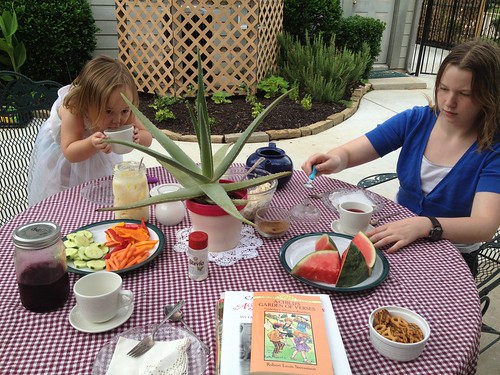
I love the idea of Poetry Teatime, and the times we have done it, all of us have really enjoyed it. The truth is, though, that we haven’t done it very often. Tea is an afternoon thing, right? But there’s the baby’s nap, and swim practice to get to, and dinner to start, and frankly, most days, there’s already too much to do. Teatime gets delayed, then rescheduled, and then forgotten for months.

This day was different, though. It was a beautiful, perfect spring day in late May, a rarity in Texas. Here, it goes from cold and drizzly to beastly hot nearly instantaneously, and usually in April. We all wanted to be outside, but the kids needed lunch, and really, we needed to do some schoolwork, didn’t we?

Poetry teatime al fresco! I quickly gathered up some lunch and made tea while my 12 year old set the table outside. I retrieved the too-long-neglected stack of poetry books from the dining room (where else would they be?), and we all sat down with a collective, nearly audible sigh.

The 12 year old chose a poem from Caroline Kennedy’s A Family of Poems, which was just a starting point. We got to the section of silly poems and stayed there, relishing each one. The two-year-old, an avid participant in just about everything, surprised us by not wanting to choose a poem. Instead, she insisted that we needed to sing “I’m a Little Teapot,” and so we did. Six times!

Teatime al fresco was perfect. We really do need to make time for it more often.

~Janeen

Visit our Poetry Teatime website!

Posted in Poetry Teatime | 1 Comment »


« Older Entries
Newer Entries »
  • Search the Blog

  • Julie Bogart
  • Welcome, I’m Julie Bogart.

    I’m a homeschooling alum -17 years, five kids. Now I run Brave Writer, the online writing and language arts program for families. More >>

    IMPORTANT: Please read our Privacy Policy.

  • New to Brave Writer? START HERE

  • FREE Resources

    • 7-Day Writing Blitz
    • Brave Writer Lifestyle Program
    • Brave Writer Sampler: Free Sample Products
    • Freewriting Prompts
    • Podcasts
  • Popular Posts

    • You have time
    • How writing is like sewing
    • Best curriculum for a 6 year old
    • Today's little unspoken homeschool secret
    • Do you like to homeschool?
    • Don't trust the schedule
    • You want to do a good job parenting?
    • If you've got a passel of kids
    • You are not a teacher
    • Natural Stages of Growth in Writing podcasts
  • Blog Topics

    • Brave Learner Home
    • Brave Writer Lifestyle
    • Classes
    • Contests/Giveaways
    • Friday Freewrite
    • High School
    • Homeschool Advice
    • Julie's Life
    • Language Arts
    • Movie Wednesday
    • Natural Stages of Growth
    • One Thing Principle
    • Our Team
    • Parenting
    • Philosophy of Education
    • Podcasts
    • Poetry Teatime
    • Products
    • Reviews
    • Speaking Schedule
    • Students
    • Writing about Writing
    • Young Writers
  • Archives

  • Brave Writer is a participant in the Amazon Services LLC Associates Program, an affiliate advertising program designed to provide a means for sites to earn advertising fees (at no extra cost to you) by advertising and linking to amazon.com

    Content © Brave Writer unless otherwise stated.

What is Brave Writer?

  • Welcome to Brave Writer
  • Why Brave Writer Works
  • About Julie
  • Brave Writer Values
  • Frequently Asked Questions
  • Speaking Schedule

Brave Writer Program

  • Getting Started!
  • Stages of Growth in Writing
  • The Brave Writer Program
  • For Families and Students
  • Online Classes
  • Brave Writer Lifestyle

…and More!

  • Blog
  • Classroom
  • Store
  • Books in Brave Writer Programs
  • Contact Us
  • Customer Service
  • Brave Writer Staff
© 2026 Brave Writer
Privacy Policy
Children's Privacy Policy
Help Center