Brave Writer Philosophy Archives - Page 41 of 139 - A Brave Writer's Life in Brief A Brave Writer's Life in Brief
  • Start Here
    • For Families
      Multiple Ages
    • Ages 5-7
      Beginning Writers
    • Ages 8-10
      Emerging Writers
    • Ages 11-12
      Middle School Writers
    • Ages 13-14
      High School Writers
    • Ages 15-18
      College Prep Writers
  • Shop
    • Product Collections
    • Bundles
    • Writing Instruction Manuals
    • Literature & Grammar/Punctuation
    • Composition Formats
    • Literature Singles
    • Homeschool Help
    • Book Shop
    • Special Offers
  • Online Classes
    • Class Descriptions
    • Class Schedule
    • Classroom
    • How Our Classes Work
    • Our Writing Coaches
    • Classes FAQ
  • Community
    • Brave Learner Home
    • What’s Happening
    • Blog
    • Podcast
    • Calendar
    • Brave Writer Lifestyle
  • Cart
  • My Account
    • My Online Classes
    • My Account
  • My Account
    • My Online Classes
    • My Account
  • Start Here

    If you’re new to Brave Writer, or are looking for the best products for your child or family, choose from below:

    • For Families
      Multiple Ages
    • Ages 5-7
      Beginning Writers
    • Ages 8-10
      Emerging Writers
    • Ages 11-12
      Middle School Writers
    • Ages 13-14
      High School Writers
    • Ages 15-18
      College Prep Writers
  • Shop

    If you’re already familiar with Brave Writer products, go directly to what you’re looking for:

    • Product Collections Browse the full catalog in our shop
    • Bundles Everything you need to get started
    • Writing Instruction Manuals Foundational Writing Programs
    • Literature & Grammar/Punctuation Grammar, Punctuation, Spelling & Literary Devices
    • Composition Formats Writing Assignments for Every Age
    • Literature Singles Individual Literature Handbooks
    • Homeschool Help Homeschooling Tools and Resources
    • Book Shop Books associated with Brave Writer Programs
    • Special Offers
  • Online Classes
    • Class Descriptions
    • Class Schedule
    • Classroom
    • How Our Classes Work
    • Our Writing Coaches
    • Classes FAQ
  • Community
    • Brave Learner Home
    • What’s Happening
    • Blog
    • Podcast
    • Calendar
    • Brave Writer Lifestyle
  • Search
  • Cart

Search Bravewriter.com

  • Home
  • Blog

A Brave Writer's Life in Brief

Thoughts from my home to yours

Archive for the ‘Brave Writer Philosophy’ Category

« Older Entries
Newer Entries »

Love who you are

Love who you are

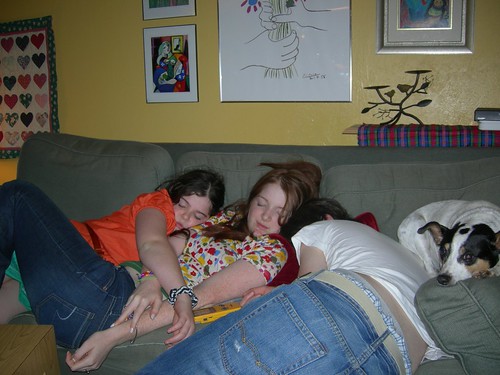
Have you noticed how easy it is to wish away your chief personality features? Do you think to yourself, “I’m the wrong personality for my temperament”? You might wish for a clean, orderly home in your heart, but your personality style is relaxed Bohemian. Or you are the sort who keeps a ship-shape house, but wish you could relax when your kids make big creative messes.

Layered on top of the structured versus unstructured selves we bring to homeschool are our memories of school. We compare what we do at home (even when we don’t want to) to what we experienced as children. We react against it (“I’m not doing that!) or we we suffer because of it (“I’m not teaching my kids anything”).

The temptation to overhaul our essential selves is powerful. Advertising everywhere tells us we are one tweak away from being the fantasy person in our heads. We may be able to resist Botox or Coach purses, but the seductress for home educators is any “method” that results in effortless, joyful learning where parents and kids get along all the time.

We hop from one program to the next like frogs on lily pads forgetting to consider which personality is implementing the philosophy!

Let me let you in on a little secret.

There’s no one personality type that is better for homeschooling than another.

Let me drill down further.

There’s no one personality type that is better for parenting, loving, nurturing than another.

Every type has its marvelous strengths, and (darn it all) each type has its blind spots and liabilities.

What you and I need to do is to become self aware people—able to recognize when our personalities are creating the hum of happiness and productivity, and when they are sapping the energy from the room and causing pain.

It isn’t always better to have a messy or a neat house.

Sometimes waking up to a clear kitchen table, fluffed pillows, books easy to access, and a freshly vacuumed carpet is the most nurturing way to start the day. If, however, the process of getting there ended an art project or removed a Robin Hood fort still lingering in the minds of your kids as they went to bed, the same cleared space in the morning may now feel like robbery:

“Where did you put my art project?”

“Do I really have to get out all the blankets again for my fort?”

The question to ask yourself as you move through the day isn’t “How can I be more relaxed?” or “How can I be more productive?”

You want to ask yourself a single question:

“How can I best serve this moment?”

I remember when I went to graduate school, I had just begun our unschooling experiment. It was a study in contrasts. I was being educated by highly trained academics with lectures, a syllabus, reading schedule, essay assignments, and tests. My kids were free to explore the world without any hindrance.

Or so I thought.
Love who you are

What became apparent to me after a semester surprised me. I loved graduate school. It felt nurturing to have someone care enough to create lessons, to show me what I should read to get a full view of the subject, to dialog with me from a position of investment and knowledge. I liked having a plan and a schedule. I felt relief. I had studied the subject area for five years on my own, and now I felt this surge of strength that came from guidance and support.

Meanwhile, the structures I had used in homeschool were on hold. I wanted my kids to feel free to learn what they wanted, to investigate any topic to their hearts’ content. A couple of them took off! But two floundered. They felt (strangely enough) unloved. They wouldn’t have used that language but in hindsight that’s what it was. They felt connected to me when I took the time to plan their lessons and guide their education. They lost that connection when I gave them “freedom.”

I spent hours on unschooling lists learning how to create the context, how to support an unschooling lifestyle, how to foster and nurture a rich learning environment. I didn’t “abandon” my kids to doing whatever they wanted unsupervised. Nevertheless, two of my children missed planned lessons and a structure for learning. I understood this because I was having a parallel experience in grad school.

What becomes so difficult to tease apart as a home educator is the idealized vision of learning that dances in our heads like sugar plums and the very real home and family we have. Our job isn’t to be more organized or more relaxed, more structured or completely free of structure.

Our job is to serve the moment—to serve the needs of our families from within the framework of our delightful personalities.

We can do that best when we lean into our strengths.

If you’re an orderly person, create happy order. Avoid the temptation to require everyone to be like you. Resist your tendency to nag or to have your feelings hurt when the rest of your gang is unenthusiastic for kitchen duty or keeping tables cleared. Straighten, file, assemble check lists, keep the sink empty, make the beds, plan the day. Enthusiastically offer your talent for creating a clean, peaceful, orderly, neat space to the family as a gift.

If you’re a relaxed, go-with-the-flow mom, stop pummeling your personality. Your home is cozy, it’s alive with activity, and it supports messes without stress. Keep big containers nearby for quick clean-ups, make a loose routine to follow each day (rather than a schedule), allow your kids who need order to create systems to support you and the family. Smile.

Do not worry that you aren’t getting enough done in either system or style. Focus on this moment. What is happening right now? How can I help it become a good moment? Shall I ease up and let the mess grow? Shall I hunker down and clear the space so something new can be born? Are we getting along and growing?

Above all: no system saves you. You will eventually go back to being who you are. Your job is to be the best you, you can be. Be the you that creates love and learning, not the you that worries and frets or ignores and pretends away.

You can even say to your kids in a moment of frazzledness:

“You know me! I need everything cleaned up before I can think straight. Anyone willing to help me so we get the day off to a good start? My brain is about to fall out of my head when I see shoes scattered everywhere. Cookies to the helpers!”

Or

“You know me! I can’t put a week-long system together for the life of me. Let’s make a quick list for today of things we want to study and do, and then put them in an order. Who wants to make the list with me? If today feels good, we can do it again tomorrow. Let’s eat cookies while we discuss.”

See? The goal isn’t to “reform” who you are and how you are. The goal is to be the best of yourself that you can be, acknowledging that within your strengths and weaknesses is a real human being doing the best she can. Your kids want to help you and they want to be themselves too.

They’ll learn to love who they are in direct proportion

to how well you love who you are.

Go forth and love yourself.

Posted in Brave Writer Philosophy, Homeschool Advice, Julie's Life, On Being a Mother, Unschooling | 16 Comments »

Enter Your Child’s World

Enter Your Child's World

Sometimes in our eagerness to see our children become independent, we leave them to their interests. We see them happily listening to their favorite musical artists over and over again, we notice them reading an entire series on the universe and star systems, we watch as they perfect a trick in gymnastics or a move in lacrosse, or we try not to be disturbed by how enthusiastically they play an online game.

Sometimes their hobbies and interests create pride in us. For instance, I’ve never met anyone who would be ashamed to see their child mastering chess and entering tournaments, or practicing violin 4-5 hours a day. Kids who learn foreign languages with Rosetta Stone, on their own, because they want to, cause parents to brag about them. Parents are regularly proud of kids whose favorite subject is math, or the history of warfare. They love it when their kids show prowess in “prestige” interests.

Other times, though, our kids get obsessed (our negative word for their passions) with stuff that makes us cringe:

  • role playing games,
  • online video games,
  • fashion,
  • make-up,
  • coloring books,
  • a television series,
  • a popular book series read over and over again,
  • electric guitar,
  • learning Klingon,
  • decorating a bedroom,
  • rap,
  • talking online to friends at all hours of the day and night,
  • coding new versions of computer games,
  • learning all the statistics for a favorite baseball team…

It’s easy to put a child’s interests into containers (the “good” interest box, and the “bad” interest box). When you do that, your face changes when you talk to your child. You light up when your daughter tells you she learned to play the difficult passage in the concerto, but cringe a little bit when your son tells you he finally beat a level in Halo after hours of playing.

Your response to how your children express their interests generates trust or creates distance between you. For a moment, suspend judgment and think about what your child is learning about learning. We call this “going meta.” The “meta” level of reflection works like this: To have a meta conversation, means you are now talking about talking. To discover the meta-theory means you are developing a theory to discuss theory.

Applied to the idea of learning: the “meta-layer” of learning is examining how learning is happening, not what is being learned. You get up on a high perch, above your child and your child’s interests, looking down at the signs and symptoms of learning rather than the content (what he or she is studying).

When you do this, you begin to see that the features are similar whether studying violin or how to blow away your opponent on a screen. Certainly the skills are different (and we can argue some other time about what is more difficult). But the process—

  • deep immersion,
  • expanded vocabulary in the field,
  • complex sorting of information,
  • discovery of how to apply what one knows to how one practices,
  • sustained interest that leads to achievements when challenges arise,
  • curiosity about tangential skills and facts related to the original field,
  • breakthrough insights about the nature of the field itself, + a sense of prowess and power that comes from expertise and evolving skill,
  • mastery (awareness that this area of interest is now under the learner’s control and that there is unlimited possibility within that sphere)

—can all be gained in any subject area.

When we’re tempted to dismiss a child’s passions, we may be short-circuiting their development as learners! In other words, what matters more than the specific field is the child’s development as a skilled autodidact (self-directed learner).

The skill of learning transfers to any field of endeavor. But it can’t transfer if a person has never experienced the way passionate interest generates sustained growth and commitment to overcome challenges. These are the tools of learning that create lifelong learners (of the sort we all say we want).

To facilitate this growth, it helps if you wade into the waters with your child. You don’t have to become an expert at World of Warcraft or episodes of Dr. Who or even how to play chess. What you need to be is curious about how your child sees the world when immersed in this field. You want to find out if he or she is “good” yet (as far as they can tell), and what “getting good” looks like, and how they measure themselves. You want to understand what compels their interest (how did they get hooked and why?). You want to know who the community is that is invested in this world (and if at all possible, you want to value it!).

The world is a huge place with so much to explore. It’s not surprising that our kids might find passions in places we never thought to look!

Become a part of the conversation—hold back judgment. Go “meta” and look at the skills that are related to being a learner, and validate those (to yourself, especially—your kids already know they are learning, you need to know that too). You also may find out that that world that is so absorbing to them really is as fascinating as they say it is! What a gift to our kids when we can genuinely say about their prowess, “I’m so proud of you!” and mean it.


Explore this topic further:

This IS School

The Misunderstood “Child-Learning” Model

Posted in Brave Writer Lifestyle, Brave Writer Philosophy, Homeschool Advice | Comments Off on Enter Your Child’s World

What’s on your child’s mind?

Your kids have been pondering, thinking, and imagining their lives. Some of them spend hours daydreaming about the next level they’ll beat on a video game.

Others wish they could sew costumes or paint with watercolors. You might have a child who wants to be in a play or who wants to play an instrument.

Maybe your daughter wants to become the next soccer star of her local team and your son hopes he can take a cake decorating class.

A teen might want to spend hours a day watching the top 100 films listed by Criterion in order.

How will you know, if you don’t ask? Where will those hours of the day come from if they’re already filled with your agenda or your wishes?

Creating space for the pursuit of your children’s daydreams is one of the greatest joys of homeschool. When you care about their desire to beat the next level on a game, they are more likely to trust you when you say that the math page will only take 15 minutes.

Conversely, what if dread of a specific homeschool task fills their minds?

Find out about that. Create space for complaint or anxiety.

In some cases, your kids will have smart thoughts about how to learn the hard subject area. It’s surprising the amount of insight your kids may have about their struggles if you know how to ask them the right kinds of questions.

You might ask things like:

“I know times tables feel hard to do. Does anything help? Do you prefer to hold things in your hand or draw on a chalk board? Does it help to talk to me as you work on them? What’s the hard part for you? Is it the book? Too busy and colorful? Too plain and tedious? Do the Cuisenaire rods hurt or help?”

Don’t punch the questions at your child like a nail gun. Take them slowly, show curiosity. Sometimes a child will say one thing that unlocks the whole thing:

“I don’t get the point of the rods.”

Suddenly you can see that your child is going through the motions without true understanding! More modeling and support, conversation and suggestions can follow. So pay attention and use your maturity and compassion to help you hear where the frustration comes from.

Usually lectures about the value of a specific subject area for their eventual adulthood doesn’t work with kids. What works is breaking down each task to its smallest part and relating it to their immediate world.

If there is no immediate connection, perhaps the work should fall to you to discover one before requiring a child to work that hard on the subject. After all, these are children. They don’t have the same level of fortitude to “do what they should” as you do as an adult. So take time (since you are the grown-up) to find the connection, to uncover the meaning, and to share it with love and support before requiring follow through and effort.

Sandwiched between support for their dreams and help for their struggles are love and trust. Create those through curiosity and care, and you’ll all feel a little happier today.

What works is

Cross-posted on facebook.

Posted in Brave Writer Philosophy, Homeschool Advice | Comments Off on What’s on your child’s mind?

« Older Entries
Newer Entries »
  • Search the Blog

  • Julie Bogart
  • Welcome, I’m Julie Bogart.

    I’m a homeschooling alum -17 years, five kids. Now I run Brave Writer, the online writing and language arts program for families. More >>

    IMPORTANT: Please read our Privacy Policy.

  • New to Brave Writer? START HERE

  • FREE Resources

    • 7-Day Writing Blitz
    • Brave Writer Lifestyle Program
    • Brave Writer Sampler: Free Sample Products
    • Freewriting Prompts
    • Podcasts
  • Popular Posts

    • You have time
    • How writing is like sewing
    • Best curriculum for a 6 year old
    • Today's little unspoken homeschool secret
    • Do you like to homeschool?
    • Don't trust the schedule
    • You want to do a good job parenting?
    • If you've got a passel of kids
    • You are not a teacher
    • Natural Stages of Growth in Writing podcasts
  • Blog Topics

    • Brave Learner Home
    • Brave Writer Lifestyle
    • Classes
    • Contests/Giveaways
    • Friday Freewrite
    • High School
    • Homeschool Advice
    • Julie's Life
    • Language Arts
    • Movie Wednesday
    • Natural Stages of Growth
    • One Thing Principle
    • Our Team
    • Parenting
    • Philosophy of Education
    • Podcasts
    • Poetry Teatime
    • Products
    • Reviews
    • Speaking Schedule
    • Students
    • Writing about Writing
    • Young Writers
  • Archives

  • Brave Writer is a participant in the Amazon Services LLC Associates Program, an affiliate advertising program designed to provide a means for sites to earn advertising fees (at no extra cost to you) by advertising and linking to amazon.com

    Content © Brave Writer unless otherwise stated.

What is Brave Writer?

  • Welcome to Brave Writer
  • Why Brave Writer Works
  • About Julie
  • Brave Writer Values
  • Frequently Asked Questions
  • Speaking Schedule

Brave Writer Program

  • Getting Started!
  • Stages of Growth in Writing
  • The Brave Writer Program
  • For Families and Students
  • Online Classes
  • Brave Writer Lifestyle

…and More!

  • Blog
  • Classroom
  • Store
  • Books in Brave Writer Programs
  • Contact Us
  • Customer Service
  • Brave Writer Staff
© 2026 Brave Writer
Privacy Policy
Children's Privacy Policy
Help Center