If you could break the Guiness Book of Records what would it be for?
Author Archive
Oh no! It’s March and I haven’t taught writing!
I get these kinds of emails starting about now and they run until the end of the school year. Totally understandable. When a subject doesn’t fit your lifestyle or if it presents challenges to either you or your children, it’s much easier to let it slide in favor of the other subjects you tackle confidently and naturally.
Writing tends to be one of the most often dropped subjects. Even if your kids don’t like math, it’s easy to put the math book in front of them every day. But with writing, it doesn’t lend itself to that kind of hands-off routine. Instead you wonder when you will have a block of time without any distractions when you can finally sit down and work on writing.
Well, consider this blog entry the “ding” on your email calendar. It’s time to make time to write.
Don’t fret. This is Brave Writer, remember? I have a few tips to help make it easy on you.
First, block out time for writing (even drop something else you usually do to fit it in). In fact, drop the something you’ve done well all year. Now’s the time to turn the tables and focus on what you haven’t had time to do. There are eight weeks until June. If you can commit to doing the following practices for eight weeks (eight weeks isn’t that long!), you’ll have accomplished the goals you had and will finish with a flourish.
- Start with copywork. Commit to one entry of copywork per week until June. You’ll have eight weeks of copywork, which means eight carefully copied texts. Much better than zero!
- On a different day, do dictation. Pick short passages (back issues of the Arrow work great or grab the nearest novel and just pick the opening lines of four chapters… easy peasy).
- Freewrite on Fridays. (I have many freewriting prompts on this blog.)
- Pick one freewrite to revise. Take it through the writing process. What that means is, freewrite for, say, three or four weeks and pick one to revise. Block out time to go through the narrowing and expanding steps, the revision and the editing. It will take you a couple of weeks to do the steps so plan to have the revision process occur in May. Skip freewriting during the two revision weeks.
That’s it.
By the end of the year, you’ll have:
- 8 passages of copywork
- 8 dictation passages
- 6 freewrites
- 1 polished piece of writing that has gone through the writing process.
This schedule is do-able. So go for it! You’re investing in your summer vacation by putting in a bit more energy right at the end of the school year. You’ll go into summer guilt-free. That’s a worthwhile goal, isn’t it? This little writing program is the last sprint to the finish line.
For those who are unclear about the steps for revising/editing, The Writer’s Jungle details the process and supports you in achieving these goals. You may also find that it is the boost you need at the end of the year when new ideas and enthusiasm for homeschooling are waning.
Out of town

Shell detail
Originally uploaded by juliecinci.
I spent the weekend with girlfriends on Edisto Island in South Carolina. Hencely and thusly, I was not blogging or thinking about blogging or thinking about writing or writing about writing.
I will, however, be returning to all normal Brave Writer functions tomorrow… after I attack email and snail mail, and give my attention to my chillins. 🙂
(Btw, all you homeschooling mothers, plan your own getaways. I don’t know if March is the best time of year to go, but there really is never a “great” time – so pick a month, collect some friends and get out of town. You’ll be glad you did.)
Friday Freewrite: Too popular
What would you do if you were invited to two parties on the same day?
Characterization in Books and Movies
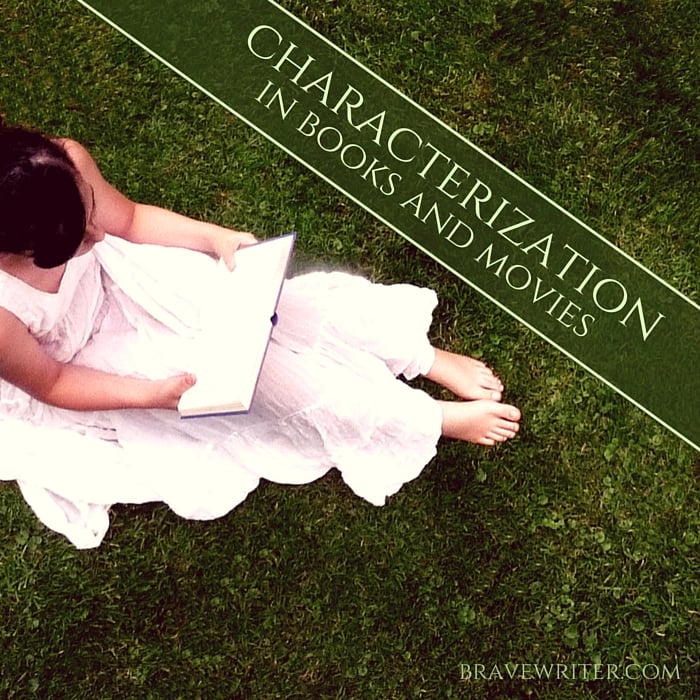
In addition to plot conventions, movies and books share similarities in how they portray characterization. Naturally movies rely on visual cues such as costume, make-up, and hair style to define the period, personality and attention to personal hygiene of a character. In a novel, the author must describe enough of these details for the reader to create a corresponding image in the imagination.
In addition to these obvious categories of characterization, however, are the more subtle aspects of personality which are usually manifest in the following ways:
- physical idiosyncrasies like a limp or a lisp
- twitches
- wheezing
- playing with hair strands
- adjusting glasses
- slumped shoulders
- saucy gait
- pursed lips
- raised eyebrows
- military posture
- poor speech
…And so on.
When looking at an actor’s choices in a movie, then, it is important to consider what you see the character doing as much as what the character looks like or says. Movies require us to notice acting choices, such as:
- Does the character mumble or speak clearly?
- Does the character turn away from someone intimidating or does the character face that person squarely?
- How does the character relate to the other characters?
You can often detect differences in relationships through observing the changes in conversational style and posture between a single character and each unique relationship within the story.
In books, characterization is developed along similar lines, however, you also often have the benefit of internal processing (what the character thinks in addition to what the character does). This is most often the case for the protagonist (the primary character in the story). You may not have access to the minds of the other characters. The benefit of knowing what is in the mind of the character is that you will have layers of motivation to evaluate rather than merely drawing conclusions from behavior.
Shakespeare’s soliloquies serve a similar purpose in his plays. They are meant to reveal to the audience what the character is thinking that can’t be observed from the outside.
Another source of commentary on the character is often supplied by the author. Authors will give you clues about characterization based on how they title or describe the character. In The Red Badge of Courage, the main character, Henry, is referred to as “the youth” in every paragraph except dialog. It’s important to ask why because the author clearly intends to communicate something about Henry through that label.
In classic plots seen in movies and found in books, there are two primary characters to look for: the protagonist (usually the one we root for) and the antagonist (the one that makes us “boo”). The protagonist faces an obstacle that is the key to the plot. The antagonist wants to thwart the protagonist’s progress in achieving that goal. Sometimes the protagonist is supported by other characters in achieving the quest (as Frodo was in The Lord of the Rings). Sometimes the antagonist is not human but instead is a force in nature or a war or the gods (not all antagonists are human, either). And sometimes the primary antagonist is the self – a conflict occurring within the primary character.
Don’t feel you need to over-analyze characterization.
What is helpful to do is to ask questions of your kids as they read or view that helps them to notice what they might miss otherwise.
- Why do you think the protagonist has a limp? How does that hurt his chances of success?
- Who is the antagonist?
- Why does the antagonist oppose the protagonist?
- What does the costume say about that character?
- What can we learn about the character from the way he interacts with his parents, his friends and authorities?
…And so on.
Go forth and enjoy movies and books!