A Brave Writer's Life in Brief - Page 636 of 779 - Thoughts from my home to yours A Brave Writer's Life in Brief
  • Start Here
    • For Families
      Multiple Ages
    • Ages 5-7
      Beginning Writers
    • Ages 8-10
      Emerging Writers
    • Ages 11-12
      Middle School Writers
    • Ages 13-14
      High School Writers
    • Ages 15-18
      College Prep Writers
  • Shop
    • Product Collections
    • Bundles
    • Writing Instruction Manuals
    • Literature & Grammar/Punctuation
    • Composition Formats
    • Literature Singles
    • Homeschool Help
    • Book Shop
  • Online Classes
    • Class Descriptions
    • Class Schedule
    • Classroom
    • How Our Classes Work
    • Our Writing Coaches
    • Classes FAQ
  • Community
    • Brave Learner Home
    • What’s Happening
    • Blog
    • Podcast
    • Calendar
  • Cart
  • My Account
    • My Online Classes
    • My Account
  • My Account
    • My Online Classes
    • My Account
  • Start Here

    If you’re new to Brave Writer, or are looking for the best products for your child or family, choose from below:

    • For Families
      Multiple Ages
    • Ages 5-7
      Beginning Writers
    • Ages 8-10
      Emerging Writers
    • Ages 11-12
      Middle School Writers
    • Ages 13-14
      High School Writers
    • Ages 15-18
      College Prep Writers
  • Shop

    If you’re already familiar with Brave Writer products, go directly to what you’re looking for:

    • Product Collections Browse the full catalog in our shop
    • Bundles Everything you need to get started
    • Writing Instruction Manuals Foundational Writing Programs
    • Literature & Grammar/Punctuation Grammar, Punctuation, Spelling & Literary Devices
    • Composition Formats Writing Assignments for Every Age
    • Literature Singles Individual Literature Handbooks
    • Homeschool Help Homeschooling Tools and Resources
    • Book Shop Books associated with Brave Writer Programs
  • Online Classes
    • Class Descriptions
    • Class Schedule
    • Classroom
    • How Our Classes Work
    • Our Writing Coaches
    • Classes FAQ
  • Community
    • Brave Learner Home
    • What’s Happening
    • Blog
    • Podcast
    • Calendar
  • Search
  • Cart

Search Bravewriter.com

  • Home
  • Blog

A Brave Writer's Life in Brief

Thoughts from my home to yours

When freewriting isn’t fun

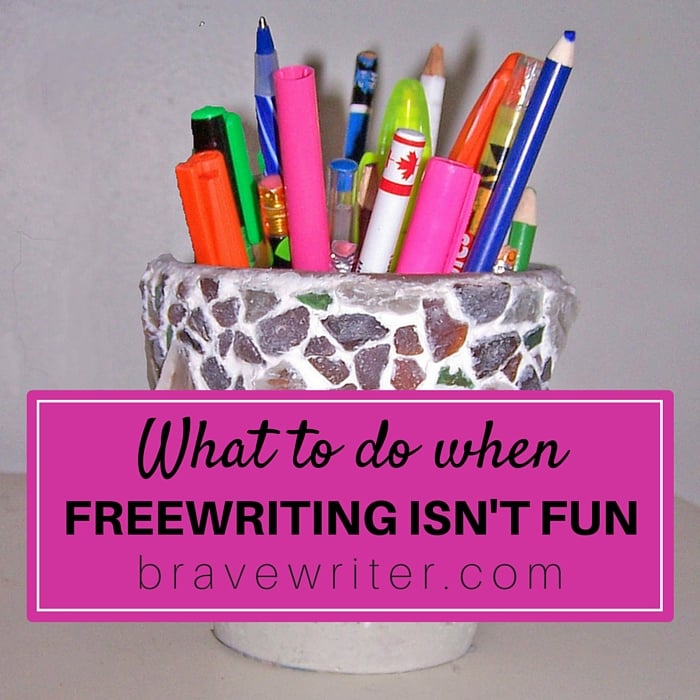
What to do when freewriting isn't fun

Not everyone likes freewriting. Some kids feel pressured by the timer, they worry about making mistakes (even after being told that they can make all the mistakes they want!), they resist the idea of writing about any random topic. Others just don’t like writing and freewriting feels like one more writing task no matter how many times they are told that this is an easier form of writing than the one they are used to.

Our oldest son (Noah) told me that while he can write (and I’d say he writes well!), and while he certainly does know how to freewrite (and has done plenty of it), writing has never gotten easier for him. When he faces a blank page, he still fights the sensation of momentary panic and inertia.

And yet, I still firmly believe that every person can learn to write so that they are competent as adult writers. Even if they have that initial surge of panic when staring at a blank page, they will have cultivated some strategies for tackling the topic anyway!

Freewriting gives writers a chance to get the swirl of words inside, out of their heads and bodies and onto a page or computer screen. Those words, once out and visible, can be honed, revised, enhanced and massaged into better prose or exposition. Freewriting helps to untangle the jumble or to at least put the writer in touch with what there is to say (or not) about a topic.

Part of the charm of freewriting (its lack of structure, its freedom, its open-endedness) sometimes causes a surprising counter-reaction in some kids. These young writers feel too much freedom! They want guidelines, structure, clarity about the expectations. They want to avoid making a mess that will be required to go through a revision process later. So let’s look at how to help them over the hump with some novel ways to make freewriting less “free” while retaining the essential messiness that is most beneficial in terms of real writing later.
What to do when freewriting isn't fun

Image by Brave Writer mom Melody

TOPICS
Some kids really do need a subject to get them going. Asking them to simply “write” whatever is on their mind is too big. Their minds are busy places and they can’t narrow the swirl of ideas down into a manageable size for writing. To help these kids, we suggest the “freewrite list.” One week, instead of freewriting, ask your kids to write a list of all the things they love and know lots about. This list can be written straight down the page and can include things like: soccer, horses, Harry Potter, how to make cookies, quilting, pet ferrets, hacky sacks, Starcraft, decorating Christmas trees, blow drying hair, WWII tanks, Star Wars, American Girl doll outfits and planting bulbs. There are no right topics. Only those your kids love and know well. Once you have a list, each week let your child pick a topic from the list to write about.

TOO MUCH TIME
Some kids do better with a few more boundaries around the freewrite. Rather than a 7-10 minute period, limit the time frame to 2-3 minutes. Ask your child to write as quickly as possible, without stopping, putting anything that comes to mind onto the paper. Keep the sessions short and don’t worry at all about content. The idea here is to just keep the pencil moving for 2-3 minutes.

PERFECTIONISM
Some kids are haunted by a need to know how to spell, how to punctuate, when to capitalize and so on. To be told that errors are permissible doesn’t ease the anxiety. Usually there are two reasons for this. The first is that the child is just one of those neat-nik kids who prefers order and hates a mess. For that child, simply tell him that if he doesn’t know how to spell a word, to call it out to you and you will instantly recite the proper spelling so he can continue without stopping. If this happens every third word, then you will need to let him know that he can make his mistakes but you promise to correct them with him as soon as he finishes.

The other kind of perfectionist is the one who knows that any mistake she makes will be required to be fixed by you. These kids are the ones who’ve figured out that if they don’t write perfectly the first time, they’ll have to revise and edit until you are satisfied with the product. First, reassure your child that this freewrite will not go through any revision. When it’s done, it’s done. Second, take a piece of scratch paper, crumple it up and then smooth it out again. Tell your child to freewrite on the crumpled page. Often, just seeing that the paper cannot possibly be used as a final copy will prevent the tendency to be overly careful with the freewrite.
What to do when freewriting isn't fun

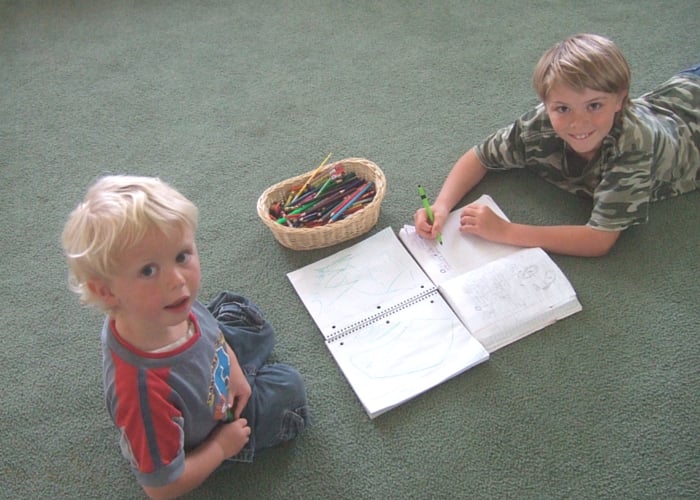
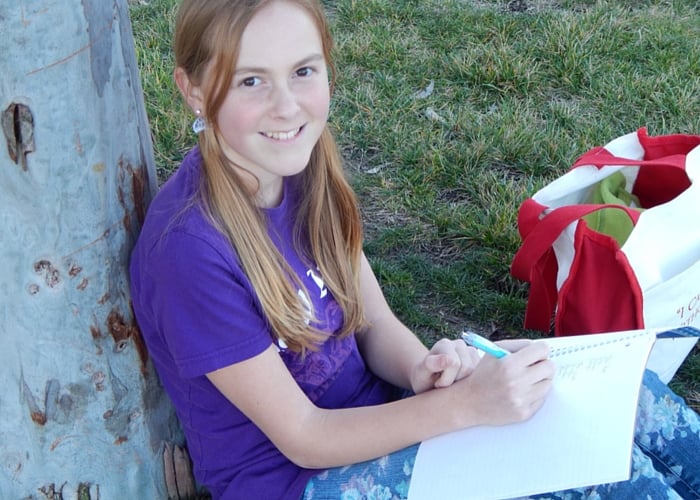
Image by Brave Writer mom Anne

HURTING HANDS
Some kids grip their pencils so tightly that when you add the pressure of a timer (and the instruction to write speedily), they cause themselves pain when they freewrite. No wonder they hate it! For these kids, you can try two options. For younger kids whose handwriting skills are still developing, offer to type their freewrites while they narrate orally to you. For older kids, let them freewrite on the computer from time to time until they learn to relax their hands.

NATURAL WRITING RESISTANCE
Some kids are naturally less verbal than others. They fight to find the words they need in their oral communication and find writing that much more of a challenge. Freewriting is an invitation to pain, for these kids! It’s like they have to openly admit that words don’t come easily to them. It’s not that they can’t speak, but they find themselves moving at a slower verbal pace than the chatty-Cathy’s around them. For kids like this, sometimes a timer feels like pressure rather than release. I suggest instead of timing these kids, ask them to keep writing until they are tired. That may mean they write one sentence and that’s all they can muster. Encourage these kids especially to write about that frustration as it comes up. They can write things like:

    I love playing lacrosse with the junior high team but i hate it when I don’t get to play attack. I’m so mad that I have to write. This is hard. My hand is cramping. I want to play attack.

Like that. They need to be helped to really express what is in the way of the words. These kids tend not to give language to their frustration or their physical sensations. So you can draw them out with questions, etc.
Top image by Cinder’s (cc text added)

Posted in Brave Writer Philosophy, Friday Freewrite, Writing Exercises, Young Writers | Comments Off on When freewriting isn’t fun


Today is Registration Day: Winter Classes

Hi everyone!

Registration is now live. Registration opens at 12:00 p.m. eastern. Classes often fill quickly. We have, however, increased the number of classes we offer so that as many of you can be enrolled as possible. We’ll post a note when a class closes.

To read about the classes, click here.

To register, click here. When it’s noon, the registration form will go live. Just refresh the screen until it pops up!

If you have any questions about what classes would be appropriate for your family, email us at help@bravewriter.com

Posted in BW products | Comments Off on Today is Registration Day: Winter Classes


Friday Freewrite: Giving

If you could give away one thousand dollars, who would receive your gift and for what purpose?

Posted in Friday Freewrite | Comments Off on Friday Freewrite: Giving


Freewriting: A Rationale

Freewriting: a rationale

Many  of you are comfortable with freewriting. If you’ve been with Brave Writer any length of time, you know that freewriting is a core practice when becoming a fluent writer. At a certain point in time, though, many moms worry that that is “all” their kids are doing. They can handle copywork, dictation, and freewriting (these practices are as concrete as times tables work sheets!), but getting beyond freewriting feels like a real challenge. But I want to underscore again, the value of freewriting and to help you see that you aren’t just killing time until your kids do “real” writing. Freewriting is real and valuable and the foundation of all future writing.

Besides being the easiest way to get locked up words unlocked, freewriting is also the best way to help your kids stay fluent with their handwriting skills. In this age of computer use (where sometimes I go days without holding a pencil in my hand), it becomes important to give your children the chance to keep their handwriting legible while speedy. They will handwrite more than you or I do as they move through their academic careers.

Today in universities, more and more professors use the “in-class timed essay” as a way to gauge student progress in the material. With the rise of Internet fraud and plagiarism, professors have one sure way to guarantee that they are getting student work (not a purchased or stolen product). They can ask their students to write in-class essays. Those essays are invariably in hand-writing. Not only that, they are written to a “time limit” (sounds like writing to a timer, right?) and they are written without the aid of resources to reference as they cough up their ideas onto the page.

Freewriting, early and regularly, puts your children
at a real advantage in the academic world.

Your kids will grow comfortable expressing themselves on paper with pen in hand, they become aware of how quickly they need to write to fill a page in a number of minutes, they aren’t intimidated by the blank page and they know they can gather their thoughts and spew them out on command as they grow adept at writing.

Additionally, even for those papers that occur outside of the classroom, where research, computers and time offer students the possibility of revision, freewriting still serves a powerful purpose. It allows kids to write their thoughts and ideas in short, powerful bursts. They can tackle one aspect of a topic and really hone in on it in freewriting before they start crafting an essay. This is especially important in the writing they will do later in life. Too often kids fall into the trap of lifeless, point-by-point writing where they lull their professors and teachers to sleep with the predictable pattern of points and supports, no freshness, no originality. Freewriting disturbs this trend. It helps kids get back in touch with the quirky, insightful person inside and dislodges the words that would be overlooked in the pedantic plodding methodology of most “papers-for-school” writing that other students write.

Finally, freewriting can be a lively and poignant opportunity to get to know your child’s passions and viewpoints.

Freewriting has often served as a way for me to know my kids:
what they’re thinking, how they are processing something,
why they are worried or exuberant.

Even when it seems that the academic purpose is lost in the freewriting, the person that is your child never is. See freewriting as a multi-faceted chance to enhance your child’s comfort with handwriting, ability to write under pressure, as preparation for a life of insightful writing and the chance to express an interior life on paper.

It does all that, and more! Freewriting is the core of a healthy writing life.

Freewriting Prompts

Posted in Brave Writer Philosophy, Friday Freewrite | 6 Comments »


Tuesday Teatime: Hayes Family

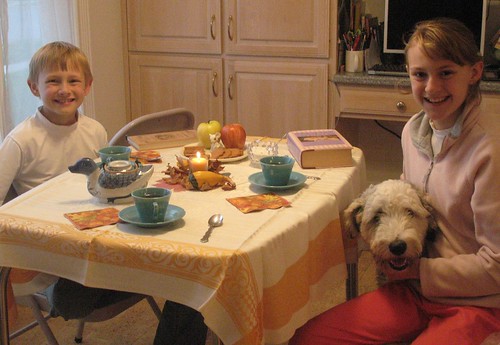
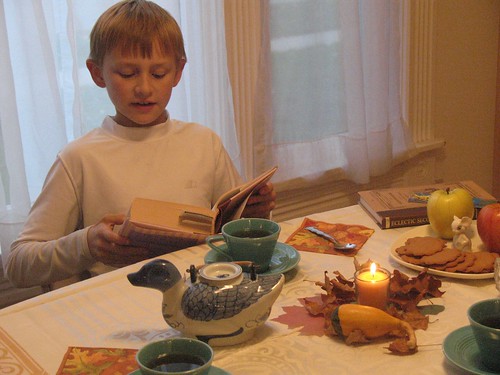
teatime hayes “Mom! It’s tea time!”

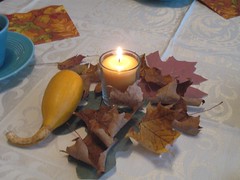
“Okay, I’ll put the kettle on.” I mentally decided to make this quickly-thrown-together tea a little nicer than our usual quickly-thrown-together teas. So for this tea…a beautiful autumnal tablecloth and a couple of faux leaves under a plain autumn harvest scented votive candle for a simple centerpiece.

Next thing I know, ten year old son Josh is out the door and back in again in a flash with a, “Close your eyes, Mom!” and then a handful of REAL autumn leaves to make the centerpiece more beautiful. (After all, it is October!) Add a little Bach for background music, Anna’s thin and crispy pepparkakors, red and yellow apple slices and a pot of Country Cranberry Tea and our little-bit-nicer-than-usual autumn tea is on!

Hayes teatime

From the Book of 1000 Poems:
“Swinging,” by Irene Thompson and “The Song of the Bath,” by Margaret Gibbs, chosen and read by Hannah (11).
“October’s Party,” by George Cooper, selected by Josh(10)
“October,” by Christina Rosetti and “Rich Days,” by W.H. Davies were Mom’s picks.
(The last three were all repeats from last week’s tea-time readings.)

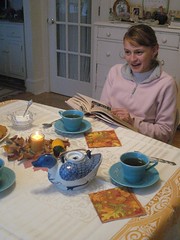
teatime hayes 2 Finally, we practiced our elocution (as suggested by Linda Fay on higherupand furtherin.blogspot.com) by reading about whales and whaling from McGuffy’s Reader– and Tea Time is done for another week (if all goes well!) If truth be told, I have the nagging fear (certainty?!) that my children’s love of tea time has more to do with the FOOD than the poetry (sigh…), but I also know that whether THEY know it or not, they HAVE been nourished all the same by what they have read and heard, as well as from what they’ve eaten!


Thank you, Julie, for blessing and inspiring so many of us.
Judi

teatime hayes 3

Posted in Poetry Teatime | Comments Off on Tuesday Teatime: Hayes Family


« Older Entries
Newer Entries »
  • Search the Blog

  • Julie Bogart
  • Welcome, I’m Julie Bogart.

    I’m a homeschooling alum -17 years, five kids. Now I run Brave Writer, the online writing and language arts program for families. More >>

    IMPORTANT: Please read our Privacy Policy.

  • New to Brave Writer? START HERE

  • FREE Resources

    • 7-Day Writing Blitz
    • Brave Writer Lifestyle Program
    • Brave Writer Sampler: Free Sample Products
    • Freewriting Prompts
    • Podcasts
  • Popular Posts

    • You have time
    • How writing is like sewing
    • Best curriculum for a 6 year old
    • Today's little unspoken homeschool secret
    • Do you like to homeschool?
    • Don't trust the schedule
    • You want to do a good job parenting?
    • If you've got a passel of kids
    • You are not a teacher
    • Natural Stages of Growth in Writing podcasts
  • Blog Topics

    • Brave Learner Home
    • Brave Writer Lifestyle
    • Classes
    • Contests/Giveaways
    • Friday Freewrite
    • High School
    • Homeschool Advice
    • Julie's Life
    • Language Arts
    • Movie Wednesday
    • Natural Stages of Growth
    • One Thing Principle
    • Our Team
    • Parenting
    • Philosophy of Education
    • Podcasts
    • Poetry Teatime
    • Products
    • Reviews
    • Speaking Schedule
    • Students
    • Writing about Writing
    • Young Writers
  • Archives

  • Brave Writer is a participant in the Amazon Services LLC Associates Program, an affiliate advertising program designed to provide a means for sites to earn advertising fees (at no extra cost to you) by advertising and linking to amazon.com

    Content © Brave Writer unless otherwise stated.

What is Brave Writer?

  • Welcome to Brave Writer
  • Why Brave Writer Works
  • About Julie
  • Brave Writer Values
  • Frequently Asked Questions
  • Speaking Schedule

Brave Writer Program

  • Getting Started!
  • Stages of Growth in Writing
  • The Brave Writer Program
  • For Families and Students
  • Online Classes
  • Brave Writer Lifestyle

…and More!

  • Blog
  • Classroom
  • Store
  • Books in Brave Writer Programs
  • Contact Us
  • Customer Service
  • Brave Writer Staff
© 2026 Brave Writer
Privacy Policy
Children's Privacy Policy
Help Center