What would you do to entertain your family without spending any money?
By spring, unschooling
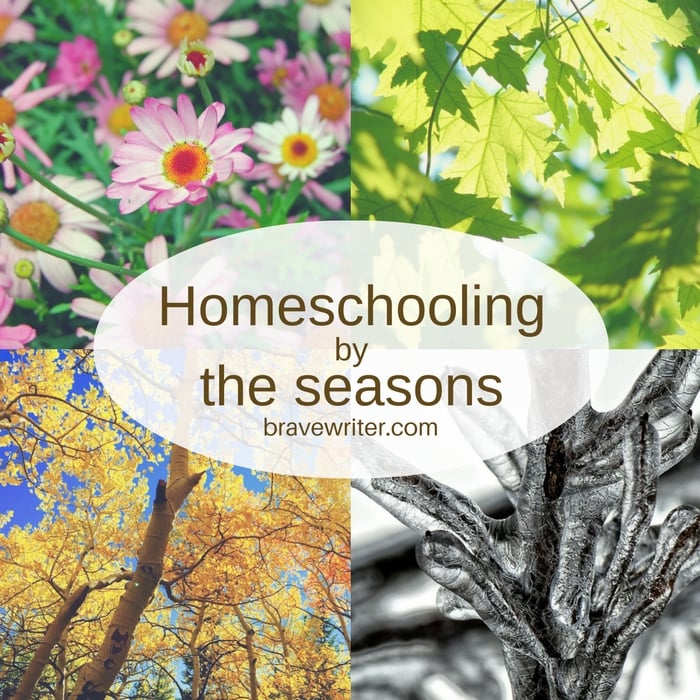
I used to tell audiences that we had a three-pronged approach to home education: Sonlight, Charlotte Mason and Unschooling.
In Autumn:
We’d follow the Sonlight curriculum with its scheduled novels, fast clip workbooks, and history immersion. Fall brought energy and focus. I could prepare lessons, stay on top of a schedule, and take advantage of my kids’ love for crisp unused materials.
In Winter:
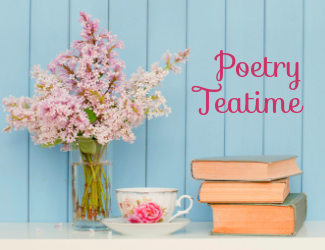
After the Christmas break, when bare trees, grey skies and snow took away our chance to head outdoors consistently, we moved into Charlotte Mason mode. The cozy house lent itself to fires and read alouds, candles and poetry teatimes. We’d watch birds, study pine cones, take brisk walks in barren parks or go skiing. We’d also delve into the arts: we’d visit the art museum, watch classic films, and learn to knit. Schedules felt wearying and workbooks, frayed and tired. Poetry teatimes and hand crafts, literature and the arts, nature and conversation.
By Spring:
After all that great academic effort, we’d collapse into unintended unschooling. Seemed our energies for organized education would suddenly evaporate under the glare of sunshine, spring sports and theatrical performance! We’d follow the educational muse wherever she took us. Spring turned into “party school” where we’d organize a big Gold Rush dig or we’d invite a gaggle of girls over to immerse themselves in what we’d learned about India (complete with foods, henna and saris). Field trips were so natural and easy in spring.
Today:
Now that three of the kids aren’t at home, schooling along with us, my younger two and I don’t follow a particular schedule or style. The two at home mostly wake up at about 12:00 noon. I do my work in the mornings and we have the routine of “school work” in the afternoons. Yet all those lifestyles live in me and in our home. We can and do follow a more disciplined approach to some subjects (math with a tutor has created a routine we can all sustain more happily than if I just expect the kids to learn it as they go). And we are utterly free with others (history is no longer tethered to a spine; we typically watch movies and read literature and allow history to find its way into our lives more organically; though we do use Story of the World as a good solid reference). We have lots more time and space (no more toddlers, only two sharing one computer). Conversations are deep, long and satisfying. Poetry teatimes are still a highlight.
Having grown up in our family, the younger two seem to naturally self-educate in a way that the older ones didn’t (or at least, they didn’t come to it as naturally). I’m amazed at the way each of them tackles what they want to learn. For instance, Caitrin (12) is vegan. She started as vegetarian and due to the influence of her “away-at-college” older sister, she decided to take it further. Veganism has led her to study about how food is produced in America, what conditions animals are raised in for our consumption (warning: it’s pretty graphic and ugly once you get into it), what it is to be healthy (she’s spent hours learning about nutrients, which ones she needs, how to get them), and how to cook! She’s taken over dinners, using her magazine “The Vegetarian Times” to help her produce very tasty meals for all of us.
There’s space and time for all of this because I don’t feel panicked about her education, because we don’t have toddlers, because I recognize a great learning trend when I see one. I didn’t always feel this way. I remember panicking, chasing toddlers and nursing babies, and I remember doubting that something like veganism could really lead to a quality learning experience.
What I like to say to moms when they ask me about unschooling or child-led learning: it’s all a process for you too. You’re in your own learning process about what it is to homeschool, educate, nurture and lead your children. Be patient with yourself. Affirm the good, gently let go of what doesn’t work. Over time, you will find the rhythm that is right for your family.

You knew your gamer would make a career of it…
Can you believe this? Video Game Grad Programs Opens Up Industry
Traditionally, video game designers learned their trade from other designers, a system that meant the people who made the games were often living in a monoculture. But that’s changed recently; for the past five or 10 years, universities have been offering degree programs in video game design.
The programs are not about coding; instead they look at games as a medium for artistic experimentation and collaboration. And as students emerge, they are gradually making their mark on the industry.
My kids have told me for years that they would be able to earn a living off gaming. Now, it appears they were right!
Good writing
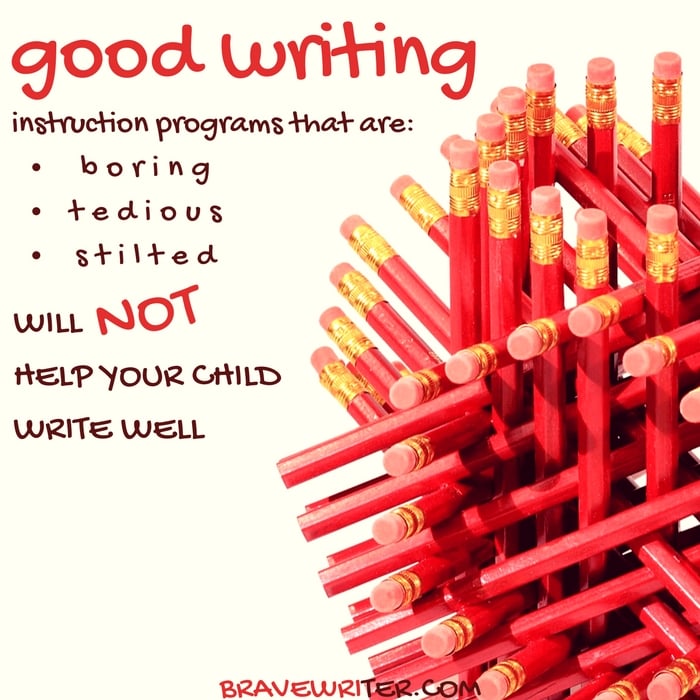
You know what? Good writing is good to read. Period. You know it when you read it. You want to keep reading. That’s the test. Do I want to keep reading?
I’m bored with writing by people who haven’t spent ten minutes imagining the yawn they’re creating from the tedious, stilted prose they pour forth to a computer screen in the name of clarity.
I’d sacrifice a little clarity for the sake of a hearty chuckle. It’s just not right, in the 21st century, to think anyone has time for words strung together that plod along in life-sapping language requiring you to read them because, after all, they’re telling you about a product or service you think you might like. Please! Have a heart. Hold my attention. Don’t make me drink six cups of coffee to stay awake through the explanation.
Twitter limits tweets to 140 characters, including spaces. That’s not much time to hold anyone’s attention. Yet all day long, I’m struck by the power of the updates. People pack an incredible amount of information, insight, humor, commentary, heart, debate and chat into 140 character comments.
Meanwhile, on some websites, you can’t get a single bounce out of any sentence despite having unlimited space to create that energy! Even more criminal: on websites where writing instruction is the priority, visitors are often met with a sterile, impersonal template sharing little more than pedantic explanations about how courses work or what format structure they teach. Really? That’s the best writers can offer?
I wilt like lettuce left on the counter just reading that stuff.
It’s like we haven’t evolved. Somehow the world of writing instruction has not caught up to the world of writing consumption! The Internet is overrun with good writers and great writing. That’s because the competition for an audience is steep. People know what they like to read. They can click out of any page that drowns them in the alphabet. Readers need their linguistic hit!
So here’s my new rule of thumb: can you say it in 140 characters and make someone want to listen? If you can do that in 140, you can do it in 400, or 4,000. It’s just you gotta treat all the characters with that level of care. Even more, be your own audience. Did you laugh at your writing? Were you moved by your words? Did you find a metaphor you hadn’t ever thought of before?
Last thing: if you’re shopping for writing curricula, do the “good writing test.” If you find it hard work to read the materials, if you have to “discipline yourself” to pay attention to explanations of the classes, if you feel like writing will be a chore you must do (like eating your veggies, taking fish oil capsules and scrubbing toilets), then you’re not in the right program.
The goal of any writing instruction is that the end product is a joy to read. That only comes if the purpose of the writing is to hold the attention of the reader. And that only comes when you let go and allow your wacky, quirky, delightful take on life to weave itself into your writing.

APACHE convention
Hi everyone.
I’ll be speaking at the homeschool convention in Peoria, Illinois which starts on Friday. I hope locals will turn out. They’ve assigned me five workshops and I’ll have a booth with materials available to all who might be curious to see The Writer’s Jungle in person. I’ll cover topics which include nurturing brave writers, the developmental stages of writing, high school writing (including SAT/ACt prep), language arts, and the Brave Writer program. I hope I get to meet some of you! I always love talking with Brave Writer moms.
For more information, check out the APACHE website.