 Image by woodleywonderworks
Tell about a time when you said goodbye. It might be about a person, a pet, an object, an experience, the winter season, etc.
New to freewriting? Check out our online guide.

Image by woodleywonderworks
Tell about a time when you said goodbye. It might be about a person, a pet, an object, an experience, the winter season, etc.
New to freewriting? Check out our online guide.
The following post is by Nikolas Baron. Note: this guest post is in line with Brave Writer principles, but we don’t necessarily endorse all of the author’s views or associations.
I remember, the Players have often mentioned it as an honour to Shakespeare, that in his writing, (whatsoever he penn’d) hee never blotted out line. My answer hath beene, would he had blotted a thousand.’
Those are the words of 17th century playwright, Ben Jonson, about his friend, William Shakespeare. Shakespeare, famously, did not proofread his work, and Jonson was saying that if he had he would have been a much better writer!
All writers make mistakes, but they can’t all get away with them like Shakespeare did. So, though clear and colorful content come first, it’s important for students to know that correcting mistakes is part of the process and that successful writers have trained themselves to edit and proofread their work.
Young writers don’t need to polish every piece of writing they produce, but when they do want to take a story or an essay to completion, here are a few tips to keep in mind:
1. Use a dictionary. Maybe that sounds a bit old-fashioned today, what with all the online help available, but a good dictionary is invaluable and can greatly improve spelling and vocabulary. The same can be said for a thesaurus. The English language is rich in synonyms and using a thesaurus can improve children’s writing immeasurably, as well as increase their awareness of the different ways of saying the same thing.
2. Cheat a little. If children write on the computer, encourage them to use a spellchecker or other online programs that highlight grammatical errors. There’s nothing wrong with a little outside help, and kids can learn from the suggested corrections (emphasis on “suggested,” because it’s okay to break the rules, sometimes).
3. Print it out. Instead of reading a computer screen, print the text. Mistakes can be seen much better that way.
4. Read out loud. Students should read through their work, and the best method is not a silent read through. Our brains tend to see what we think is written rather than what is actually on the page, so the most effective method is to have budding writers read their work aloud. This helps them concentrate on their words in a way that a silent read-through never can. If a sentence runs on and on, children will literally run out of breath when it’s verbalized! They will also hear where those all-important full stops and commas go. Misspelled words will stand out, too. Plus if students have missed a word, or the word order is wrong then they will be able to hear that. English is a highly rhythmic language, so as well as spotting errors more easily, reading out loud helps students decide if their writing “sounds right.”
5. Pick one thing. Proofread for certain features: one read through for spelling, one for full stops, one for commas, and so on.
6. Leave it alone. After finishing a piece of writing have children put it away for a day or two then have them go back and read it through once more. They’ll spot mistakes they missed the first time round, and they’ll also be able to decide if the structure of the piece needs altering.
Using some or all of these techniques will help students polish their writing, and pretty soon they’ll be using them automatically every time they put fingers to keyboard or pick up a pen.
Happy proofreading!
Nikolas Baron is a freelance writer. He works for Grammarly.com –an online program that not only checks spelling but also gives useful advice about commas, full stops, and other tricky punctuation features.
Image by Julia Manzerova

Sometimes in our eagerness to see our children become independent, we leave them to their interests. We see them happily listening to their favorite musical artists over and over again, we notice them reading an entire series on the universe and star systems, we watch as they perfect a trick in gymnastics or a move in lacrosse, or we try not to be disturbed by how enthusiastically they play an online game.
Sometimes their hobbies and interests create pride in us. For instance, I’ve never met anyone who would be ashamed to see their child mastering chess and entering tournaments, or practicing violin 4-5 hours a day. Kids who learn foreign languages with Rosetta Stone, on their own, because they want to, cause parents to brag about them. Parents are regularly proud of kids whose favorite subject is math, or the history of warfare. They love it when their kids show prowess in “prestige” interests.
Other times, though, our kids get obsessed (our negative word for their passions) with stuff that makes us cringe:
It’s easy to put a child’s interests into containers (the “good” interest box, and the “bad” interest box). When you do that, your face changes when you talk to your child. You light up when your daughter tells you she learned to play the difficult passage in the concerto, but cringe a little bit when your son tells you he finally beat a level in Halo after hours of playing.
Your response to how your children express their interests generates trust or creates distance between you. For a moment, suspend judgment and think about what your child is learning about learning. We call this “going meta.” The “meta” level of reflection works like this: To have a meta conversation, means you are now talking about talking. To discover the meta-theory means you are developing a theory to discuss theory.
Applied to the idea of learning: the “meta-layer” of learning is examining how learning is happening, not what is being learned. You get up on a high perch, above your child and your child’s interests, looking down at the signs and symptoms of learning rather than the content (what he or she is studying).
When you do this, you begin to see that the features are similar whether studying violin or how to blow away your opponent on a screen. Certainly the skills are different (and we can argue some other time about what is more difficult). But the process—
—can all be gained in any subject area.
When we’re tempted to dismiss a child’s passions, we may be short-circuiting their development as learners! In other words, what matters more than the specific field is the child’s development as a skilled autodidact (self-directed learner).
The skill of learning transfers to any field of endeavor. But it can’t transfer if a person has never experienced the way passionate interest generates sustained growth and commitment to overcome challenges. These are the tools of learning that create lifelong learners (of the sort we all say we want).
To facilitate this growth, it helps if you wade into the waters with your child. You don’t have to become an expert at World of Warcraft or episodes of Dr. Who or even how to play chess. What you need to be is curious about how your child sees the world when immersed in this field. You want to find out if he or she is “good” yet (as far as they can tell), and what “getting good” looks like, and how they measure themselves. You want to understand what compels their interest (how did they get hooked and why?). You want to know who the community is that is invested in this world (and if at all possible, you want to value it!).
The world is a huge place with so much to explore. It’s not surprising that our kids might find passions in places we never thought to look!
Become a part of the conversation—hold back judgment. Go “meta” and look at the skills that are related to being a learner, and validate those (to yourself, especially—your kids already know they are learning, you need to know that too). You also may find out that that world that is so absorbing to them really is as fascinating as they say it is! What a gift to our kids when we can genuinely say about their prowess, “I’m so proud of you!” and mean it.
Explore this topic further:
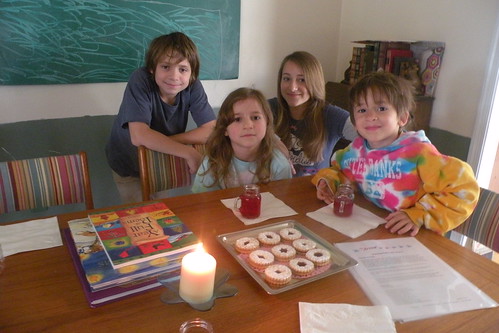
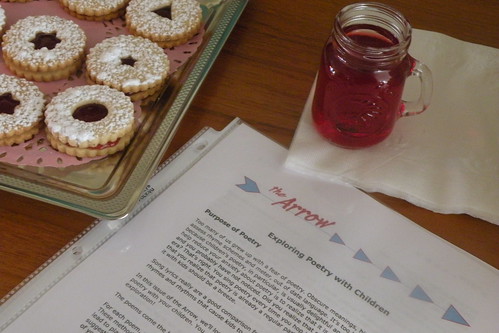
Thankfully there’s a freedom in brave writing that doesn’t make me feel guilty when I can’t do this every week, but when we’ve done it it’s been memorable (in a good way!) It never gets fancy, but it’s fun and enjoyable.
Brave Writer ROCKS!
~Angela

It’s not too late to teach writing or fractions or a love for reading.
It’s not too late to have big conversations or to show interest in your children’s noisy music or boring card games.
It’s not too late to sketch the trees or recite poetry.
It’s not too late to study chemistry or learn calculus or play a musical instrument.
It’s not too late to be gentle, or to listen more attentively to your child.
It’s not too late to get help for your struggling learner, no matter how old he or she is.
It’s not too late for therapy or support groups or help for you.
It’s not too late to make the hardest decision you’ll ever make.
It’s not too late to go on the field trip or save money for the special camp or to go on the big vacation to that place that you imagined you’d all go.
It’s not too late to learn more about home education.
It’s not too late to change course, revise your plan, or to try something new.
It’s not too late to have the homeschool you imagined, even if you try it just for a day, or a week, or a whole month to see how it goes.
You can start today, or tomorrow, or even next week. You can start in the fall or after Valentine’s Day or once the baby is born.
If it doesn’t go the way you’d hoped, it’s not too late to go back to how things were.
If it’s harder than you expected, it’s not too late to take more time, or go more slowly, or get help.
If you love the new direction or find that you’re making progress or see that your children are thriving, it’s not too late to be proud of that choice!
You don’t have to regret that you didn’t figure it out sooner, or that you weren’t made aware of this wonderful new resource, path, or philosophy. Congratulate yourself on finding it now, on having the courage to stake out a new footpath for you and your family.
If you’ve lost your way, if you’ve lost a child or husband or wife or community, if you’ve suffered set backs in finances or health, if your life is not at all how you imagined it would be at this point in time…
…it’s not too late to be happy again, or to find hope, or energy, or optimism.
It’s never too late to find a new way that works, maybe just as well, maybe just good enough, maybe better than ever.
But it’s not too late.
You can face the future armed with this single awareness:
All you have is today. With the people you love and the life you have, today can be the start of the:
…next step
…next chance
…next opportunity.
Don’t give up. Make the phone call, read the book, book the tutor, clear the schedule, sit at the table, do the work, go on the trip, file the papers, listen.
Regroup: tomorrow, or the day after, or whenever you’re ready.
You will be, eventually, at just the right time.
And it won’t be too late.