A Brave Writer's Life in Brief - Page 559 of 780 - Thoughts from my home to yours A Brave Writer's Life in Brief
  • Start Here
    • For Families
      Multiple Ages
    • Ages 5-7
      Beginning Writers
    • Ages 8-10
      Emerging Writers
    • Ages 11-12
      Middle School Writers
    • Ages 13-14
      High School Writers
    • Ages 15-18
      College Prep Writers
  • Shop
    • Product Collections
    • Bundles
    • Writing Instruction Manuals
    • Literature & Grammar/Punctuation
    • Composition Formats
    • Literature Singles
    • Homeschool Help
    • Book Shop
  • Online Classes
    • Class Descriptions
    • Class Schedule
    • Classroom
    • How Our Classes Work
    • Our Writing Coaches
    • Classes FAQ
  • Community
    • Brave Learner Home
    • What’s Happening
    • Blog
    • Podcast
    • Calendar
  • Cart
  • My Account
    • My Online Classes
    • My Account
  • My Account
    • My Online Classes
    • My Account
  • Start Here

    If you’re new to Brave Writer, or are looking for the best products for your child or family, choose from below:

    • For Families
      Multiple Ages
    • Ages 5-7
      Beginning Writers
    • Ages 8-10
      Emerging Writers
    • Ages 11-12
      Middle School Writers
    • Ages 13-14
      High School Writers
    • Ages 15-18
      College Prep Writers
  • Shop

    If you’re already familiar with Brave Writer products, go directly to what you’re looking for:

    • Product Collections Browse the full catalog in our shop
    • Bundles Everything you need to get started
    • Writing Instruction Manuals Foundational Writing Programs
    • Literature & Grammar/Punctuation Grammar, Punctuation, Spelling & Literary Devices
    • Composition Formats Writing Assignments for Every Age
    • Literature Singles Individual Literature Handbooks
    • Homeschool Help Homeschooling Tools and Resources
    • Book Shop Books associated with Brave Writer Programs
  • Online Classes
    • Class Descriptions
    • Class Schedule
    • Classroom
    • How Our Classes Work
    • Our Writing Coaches
    • Classes FAQ
  • Community
    • Brave Learner Home
    • What’s Happening
    • Blog
    • Podcast
    • Calendar
  • Search
  • Cart

Search Bravewriter.com

  • Home
  • Blog

A Brave Writer's Life in Brief

Thoughts from my home to yours

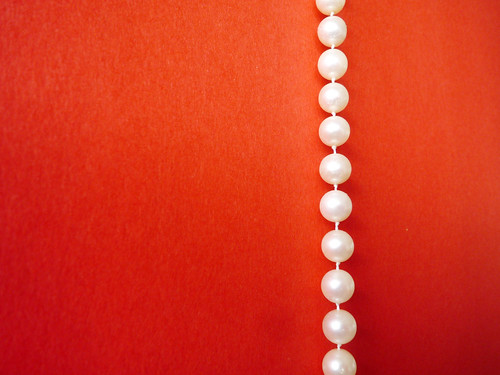
Like pearls on a necklace

counting pearlsImage by rosemary

It’s not unusual to feel muddled when you think about what the best course of home education is for your children. There are competing promises among the many choices.

freedom
depth
flexibility
“children learn best when children decide what, when, and how they will learn, and for what purpose”
advanced academic preparation
mentoring
“inspire, not require”
connections between subjects
personalized education
“a well trained mind”
“a science of relations”
character building
religion-free, multicultural, world citizen
“literature-rich, Christ centered”
“open-and-go”
structured and thorough
comprehensive
parent-led
child-led

I’m sure you can add quotes and slogans of your own.

With the advent of the Internet, there are even more homeschooling groups, websites, blogs, forums, email lists, and Facebook groups than ever. Each promises a happy, well-educated, well-adjusted child at the end of the journey.

What happens when you explore is that the advocates of any system typically believe in their system so thoroughly, they disregard the value of any other system.

When you make a choice to adopt a specific program or plan (even if the “plan” is to let go of the “plan”!), the initial experience is often like trying to join a marathon in progress, only you’ve never done the training. You get tired, you say the wrong thing, you do the wrong thing… while the trained runners whiz by you.

Missteps and misunderstandings of the principles lead to strong exhortations on the part of the advocates: everything from advice-giving, to figurative hand-slaps, to humiliations.

Even when you earnestly seek to apply the principles in their entirety, if you run aground (have struggles, find that the method isn’t working for one of your children, or discover that you aren’t having the success you envisioned), sometimes you’re blamed for not applying the principles correctly, or enough, or with the right tone of voice, or according to the right schedule (or lack of it!).

Learning how to live according to a vision someone else cast is demanding. No two people understand the vision the same way. Add your family to the mix (where you’ve done all the research, and they’ve typically done none), and you have a recipe for confusion—particularly during the transition away from one paradigm to another.

Parenting and education are broad categories. There is no one (single) way to bring children into adulthood as learned people. We know this because the world over uses a variety of parenting and educational strategies, and the world embodies brilliant minds and close connected families in cultures completely different from ours.

Our goal can’t be to find the right set of tools, or the right ideology, or the right system. It can’t be to advocate so righteously for one method that we overlook the benefits or valuable insights of another.

Any philosophy that adopts the viewpoint that if you experience “failure” or struggle, you aren’t doing it right, is in danger of putting ideas ahead of people. No one lives any belief system so purely that they never run up against the limits of that perspective.

In fact, I’d go so far as to say that all perspectives have limits—and all people have limited abilities to carry out their best intentions.

Examining your principles is a good place to start (principles are easier to live by than rules). But purists can turn principles into rules… so be careful.

Your best bet is to be gentle with yourself and to surround your homeschool life with people who are advocates for *you* more than your philosophy of education or parenting. You should have room to air your confusion, your mistakes, your failures, and your successes. You shouldn’t have to pretend to live up to the ideals of the group in order to participate. You shouldn’t be subjected to unkind scrutiny for the sake of being a lesson for others.

It is possible to get value from a perspective, even if you don’t adopt all of it.

It’s possible to use a style of education for a few years, and then try something else for a few years just to change up the energy in your home.

It’s great to read the powerful arguments for a variety of educational theories so that you avoid getting into a rut of thought where you make one view “all bad” and have to defend your view as “all good.”

These are rarely useful ways to evaluate.

Lastly, some seasons demand different styles of home education for everyone’s peace of mind. Families dealing with chronic or terminal illness in a parent will necessarily approach home education differently than those with parents fully functioning.

What matters—what will matter most to you in the end—is the feeling that the people you love consider home and education to be pleasant, peaceful, and life-giving. No family or home feels like that all the time in any philosophy. Many philosophies help you get there. Most often, the philosophy is only as good as the emotional health of the parents anyway.

Your goal is to string together (like pearls on a necklace) moments where you can say, “Today was a good day together and we learned something too.”

When these accumulate, life starts to hum. Don’t worry so much about how you got there. Enjoy it while it lasts. Note it. Be proud of it. Don’t doubt it.

Weirdly, that’s enough—whether you co-sleep or bottlefeed or homeschool or put your kids on a yellow bus.

Love in the home, created by conscientious parents, who take education seriously (in any of its myriad forms), is what we all want.

Go forth into your homeschool this morning and enjoy whatever philosophy it is that has your fascinated today.

Cross-posted on facebook.
Posted in Homeschool Advice | Comments Off on Like pearls on a necklace


Poetry Teatime: Around the campfire

Poetry Teatime

My name is Rebecca, my children are Roman (almost 8) and Simone (5). Poetry Tea Time gives our family rhythm and respite – some quite time among the complexities of math, of learning to read. It easily blends into many other aspects of life. We use it to practice proper table manners or to learn to cook the goodies we will eat.

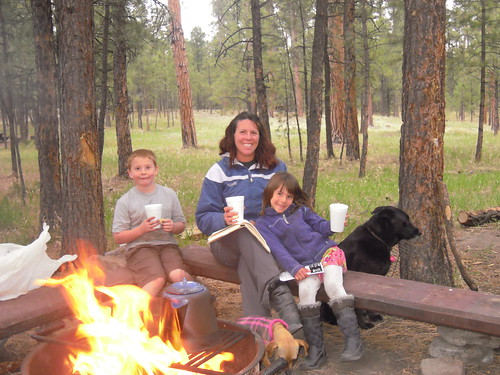
I wanted to share with you a photo from our most recent Poetry Tea. It took place while camping in the Santa Fe National Forest, about an hour from our house. No fancy tea cups and pastry this time. However, campfire s’mores, tall Ponderosa Pines and cool mountain air are a good trade.

I love listening to the giggles of my children as I read Hat by Shel Silverstein. The poem is about a child who is wearing a toilet plunger as a hat. The reader can only assume he must have been told this by an older sibling. I think as mother’s we can all relate to the plight of our youngest children. I feel as though I have come full circle when I read poems by Silverstein, my parents read them to me as a child, now I am sharing them with my children. They are silly and deep at the same time.

Sometimes our Poetry Tea is fancy and proper, sometimes it is lemonade and cookies in the park, sometimes it is mud pies and sticks in the river and sometimes it is up in the tall pines of the mountains. In the photo we are enjoying what we love most about homeschool, independence. We are camping, during the middle of the week, in an empty forest.

Regards,
Rebecca

Visit our Poetry Teatime website!

Posted in Poetry Teatime | Comments Off on Poetry Teatime: Around the campfire


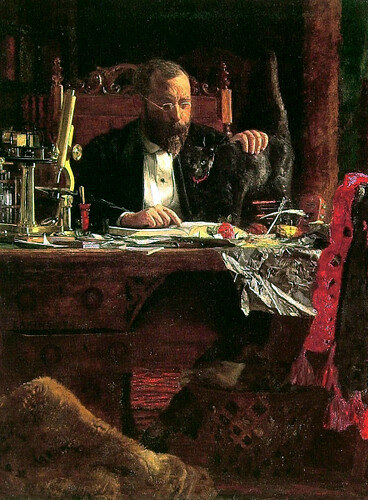
The professor-archetype

Portrait of Professor Benjamin H RandHave you ever noticed that in some children’s literature, a professorial type male character is often included as a father-like figure to a gaggle of kids? He might even be the father.

This man is usually interesting to the reader because he seems oblivious to typical parental worries—he doesn’t throw up red flags of caution when the children experiment with dangerous tools, contraptions, or potions. He is unworried by their retellings of journeys into magical worlds or forests. He is non-plussed by their cheeky philosophy or their impolitely expressed opinions. He often accepts their fantastical tales with aplomb, barely registering alarm when they return from adventures riddled with danger, and shows a surprising capacity to believe the stories at face value.

This man-character doesn’t lecture children and sometimes, infuriatingly, doesn’t even give advice or warnings when they seem most merited. He, himself, might be engaged in his own mysterious doings and ponderings, which leave the children bewildered and impressed.

I think of characters like Professor Dumbledore (Harry Potter), Professor Kirke (Chronicles of Narnia), Professor Martin Penderwick (professor of botany, The Penderwicks), Merlin (The Sword and the Stone), Wayne Szalinski (Honey, I Shrunk the Kids), Gandalf (Lord of the Rings series) and even the benign homesteading pioneer, Pa Ingalls (Little House series).

This archetype is an intriguing figure. Children gravitate to these men and I’ve been curious about why. I have a few hunches. It seems to me that children crave the experience of being taken seriously. They want their words to be weighed by adults and then found to be full of truth, sincerity, and importance. Even if children’s ideas or experiences could be explained away by an adult’s greater worldliness, children still hope to find in the adult they respect, an appreciation for the way they know the world so far.

These professor-like men uniformly respect a child’s grasp of the world they live in and they are appropriately engaged in their own battles and explorations so as not to be overly impressed by the children’s, either. These men’s lives are independent of whether or not the kids turn out, survive, or discover the same truths the professor-types take for granted.

Additionally, the professor-archetype believes he doesn’t know everything and is open to learning from any source, including the naive experiences of kids. This openness registers deeply with readers. It gives child-readers hope that the thoughts and feelings they have about the life they are living can find a kind, sympathetic, or at minimum, respectful audience in the adults they love and trust.

When I get worked up (wanting to cover all the bases, trying to protect my children from danger – even my adult children!, lecturing them from the vast-expanse of my more abundant failures and successes, disbelieving their reports because they don’t match what I’ve known to be true), I sometimes envision Professor Kirke and his wave-of-the-hand type attitude. He couldn’t be bothered explaining away Lucy’s experience of Narnia. If she reported it and she was trustworthy and we admit that there are things in the universe we do not yet know, there must be truth in Lucy’s report. End of story.

A profound respect for the truthfulness of children. Impressive.

When faced with my children’s inexperience and their youthful impulses, I have to resist the temptation to be a stodgy, know-it-all adult who fails to see magic and opportunity in a child’s point of view. I have to sometimes sit on my hands (which tend to do all the talking, lecturing, and waving) and let the perspective “ride”—let it run its course or express itself without restraint to hear the full-bodied nature of what it wants to say. I have to make room for what makes me uncomfortable.

I’m learning how to let risk be a part of a child’s (or young adult’s) exploration. I’m trying to hang back, talk less, and listen more. I want to be open, quieter, more curious, less case-closed.

I want to relate to my kids, believing that life is a better teacher than a lecture.

I want to respect their experiences without being a busybody about them.

It’s funny. This professor-archetype character is so popular with kids. They just love the surprise of an authority figure who would treat children as peers and invite them into real danger trusting them to their competencies, heart (valor), and goodwill—at least on the level of how they express their participation in the world around them, and how they understand their part in it.

These men (and women) make good role models for us. Don’t you think? Who are your favorite adults in children’s (or any) literature? What have you learned from them? I’m curious.

Cross-posted on facebook.

Image Portrait of Professor Benjamin H Rand by Thomas Eakins (1874)

Posted in Literary elements, Living Literature, Writing about Writing | 4 Comments »


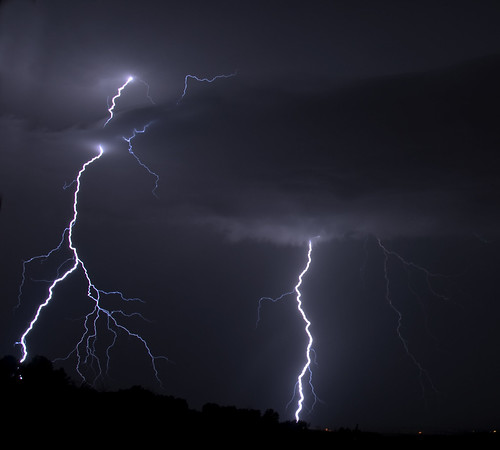
Prophecies of doom

LightningImage by John Fowler

We’ve all made them—those pronouncements that let our children know that the perilous choice they make today will land them in a low-paying ditch of a job, eking out a half life, regretting that they didn’t… master the proof for right angles on Thursday, April 25, 2013.

The slow descent to adult failure begins when the precious cherub who suckled at your breast defies your plan for his life.

You see him happily writing poems instead of completing math tests (yes, that would be Noah) and declare: “How will you get into college if you never advance in math?”

He plays around with sign language, studies Klingon, and never takes chemistry.

Dire predictions follow: “You *must* complete high school. You can’t expect colleges to make exceptions for you. Without a college degree, you won’t ever earn enough money to live.”

Except that colleges do make exceptions, and they make them for your son, who they told to put Klingon on his transcript for his foreign language requirement, and apparently the linguistics department doesn’t care whether or not he took chemistry in high school.

You proclaim to your daughter that she *must* study US history because no college will accept her without it on her transcript. She never musters the interest. US history study lags and flags and sputters. When application to college-time comes, she does a six week crash course and is accepted into the scholars program at the university of her choice… anyway.

You declare that no one can live on minimum wage… and then your adult child does, somehow (maybe not to the standard of living you’d want for him, but he makes it work because it’s his life and this is what he wanted for now).

We tell our kids that they will get lost if they don’t print directions, we tell them they will lose all their teeth if they don’t brush them, we warn that if they don’t sleep 8 hours a night, they won’t be able to think straight the next day.

We predict that no girl will ever kiss our son if he doesn’t learn to shower. We declare that online friends aren’t real friends and so our child is friendless.

We make sweeping statements out of fear and love, I know. We all do it.

Last night a mother I spoke with told me that her 9 year old son had just begun to lie to her, for the first time in their precious intimate close self-aware relationship. It stunned her. She launched into the parental “never lie to me” prophecy of doom: “How can you lie to me? We will never have trust again if you don’t tell me the truth. You are ruining our relationship.”

But that’s not what is happening. A 9 year old boy is avoiding something, has figured out that if he tells half the truth, he may only have to do half the work. It’s not likely he intends to destroy the parent-child bond… but we frame it that way. We get big and dramatic and huge and sometimes even loud and lecture-y and oh how we love to go for length in those moments.

Parents aren’t stupid. They have made so many mistakes in their 35-50 years on the planet, they only want one thing: for their children to not make any. Parents can see further down the time line. Sometimes that’s an enormous advantage! Kids do well to heed parental vision!

But not every time.

Not about every thing.

Not all the choices your kids make today need to match the ones you would have them make.

In fact, I’ll go further. Our biggest job isn’t to prophecy doom or to spell out impending disaster or to nudge, nag, and coerce cooperation with our vision for their lives (or even what we are convinced is their vision for their lives).

Our job is to be pointers.

It’s better to say stuff like:

“Hmm. You don’t want to take more math? I wonder if UC will accept you into their program if you were to apply without it. Let’s call to find out. What if you don’t call and don’t take the math? How would you feel if they didn’t accept you because you didn’t take pre-calc? Would you take it then? Where?”

We need to help our kids think about the choices they are making, not tell them the outcome of the choices before they’ve made them. We can point our children in the right direction—suggesting they find out what they don’t know and honestly, what we may not know either.

When Noah stuffed his transcript into the application envelope for college, he said the following:

“I’m going to be so mad at myself if not taking chemistry keeps me out of college.”

That’s what you want to hear! Noah knew it was his choice, one he made with full information—that most kids need chemistry in high school to qualify for college.

And wouldn’t you know? His wager won. He was accepted to the linguistics program without chemistry.

The main reason you don’t want to prophesy doom is because you really don’t know how things will turn out. You really don’t. But you do have valid concerns and some perspective and a slew of ideas about how to make a satisfying life. Your best bet is to engage in conversation, point out things to consider, and even to prophesy a little hope:

“I would hate to study chemistry too. In fact, I never did! We didn’t have to take that class in high school when I was your age. I wonder if there’s a way to get around it. I wonder, if it is required, if there’s a way to do it so it’s less annoying. But I know you. You’re smart! You’ll get to where you want to go eventually, and I want to help you get there. Shall we do a little research before we abandon the traditional path? Just to be sure?”

Resist the temptation to prophesy doom.

Establish the habit of research and considering all options.

Give support, faith, and love.

Then see what happens.

Posted in Homeschool Advice | 2 Comments »


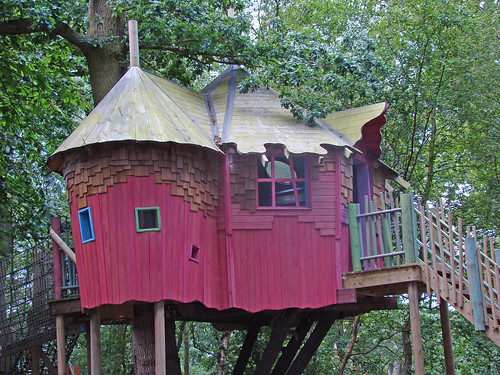
Friday Freewrite: Treehouse

Bewilderwood TreehouseImage by Spencer Wright

If you could design a treehouse, what would it look like outside and in?

New to freewriting? Check out our online guide.

Posted in Friday Freewrite | Comments Off on Friday Freewrite: Treehouse


« Older Entries
Newer Entries »
  • Search the Blog

  • Julie Bogart
  • Welcome, I’m Julie Bogart.

    I’m a homeschooling alum -17 years, five kids. Now I run Brave Writer, the online writing and language arts program for families. More >>

    IMPORTANT: Please read our Privacy Policy.

  • New to Brave Writer? START HERE

  • FREE Resources

    • 7-Day Writing Blitz
    • Brave Writer Lifestyle Program
    • Brave Writer Sampler: Free Sample Products
    • Freewriting Prompts
    • Podcasts
  • Popular Posts

    • You have time
    • How writing is like sewing
    • Best curriculum for a 6 year old
    • Today's little unspoken homeschool secret
    • Do you like to homeschool?
    • Don't trust the schedule
    • You want to do a good job parenting?
    • If you've got a passel of kids
    • You are not a teacher
    • Natural Stages of Growth in Writing podcasts
  • Blog Topics

    • Brave Learner Home
    • Brave Writer Lifestyle
    • Classes
    • Contests/Giveaways
    • Friday Freewrite
    • High School
    • Homeschool Advice
    • Julie's Life
    • Language Arts
    • Movie Wednesday
    • Natural Stages of Growth
    • One Thing Principle
    • Our Team
    • Parenting
    • Philosophy of Education
    • Podcasts
    • Poetry Teatime
    • Products
    • Reviews
    • Speaking Schedule
    • Students
    • Writing about Writing
    • Young Writers
  • Archives

  • Brave Writer is a participant in the Amazon Services LLC Associates Program, an affiliate advertising program designed to provide a means for sites to earn advertising fees (at no extra cost to you) by advertising and linking to amazon.com

    Content © Brave Writer unless otherwise stated.

What is Brave Writer?

  • Welcome to Brave Writer
  • Why Brave Writer Works
  • About Julie
  • Brave Writer Values
  • Frequently Asked Questions
  • Speaking Schedule

Brave Writer Program

  • Getting Started!
  • Stages of Growth in Writing
  • The Brave Writer Program
  • For Families and Students
  • Online Classes
  • Brave Writer Lifestyle

…and More!

  • Blog
  • Classroom
  • Store
  • Books in Brave Writer Programs
  • Contact Us
  • Customer Service
  • Brave Writer Staff
© 2026 Brave Writer
Privacy Policy
Children's Privacy Policy
Help Center