Praise for Brave Writer
Julie-
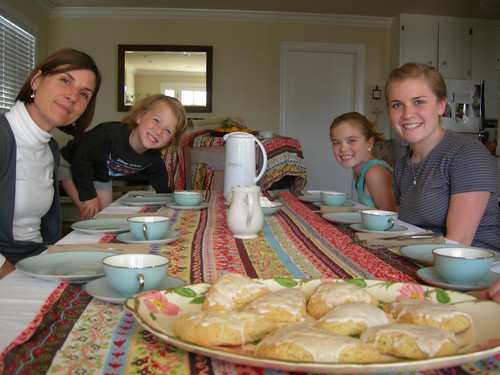
First, my children and I just finished the Kidswrite Basic class with Jean Hall… Thank you so much for making these classes available. My children didn’t turn out marvelously witty or poignant works, but they did write something and without too much complaining and they learned that they CAN write. And that is with suffering from the flu for most of the class. I no longer fear teaching them writing… I just have to figure out what kind of assignments to give them.Second, I’ve always thought canned writing programs were fluff and the assignments were drivel…but it wasn’t until I found your website and read The Writer’s Jungle that I realized others felt the same way. Most of the other homeschool moms I’ve talked with have looked at me as if I’d lost my mind but I know what works for my family. Since I discovered your website last summer, we have incorporated into our school routine Teatime Tuesdays (my 4-year old’s MOST favorite part of the week), Friday Freewrites, and this May we are taking your One Thing Workshop: Shakespeare… We (well, I) can’t wait. Thank you so much for inspiring me to make the most of the time I have with my children, learn to love writing, and only focus on one thing at a time!
Laura
Answer:
Thanks Laura for sharing with us. I’m so glad you have begun this journey one thing at a time.
–Julie
Question about research papers:
Hi Julie,
I really value & trust your opinion & wonder if you have a chance to answer a quick question for me. At what age would you recommend having a child do a research paper? My son will be 12 next school year. We do a copywork/dictation passage each week (courtesy of you next year) & also a creative writing assignment each week. At what age should I begin thinking about research papers?
Kim in Venice, FL
Answer:
Hi Kim.
I have lots of thoughts about research papers. First of all, it’s not possible for a 12-year-old to actually write one. He may be able to write a long report (which is usually what is meant by the term “research paper” when you read about them at the junior high level). A long report means that your child will study a subject using multiple sources and will then compile and paraphrase the information into his own words. He’ll organize the material by sub-head (subject heading). At the end, he’ll include some type of bibliography that itemizes his sources.
Just to be clear. That kind of writing is not a research paper. A research paper takes a specific point of view about a topic (a thesis-based paper) that is controversial (or at minimum, that provokes a counter-argument). These papers engage the academic community. What that means is that the papers are analyzing the academic work done by experts in the field. Students (particularly those who are in high school or who are college undergraduates) attempt to synthesize and analyze those arguments by taking a risky position, paraphrasing and understanding the arguments made by the experts, and then bringing something of their own insight and perspective to bear on those arguments (either agreeing or disagreeing or nuancing the positions). They use multiple sources (usually the rule of thumb is that you will have consulted the equivalent of one source per page based on the total length of the paper – so 15 sources for a 15 page paper).
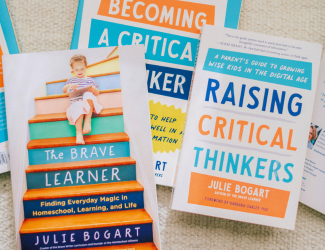
For a 12-year-old, writing a long-ish report is fine. But don’t call it a research paper. I have a chapter in The Writer’s Jungle called “The Dreaded Elementary School Report” that gives blow-by-blow steps of how to put one together that doesn’t drain the soul-life from your child. Most reports are tediously long, encourage flat-footed writing and kill anything resembling peaceful writing relations between parent and child (or teacher). The main benefit of the “long-ish” report is that your child learns how to use the library’s computer catalog system, sorts information into categories and learns how to make a little bibliography at the end. All of these can be achieved without writing a report, but if you are set on writing one, then exploit the experience for these aims rather than thinking about it in terms of “quality writing instruction.” Make sure that you keep the writing portion of the process to a minimum.
For the record, two of my five kids have written elementary school reports. Our ratio of how we organized our time: many months of reading and research and about a week of writing. 🙂 None so far has written a research paper before college. Jon and I have worked with our high schoolers (three of them) on crafting solid, 4-6 page essays. They are all very good at these now. When the older two went off to college and had to write longer papers (what would technically be called a research or term paper), they were both able to do it! They just expanded the essay format, lengthened the depth of their analysis for each of their points and voila! Research papers.
So I think the “research paper” as an academic goal before college is overblown. What we really want isn’t the ability to string together enough words for 15 pages. We want to cultivate rhetorical thinking and the skills of analysis in writing. We want to expose our kids to multiple points of view about a topic and teach them how to critically think about those viewpoints and how to offer their own. Most junior high kids aren’t mentally mature enough to do that kind of thinking yet. But in high school, kids are. Tackle that skill then and research papers will take care of themselves in college.
Julie