Podcasts Archives - Page 33 of 75 - A Brave Writer's Life in Brief A Brave Writer's Life in Brief
  • Start Here
    • For Families
      Multiple Ages
    • Ages 5-7
      Beginning Writers
    • Ages 8-10
      Emerging Writers
    • Ages 11-12
      Middle School Writers
    • Ages 13-14
      High School Writers
    • Ages 15-18
      College Prep Writers
  • Shop
    • Product Collections
    • Bundles
    • Writing Instruction Manuals
    • Literature & Grammar/Punctuation
    • Composition Formats
    • Literature Singles
    • Homeschool Help
    • Book Shop
  • Online Classes
    • Class Descriptions
    • Class Schedule
    • Classroom
    • How Our Classes Work
    • Our Writing Coaches
    • Classes FAQ
  • Community
    • Brave Learner Home
    • What’s Happening
    • Blog
    • Podcast
    • Calendar
  • Cart
  • My Account
    • My Online Classes
    • My Account
  • My Account
    • My Online Classes
    • My Account
  • Start Here

    If you’re new to Brave Writer, or are looking for the best products for your child or family, choose from below:

    • For Families
      Multiple Ages
    • Ages 5-7
      Beginning Writers
    • Ages 8-10
      Emerging Writers
    • Ages 11-12
      Middle School Writers
    • Ages 13-14
      High School Writers
    • Ages 15-18
      College Prep Writers
  • Shop

    If you’re already familiar with Brave Writer products, go directly to what you’re looking for:

    • Product Collections Browse the full catalog in our shop
    • Bundles Everything you need to get started
    • Writing Instruction Manuals Foundational Writing Programs
    • Literature & Grammar/Punctuation Grammar, Punctuation, Spelling & Literary Devices
    • Composition Formats Writing Assignments for Every Age
    • Literature Singles Individual Literature Handbooks
    • Homeschool Help Homeschooling Tools and Resources
    • Book Shop Books associated with Brave Writer Programs
  • Online Classes
    • Class Descriptions
    • Class Schedule
    • Classroom
    • How Our Classes Work
    • Our Writing Coaches
    • Classes FAQ
  • Community
    • Brave Learner Home
    • What’s Happening
    • Blog
    • Podcast
    • Calendar
  • Search
  • Cart

Search Bravewriter.com

  • Home
  • Blog

A Brave Writer's Life in Brief

Thoughts from my home to yours

Archive for the ‘Podcasts’ Category

« Older Entries
Newer Entries »

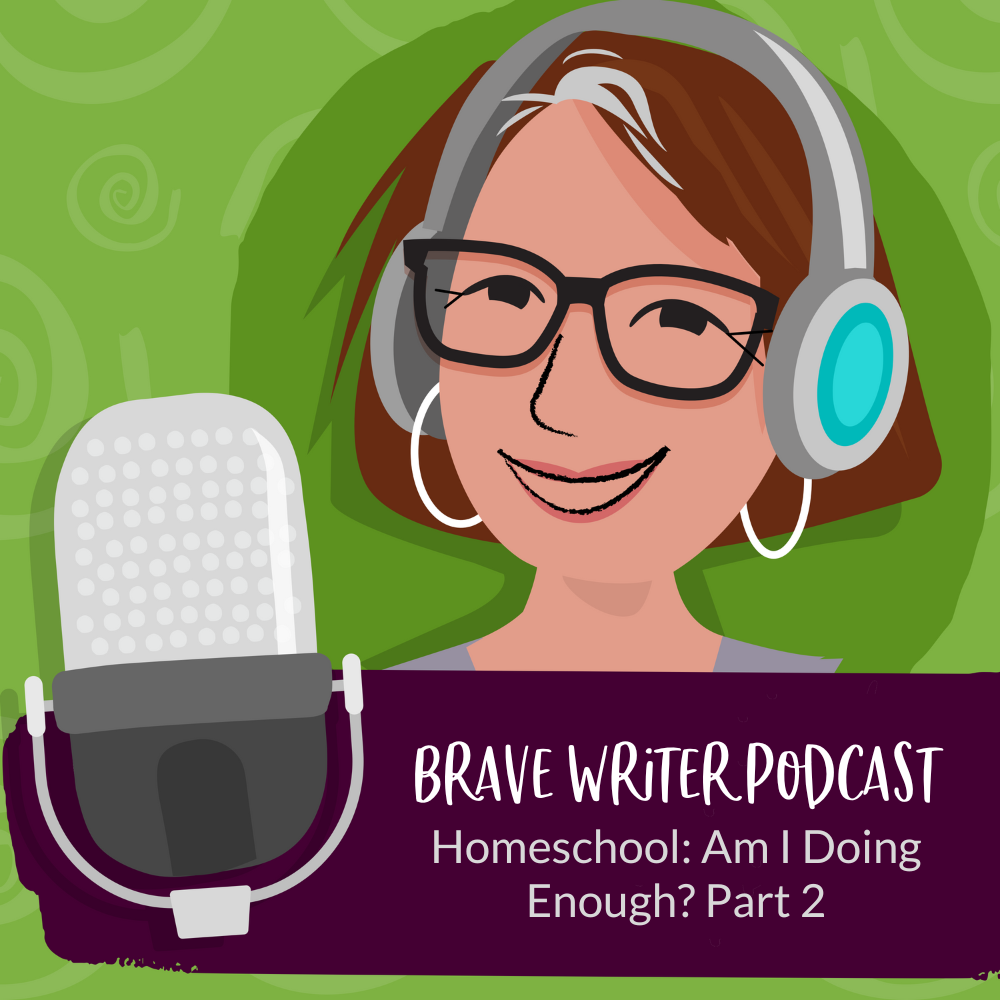
Podcast: Am I Doing Enough? Part 2

Brave Writer Podcast

In the first part of our series answering the question “How do I know if I’m doing enough for my kids’ education?” (which you should definitely listen to if you haven’t already), we discussed how to ensure you’ve done enough preparation and research for your homeschooling journey, as well as how to navigate subject mastery in pre-kindergarten and elementary school to meet the educational requirements.

Now, we’re excited to dive deeper into understanding “enoughness” for middle and high school students. In this second part, we will explore how to determine what’s sufficient for these older age groups and shed light on the third aspect: how much daily time should be committed to each subject.

Join us as we continue this important conversation and provide insights to help you feel confident and supported in your homeschooling experience.

Show Notes

Embracing the Goals of Middle School Education

Middle school education is a unique and exciting phase in a child’s learning journey. It’s a time to catch up on anything that didn’t click during the earlier years, while simultaneously providing opportunities for experiential learning and exploration. Middle schoolers benefit from a dynamic approach, including:

  • workshops,
  • museum visits,
  • online classes,
  • and participation in co-ops.

This stage in education also encourages deeper thinking, more writing, and opportunities for students to express their ideas and experiences.

It’s essential to recognize that middle school students come in various shapes, sizes, and intellectual abilities, with some having accumulated a wealth of knowledge that’s ready to bloom, while others still have considerable growth ahead. As homeschooling parents, it’s crucial to factor in the growth spread time and accommodate the changes that middle schoolers go through. This includes allowing for more:

  • sleep,
  • downtime,
  • and moments of introspection.

The middle school years are a fantastic time for children to apply their existing skillset and indulge in their interests, whether it’s creating a circuit board, sewing a quilt, or redecorating their bedroom. Capitalize on their enthusiasm before the distractions of high school and social life take over. It’s also an excellent time for parents to learn from their children, as the script often flips and kids become eager to share their newfound expertise.

In terms of “enoughness” for middle school, the focus should be on:

  • consolidating skills,
  • empowering students to take on big, bold projects,
  • and enjoying the fruits of their labor.

The goal is to provide a well-rounded education that balances subject mastery with hands-on experiences and personal growth. Remember to consult online scope and sequence resources for guidance on subject areas, but ultimately, strive to create a supportive environment that fosters curiosity, exploration, and the freedom to make mistakes. Don’t forget to allow space for apparent idleness, as these moments of “composting” can be essential for mental processing and growth. Embrace the middle school years as a time of tremendous potential and transformative learning experiences.

The Aim of High School Education

High school education aims to keep as many doors open as possible for students, allowing them to explore various paths and choose the direction they wish to pursue. It involves engaging in meaningful conversations with students about their interests, aspirations, and possible future paths, whether they involve:

  • traditional college experience,
  • apprenticeships,
  • or exploring non-traditional subjects.

High school education should not be confined to a traditional school experience. Instead, it can involve immersing in different areas of interest, learning at one’s own pace, and developing unique skills that differentiate a student from their peers. This uniqueness can make homeschooled students particularly attractive to colleges, as they bring variety and fresh perspectives to the student body.

Parents and educators should not be afraid to give a unique character and flavor to the high school experience, encouraging students to explore their passions and interests, whether they are academic subjects or practical skills. This approach can involve reading books, engaging in discussions, or using different resources like movies, TV shows, or even joining acting troupes to gain a deeper understanding of various topics.

One essential aspect of high school education is keeping good notes on what students are doing and learning. Creating a narrative transcript allows parents and educators to track progress and showcase the student’s skills and expertise when applying to college or other opportunities.

High school education can also involve immersions or deep dives into specific subjects, allowing students to focus on one area intensely for a period of time. This approach can serve students well, as they can maximize their learning potential and avoid the pitfalls of having their day divided into smaller segments.

In summary, the goal of high school education is to provide students with a flexible, engaging, and personalized learning experience, enabling them to:

  • explore their interests,
  • develop unique skills,
  • and choose the path that best suits their aspirations.

Encouraging deep immersion in subjects and providing opportunities for non-traditional learning experiences can help create well-rounded and interesting individuals who can succeed in various fields.

How to Spend Your Time

It is a common misconception that homeschooling requires hours of daily instruction for each subject. In reality, the time spent learning at home is often much less than in a traditional school setting due to reduced transitions, testing, and other non-instructional activities. Many homeschooling families find that they can complete their structured learning time by lunchtime, leaving the afternoons open for hands-on projects, nature walks, and other activities.

The amount of focused attention a child can give generally equals their age plus one minute (e.g., a 10-year-old can give 11 minutes of focused attention). This means that shorter, more engaging learning sessions are often more effective than trying to maintain focus for extended periods. It’s essential to allow for breaks and downtime for children to process and consolidate what they have learned.

Instead of attempting to cover every subject every day, homeschooling families may opt for a more flexible schedule, focusing on history or science through project-based learning or experiential activities. Some families even choose to have a four-day school week, taking one day for co-ops, therapy appointments, or other commitments.

A typical homeschool day might start with read-aloud time, broken up by conversations and various short readings from different genres. Then, after a break, the family might move to table-focused work, such as math or copy work. Another break and lunch would follow before transitioning to afternoon activities, which could include history or science projects, outdoor play, or errands.

It’s important to remember that learning doesn’t always have to follow a specific order or pace. Humans are naturally inclined to learn, and much of the learning that happens at home is organic and experiential. As homeschooling parents, it’s essential to recognize and value this type of learning, rather than expecting it to mimic the structure of traditional schooling. Embracing a more relaxed and flexible approach can lead to a more enjoyable and effective learning experience for both parents and children.

We must recognize that building and maintaining habits in a homeschooling environment takes time and practice. Whether it’s establishing a quiet time during the day or consistently incorporating read-alouds, these routines often require around six weeks to become ingrained in the family’s daily life. Parents play a crucial role in coaching their children to develop and adhere to these habits, as they are essential for a well-rounded homeschooling experience.

Contrary to some misconceptions, homeschooling does teach children to stick to and complete tasks, as long as parents are mindful of creating a supportive and structured environment that fosters healthy habits and encourages lifelong learning.

Resources

  • Podcast: The Learning Benefits of Travel & Taking Big Risks with Blake Boles
  • Introducing Teens to Unschooling Liberation with Grace Llewellyn
  • Get 10% off our Growing Brave Writers program using code GBWPOD10 at https://store.bravewriter.com/products/growing-brave-writers
  • Sign up for our Text Message Pod Ring to get podcast updates and more!
  • Send us podcast topic ideas by texting us: +1 (833) 947-3684
  • Want help getting started with Brave Writer? Go to bravewriter.com/getting-started
  • Sign up for the Brave Writer newsletter to learn about all of the special offers we’re doing in 2022 and you’ll get a free seven-day Writing Blitz guide just for signing up: http://go.bravewriter.com/writing-blitz

Connect with Julie

  • Instagram: instagram.com/juliebogartwriter
  • Twitter: twitter.com/bravewriter
  • Facebook: facebook.com/bravewriter
Brave Writer Podcast

Posted in Podcasts | Comments Off on Podcast: Am I Doing Enough? Part 2

Podcast: Am I Doing Enough? Part 1

Brave Writer Podcast

A question that often comes up repeatedly in the minds of many homeschooling parents is: “Am I doing enough?” We know how stressful it can be — we’ve all been there.

Today on the Brave Writer podcast, we’re going to explore three key aspects to help you navigate the world of “enoughness” in homeschooling:

  • what constitutes enough preparation and training for parents,
  • determining enough mastery of subject areas for different age groups,
  • and understanding how much daily activity is needed in each subject area.

So, let’s dive in and address these concerns together, making homeschooling a more enjoyable and fulfilling journey for both you and your children. This is a two part episode so be sure to come back next time!

Show Notes

Preparation & Training

There are two types of preparation: homeschool philosophy research and homeschool practice. Philosophy research helps us understand the “why” of homeschooling, while practice is focused on the “how” – the actual implementation of education at home.

Balancing these two aspects is crucial for a successful homeschooling experience. It’s easy to get stuck in one area, such as obsessing over homeschooling philosophies or getting overwhelmed with the practical side of things. To create momentum, we need to keep both philosophy and practice in mind, like two pedals on a bicycle.

Research and learning are ongoing processes, and our questions will evolve as our children grow and their needs change. Pay attention to your child’s engagement and progress, as this will guide you toward new resources and ideas.

One approach to balance philosophy and practice is to spend a few weeks:

  • researching and making decisions about curriculum,
  • interacting with other homeschoolers,
  • and reading articles.

Then, live with your choices for a few months before allowing yourself to revisit them. Also, be open to change – it’s not a sign of failure but a way to inject new energy and enthusiasm into the learning process.

Staying curious and observant is key. Notice when your child seems disinterested or restless and be prepared to make adjustments. By maintaining a balance between philosophy and practice, you’ll create a more fulfilling and successful homeschooling journey for both you and your child.

Recognizing Subject Mastery

The journey of determining mastery for various age groups can be broken down into three stages: Pre-K and Kindergarten, first through sixth grade, and the transition to reading.

Pre-K and Kindergarten

For Pre-K and Kindergarten age kids, the focus should be on engaging and entertaining activities. The best curriculum for these little learners includes:

  • reading,
  • playing games together,
  • nature walks,
  • and creative activities like finger painting or drawing.

Rotate your book collection to provide variety while allowing your child to enjoy their favorites repeatedly. Mastery at this stage comes from practice and repetition, so don’t worry about always introducing new activities.

First through Sixth Grade

The transition to first through sixth grade can feel daunting as the foundation of learning is reading. It’s essential to recognize that the process of learning to read varies for each child. While some may begin reading at a young age, others may take longer. As a parent, your role is to be a detective in understanding your child’s unique needs and providing support accordingly.

Incorporate a range of strategies to expose your child to reading. For instance:

  • use phonics-based programs,
  • watch TV with captions,
  • and read aloud to them.

If your child is struggling, don’t merely switch from one program to another. Instead, take the time to understand the underlying issue and address it accordingly.

Transition to Self-Led Reading

The goal by the sixth grade is for reading to become a useful tool in your child’s life. This doesn’t mean they have to love reading, but they should be able to use it as a means for self-education. Continue to read aloud to your child, even if they are reading independently, and encourage a family reading habit.

Create opportunities for your child to connect with books, such as designated quiet reading times or a cozy book nook. Remember that the process of learning to read is not just about mastering a subject but also about experiencing the pleasure and benefits that reading offers.

Determining mastery for different age groups and different subjects involves understanding each child’s unique needs and providing support accordingly. Be patient, as every child’s learning journey is different, and focus on creating a nurturing and engaging environment for your child to develop and enjoy reading.

Listen to next week’s episode for more.

There’s still lots to discuss on this topic! We’re going to continue with middle school and high school benchmarks, and then move into how much time to spend on each subject. This is a two part episode so be sure to come back next time!

Resources

  • Looking for a new math program? Get a free trial of CTCMath.com today to get a free trial.
  • Get 10% off our Growing Brave Writers program using code GBWPOD10 at https://store.bravewriter.com/products/growing-brave-writers
  • Sign up for our Text Message Pod Ring to get podcast updates and more!
  • Send us podcast topic ideas by texting us: +1 (833) 947-3684
  • Want help getting started with Brave Writer? Go to bravewriter.com/getting-started
  • Sign up for the Brave Writer newsletter to learn about all of the special offers we’re doing in 2022 and you’ll get a free seven-day Writing Blitz guide just for signing up: http://go.bravewriter.com/writing-blitz

Connect with Julie

  • Instagram: instagram.com/juliebogartwriter
  • Twitter: twitter.com/bravewriter
  • Facebook: facebook.com/bravewriter

Brave Writer Podcast

Posted in Podcasts | Comments Off on Podcast: Am I Doing Enough? Part 1

Podcast: Bingo! Planned Spontaneity in Homeschooling

Brave Writer Podcast

I am recording some of my Tea with Julie emails for the podcast for those of you who prefer to listen. These are brief messages of support for parents and educators. If you’d like to receive the weekly emails, they are free. Sign up at bravewriter.com/tea


Do you wish you were more spontaneous? Or do you think you should “stick to a schedule”?

On today’s Brave Writer podcast, I share an experience I had learning the hard way that planning works best when our kids are included in the process, as well as a novel solution for bridging the gap between planning and spontaneity.

Show Notes

The original Tea with Julie notes can be found HERE.

Including Your Kids in the Plan

A lot of times we assume that our kids don’t think they need math, science, history, writing or reading. But deep down, they do know that they need those things. They also know that their lives are happier when they can look forward to something on the schedule. When every day isn’t just drudgery created by a parent.

When we include our kids then, we’re not only asking them what they want to do. We can also ask them what they feel they need to work on, what aspects of education are lacking for them. What would they like to improve? That’s one way to frame it. Because if you just ask them what are the things you want to do, you may only end up with a list of their passions. And of course, we do feel responsible to help them grow in mathematics in an understanding of history, fluency in reading and writing. These matter.

The Bingo Card Method

One way to help you get used to this idea of flexibility — if you’re not quite ready to let go of the schedule — is to introduce something I call the bingo card. Now, we have a template for this available inside our membership community called the Brave Learner Home. But I’m going to include a link to it here in the show notes so that you can use it right now.

This bingo card looks something like a calendar month template, but it doesn’t have days of the week and it doesn’t have any calendar dates. It is just a set of empty boxes. And what you can do with your kids is sit down and collaborate on all the things they’d like to do over the next month or two, and all the things they feel they need to work on.

Items you might see on this bingo card that your kids might contribute would be:

  • having a poetry tea time,
  • gaming on the computer,
  • playing with dolls,
  • learning to sew,
  • taking nature walks,
  • watching birds at the bird feeder and tracking them,
  • learning how to do computer programming or coding.

But it could also include things like:

  • mastering the multiplication tables,
  • learning cursive,
  • reading aloud to a parent twice a week.

In other words, whatever you feel and your kids feel should go on this bingo card, just stick it on there.

Hang the bingo card where it can be looked at every day, a bulletin board, a magnet on the refrigerator, and on those days where you’re bored or you need a change in routine. Or your kids simply have a desire, look at the card and pick something to do. Maybe it’s a visit to the zoo, maybe it is dissecting a flower, maybe it’s finally breaking out the microscope you purchased six months ago and learning how to use it.

The bingo card acts as both a planning tool and a tool for spontaneity. It ensures what Liam was worried about that the things he loves wouldn’t get overlooked because we forget about them. And it also helps your kids notice and visibly see that you are doing a lot of activities that they enjoy as well as activities related to education.

As your kids check off these activities, if you get a bingo, that’s a time for a celebration. Maybe you all make smoothies to celebrate. Maybe that afternoon you play a board game. Maybe that’s a day you decide to just watch your favorite Disney movie instead of doing your usual routine.

Give yourself permission to both plan and honor spontaneity. The Bingo card is a way to plan for spontaneity if you need that little support in learning how to do both.

Resources

  • Sign up for my Tea with Julie newsletters: https://go.bravewriter.com/tea-with-julie
  • Tea with Julie: Scheduling & Spontaneity: Finding the Balance
  • Bingo Card: https://go.bravewriter.com/blh-calendar-template-bingo-card
  • Sign up for our Text Message Pod Ring to get podcast updates and more!
  • Send us podcast topic ideas by texting us: +1 (833) 947-3684
  • Want help getting started with Brave Writer? Go to bravewriter.com/getting-started
  • Sign up for the Brave Writer newsletter to learn about all of the special offers we’re doing in 2022 and you’ll get a free seven-day Writing Blitz guide just for signing up: https://go.bravewriter.com/writing-blitz

Connect with Julie

  • Instagram: instagram.com/juliebogartwriter
  • Twitter: twitter.com/bravewriter
  • Facebook: facebook.com/bravewriter

Brave Writer Podcast

Tags: Tea with Julie Podcasts
Posted in Podcasts | Comments Off on Podcast: Bingo! Planned Spontaneity in Homeschooling

Podcast: Am I Doing Enough?

Brave Writer Podcast

I am recording some of my Tea with Julie emails for the podcast for those of you who prefer to listen. These are brief messages of support for parents and educators. If you’d like to receive the weekly emails, they are free. Sign up at bravewriter.com/tea


Have you ever felt anxious about homeschooling and worried that you’re not doing enough?

In this Brave Writer podcast episode, you’ll hear our advice on how to create a well-rounded learning experience for your kids and learn how even the least “schooly” moments can be opportunities for growth.

Join us as we explore the idea that every day counts and that it’s all enough!

Show Notes

Complete Tea with Julie notes can be found HERE.

Resources

  • Sign up for my Tea with Julie newsletters at bravewriter.com/tea.
  • Looking for a new math program? Get a free trial of CTCMath.com today to get a free trial.
  • Get 10% off our Growing Brave Writers program using code GBWPOD10 at https://store.bravewriter.com/products/growing-brave-writers
  • Sign up for our Text Message Pod Ring (+1 (833) 947-3684) to get podcast updates. You can also send us topic ideas!
  • Want help getting started with Brave Writer? Go to bravewriter.com/getting-started
  • Sign up for the Brave Writer newsletter to learn about all of the special offers we’re doing in 2022 and you’ll get a free seven-day Writing Blitz guide just for signing up: http://go.bravewriter.com/writing-blitz

Connect with Julie

  • Instagram: instagram.com/juliebogartwriter
  • Twitter: twitter.com/bravewriter
  • Facebook: facebook.com/bravewriter

Brave Writer Podcast

Tags: Tea with Julie Podcasts
Posted in Podcasts | Comments Off on Podcast: Am I Doing Enough?

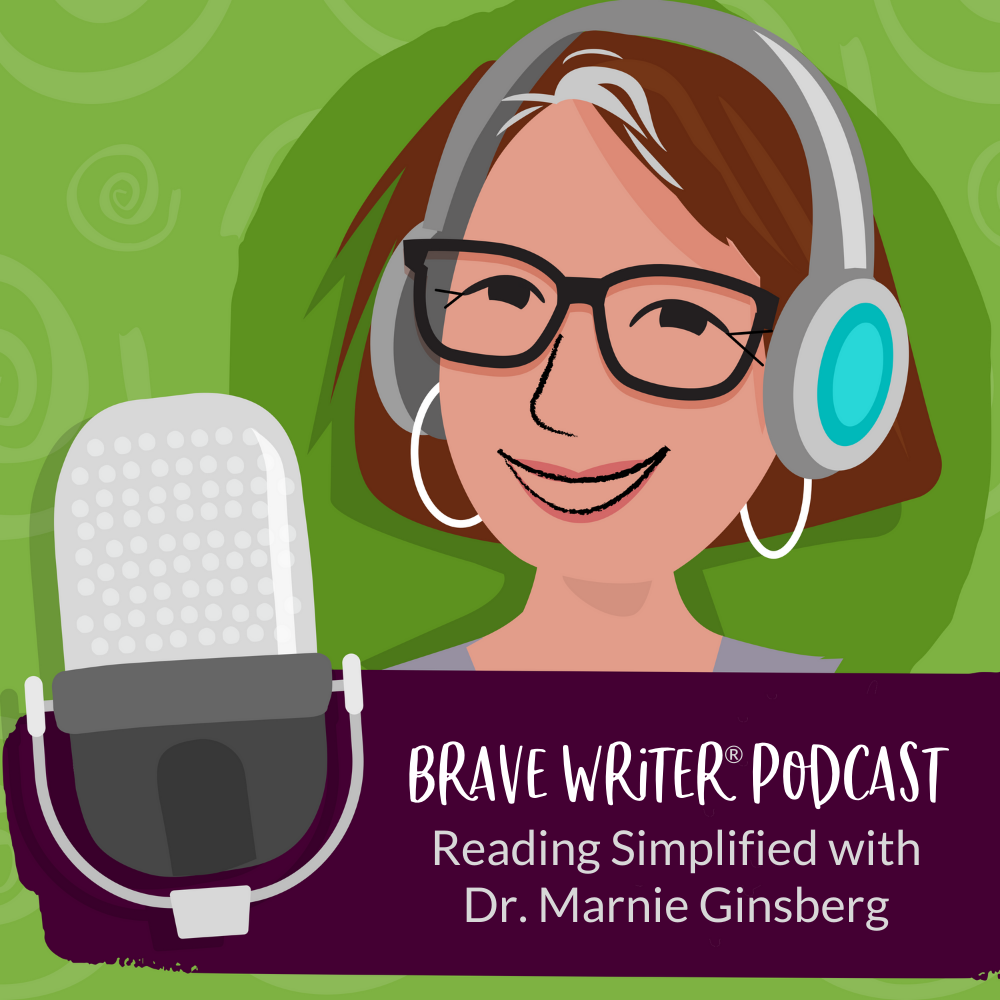
Podcast: Reading Simplified with Dr. Marnie Ginsberg

Brave Writer Podcast

Are you a teacher who feels overwhelmed by the challenge of helping all of your students achieve their reading goals? Then you won’t want to miss today’s episode of our podcast! We’re thrilled to be joined by Dr. Marnie Ginsberg, the founder of Reading Simplified, a program designed to support educators in teaching an evidence-based system of reading instruction.

In this episode, Dr. Ginsberg shares her insights on why traditional reading instruction often falls short, and how her program offers a more effective and efficient approach. She also discusses the challenges that teachers face in balancing their many responsibilities and offers practical tips for implementing her system in a busy classroom.

Whether you’re a seasoned educator or just starting out, this episode offers valuable insights into the science of reading instruction and the tools you need to help all of your students succeed. So tune in and join us for this inspiring conversation with Dr. Marnie Ginsberg!

Show Notes

The Art & the Science of Reading

Reading is a fundamental skill that almost everyone needs to master to succeed in life. But what does it take to become a good reader? Is it simply a matter of learning the mechanics of decoding written words, or is there more to it than that?

According to Dr. Marnie Ginsberg, the founder of Reading Simplified, there is both a science and an art to reading instruction. On the one hand, there is a vast body of research that tells us how the brain learns to read. This includes insights into the importance of phonemic awareness (the ability to hear individual sounds and words), the role of written language as a code for sounds, and the common pathways that successful readers tend to follow.

On the other hand, there is the art of teaching reading – the complex, nuanced, and often intuitive work of figuring out what works best for each individual student. This involves observing their emotional, motivational, cognitive, behavioral, and physical needs and strengths and adapting instruction to meet those needs. It’s a bit like being a detective, trying to uncover the best strategies for each child.

Dr. Ginsberg believes that the key to successful reading instruction is to marry the science and the art of reading. While we have learned a great deal about how the brain learns to read, there are still many things we don’t know, and it’s important to honor the wisdom of parents and teachers who have the experience and intuition to work effectively with individual students.

So whether you’re a parent, teacher, or tutor, remember that effective reading instruction requires both scientific knowledge and practical know-how. By combining the two, you can help all of your students achieve their reading goals and set them on a path to success.

Reading, Simplified

At the heart of Reading Simplified, the program developed by Dr. Marnie Ginsberg that streamlines instruction for educators while accelerating students’ reading achievement, is an approach that draws students’ attention to the sounds and words of the English language and connects it to phonics and real words. By using letter sound tiles to build words and teaching phonics information organized by sound, rather than print or spelling, students quickly unlock the code of written language and develop a mental organizational framework that helps them retain information.

In just a few weeks, students who use the Reading Simplified approach can move from basic phonics to early transitional texts, where they experience the reward of seeing their reading skills rapidly improve. This is because the program focuses on providing sufficient phonics, phonemic awareness, and decoding strategies – the key components of effective reading instruction.

If you’re looking for an approach to reading instruction that’s grounded in the latest research and designed to accelerate student achievement, then Reading Simplified is the program for you. Give it a try and see the difference it can make for your students!

Dr. Marnie’s Quick Reading Tips

If you’re a parent or teacher looking for tips on how to teach reading to kids, then Dr. Marnie Ginsberg has some great advice for you. Here are her top three tips:

Keep reading aloud: No matter how old your child is, reading aloud to them is always beneficial. It’s a powerful way to expose them to new vocabulary and ideas, and it helps build their listening skills. Try reading texts that are a few years above their age level – most kids can handle it as long as the content is appropriate.

Provide quick access: Kids are more likely to enjoy reading if they feel successful at it. That’s why Dr. Ginsberg designed Reading Simplified to help kids quickly access phonics information and high-frequency words. One way to build success is to move quickly between activities and to encourage rereading. When a child rereads a text, it helps them gain automaticity with the words they didn’t know immediately earlier. By cycling through texts and revisiting them over time, kids build their phonics knowledge and develop decoding skills that enable them to read more complex texts.

Follow their interests: Finally, it’s important to encourage kids to read what interests them. Whether it’s early chapter books, graphic novels, or something else, finding books that light up their imagination is key to building a love of reading. By providing access to phonics and high-frequency words, you can help them tackle even more challenging texts and feel confident in their reading abilities.

By following these tips, you can help your child develop the skills and confidence they need to become successful readers. So keep reading aloud, provide quick access to phonics information, and follow their interests – and watch as your child’s love of reading blossoms!

Stay the Course

If you’re a parent or teacher struggling to help a child who’s having difficulty with reading, then Dr. Marnie Ginsberg has some words of encouragement for you. Remember to stay the course, try some phonemic awareness methods, and go slow to go fast. It’s important to keep in mind that a child’s ability to concentrate is age plus one minute, so keep reading sessions short and avoid showing panic or frustration.

Dr. Ginsberg also recommends encouraging your child to spend some time alone each day practicing without the pressure of adult scrutiny. This can help alleviate performance anxiety and enable kids to make progress on their own terms.

By following these tips and checking out Reading Simplified, you can help your child develop the skills and confidence they need to become successful readers. Remember to stay positive, be patient, and celebrate small victories along the way.

So if you’re ready to help your child unlock the power of reading, give Reading Simplified a try today. With a little perseverance and a lot of love, you can help your child achieve their reading goals and set them on a path to lifelong success.

Resources

  • Contact Dr. Marnie Ginsberg at: Marnie@readingsimpified.com
  • Website: ReadingSimplified.com
  • Instagram: @readingsimplified
  • Twitter: @readingsimplified
  • FREE: Switch It! Game
  • Join us on an adventure for early literacy with Quill (ages 5-7): bravewriter.com/quill
  • Sign up for our Text Message Pod Ring (+1 (833) 947-3684) to get podcast updates!
  • Want help getting started with Brave Writer? Go to bravewriter.com/getting-started
  • Sign up for the Brave Writer newsletter to learn about all of the special offers we’re doing in 2022 and you’ll get a free seven-day Writing Blitz guide just for signing up: https://go.bravewriter.com/writing-blitz

Connect with Julie

  • Instagram: instagram.com/juliebogartwriter
  • Twitter: twitter.com/bravewriter
  • Facebook: facebook.com/bravewriter

Brave Writer Podcast

Posted in Podcasts | Comments Off on Podcast: Reading Simplified with Dr. Marnie Ginsberg

« Older Entries
Newer Entries »
  • Search the Blog

  • Julie Bogart
  • Welcome, I’m Julie Bogart.

    I’m a homeschooling alum -17 years, five kids. Now I run Brave Writer, the online writing and language arts program for families. More >>

    IMPORTANT: Please read our Privacy Policy.

  • New to Brave Writer? START HERE

  • FREE Resources

    • 7-Day Writing Blitz
    • Brave Writer Lifestyle Program
    • Brave Writer Sampler: Free Sample Products
    • Freewriting Prompts
    • Podcasts
  • Popular Posts

    • You have time
    • How writing is like sewing
    • Best curriculum for a 6 year old
    • Today's little unspoken homeschool secret
    • Do you like to homeschool?
    • Don't trust the schedule
    • You want to do a good job parenting?
    • If you've got a passel of kids
    • You are not a teacher
    • Natural Stages of Growth in Writing podcasts
  • Blog Topics

    • Brave Learner Home
    • Brave Writer Lifestyle
    • Classes
    • Contests/Giveaways
    • Friday Freewrite
    • High School
    • Homeschool Advice
    • Julie's Life
    • Language Arts
    • Movie Wednesday
    • Natural Stages of Growth
    • One Thing Principle
    • Our Team
    • Parenting
    • Philosophy of Education
    • Podcasts
    • Poetry Teatime
    • Products
    • Reviews
    • Speaking Schedule
    • Students
    • Writing about Writing
    • Young Writers
  • Archives

  • Brave Writer is a participant in the Amazon Services LLC Associates Program, an affiliate advertising program designed to provide a means for sites to earn advertising fees (at no extra cost to you) by advertising and linking to amazon.com

    Content © Brave Writer unless otherwise stated.

What is Brave Writer?

  • Welcome to Brave Writer
  • Why Brave Writer Works
  • About Julie
  • Brave Writer Values
  • Frequently Asked Questions
  • Speaking Schedule

Brave Writer Program

  • Getting Started!
  • Stages of Growth in Writing
  • The Brave Writer Program
  • For Families and Students
  • Online Classes
  • Brave Writer Lifestyle

…and More!

  • Blog
  • Classroom
  • Store
  • Books in Brave Writer Programs
  • Contact Us
  • Customer Service
  • Brave Writer Staff
© 2026 Brave Writer
Privacy Policy
Children's Privacy Policy
Help Center