Podcasts Archives - Page 34 of 75 - A Brave Writer's Life in Brief A Brave Writer's Life in Brief
  • Start Here
    • For Families
      Multiple Ages
    • Ages 5-7
      Beginning Writers
    • Ages 8-10
      Emerging Writers
    • Ages 11-12
      Middle School Writers
    • Ages 13-14
      High School Writers
    • Ages 15-18
      College Prep Writers
  • Shop
    • Product Collections
    • Bundles
    • Writing Instruction Manuals
    • Literature & Grammar/Punctuation
    • Composition Formats
    • Literature Singles
    • Homeschool Help
    • Book Shop
  • Online Classes
    • Class Descriptions
    • Class Schedule
    • Classroom
    • How Our Classes Work
    • Our Writing Coaches
    • Classes FAQ
  • Community
    • Brave Learner Home
    • What’s Happening
    • Blog
    • Podcast
    • Calendar
  • Cart
  • My Account
    • My Online Classes
    • My Account
  • My Account
    • My Online Classes
    • My Account
  • Start Here

    If you’re new to Brave Writer, or are looking for the best products for your child or family, choose from below:

    • For Families
      Multiple Ages
    • Ages 5-7
      Beginning Writers
    • Ages 8-10
      Emerging Writers
    • Ages 11-12
      Middle School Writers
    • Ages 13-14
      High School Writers
    • Ages 15-18
      College Prep Writers
  • Shop

    If you’re already familiar with Brave Writer products, go directly to what you’re looking for:

    • Product Collections Browse the full catalog in our shop
    • Bundles Everything you need to get started
    • Writing Instruction Manuals Foundational Writing Programs
    • Literature & Grammar/Punctuation Grammar, Punctuation, Spelling & Literary Devices
    • Composition Formats Writing Assignments for Every Age
    • Literature Singles Individual Literature Handbooks
    • Homeschool Help Homeschooling Tools and Resources
    • Book Shop Books associated with Brave Writer Programs
  • Online Classes
    • Class Descriptions
    • Class Schedule
    • Classroom
    • How Our Classes Work
    • Our Writing Coaches
    • Classes FAQ
  • Community
    • Brave Learner Home
    • What’s Happening
    • Blog
    • Podcast
    • Calendar
  • Search
  • Cart

Search Bravewriter.com

  • Home
  • Blog

A Brave Writer's Life in Brief

Thoughts from my home to yours

Archive for the ‘Podcasts’ Category

« Older Entries
Newer Entries »

Podcast: Millennials and Gen X CAN Homeschool!

Brave Writer Podcast

Looking into our Brave Writer podcast analytics, we discovered a surprising fact: Most of our listeners are Millennials or Gen X!

In today’s episode, Melissa and I will be exploring the unique challenges faced by young Gen-Xers and Millennials who choose to homeschool. We’ve been looking into generation theory to better understand the characteristics and demands that may be affecting this group of homeschoolers.

Our goal is to support and advocate for you, as we think you’re awesome and brave for taking on homeschooling. We’ll also highlight some positive skills you already possess that will be helpful on your journey. It’s important to remember that every generation that has chosen to homeschool has had to defy societal norms, and we admire your courage and imagination.

So, let’s dive in and explore how different generations have related to homeschooling, and how you can forge your own path that’s right for you and your family. Remember to be kind to yourself and give yourself grace along the way.

Show Notes

We’ll be looking at the generational archetypes of four different groups: the boomers, Gen X, millennials, and Gen Z.

  • The boomers were born between 1943 and 1960 and are associated with the prophet archetype.
  • Gen X, born between 1961 and 1981, is associated with the nomad archetype.
  • The millennials were born between 1982 and 2004 and are associated with the hero archetype.
  • Gen Z, born from 2005 onwards, is associated with the artist archetype.

As we continue, we’ll explore what these archetypes mean in more detail.

It’s fascinating to see how the experiences of boomers and millennials intersect. Boomers had a vision for the future and spoke it into being, but millennials were raised to believe in that vision and follow the rules, only to come of age in a world where the promises weren’t fulfilled. Millennials often feel angry and betrayed, with a sense that they were promised a secure life if they followed the rules and obtained a degree, but this isn’t the reality they face today. They also tend to have a strong sense of self-righteousness and a desire to save the world. However, interpersonally, they often clash with their boomer or older gen X parents who feel accused and misunderstood. The shadow of the millennial generation includes denial of inner authority, making it challenging for them to step up and navigate the world as it is today.

In the pre-internet world, people had to be self-sufficient and create things from scratch. If they failed, no one would witness it except themselves. Nowadays, we broadcast our successes and failures. With the internet, resources are readily available, and if someone wants to do something, they can find a how-to manual or watch a YouTube tutorial. However, this can lead to information overload and paralysis, as people may spend too much time watching tutorials instead of taking action. This phenomenon is particularly prevalent among the younger generations, who are accustomed to having many options and resources available. When it comes to homeschooling, there are now many options for curricula and models to choose from, but it’s important to be discerning about the sources of information and not to spend too much time-consuming information instead of taking action.

To encourage millennial homeschooling parents, it’s important to tap into your own sense of identification with leaders who resonate with you. Look for what’s calling to you and try things out. Remember that you’re already unique in your group for choosing to homeschool, and you don’t have to be a perfect homeschooler. Perfectionism was a bill of goods sold to you by previous generations. Don’t fixate on the perfect outcome, but give yourself permission to have the hero’s adventure.

To be a good parent and educator, don’t try to sort through all the advice out there. Instead, focus on being present with your children and using what you have available right now. There is no “right” way to do things, so don’t get hung up on trying to find the perfect solution. Just focus on shared learning and connection with your children. It may take some time for your child to learn to read but don’t obsess over measurement and getting it right. Remember that you are teaching human beings, not preparing them for a standardized test.

Resources

  • Looking for a new math program? Get a free trial of CTCMath.com today to get a free trial.
  • Get 10% off our Growing Brave Writers program using code GBWPOD10 at https://store.bravewriter.com/products/growing-brave-writers
  • Sign up for our Text Message Pod Ring (+1 (833) 947-3684) to get podcast updates and more!
  • Want help getting started with Brave Writer? Go to bravewriter.com/getting-started
  • Sign up for the Brave Writer newsletter to learn about all of the special offers we’re doing in 2022 and you’ll get a free seven-day Writing Blitz guide just for signing up: http://go.bravewriter.com/writing-blitz
  • Personality Hacker Podcast episodes: Boomers and Gen X Theory, Millennials and GenZ Theory

Connect with Julie

  • Instagram: instagram.com/juliebogartwriter
  • Twitter: twitter.com/bravewriter
  • Facebook: facebook.com/bravewriter
Brave Writer Podcast

Posted in Podcasts | Comments Off on Podcast: Millennials and Gen X CAN Homeschool!

Podcast: Use Your Bodies to Learn

Brave Writer Podcast

Melissa and I just discovered an interesting coincidence about us: We both grew up as theater kids! Although we didn’t pursue theater professionally, we bonded over our kinesthetic approach to home education.

Our Brave Writer products, such as the Quill, Dart, Arrow, Boomerang, and Slingshot (affectionately abbreviated to Q-DABS), are designed to incorporate movement into learning. For example, when writing the Dart program, Melissa focused on creating activities that allow children to embody the concepts they’re learning.

As parents ourselves, we always consider how to keep kids active and engaged while teaching. Research shows that when children use their bodies to learn, they retain information better and have more fun. By creating a dynamic and enjoyable learning experience, kids start to trust that lessons can be interesting and relevant.

Come along with us as we share some of the techniques we use at Brave Writer to integrate embodied learning and make lessons more engaging and effective.

Show Notes

For learning to stick, it needs to be used. However, for abstract concepts like using the month of September, pointing out the seasons changing outside may not be enough. I found that pairing abstract concepts with kinesthetic activities helped kids retain the information better. It seemed to become a part of their muscle memory.

For struggling readers and writers, it’s important to connect the sound with the letter. By physically forming the letters with their hand and using their mouth, children can form a whole-body connection. According to the 12 Brain/Mind Learning Principles by Renate and Geoffrey Caine, all learning is physiological. Reading involves applying sounds to symbols on a page, which is a physical act. One recommended practice for copy work is for the child to vocalize the sound as they write.

The second principle of the Caines, “the brain/mind is social,” is relevant for parents who want their children to work independently while they take care of other tasks. However, learning is both social and physiological. This means that kids can benefit from using their bodies in connection with each other, such as through theater games. Therefore, it’s important for parents to provide opportunities for children to engage in social learning experiences.

Here are some of the things that we’ve done to incorporate kinesthetic learning with our kids:

  • Comma-dipping: By pausing and dipping the body at commas and using other physical cues for other marks, kids can start connecting the symbols to the spoken language and their own felt experience.
  • To teach prepositions, ask children to move a stuffed animal to different locations and describe its position, such as “the cat is on the chair” or “the cat is under the table.” You can also use video game characters or other familiar objects to practice prepositional phrases. By making the learning experience fun and interactive, children can develop a strong understanding of prepositions.

The kitchen table is not the only place to learn! In Brave Writer, we integrate embodied learning to make lessons more engaging and effective. We don’t just provide traditional worksheets for memorizing concepts, because research shows that when children use their bodies to learn, they retain information better and have more fun.

By creating a dynamic and enjoyable learning experience, kids start to trust that lessons can be interesting and relevant.

Resources

  • Book:  On Stage by Lisa Bany Winters 
  • Looking for a new math program? Get a free trial of CTCMath.com today to get a free trial.
  • Sign up for our Text Message Pod Ring to get podcast updates and more!
  • Try our Semester-Long Dart, Arrow, and Boomerang for literature and grammar activities!
  • Get 10% off our Growing Brave Writers program using code GBWPOD10 at https://store.bravewriter.com/products/growing-brave-writers
  • Want help getting started with Brave Writer? Head over to bravewriter.com/getting-started
  • Sign up for the Brave Writer newsletter to learn about all of the special offers we’re doing in 2022 and you’ll get a free seven-day Writing Blitz guide just for signing up: https://go.bravewriter.com/writing-blitz

Connect with Julie

  • Instagram: instagram.com/juliebogartwriter
  • Twitter: twitter.com/bravewriter
  • Facebook: facebook.com/bravewriter
Brave Writer Podcast

Posted in Podcasts | Comments Off on Podcast: Use Your Bodies to Learn

Podcast: The Power of Historical Perspective with Emily Glankler

Brave Writer Podcast

The way most of us were taught history can be boring — just a list of dates and events with no relevance. But once you start teaching history to your kids, everything changes, and you wish you could show your kids now what you wish you had seen when you were first learning history yourself. 

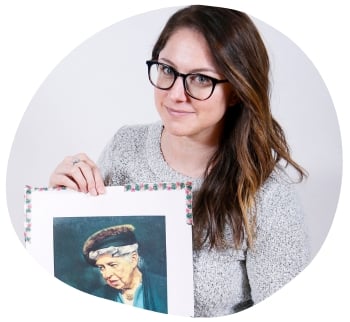
Today’s guest on the Brave Writer podcast, Emily Glankler, is the founder of Anti-Social Studies, wildly popular TikTok and Instagram accounts and a website by the same name. Her passion and sense of humor make history come alive for your family. With degrees in history and international studies, she’s a veteran high school teacher in Austin, Texas, and a love of improv.

Emily Glankler
Emily Glankler

Emily finds the details of world history and turns them into relevant stories for today’s students.. Emily’s mission with her podcast and social media channels is to remind people of the significance of historical events and provide fun and contextualized historical information.

Listen as we discuss how to make history interesting and engaging for kids and adults — and it’s simpler than you might think!

Show Notes

History as Facts vs. Being a Historian

There is a huge difference between studying history for facts and studying history as a discipline of being a historian. When asked what she wished students understood about teaching history, Emily said that the biggest issue is that people view history as a list of events told to them in a textbook. In reality, historians approach history like the scientific method:

  • They start with a theory,
  • conduct research by examining documents and sources,
  • and then draw conclusions based on the evidence they find.

However, history is not as objective as math or science due to the fact that all sources are human-created — and thus subject to subjectivity.

The way we often teach writing is that the thesis statement comes in the first paragraph of an essay, but it’s the opposite in thinking: The thesis statement should be the last thing you come up with, after reasoning through everything in writing. The thesis statement that comes to you in the conclusion will always be better than the one you come up with beforehand. This is what it means to study history in an unbiased way. We have to understand the context in which our source material was created, and attempt to come to our own conclusions rather than accepting what we hear at face value.

Historiography: The Historical Study of History

Emily is knowledgeable on the topic of historical interpretation. She believes that the interpretation of history changes from generation to generation and interpreter to interpreter, as each person brings their own background and social location to the table. Emily is particularly interested in historiography, which is the history of history itself, and the evolution of the interpretation of events over time. To illustrate her point, she mentions her master’s program paper on the historiography of the conquest of Mexico and the interactions between Cortez and Montezuma. Emily explains that different historical records of the same event can have vastly different interpretations depending on the writer’s background and social location. She highlights the importance of recognizing that any interpretation of history is still funneled through a human being and that the current experiences of the interpreter shape how they read the past.

Creating a Sense of Historical Wonder

Emily believes that sparking a sense of wonder and curiosity in children about history is essential for catching their interest. To do this, she uses a creative teaching method by presenting her students with a fictional scenario before teaching them about the Persian Empire. The students then build their own empires, which often predict 80% of the actual events that happen in her class. By engaging the students in respectful imagination and making a personal connection with history, they will be more interested and invested.

Having deeper conversations about history is important, even if it means sacrificing some content. Emily compares her teaching method to homeschooling, where historical fiction is used to immerse children in the story, and then additional context is added. She believes that making history three-dimensional and not just limited to text and memorization is important for children to understand the experience.

When it comes to engaging our children in history, it’s important to couch it in a sense of wonder and relatability. Even an event that feels far off to us can suddenly become more relevant when we realize our grandparents were alive during it. When kids start to think of historical events as things that actually happened, and how surprisingly similar people were in the past to us today, their interest will skyrocket. They just need that little nudge.

Resources

  • Emily Glankler is found at: antisocialstudies.org/aboutemily
  • Instagram: @antisocstudies
  • TikTok: @antisocialstudies
  • High School Writing: Historical Fiction and Rebellious History
  • Middle School Writing: History Writing Projects
  • Sign up for our Text Message Pod Ring to get podcast updates and more!
  • Want help getting started with Brave Writer? Go to bravewriter.com/getting-started
  • Sign up for the Brave Writer newsletter to learn about all of the special offers we’re doing in 2022 and you’ll get a free seven-day Writing Blitz guide just for signing up: https://go.bravewriter.com/writing-blitz

Connect with Julie

  • Instagram: instagram.com/juliebogartwriter
  • Twitter: twitter.com/bravewriter
  • Facebook: facebook.com/bravewriter

Brave Writer Podcast

Posted in Podcasts | Comments Off on Podcast: The Power of Historical Perspective with Emily Glankler

Podcast: Writing in the Age of ChatGPT

Brave Writer Podcast

Today Melissa and I nerd out about writing. We’re passionate about writing. We’re professional writers! Ergo: we LOVE it!

The unique aspect of Brave Writer is that our approach to teaching writing is different from what’s typically taught in education or seen in other writing resources. It’s a process that is reflective of the stages a writer goes through when writing and publishing a novel. And when we were designing that program, we felt that the missing element in writing education was love.

On this episode of the Brave Writer podcast, we discuss the history of the written word that led us to this conclusion, as well as new technologies that may have the potential to disrupt what it means to be a writer.

Show Notes

Have you ever found yourself reading a sample paragraph out of a teaching program and thought to yourself, “What happens next? I want a second paragraph!” If the answer is no, let me ask you this: Why would you want to use a lifeless piece of writing as an example for your children?

We know good writing when we see it — that’s love. We should be teaching the writing that lights us up, and that wants us to keep reading.

Why do humans write?

What drives us to create art, hieroglyphs, and alphabets? It’s the desire to preserve and share valuable information. The excitement of capturing something in a lasting way is contagious — it taps into our awareness of our own mortality. To teach a five-year-old the value of writing, they must see the purpose behind it. Why do we read and write? To preserve and share information. This is seen in how parents record their baby’s first words and share them with others. There is a strong desire to preserve original information in a written form.

When you start from a foundation of valuing the human being and the writing voice that lives inside, it makes the work more meaningful and you can take it at a pace the child can handle. We’ve designed all of our programs with that pace in mind for the sake of the child. Kids have to understand that there is something of value at the end of it.

But what about ChatGPT?

If you haven’t heard of it yet, ChatGPT is a sophisticated AI technology built to understand natural language. You can ask it a question and it will answer with what is often eerily human-sounding responses.

  • What about this brave new world of AI writing technology?
  • Will Melissa and Julie (and other professional writers) be out of a job? 
  • Do your kids even need to learn how to write?
  • What role should ChatGPT play in our culture and education systems, like college? 

ChatGPT can be, at first glance, surprisingly impressive. But as you see more examples of it, you begin to realize the limitations of what it can create or how reliable it is in its accuracy.

Beyond that, there are many unsettling questions about what this means for creators and writers. Where is it getting its information? Who could you unknowingly be plagiarizing by using it? As a structure, it’s appropriative.

If you want to incorporate ChatGPT and other AI tools into your child’s writing and education, start by treating it as an adventure that you can go on together. Explore and see if you can arrive at an understanding of where it’s useful and where it’s lifeless.

There are no easy answers when it comes to adopting and adapting to new technologies. We’ve seen it before with the rise of the internet, smartphones, and ever-present screens — it takes time to find a balance that works for your family, and you’re going to have questions along the way. We’re all still figuring it out. We hope that you’ll be along for the ride with us as we continue to see what direction this may unfold.

Resources

  • openai.com/blog/chatgpt
  • Sister Wendy’s Story of Painting
  • Looking for a new math program? Get a free trial of CTCMath.com today to get a free trial.
  • Get 10% off our Growing Brave Writers program using code GBWPOD10 at https://store.bravewriter.com/products/growing-brave-writers
  • Sign up for our Text Message Pod Ring to get podcast updates and more!
  • Want help getting started with Brave Writer? Head over to bravewriter.com/getting-started
  • Sign up for the Brave Writer newsletter to learn about all of the special offers we’re doing in 2022 and you’ll get a free seven-day Writing Blitz guide just for signing up: https://go.bravewriter.com/writing-blitz

Connect with Julie

  • Instagram: instagram.com/juliebogartwriter
  • Twitter: twitter.com/bravewriter
  • Facebook: facebook.com/bravewriter

Brave Writer Podcast

Posted in Podcasts | Comments Off on Podcast: Writing in the Age of ChatGPT

Podcast: Technology and Kids with Devorah Heitner

Brave Writer Podcast

Wondering how to juggle technology and kids? Today’s Brave Writer podcast episode is dedicated to addressing the number one requested topic: screen time and our children.

With the rise of technology and the numerous devices available, it’s natural for us to feel overwhelmed and concerned about the impact screens are having on our kids. Do you ever feel guilty about letting your children watch television or use their devices, even though you don’t feel the same way about listening to a podcast or audiobook?

Devorah Heitner
Devorah Heitner

Our guest today, Devorah Heitner, is here to help us answer our most pressing questions and ease the nervousness we feel around screen time. Devorah is a Ph.D. who studied media, technology, and society at Northwestern University and works with communities, schools, and companies to raise tech-savvy children. She is the author of the best-selling book, Screenwise: Helping Kids Thrive and Survive in Their Digital World, and is here to offer practical advice, not add more shame or guilt to our already complex relationship with screens.

So sit back, relax, and get ready to learn about managing screen time for our children.

Show Notes

Should parents be concerned about tech?

It can be a significant challenge to manage technology in homeschooling environments. With constant access to tech devices like iPads and laptops, it’s difficult for parents to set boundaries. The devices are always present and the temptation to use them is high. This can be especially difficult for parents juggling multiple responsibilities, who sometimes use technology as a distraction. The tension between the availability of technology and the need to manage it is one of the biggest challenges faced by families.

Devorah is optimistic about the experiences kids can have — but has to admit her concern that tech companies don’t have their best interests in mind. However, communities like homeschoolers are showing great innovation. We want kids to know that technology is there to support them, not the other way around. It should enhance learning and connections, not control them.

Parents’ concerns are real, but how we react to those concerns is what is most important: We don’t want to be overly controlling and limiting, and at the same time we don’t want to just throw up our hands and give in freely. We have to focus on what technology can make better, and mentor our children in ways to use it that enhance their lives.

Mentors vs Monitors

When it comes to parenting and technology, it’s important to understand the difference between mentoring and monitoring. Mentoring focuses on setting your children up for success and helping them make their own decisions, while monitoring is more about catching them when they do something wrong. It’s important to prioritize teaching your children to do the right thing, rather than just catching them when they make mistakes. Mentoring is an ongoing conversation that involves sharing personal experiences, such as tech mishaps, and helping your children build their character and decision-making skills.

Entering into consensual monitoring is the key.

In terms of technology and parenting, filters and child locks can be helpful, but they are not a complete solution. It’s crucial to have open and honest conversations with your children about topics such as pornography and other potentially harmful content they may encounter online. Even with filters in place, your children may still come across these things, so it’s important to create an environment where they feel comfortable talking to you if they encounter something concerning.

Tips for regulating screen usage

In order to help children raised in the streaming era to have a balanced relationship with television, it’s important to create attractive unplugged zones in the home. This can be done by:

  • Visiting libraries, and bookstores, and restocking art supplies to keep things new and exciting.
  • It’s not always necessary to buy new items, but rotating the supplies and making them accessible helps kids engage in activities that don’t involve screens.
  • Making other spaces in the home attractive, such as a cozy spot around the piano or a game area, can help shift the focus away from screens.

When kids are drawn to technology-based activities, such as gaming or YouTube how-to tutorials, it’s important to encourage them to use that knowledge to create something in real life. This can be done by asking them to make dinner or to use the knowledge from the tutorials to make something. The goal is to have them create rather than just consume, as too much screen time can have negative impacts on their development.

Our kids are ultimately going to have to live with technology their whole lives. Keeping it inaccessible to them for most of their lives is only going to hold them back. But if we can set boundaries around what matters most and educate them on responsible usage of technology, their relationship with it may be better than our own.

Resources

  • Read: Screenwise
  • Devorah’s website: https://devorahheitner.com/
  • Instagram: https://www.instagram.com/devorahheitnerphd
  • Twitter: https://twitter.com/DevorahHeitner
  • Reset your family’s tech habits with Devorah’s FREE 7-day email course.
  • Special Discount for Brave Writer listeners: Phonewise: a 4-module self-paced course to prepare you for your child’s first phone.
  • Get 10% off our Growing Brave Writers program using code GBWPOD10 at https://store.bravewriter.com/products/growing-brave-writers
  • Sign up for our Text Message Pod Ring to get podcast updates and more!
  • Looking for a new math program? Get a free trial of CTCMath.com today to get a free trial.
  • Want help getting started with Brave Writer? Head over to bravewriter.com/getting-started
  • Sign up for the Brave Writer newsletter to learn about all of the special offers we’re doing in 2022 and you’ll get a free seven-day Writing Blitz guide just for signing up: https://go.bravewriter.com/writing-blitz

Connect with Julie

  • Instagram: instagram.com/juliebogartwriter
  • Twitter: twitter.com/bravewriter
  • Facebook: facebook.com/bravewriter

Brave Writer Podcast

Posted in Podcasts | Comments Off on Podcast: Technology and Kids with Devorah Heitner

« Older Entries
Newer Entries »
  • Search the Blog

  • Julie Bogart
  • Welcome, I’m Julie Bogart.

    I’m a homeschooling alum -17 years, five kids. Now I run Brave Writer, the online writing and language arts program for families. More >>

    IMPORTANT: Please read our Privacy Policy.

  • New to Brave Writer? START HERE

  • FREE Resources

    • 7-Day Writing Blitz
    • Brave Writer Lifestyle Program
    • Brave Writer Sampler: Free Sample Products
    • Freewriting Prompts
    • Podcasts
  • Popular Posts

    • You have time
    • How writing is like sewing
    • Best curriculum for a 6 year old
    • Today's little unspoken homeschool secret
    • Do you like to homeschool?
    • Don't trust the schedule
    • You want to do a good job parenting?
    • If you've got a passel of kids
    • You are not a teacher
    • Natural Stages of Growth in Writing podcasts
  • Blog Topics

    • Brave Learner Home
    • Brave Writer Lifestyle
    • Classes
    • Contests/Giveaways
    • Friday Freewrite
    • High School
    • Homeschool Advice
    • Julie's Life
    • Language Arts
    • Movie Wednesday
    • Natural Stages of Growth
    • One Thing Principle
    • Our Team
    • Parenting
    • Philosophy of Education
    • Podcasts
    • Poetry Teatime
    • Products
    • Reviews
    • Speaking Schedule
    • Students
    • Writing about Writing
    • Young Writers
  • Archives

  • Brave Writer is a participant in the Amazon Services LLC Associates Program, an affiliate advertising program designed to provide a means for sites to earn advertising fees (at no extra cost to you) by advertising and linking to amazon.com

    Content © Brave Writer unless otherwise stated.

What is Brave Writer?

  • Welcome to Brave Writer
  • Why Brave Writer Works
  • About Julie
  • Brave Writer Values
  • Frequently Asked Questions
  • Speaking Schedule

Brave Writer Program

  • Getting Started!
  • Stages of Growth in Writing
  • The Brave Writer Program
  • For Families and Students
  • Online Classes
  • Brave Writer Lifestyle

…and More!

  • Blog
  • Classroom
  • Store
  • Books in Brave Writer Programs
  • Contact Us
  • Customer Service
  • Brave Writer Staff
© 2026 Brave Writer
Privacy Policy
Children's Privacy Policy
Help Center