
Brave Writer Lifestyle Archives - Page 22 of 26 - A Brave Writer's Life in Brief A Brave Writer's Life in Brief
  • Start Here
    • For Families
      Multiple Ages
    • Ages 5-7
      Beginning Writers
    • Ages 8-10
      Emerging Writers
    • Ages 11-12
      Middle School Writers
    • Ages 13-14
      High School Writers
    • Ages 15-18
      College Prep Writers
  • Shop
    • Product Collections
    • Bundles
    • Writing Instruction Manuals
    • Literature & Grammar/Punctuation
    • Composition Formats
    • Literature Singles
    • Homeschool Help
    • Book Shop
  • Online Classes
    • Class Descriptions
    • Class Schedule
    • Classroom
    • How Our Classes Work
    • Our Writing Coaches
    • Classes FAQ
  • Community
    • Brave Learner Home
    • What’s Happening
    • Blog
    • Podcast
    • Calendar
  • Cart
  • My Account
    • My Online Classes
    • My Account
  • My Account
    • My Online Classes
    • My Account
  • Start Here

    If you’re new to Brave Writer, or are looking for the best products for your child or family, choose from below:

    • For Families
      Multiple Ages
    • Ages 5-7
      Beginning Writers
    • Ages 8-10
      Emerging Writers
    • Ages 11-12
      Middle School Writers
    • Ages 13-14
      High School Writers
    • Ages 15-18
      College Prep Writers
  • Shop

    If you’re already familiar with Brave Writer products, go directly to what you’re looking for:

    • Product Collections Browse the full catalog in our shop
    • Bundles Everything you need to get started
    • Writing Instruction Manuals Foundational Writing Programs
    • Literature & Grammar/Punctuation Grammar, Punctuation, Spelling & Literary Devices
    • Composition Formats Writing Assignments for Every Age
    • Literature Singles Individual Literature Handbooks
    • Homeschool Help Homeschooling Tools and Resources
    • Book Shop Books associated with Brave Writer Programs
  • Online Classes
    • Class Descriptions
    • Class Schedule
    • Classroom
    • How Our Classes Work
    • Our Writing Coaches
    • Classes FAQ
  • Community
    • Brave Learner Home
    • What’s Happening
    • Blog
    • Podcast
    • Calendar
  • Search
  • Cart

Search Bravewriter.com

  • Home
  • Blog

A Brave Writer's Life in Brief

Thoughts from my home to yours

Archive for the ‘Brave Writer Lifestyle’ Category

« Older Entries
Newer Entries »

Happy Valentine’s Day: Strawberry Shortcake Edition

Strawberry Shortcake Recipe

Our favorite Valentine’s Day treat is Strawberry Shortcake.

I like to make the shortcake from scratch. It has great crumbly, buttery texture and is warm from the oven. For those of you who feel ambitious and inspired, here’s the recipe I use from my old stalwart battle-ax: The Fannie Farmer Cookbook:

Shortcake

2 cups flour
4 tsp baking powder
1 tsp salt
1 1/2 Tbsp sugar
5 Tbsp butter
2/3 cup milk
Berries, slightly sweetened
Heavy cream (whipped)

Preheat the oven to 425ºF (220ºC). Butter and lightly flour an 8 inch cake pan or a cookie sheet. Mix the flour, baking powder, salt, and sugar in a bowl. Cut the butter in bits and work it into the flour mixture with a pastry blender or your fingers until it resembles coarse meal. Slowly stir in the milk, using just enough to hold the dough together. Turn onto a floured board and knead for a minute or two. Pat the dough into the cake pan, or roll and pat it 3/4 inch thick and cut it into eight 2-inch rounds, using a biscuit cutter. Arrange the rounds on a cookie sheet and bake them for 10-12 minutes, or the larger cake for 12-15 minutes. Split with two forks while still warm, butter, fill with sugared fruit or berries, and serve warm with whipped cream.

The large disc shortcake makes a dramatic appearance on a table (you split the entire cake, butter its insides, heap on the berries, and add whipped cream on top). Cutting and serving it is less artful of an impression for the individual dish, but as long as everyone beheld the original masterpiece, a bit of a mess is forgiven.

I’ve enjoyed creating the smaller, individual biscuit-size shortcakes when serving my family. The kids love seeing their own miniature cake look exotic and particularly whipped cream-special just for them. So we usually use the biscuit cutter version of the shortcake for our family strawberry shortcake parties. The photo is from 2007, and is of one of our small biscuit shortcakes.

This is my Valentine’s Day gift to you! Hope you have a wonderful day.
Visit our Poetry Teatime website!

Posted in Brave Writer Lifestyle, Family Notes, Poetry Teatime | Comments Off on Happy Valentine’s Day: Strawberry Shortcake Edition

5 Ways to Encourage Reading

DSCN3202.JPG

Sometimes you love to read, your kids love to hear you read, and the whole family walks around with a nose in a book or up against the screen of a Kindle. But maybe your family has a kid or two or three who finds the work of reading a deterrent to actually doing it. They love stories—books on CD, movies, cartoons. They may enjoy comic books. But the sustained effort to read a novel is challenging. And being the conscientious wonderful parent that you are, you are now worried. What to do!

I have a few tips today to offer you. Feel free to add more in the comments.

1) Create a cozy reading space.
Hidey-holes are particularly popular. Pick a corner of a room where people are (no isolated space gets used in a homeschool family so make this space a part of the family activity), prop a pillow or two up against the wall and place one on the floor (a bean bag chair works too, or a futon). Next to the floor-level cushiony space, situate a basket with books in it (tempting ones, a range – fiction, non-fiction, short, long, easy, challenging). Next to the basket, add a small low table with a lamp on it. Or alternatively (to “up the cool factor”), put a clip light in the basket for the child to attach to the book itself to provide lighting. Be sure (if it’s winter where you are) to add a cozy blanket to snuggle under. Specify that the corner is for reading, not for any other activity. Any child may go there any time he or she wants to read, even if only for a couple of minutes. (In big families, you may need several hidey-holes—don’t forget hidey-holes under tables or near fireplaces or behind sofas, too.)

2) Write personal notes in the book that the child is going to read.
My daughter does this for siblings when she loans a book. She writes notes at particular moments in the story in the margins for the sibling to read. These might be comments like “Bet you didn’t see that coming!” or “Isn’t so-and-so a jerk?” or “Tell me when you get to this chapter so we can discuss. It’s so infuriating!” Knowing that these notes are in the margins waiting to be discovered can help a child sustain attention to keep reading just so he or she can see what you wanted to say to him or her.

3) Light a candle for “reading time.”
Everyone in the family reads while the candle is lit. Start with 5 minutes of silent, family reading and build over a period of weeks to 15 or 20. During the “reading time,” no one will get up to get a glass of juice or a snack for a sibling or child. No one will pull out the Legos and build a fort (unless you have some pre-readers who need to do something while everyone reads). When the candle is extinguished, reading time is over, talking and noise resume.

4) My mom’s tip for reading worked wonderfully for my siblings and me.
She sent us to bed at whatever bedtime was the current one. But she always told us we could stay up as late as we liked as long as we were reading in bed. This strategy had two benefits. First, we found ourselves reading every night because, in part, it meant we got to stay up late. Second, we wanted to go to bed to read to find out what happened after we fell asleep with the light on the night before—it made the whole “getting to bed” routine much less of a big deal and it turned all of us into readers!

5) Go to the library on a regular basis.
Even if you have digital books aplenty, there is something about walking through the stacks and getting to pick out your own books that makes the library a fabulous incentive for reading. Don’t worry if your child picks books and doesn’t read them or doesn’t finish them. The accumulation of information, language, and story from repeated visits, paging through books, reading some, ignoring others, will generate more reading later. Only good can come of it!

Posted in Brave Writer Lifestyle, Brave Writer Philosophy, Language Arts, Living Literature, Reading | 3 Comments »

Linky-links!

In tooling around the net this morning, I came across a few bloggers who are posting some wonderful stuff for homeschool. Thought I’d give them a little love and link back to them here:

If you are interested in quilting, you can’t get more inspired than by the stunning colors of this lovely quilt from Life on Prince Edward Island.

To go with my podcast about One Thing at a time, I found this terrific list of ways to get OUT of the house in winter (winter field trips!) from Upside Down Homeschool.

My favorite blog for the new year is not about homeschooling but about mindful living. Becoming Minimalist is helping me to declutter my life in 2013. Sometimes we need to remember to declutter our time commitments, not just our flat surfaces!
Not More, Better

Daily Yellow mirrors our practice of Freewriting Prompts, but offers ideas for free-art practice! Here’s how she puts it:

“Prompt6ix is a weekly set of six words or phrases to interpret as an art journal page, a collage, an art quilt, a piece of mail art, an artist trading card, even a poem for this low intensity challenge. Each prompt will include at least one color and one “technique” or method as well as words or phrases to inspire your work.”

Hope you get some new inspiration for your life by clicking around and picking ONE THING to try. 🙂 Don’t overdo it!

Posted in Brave Writer Lifestyle, Linky-links | 3 Comments »

Sick Day

DSCN5272 It’s that time of year where we all start sniffling and coughing. Shel Silverstein to the rescue! Use this poem for copywork or poetry teatime or just to read aloud for the sheer joy of it.

Sick, by Shel Silverstein

“I cannot go to school today,”
Said little Peggy Ann McKay.
“I have the measles and the mumps,
A gash, a rash and purple bumps.
My mouth is wet, my throat is dry,
I’m going blind in my right eye.
My tonsils are as big as rocks,
I’ve counted sixteen chicken pox
And there’s one more–that’s seventeen,
And don’t you think my face looks green?
My leg is cut–my eyes are blue–
It might be instamatic flu.
I cough and sneeze and gasp and choke,
I’m sure that my left leg is broke–
My hip hurts when I move my chin,
My belly button’s caving in,
My back is wrenched, my ankle’s sprained,
My ‘pendix pains each time it rains.
My nose is cold, my toes are numb.
I have a sliver in my thumb.
My neck is stiff, my voice is weak,
I hardly whisper when I speak.
My tongue is filling up my mouth,
I think my hair is falling out.
My elbow’s bent, my spine ain’t straight,
My temperature is one-o-eight.
My brain is shrunk, I cannot hear,
There is a hole inside my ear.
I have a hangnail, and my heart is–what?
What’s that? What’s that you say?
You say today is. . .Saturday?
G’bye, I’m going out to play!”

Posted in Brave Writer Lifestyle, Copywork Quotations, Dictation and copywork, Poetry, Young Writers | 1 Comment »

Natural Vocabulary Development

Spelling words

The quickest way to grow as an educated person is to master the vocabulary of a particular field. That really is what we mean when we say people are “educated.” They know the verbiage that goes with that field, they know the people who comment and write about it, they know the critical players in the field (whatever field of expertise they are in—inventors or football stars!), and they know especially the language of the specific domain.

For instance, your kids are often expert in a particular video or computer game. When they talk about it, don’t you feel a little out of your depth? That’s because your kids are experts and you are a mere novice! On the other hand, your knowledge of a particular area (birth? tennis? art history? literature? gardening?) trumps your kids’ I’m sure!

The point is this—growth as an educated person is all about mastery of language and how it relates to a specific field. The more you read, the more nuances you’ll master. It’s one thing to say: “What a pretty night sky” (a novice’s appraisal) and another to say, “There’s Cassiopeia! It’s a constellation in the northern sky, named after the queen Cassiopeia from Greek mythology. You can recognize it by its unique ‘W’ shape and how it’s formed by five bright stars. See it?”

The tendency in homeschool is to overvalue “academic” vocabulary and to under-appreciate the vocabulary your children naturally acquire in their areas of “common” interest. For instance, you want to claim “genius status” for the kid who loves astronomy, but you overlook the child whose enthusiasm for fashion makes her an expert in fabrics, necklines, and designers. Yet the exact same set of skills goes into “expertise” for both. Both of these fields offer your child the opportunity to deepen a vocabulary around a particular field of interest. Knowing the language, the insider-jargon, the methods for evaluation for whatever research is being done, the successes and failures in the field, the “celebrated persons,” the career opportunities that go with that field—all of these lead to a level of competence in that subject domain that empowers your child to be “smart.”

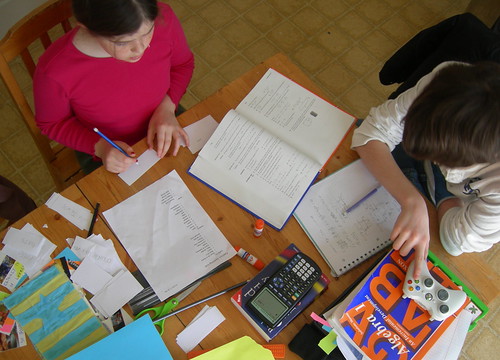
The mastery of a particular area of interest leads to the ability to replicate that style of inquiry for other areas later in life (both personal interest and academic). Not only that, you can use your child’s natural interests now, for spelling, grammar, writing style, and exploration in a way you can’t conjure with bored children being dragged through history or science that doesn’t engage them.

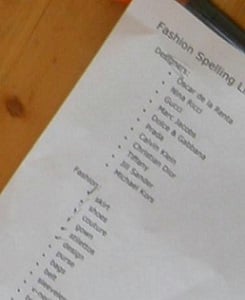
When my daughter, Caitrin, spent several years deeply invested in fashion, we made spelling lists of words that were particular to that field. Words like couture, stilettos, boutique, sleeveless.

Caitrin kept a daily blog for a year writing about fashion and modeling her individual outfits each day. We took a trip to Chicago to see the stores of designers she had studied in her magazine subscriptions (Vogue, Elle, etc.). We watched Project Runway with religious regularity.

Caitrin acquired a vocabulary far superior to mine in that arena and we used her passion for that field to learn about how you take a subject area deeper. She is less interested in fashion today, but as she focuses on what she loves, she finds the names, ideas, and language that go with those subject areas because she knows (instinctively) that that’s how you demonstrate intelligence and credibility when you talk about any subject.

Try it! You’ll like it.

Funschooling

Posted in Brave Writer Lifestyle, Family Notes, Words! | Comments Off on Natural Vocabulary Development

« Older Entries
Newer Entries »
  • Search the Blog

  • Julie Bogart
  • Welcome, I’m Julie Bogart.

    I’m a homeschooling alum -17 years, five kids. Now I run Brave Writer, the online writing and language arts program for families. More >>

    IMPORTANT: Please read our Privacy Policy.

  • New to Brave Writer? START HERE

  • FREE Resources

    • 7-Day Writing Blitz
    • Brave Writer Lifestyle Program
    • Brave Writer Sampler: Free Sample Products
    • Freewriting Prompts
    • Podcasts
  • Popular Posts

    • You have time
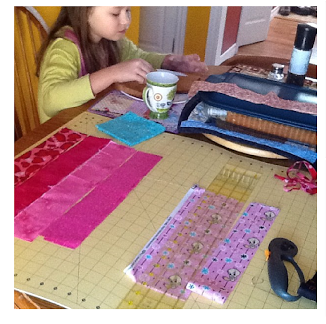
    • How writing is like sewing
    • Best curriculum for a 6 year old
    • Today's little unspoken homeschool secret
    • Do you like to homeschool?
    • Don't trust the schedule
    • You want to do a good job parenting?
    • If you've got a passel of kids
    • You are not a teacher
    • Natural Stages of Growth in Writing podcasts
  • Blog Topics

    • Brave Learner Home
    • Brave Writer Lifestyle
    • Classes
    • Contests/Giveaways
    • Friday Freewrite
    • High School
    • Homeschool Advice
    • Julie's Life
    • Language Arts
    • Movie Wednesday
    • Natural Stages of Growth
    • One Thing Principle
    • Our Team
    • Parenting
    • Philosophy of Education
    • Podcasts
    • Poetry Teatime
    • Products
    • Reviews
    • Speaking Schedule
    • Students
    • Writing about Writing
    • Young Writers
  • Archives

  • Brave Writer is a participant in the Amazon Services LLC Associates Program, an affiliate advertising program designed to provide a means for sites to earn advertising fees (at no extra cost to you) by advertising and linking to amazon.com

    Content © Brave Writer unless otherwise stated.

What is Brave Writer?

  • Welcome to Brave Writer
  • Why Brave Writer Works
  • About Julie
  • Brave Writer Values
  • Frequently Asked Questions
  • Speaking Schedule

Brave Writer Program

  • Getting Started!
  • Stages of Growth in Writing
  • The Brave Writer Program
  • For Families and Students
  • Online Classes
  • Brave Writer Lifestyle

…and More!

  • Blog
  • Classroom
  • Store
  • Books in Brave Writer Programs
  • Contact Us
  • Customer Service
  • Brave Writer Staff
© 2026 Brave Writer
Privacy Policy
Children's Privacy Policy
Help Center