A Brave Writer's Life in Brief - Page 552 of 780 - Thoughts from my home to yours A Brave Writer's Life in Brief
  • Start Here
    • For Families
      Multiple Ages
    • Ages 5-7
      Beginning Writers
    • Ages 8-10
      Emerging Writers
    • Ages 11-12
      Middle School Writers
    • Ages 13-14
      High School Writers
    • Ages 15-18
      College Prep Writers
  • Shop
    • Product Collections
    • Bundles
    • Writing Instruction Manuals
    • Literature & Grammar/Punctuation
    • Composition Formats
    • Literature Singles
    • Homeschool Help
    • Book Shop
  • Online Classes
    • Class Descriptions
    • Class Schedule
    • Classroom
    • How Our Classes Work
    • Our Writing Coaches
    • Classes FAQ
  • Community
    • Brave Learner Home
    • What’s Happening
    • Blog
    • Podcast
    • Calendar
  • Cart
  • My Account
    • My Online Classes
    • My Account
  • My Account
    • My Online Classes
    • My Account
  • Start Here

    If you’re new to Brave Writer, or are looking for the best products for your child or family, choose from below:

    • For Families
      Multiple Ages
    • Ages 5-7
      Beginning Writers
    • Ages 8-10
      Emerging Writers
    • Ages 11-12
      Middle School Writers
    • Ages 13-14
      High School Writers
    • Ages 15-18
      College Prep Writers
  • Shop

    If you’re already familiar with Brave Writer products, go directly to what you’re looking for:

    • Product Collections Browse the full catalog in our shop
    • Bundles Everything you need to get started
    • Writing Instruction Manuals Foundational Writing Programs
    • Literature & Grammar/Punctuation Grammar, Punctuation, Spelling & Literary Devices
    • Composition Formats Writing Assignments for Every Age
    • Literature Singles Individual Literature Handbooks
    • Homeschool Help Homeschooling Tools and Resources
    • Book Shop Books associated with Brave Writer Programs
  • Online Classes
    • Class Descriptions
    • Class Schedule
    • Classroom
    • How Our Classes Work
    • Our Writing Coaches
    • Classes FAQ
  • Community
    • Brave Learner Home
    • What’s Happening
    • Blog
    • Podcast
    • Calendar
  • Search
  • Cart

Search Bravewriter.com

  • Home
  • Blog

A Brave Writer's Life in Brief

Thoughts from my home to yours

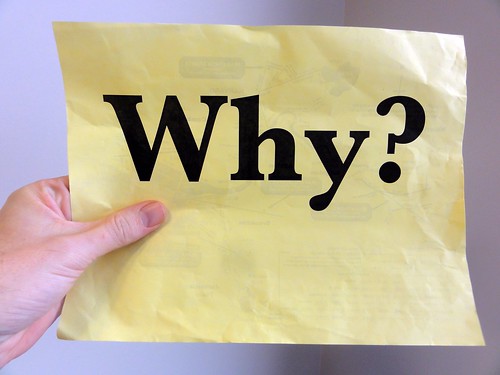
Why do you want to homeschool after all?

Why?Image by Bart Everson

Sometimes the weariness and the dailiness of homeschool get the best of us. We become “mini martyrs” because we’re committed to the cause, but we don’t actually like the process or we feel that the alternatives are so loathsome, we will not consider them despite the fact that we feel miserable.

How you feel about homeschool absolutely impacts how your kids feel about being home with you. You are the one who creates the momentum, the peace, the joy, and the enthusiasm of home education. If you’re not feeling it, no one else is either.

That’s a lot of pressure.

For those of you on summer break, this is the time to find your joy again (or at minimum, your peace). Homeschool burnout is real and can’t be ignored or minimized.

There are two ways forward.

1. Go back to the beginning. Why did you sign up to homeschool anyway? Remember what energized you—the time with kids, the joy of learning, the opportunity to create a home of shared discovery. Are you still doing those things? Have you switched to a strategy that is no longer life-giving to you because you are at the “now this counts” stage?

Is your life over-burdened by other activities and you forgot that homeschooling requires attention outside the school day hours? Are you expecting it to continue without your investment into ideas and learning and trying new things?

Have you given up on one of your challenging children? What did you do for that child at the beginning that you’ve forgotten?

Are you being seduced by methods that go against the grain of your natural personality?

2. Go forward. You need new ideas to keep you going. Read. Talk to others. Change one dynamic in your homeschool (less structure or more structure). Be intentional. Make plans (things you can look forward to).

Part of what made homeschooling more exciting at the beginning was its “newness.” You need to inject a little “new” back into the equation. Find a new theory to apply, take a class, join a group, go to a homeschool convention, pick a new curriculum for one of the subjects that has lost its liveliness. Learn something new for yourself just “cuz.” Let your own learning lead you.

You can’t expect yesterday’s inspiration to fuel today’s responsibilities.

You can use the past to help ground you (remember why you were happy before) and you can use the future to lead you (create new ways to be happy in the days to come).

Above all: know yourself. If you are burnt out, identify the source (you have teens and they are less eager to cooperate; you’re under pressure from external factors like illness, job loss, pregnancy, a new job, or some other change in circumstance; one of your children still can’t _________ – read, calculate, write, cooperate). Address the issue: self-education, conversation, and if it helps, therapy.

You can’t get to happy homeschool without an honest look at what’s ailing you and your children. You have time. Take a long slow look.

It’s also okay to coast for a while, to drift, to let go of the reins and create peacefulness through mindful inattention. Sometimes just living day to day, trusting that your energies will rebound once you let down the vigilance is enough. Really. Try that for a little while if you haven’t got the energy to sink your teeth into the nitty gritty.

Check in with yourself on a monthly basis and see if the pressure, inertia, or disappointment ease.

Allow yourself to notice little things: why you like one of your children, how watching TV together brings laughter that’s been missing, the way you feel more energized when you exercise or run or do yoga in the morning before everyone gets up.

Be good to you, and let go of the self-recriminations. This is a problem to solve or a circumstance to learn to live with, for now, for this season. It’s not a life sentence. Go back to one day at a time.

Cross-posted on facebook.

Posted in Homeschool Advice | 3 Comments »


Friday Freewrite: Treasure

through a child's eyesImage by Jesse Millan

A prized discovery. Describe what it is and how you found it.

New to freewriting? Check out our online guide.

Posted in Friday Freewrite | Comments Off on Friday Freewrite: Treasure


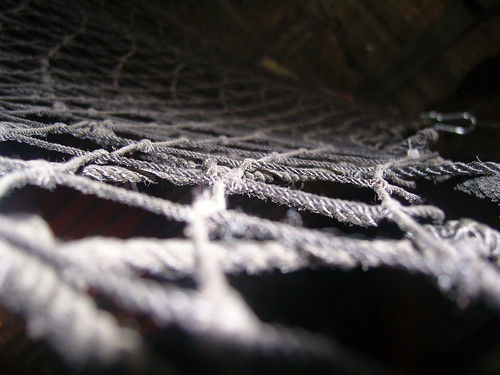
Be your child’s safety net

safety netImage by Chad

Remember our discussion about the “prophecies of doom” we sometimes inadvertently declare over our kids?

Sometimes we have to deal with prophecies of doom from others outside our families.

Today I had a message from a mother worried about her daughter who is in school, suffering from clinical anxiety, and struggling to complete a 15 page paper, which will be the difference between passing and failing the class. The instructor predicted dire consequences if her daughter failed to complete the paper and the class.

My friend’s message reminded me of another conversation—one I had with Johannah and Liam as he prepared to travel to Europe. At the apex of Liam’s nervousness about being 18 years old, alone on another continent, not knowing the languages of the countries on his itinerary, worried about making a mistake, his sister told him, “Liam, you’ll make it. After all, what are you going to do? Curl up in a ball and lie in the middle of the road and die? Of course not. If you encounter a problem, you will simply hack away at it until you solve it—because you have to, because that’s what people do when faced with big problems.”

It was a “morbidly comforting thought,” as Liam put it.

And it is. And should be to us too.

When someone else makes a dire prediction about your child and your child believes it (or fears it, or takes it in as likely), it’s your job to neutralize the impact of that negative assertion.

For instance, it’s not true that without a high school diploma, you can’t get into college. Homeschoolers have been proving otherwise for decades.

It’s not true that failure to complete the requirements for a specific class today bars you from making it as an adult tomorrow.

It’s not true that the discipline you show in high school is an indication of how well you will function in a job later. People change, mature, grow, and develop at different rates.

It’s possible to finish high school in your 20s. It’s possible to take the GED and get it over with at 15, without taking all the classes a diploma requires. It’s possible to return to homeschool after going to public school and hating it. It’s possible to delay college until your late 20s or 30s, or to not go at all.

It’s okay to stop schooling (at any stage) all together if your child’s mental and emotional well-being are at stake.

We are much more comfortable taking a child-centered, faith-filled stance with our kids in elementary school and junior high. We trust that there’s time to “catch up.” High school hits, and all of us surge forward into a “pass/fail” mentality—a zero-sum game. The culture would have us believe that all that it needs to know about our children is determined between 14-18 years of age. But that’s simply not true.

Some kids need all of their 20s to figure out what benefit could be gained from a college degree. Some discover not much benefit at all!

What we can do for our kids is to keep opening up the possibilities. We can lay out all the options—how things will look if your child comes home from high school instead of gutting it out, how things will be if he or she decides to wait to go to college, what ideas there are for being a high schooler who takes six years to finish instead of four. We can suggest alternatives like travel, work-study, outdoor education, internships, working and watching television and having friends while recovering from whatever it is that is emotionally disabling.

We can focus on our child’s person, rather than the child’s performance.

Home education is about customizing learning to your child—the human being, not coercing a fragile person through an oppressive system (if that’s what the system feels like—public, private, or home education models).

  • Remind your child of his or her unique gifts.
  • Identify with that child’s struggles.
  • Offer an optimistic outlook for the future.
  • Take pressure off.
  • Give/get help (because help helps).
  • Find alternatives to the traditional paths.

Above all, trust that not one of you (not your child, not yourself, not your spouse) is going to lie down and curl into a ball and die. You’ll all keep hacking away at the problems together, and you’ll find your way because you love each other so deeply. Even with mistakes. Even with miscalculations. Even with your own fears and memories of setbacks in the mix.

Your kids are young (anyone under 20 is). They have their entire lives ahead. They have a couple decades to figure stuff out… and then a couple more decades to figure more stuff out. Like me. Like you.

You might need to create a little safety net for your own ego, too, as you re-think what tells you you’ve been successful with your kids. You are as successful as you are compassionate, resourceful, strong, and kind.

Be good to you, too. You’re doing the best you can too, and can change how you parent and home educate any time you’d like. You are not trapped either.

Cross-posted on facebook.

Posted in Homeschool Advice | 2 Comments »


The oldest and the youngest

Noah, Caitrin, and LiamOldest child, Noah, on the left. Youngest two, Caitrin and Liam, on the right.

Have you noticed how your oldest child gets the lion’s share of your attention no matter what age or stage that child is in? It’s as if 7 is the most critical age ever (will she ever learn to read?), or 10 (maybe he can watch the baby), or 13 (when it All Starts Counting), or 16 (he can drive!), or 18 (she’s going to college!).

Meanwhile, your youngest child hits 7 and you think, “Aw. Such a cutie. So young. It’s okay if you don’t read yet.”

That youngest child turns 13 and you think, “We’ve got time. He’s just 13.”

It’s time to drive and you think, “What’s the rush?”

Sometimes in home education, the oldest writes essays by 8th grade, and by the time the youngest hits that age, you realize you literally have done no writing with this child. It sneaks up on you. You wonder how the years flew by and how you never noticed. You panic. “I’m failing my child!”

It’s a common scenario.

It happens to the best of us. Why?

Because the oldest is always doing what you have never parented before.

The oldest child creates in you the most wide-eyed amazement, anticipation, and anxiety (the trifecta!) of all your children because each event, each milestone, each achievement hangs in the balance until you’ve crested that hill together with that kid. You do all of it for your child, yes. But these experiences are also training you. You’re on a learning curve with the oldest that you never feel in quite the same way again.

Which means… if you have 3, 4, 6, 8, 10 kids… as you work your way down the bunch, the newness, the novelty, and the nerves are greatly reduced… in some cases almost to the point of neglect! You wake up to realize that this youngest child is in high school and you almost forgot it would happen!

Guilt rushes in as your energy for doing it all again rushes out. It’s natural, even if not optimal.

One benefit that the youngers have that the oldest didn’t is role models.
They have been watching each older sibling achieve and they are aware of what’s coming. You can capitalize on this benefit. Get the older kids involved. Have them talk to the youngers about what’s coming and how to prepare. Have them ask the sibling: “Did you take your Driver’s License test yet?” or “Make sure you take AP European history. You’ll be good at it.” They can be the ones to help create the trajectory the youngers will follow.

Triangle in help.
It is tedious to go through algebra six – nine times. Maybe a co-op class or a tutor gives you just enough relief and provides the structure you no longer can.

Celebrate all milestones.
You might not throw eight parties every other year for a decade, but you can mark an achievement with a Facebook status, a dinner out, a gift, or photos to commemorate the moment. Take time to say how proud you are of the youngest, even if the achievement feels old hat to you. It never is to the individual child.

Lastly, it’s never too late to get involved in the education of your youngest kids.
If you accidentally lost your way or passion for home education, remind yourself that the goal is a quality education, not proving yourself as a homeschooler. Be sure you put your child’s interests first and find the right context for that child’s education—no matter what that is.

If you want to re-up for homeschool, do it! Get new curricula (so you’ll be interested again) and change up how it gets done. Computer classes, part-time enrollment, using an iPad, studying at the local library instead of the kitchen table…

As the older kids leave home, provide treats for the younger kids. It costs less to have everyone’s favorite drinks or ice cream in the house when you only have two kids at home. Keep them in stock. Go out to eat more. Catch a movie or get coffee.

Take advantage of the portability of teenage youngest kids. Do stuff together. Try a new activity like indoor rock climbing or watching old movies. Make sure these kids get a quality experience, even if a different kind of home education than your oldest kids got.

I love having a big family. It’s a different ballgame with my youngest two still at home and the older three out of the house. I’m still learning how to do it, too.

Cross-posted on facebook.

Posted in Family Notes, Homeschool Advice, Julie's Life | 3 Comments »


Poetry Teatime: Encouraging conversation

Poetry Teatime

Image by Nick Webb

“The very act of preparing and serving tea encourages conversation. The little spaces in time created by teatime rituals call out to be filled with conversation. Even the tea itself–warm and comforting-inspires a feeling of relaxation and trust that fosters shared confidences.” ~Emilie Barnes, If Teacups Could Talk

Visit our Poetry Teatime website!

Posted in Poetry Teatime | Comments Off on Poetry Teatime: Encouraging conversation


« Older Entries
Newer Entries »
  • Search the Blog

  • Julie Bogart
  • Welcome, I’m Julie Bogart.

    I’m a homeschooling alum -17 years, five kids. Now I run Brave Writer, the online writing and language arts program for families. More >>

    IMPORTANT: Please read our Privacy Policy.

  • New to Brave Writer? START HERE

  • FREE Resources

    • 7-Day Writing Blitz
    • Brave Writer Lifestyle Program
    • Brave Writer Sampler: Free Sample Products
    • Freewriting Prompts
    • Podcasts
  • Popular Posts

    • You have time
    • How writing is like sewing
    • Best curriculum for a 6 year old
    • Today's little unspoken homeschool secret
    • Do you like to homeschool?
    • Don't trust the schedule
    • You want to do a good job parenting?
    • If you've got a passel of kids
    • You are not a teacher
    • Natural Stages of Growth in Writing podcasts
  • Blog Topics

    • Brave Learner Home
    • Brave Writer Lifestyle
    • Classes
    • Contests/Giveaways
    • Friday Freewrite
    • High School
    • Homeschool Advice
    • Julie's Life
    • Language Arts
    • Movie Wednesday
    • Natural Stages of Growth
    • One Thing Principle
    • Our Team
    • Parenting
    • Philosophy of Education
    • Podcasts
    • Poetry Teatime
    • Products
    • Reviews
    • Speaking Schedule
    • Students
    • Writing about Writing
    • Young Writers
  • Archives

  • Brave Writer is a participant in the Amazon Services LLC Associates Program, an affiliate advertising program designed to provide a means for sites to earn advertising fees (at no extra cost to you) by advertising and linking to amazon.com

    Content © Brave Writer unless otherwise stated.

What is Brave Writer?

  • Welcome to Brave Writer
  • Why Brave Writer Works
  • About Julie
  • Brave Writer Values
  • Frequently Asked Questions
  • Speaking Schedule

Brave Writer Program

  • Getting Started!
  • Stages of Growth in Writing
  • The Brave Writer Program
  • For Families and Students
  • Online Classes
  • Brave Writer Lifestyle

…and More!

  • Blog
  • Classroom
  • Store
  • Books in Brave Writer Programs
  • Contact Us
  • Customer Service
  • Brave Writer Staff
© 2026 Brave Writer
Privacy Policy
Children's Privacy Policy
Help Center