A Brave Writer's Life in Brief - Page 547 of 780 - Thoughts from my home to yours A Brave Writer's Life in Brief
  • Start Here
    • For Families
      Multiple Ages
    • Ages 5-7
      Beginning Writers
    • Ages 8-10
      Emerging Writers
    • Ages 11-12
      Middle School Writers
    • Ages 13-14
      High School Writers
    • Ages 15-18
      College Prep Writers
  • Shop
    • Product Collections
    • Bundles
    • Writing Instruction Manuals
    • Literature & Grammar/Punctuation
    • Composition Formats
    • Literature Singles
    • Homeschool Help
    • Book Shop
  • Online Classes
    • Class Descriptions
    • Class Schedule
    • Classroom
    • How Our Classes Work
    • Our Writing Coaches
    • Classes FAQ
  • Community
    • Brave Learner Home
    • What’s Happening
    • Blog
    • Podcast
    • Calendar
  • Cart
  • My Account
    • My Online Classes
    • My Account
  • My Account
    • My Online Classes
    • My Account
  • Start Here

    If you’re new to Brave Writer, or are looking for the best products for your child or family, choose from below:

    • For Families
      Multiple Ages
    • Ages 5-7
      Beginning Writers
    • Ages 8-10
      Emerging Writers
    • Ages 11-12
      Middle School Writers
    • Ages 13-14
      High School Writers
    • Ages 15-18
      College Prep Writers
  • Shop

    If you’re already familiar with Brave Writer products, go directly to what you’re looking for:

    • Product Collections Browse the full catalog in our shop
    • Bundles Everything you need to get started
    • Writing Instruction Manuals Foundational Writing Programs
    • Literature & Grammar/Punctuation Grammar, Punctuation, Spelling & Literary Devices
    • Composition Formats Writing Assignments for Every Age
    • Literature Singles Individual Literature Handbooks
    • Homeschool Help Homeschooling Tools and Resources
    • Book Shop Books associated with Brave Writer Programs
  • Online Classes
    • Class Descriptions
    • Class Schedule
    • Classroom
    • How Our Classes Work
    • Our Writing Coaches
    • Classes FAQ
  • Community
    • Brave Learner Home
    • What’s Happening
    • Blog
    • Podcast
    • Calendar
  • Search
  • Cart

Search Bravewriter.com

  • Home
  • Blog

A Brave Writer's Life in Brief

Thoughts from my home to yours

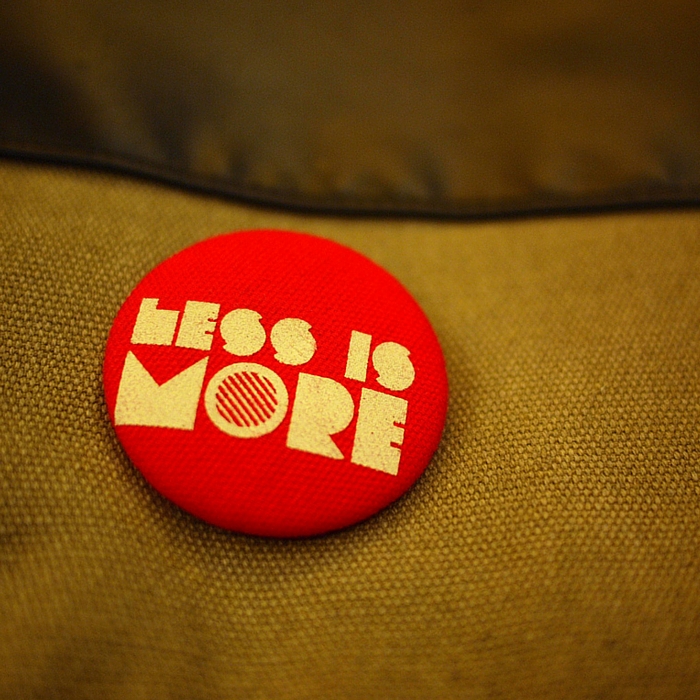
Repeat after me: “Less is more; less is more; less is more…”

Less is More

I love consulting with parents about their curriculum choices. Not only do I get to hear about their kids (who are all amazing, by the way), but I get to help them scale back their expectations and their purchases. The most important thing you can do for your upcoming school year is to do “one thing at a time.”

You want to be sure that you can spin all those plates you’re busy balancing on the top of the tall, skinny poles. If you keep purchasing curricula without considering whether or not you have the time in the day to do it all, you will find yourself frustrated and feeling guilty by October!

The best curriculum is the one you use.

It’s okay to feather in your studies as you go. If it takes a bit of time to get used to the new math program, so be it. Let that take your energy and focus for a week or two or a month. Language arts won’t die. It will simply go dormant, taking a little nap before you return to it.

If you want to launch a new project or tackle a new process, give it your full attention. You can skip everything else that day. Sit down with the guide and read it (don’t skim it). If the kids have to watch a video or play with Legos while you do, they won’t “fall behind the curve” in their educations. Rather, you will be preparing to be the best learning coach they can have. You’ll feel competent and capable because you will know what you’re doing.

  • Read directions.
  • Ensure that you have the right supplies.
  • Spend time familiarizing yourself and your kids with the methods or practices necessary for the learning experience.
  • Support the activity as your kids get used to it.
  • Follow through with the lesson or new habit for a bit without rushing, cramming, or sandwiching the work between two other demanding tasks.

If you’ve “stocked up” on curricula because of discounts or bundles or what have you, you aren’t required to use all of it at once, or to learn how to use all of it by __________ (fill in the blank official start date). You get to feather in the materials and new books as you become comfortable with them one at a time. It’s fine to not get started on that Word Origins work book, day one of the new year. In fact, might it not be a pleasure to a student to have something brand new to add to the daily tasks about the time the routine becomes a little old hat? Pulling out a brand new offering can energize your child again. Keep something new hidden at all times. Surprise is your ally in home education.

Lastly, you don’t have to do every page, every problem, or every chapter. You don’t. Your children don’t have to complete all their work in one subject before they are “allowed” to do the next one. There is no set order to how you cover the subjects.

  • You are at home. (Post that somewhere.) Make the experience homey.
  • Pay attention to flagging energy, inertia, overwhelm, and boredom.
  • Give quality efforts, in short bursts of time, to one subject area at a time.
  • Know the material and method before you begin.
  • Feel free to delay the introduction of new materials until you’ve found your groove with the first set.
  • Take it one thing at a time.

Less is more.

Check out this section on the blog for more about the One Thing Principle.
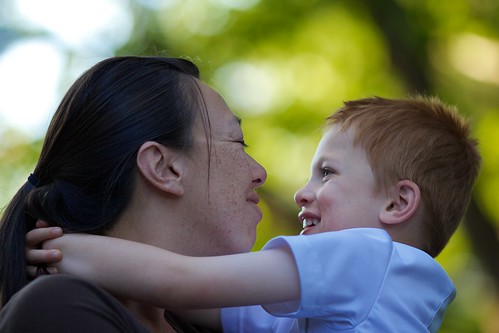
Image by othree (cc cropped)

Posted in Homeschool Advice, One Thing | 2 Comments »


Your child needs you

Andrew and Mama Time IIIImage by Michael Bentley

Your child needs you, not a scope and sequence. Not tests. Not assignments.

You brought your child home to opt out of a system of cups and pounds, inches and altitudes, teaspoons and litres.

Your child grows…whether you help or not, whether you interfere or guide, support or neglect.

Measuring growth doesn’t cause growth. Sometimes, all it does is cause unhelpful worry.

Growing is the job of children—to get tall, to acquire language, to peer into an intriguing world, to sprout beards or body curves.

Your kids will read better, calculate more easily, handwrite with less effort, produce quality insights more frequently, and show curiosity about the fascinating ideas and activities they discover along the way to 20 because that’s what human beings do.

This all happens—while they sleep, and when they wake, and while they bump along, doing what they’re told, doing what they do when no one’s watching, doing what they love, and resenting what they hate.

Sometimes they grow a quarter inch in an entire year (that was me, in 6th grade).

Sometimes they grow 6 inches in 12 months (that was me, in 11th grade).

Sometimes they can’t read, can’t read, can’t read…and then they read. At age 7 or 10 or 4.

Sometimes they tell you they hate grammar…and then major in linguistics.

You can’t stop the growth, even with lightning or flash freezing or wishing they would stay young, adorable, innocent, and easy a little longer.

You can’t make it happen faster by forcing a program that is more advanced or requiring more or worrying and hand-wringing.

Your kids need you, though. They need you to be amazed by their leaps and bounds, their first steps and first essays.

They need space to “get it” and new ideas to help when they don’t.

They need your confidence that they are doing just fine, that they will get there, wherever “there” is.

They need your investment: of money for lessons, of patience for their challenges, of heart when they must be brave.

They need your faith that the work you do together is enough, that you can’t stop them from being the fabulous people they are destined to be, even if you tried. They will grow, grow, grow and all you can do is jump in the passenger seat, open the sun roof, and turn up the radio on the joy ride.

Homeschool allows everyone to grow at the only pace they can: theirs.

Homeschool allows you to be present to who they are today, rather than worrying about who school says they should have been by now.

What a privilege.

Cross-posted on facebook.

Posted in Homeschool Advice | 3 Comments »


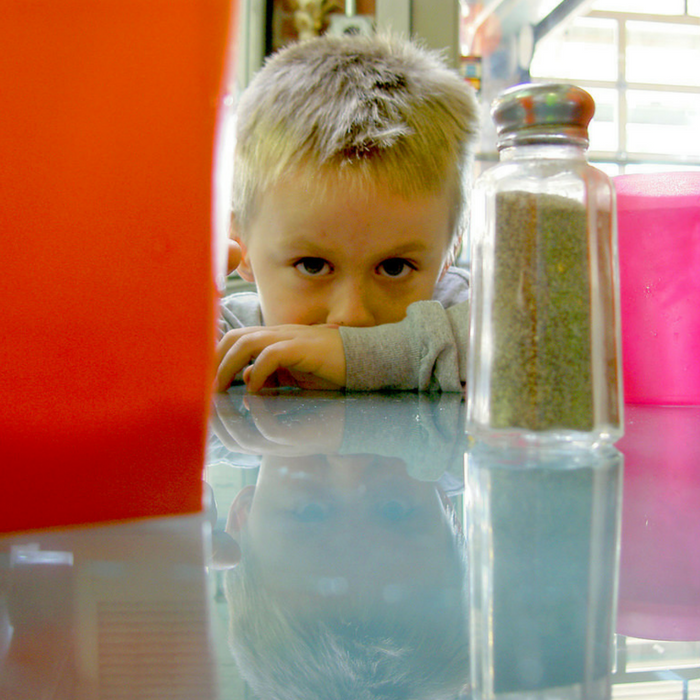
“Her favorite color is orange and she breathes Legos”

I love you

Linda, mom of a very creative Brave Writer student, emailed me this fabulous photo. This is a perfect example of playing with language!

Posted in Email, Young Writers | Comments Off on “Her favorite color is orange and she breathes Legos”


Poetry Teatime: With a pot of red tulips

Poetry Teatime

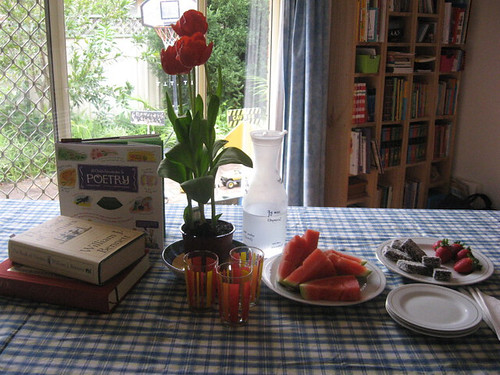
We have a poetry teatime every second Tuesday, and any other day when the mood strikes. Sometimes Nanna or a friend joins us for an arty Tuesday and brings an extra measure of delight. Most of our previous poetry teatimes have been cosy shared readings, snuggled on the lounge with rugs and hot drinks. Our table (when visible) has been pretty, with a blue plate of scented candles and paua shells one week, a treasure box of old and foreign coins and notes another time, or a white platter of pressed fern decorated candles (made with friends) and driftwood and shells we collected.

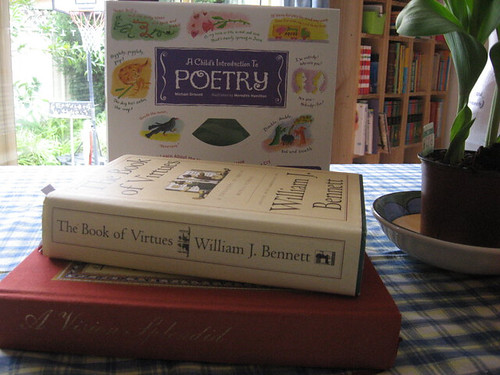
This time, a pot of red tulips was the star attraction. I asked Jasmine (8) and Elijah (9) to play in the bedroom while I prepared a surprise. Earlier, I had surreptitiously cut wedges of watermelon (an unseasonal treat as it is Winter here) and arranged lamington fingers beside fresh strawberries. All that was left to prepare was laying the table … checked blue and white cloth to contrast with the bright red tulips, a pretty stack of books, plates, serviettes and our 11 languages water jug (made from a simple flask and permanent marker, it shows words used for water in other countries).

Poetry Teatime(The red book is “A Vision Splendid: The Complete Poetry of A. B. Banjo Paterson,” a gift from my Dad.)

The children, when invited in, were delighted and settled in to enjoy our first fancy poetry teatime for the term. We all love stories and are naturally drawn to ballads. I read “The Pied Piper of Hamelin” by Robert Browning while the children enjoyed the feast, then we listened to the recorded version of it on the CD which accompanies ‘A Child’s Introduction to Poetry.’ After some light limericks for dessert, we were full and ready to go out and play.

I loved the relaxed and animated conversations we had about the stories, words and rhythms of the poems we shared. Elijah made up a poem between readings … he suddenly started to say it, and I dearly wished I had a recording device handy, but could only listen and enjoy his moment of inspiration. It was like a sunset that, when you’re caught without a camera, all you can do is sit in awe of it’s momentary beauty. When it’s gone, you fumble trying to describe the colour, light and subtle movements of clouds. Next time I will have paper and pencils handy, and I may just sneak in my mobile phone … the trick will be knowing when to press ‘record.’

Best wishes,
Vanessa

Vanessa also writes a blog, Chrysalis Island, and she posted about her experience with Brave Writer. Check it out!

Visit our Poetry Teatime website!

Posted in Poetry Teatime | 1 Comment »


What To Do When Kids Aren’t Talkative

What to do when kids aren't talkative

Sometimes your children use their voices to do their writing, rather than their pencils or keyboards. It’s okay to listen to their words, to have Big Juicy Conversations with them and jot their thoughts onto the page for them. That counts. That’s writing.

One of our BW moms shot back an email: “What if getting my child to talk is like pulling teeth? What if she won’t talk? Then how do I help her to write?”

Great question and appropriate.

I’ve noticed that everyone will eventually talk—to themselves quietly in a room when no one else is there, when their guard is down and they have a safe audience, after they have had time to process what they want to say, when they are momentarily caught up in their delight or fear or excitement or anger.

What happens too often in “school-ish” settings (where our kids know that we are “teaching” and they are now “learning”) is that we ask for talking or words or writing. The “ask” paralyzes the quiet child. The gears log jam and the child’s mind goes silent. In that moment, the parent experiences a minor rejection. That felt-sense (though not legitimate, but nonetheless real) creates the look of disappointment, or worse, frustration and irritation on the parent’s face. The child can perceive this reaction as rejection,

Once the child experiences the parental blow-back due to a failure to conjure words on command (this is how it feels to a slower processor, to a quiet child, to the introverts of our world), a cycle begins and is reinforced—the parent asks the “innocent question” and the child recoils in suspicion and self-protects by not answering.

Over time, both parent and child become stiff around subject areas that are meant to be learning experiences. Each one tenses as they approach topics or attempt to work on narrations (both oral and written).

What to do?

To begin, remember that you are at home, that this is the child you love, and that the inner life of that child exists (is alive and well). There is a world of thought happening that is not visible to you, not audible to you! It is not absent.

Then see if these attitudes and approaches help:

Become a detective. Rather than asking for information and narrations and oral freewrites or reports, pay attention to your child. If he or she is suddenly quite curious about airplanes and is reading books, watching videos, drawing them, and playing with them, take note. The next time you see the child with a plane, sit quietly nearby. Observe. Show interest (don’t ask the child to speak, simply participate—watch the movie, play with the plane, get out a pencil and try drawing one too). Be a “buddy” rather than a teacher or parent. Allow for snippets of information to flow toward you (bite-sized comments). Keep these in your own mind, jot them down somewhere, note them for your own peace of mind.

Practice private writing and thinking. It’s so easy to want our kids to be more like us so we will feel we know how to manage their development. Flip the script. How can you enter the world of the quieter child? Does it help, for instance, to suggest to the child that she may freewrite at any time in the day, in any location when she’s ready? That she can have a private time of freewriting away from the eyes of family members? Does it help to let her know that you won’t be asking for narrations or oral reports, but that you’ve provided her with a lock and key diary to record the observations and thoughts she is having that she can keep for herself so she doesn’t forget her ideas and experiences?

Explain the goal of her education. We do tend to use too many words with our kids. Still, sometimes it does help to let our kids in on our goals. You can share with your quiet child that you want her to learn to write and express herself when called on, but you want to be respectful of her process. Issue invitations to speak or write, rather than creating demands. Solicit her ideas about what helps her free her mind to share. Let her know you are on her side, not wanting to create pressure, but wanting to offer support.

Catch your child in the act of thinking. Use the Brave Writer tried and true method—when that child does speak—no matter when, no matter where—that’s the time to jot down the words. Don’t expect them to flow out in one long paragraph when you ask for it. Rather, when the time comes that your child trusts you with his words, that’s the time to listen attentively, to show positive interest, and (if possible) to put those words to paper.

Quiet kids sometimes worry that they will be opposed, that they will appear “dumb,” that their words will be scrutinized or laughed at. They sometimes worry that older siblings will take over or hijack their words. One on one time can help to foster a little more space for self-expression.

For writing, try a couple of these strategies too.

  1. Keep copywork and dictation going.
  2. Try a dialog journal where you write a question on a page for the child to answer by the next day. Then your child writes a question at the end of his answer and you write a response on the next day.
  3. Let the child talk into a digital recorder alone in a room.
  4. Listen to your child when he or she is playing with another child. Write down what you hear.

Brave Learner Home

Top image by Tim Samoff (cc)

Posted in Homeschool Advice | 2 Comments »


« Older Entries
Newer Entries »
  • Search the Blog

  • Julie Bogart
  • Welcome, I’m Julie Bogart.

    I’m a homeschooling alum -17 years, five kids. Now I run Brave Writer, the online writing and language arts program for families. More >>

    IMPORTANT: Please read our Privacy Policy.

  • New to Brave Writer? START HERE

  • FREE Resources

    • 7-Day Writing Blitz
    • Brave Writer Lifestyle Program
    • Brave Writer Sampler: Free Sample Products
    • Freewriting Prompts
    • Podcasts
  • Popular Posts

    • You have time
    • How writing is like sewing
    • Best curriculum for a 6 year old
    • Today's little unspoken homeschool secret
    • Do you like to homeschool?
    • Don't trust the schedule
    • You want to do a good job parenting?
    • If you've got a passel of kids
    • You are not a teacher
    • Natural Stages of Growth in Writing podcasts
  • Blog Topics

    • Brave Learner Home
    • Brave Writer Lifestyle
    • Classes
    • Contests/Giveaways
    • Friday Freewrite
    • High School
    • Homeschool Advice
    • Julie's Life
    • Language Arts
    • Movie Wednesday
    • Natural Stages of Growth
    • One Thing Principle
    • Our Team
    • Parenting
    • Philosophy of Education
    • Podcasts
    • Poetry Teatime
    • Products
    • Reviews
    • Speaking Schedule
    • Students
    • Writing about Writing
    • Young Writers
  • Archives

  • Brave Writer is a participant in the Amazon Services LLC Associates Program, an affiliate advertising program designed to provide a means for sites to earn advertising fees (at no extra cost to you) by advertising and linking to amazon.com

    Content © Brave Writer unless otherwise stated.

What is Brave Writer?

  • Welcome to Brave Writer
  • Why Brave Writer Works
  • About Julie
  • Brave Writer Values
  • Frequently Asked Questions
  • Speaking Schedule

Brave Writer Program

  • Getting Started!
  • Stages of Growth in Writing
  • The Brave Writer Program
  • For Families and Students
  • Online Classes
  • Brave Writer Lifestyle

…and More!

  • Blog
  • Classroom
  • Store
  • Books in Brave Writer Programs
  • Contact Us
  • Customer Service
  • Brave Writer Staff
© 2026 Brave Writer
Privacy Policy
Children's Privacy Policy
Help Center