A Brave Writer's Life in Brief - Page 510 of 779 - Thoughts from my home to yours A Brave Writer's Life in Brief
  • Start Here
    • For Families
      Multiple Ages
    • Ages 5-7
      Beginning Writers
    • Ages 8-10
      Emerging Writers
    • Ages 11-12
      Middle School Writers
    • Ages 13-14
      High School Writers
    • Ages 15-18
      College Prep Writers
  • Shop
    • Product Collections
    • Bundles
    • Writing Instruction Manuals
    • Literature & Grammar/Punctuation
    • Composition Formats
    • Literature Singles
    • Homeschool Help
    • Book Shop
  • Online Classes
    • Class Descriptions
    • Class Schedule
    • Classroom
    • How Our Classes Work
    • Our Writing Coaches
    • Classes FAQ
  • Community
    • Brave Learner Home
    • What’s Happening
    • Blog
    • Podcast
    • Calendar
  • Cart
  • My Account
    • My Online Classes
    • My Account
  • My Account
    • My Online Classes
    • My Account
  • Start Here

    If you’re new to Brave Writer, or are looking for the best products for your child or family, choose from below:

    • For Families
      Multiple Ages
    • Ages 5-7
      Beginning Writers
    • Ages 8-10
      Emerging Writers
    • Ages 11-12
      Middle School Writers
    • Ages 13-14
      High School Writers
    • Ages 15-18
      College Prep Writers
  • Shop

    If you’re already familiar with Brave Writer products, go directly to what you’re looking for:

    • Product Collections Browse the full catalog in our shop
    • Bundles Everything you need to get started
    • Writing Instruction Manuals Foundational Writing Programs
    • Literature & Grammar/Punctuation Grammar, Punctuation, Spelling & Literary Devices
    • Composition Formats Writing Assignments for Every Age
    • Literature Singles Individual Literature Handbooks
    • Homeschool Help Homeschooling Tools and Resources
    • Book Shop Books associated with Brave Writer Programs
  • Online Classes
    • Class Descriptions
    • Class Schedule
    • Classroom
    • How Our Classes Work
    • Our Writing Coaches
    • Classes FAQ
  • Community
    • Brave Learner Home
    • What’s Happening
    • Blog
    • Podcast
    • Calendar
  • Search
  • Cart

Search Bravewriter.com

  • Home
  • Blog

A Brave Writer's Life in Brief

Thoughts from my home to yours

Look for the good

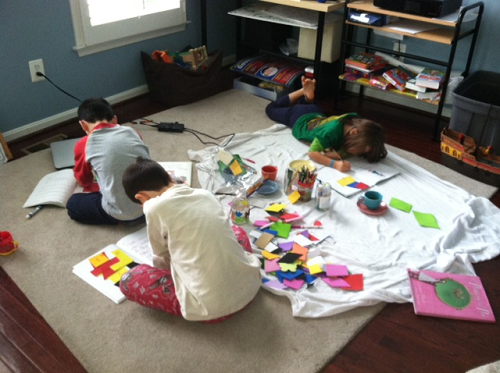
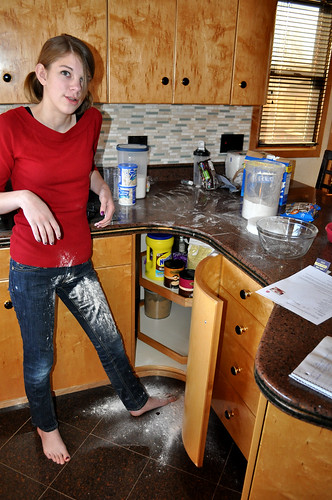
The Great Flour FiascoImage by GoodNCrazy

Not in a pretend way. Not in a fake, pollyanna, unrelated-to-reality way.

Don’t look for the good at the expense of stock-taking or facing the truth.

There are moments that call for the courage to be clear-eyed about your life: its deficits, its ongoing flaws and the shrinking space for peace and growth. Those moments come after a long season of “trying hard” and “believing the best.” The willingness to admit, “This is not working,” is a brave admission and can lead to a different kind of good—the costly kind, that requires change and overhaul, but leads to a new season of opportunity and tranquility.

The kind of “looking for good” that I mean in today’s message is not the kind explained above.

It’s a different kind. Look for the good beyond the obvious interpretation of events.

Look for the good—in the intention behind the action.

Your child who got glue on the new table to make you a card. The intention is right; the action is unnerving.

The phone call from the teen stranded on the roadside to tell you about a near miss with the family car—the accident avoided, the honesty to tell you the truth, the willingness to risk being “in trouble” with you is the good.

Look for the good—as if you were holding a camera.

Your toddler pours the spaghetti on her head in the new Hanna Andersson outfit—it’s a moment to capture for future memory-savoring.

You feel anxious about bills unpaid and see, across the room, four children building a tower of blocks in perfect harmony. The good.

Look for the good—in progress.

Your child is not reading yet, but he’s more interested in books than he was two months ago.

Your teen is not sharing her feelings with you today, but she smiled at you spontaneously.

Look for the good—in the big picture.

This week might have been hurried and harried, but the overall pace of your life in the last year is calmer, less hurried. You can get back to that.

Your 10-year-old is struggling with division, but your 13-year-old isn’t and that gives you hope for the 10-year-old.

Look for the good—in your home.

Its coziness, not its dust bunnies.

Its family-friendly messes, its corners that house your memories, the taken-for-granted nature of the space you call home, the funds to pay for the roof over all your heads—fabulous good.

Look for the good—in yourself.

You’re trying, every day.

Trying to be kind, trying to trust the process, trying to add new methods to your work, trying to laugh and love, trying to hold back your temper or exasperation, and succeeding sometimes.

You have shining moments of success where you know your children are happily bonded to you. You know that when you are not connected, there is a path back because you’ve taken it before.

Look for the good—it’s there, underneath the muddy shoes, next to the hidden math book that you can never find, behind the eyes of your tired emotional teen, inside where you can be gentle with yourself.

Keep going. <3

Cross-posted on facebook.
Posted in Homeschool Advice, Parenting | Comments Off on Look for the good


Nothing is wasted

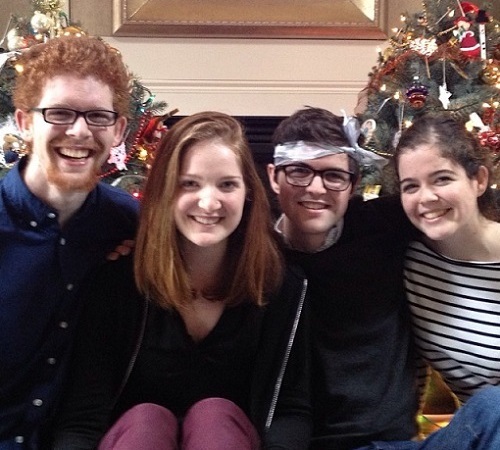
Home HolidaysHome for the Holidays: Liam, Johannah, Jacob, Caitrin

I heard from a mom who may remind you of you. She is ping-ponging between structure and freedom, routine and wide open spaces of happy, invested “wasted” time. The back and forth swing feels unnerving—like she should have picked one or the other by now, and what should she do about two kids—one who feels comforted by the predictable pattern, and the other who collapses into tears of frustration in the face of assigned pages?

The way most parents handle this predicament is to try lots of ideas—looking for that one right fit that takes everyone into account. Me too! I’m just like you.

My journey included principles gleaned from the following streams of home education, mostly in this order. I started in 1991.

KONOS (kinesthetic unit-studies—wonderful!)

Roger and Dorothy Moore’s approach to learning math and reading in the early years (love them)

Ruth Beechik’s ideas about copy work and dictation (genius)

Sonlight (literature-based history and language arts; I was there the day SL was born!)

Other reading lists and literature-based programs I discovered at conventions, through friends, at the library

Enter The Internet (WATERSHED event of my life). Now I had LOTS of people to talk to about homeschooling and my choices expanded again

Charlotte Mason (both freedom and form, living books and getting out of doors, art, a lifestyle, tea; spent five years with a terrific CM group in Dayton which shaped a lot of my thinking about learning and loving)

Classical Education (for the categories—logic, grammar, rhetoric; for the book lists; for the style of inquiry, not so much for the program—too rigid for us)

Delight-directed learning (following a child’s passions and letting those expand to include what needs to be learned)

BHAGs (big hairy audacious goals; a business management term—catching sight of a person’s, in this case: child’s, BIG dreams and shaping the education to suit them, supporting the process to bring them to life)

Unschooling (hands off! let them go! put away textbooks!)

Teenage Liberation Handbook (meant much more to me than my kids since they had never been in school—it helped to deschool me, to give me courage to risk with Noah as a teen)

Radical unschooling (being attentive to my child and coordinating that with opportunities, deep deep appreciation for how learning happens from within and how to be a parent who is engaged enough to facilitate it and stand in awe of it)

Re-enter Textbooks (some subjects benefited from use: science, math—I had the courage to go there, and it took courage)

Tutors (math, SAT prep, art, piano, saxophone, sewing, handwriting therapy for dysgraphia, speech therapy)

Classes and camps (co-op, local high school, zoo, vintage dance, online courses, Shakespeare acting, space camp, marching band, color guard, theater, poetry club at the library)

Public School (some part-time, some full time high school)

College

The inputs from each of these streams created the education we called homeschool. I did not pick one philosophy and stick to it for all 17 years—who can? You don’t know what you are doing…you have to figure it out as you go. It’s hogwash to think that if you didn’t find the right stream early enough, you screwed up. Your kids are getting an education, but so are you! You are growing as an educator, as a learner, as an adult, as a parent. You didn’t come into this whole and ready to go. You are learning, doing, being as you are leading, loving, and evolving. That’s not easy.

Give yourself space and time to change your mind, to course correct, and to feel okay about your lack of certainty.

Not only that, I didn’t stop being a home educator just because some of my kids went to school. I’m still involved editing papers, discussing ideas brought up in class, reading textbooks to help with comprehension, setting up tutors, helping with the adjustment to school, and so on.

But even after school is over (graduations from high school and college), the home education continues!

When my adult kids come home, we still drink tea, read poetry, play word games and quiz up (tests trivia skills, especially love the one for geography), speak foreign languages to each other, read books together at coffee houses in each other’s company, recommend books, talk about feminism, genocide, North Korea, social work, politics, and favorite authors, play cards, watch both documentaries and popular movies, share music and discuss it, and still notice birds and art.

If you value learning together with your children, homeschool is not a task you complete one day and then you’re done. Rather, it is an ongoing source of relationship and self-education that your family will share throughout their lives.

All the choices you make shape who you become to each other.

It’s okay that you didn’t find the right system earlier. There is no right system!

There is you, your family, and what you stumble upon that helps you each year you move ahead in life.

Promise yourself one thing, and I think you’ll be okay:

Stay responsive.

Stay responsive to the moment (what’s working, what isn’t?)

Stay responsive to the child (what’s working for this child, what isn’t?)

Stay responsive to new input (don’t disqualify any educational idea or tool because you are afraid you will look bad to some group of homeschoolers)

STAY RESPONSIVE

Allow your homeschool to evolve, morph, grow, or shrink (if it needs to). Be strong and courageous to stick up for your choices in the face of pressure to feel badly about them. Do not adopt a system, or a set of values and beliefs that trump the individuals who live in your home.

There is no right system.

There is only your family. Love them, pay attention to them, try lots of ideas (try them, taste them like you were at the Taste of Cincinnati and were walking down the long hot walk way sampling Belgian waffles, beers, and bratwursts—a little of this and a little of that). Be satisfied with your unique blend of quality ideas that you sift and apply to your family, trusting that all together, you will have created a life that values learning.

If you ever feel belittled or shamed about the choices you are making for your family, leave that group. Once you feel pressure to conform, you can’t be responsive to your family—you will substitute the system for love.

Protect your family from judgment. Stand up for yourself. Learn. Enjoy.

Cross-posted on facebook.

Posted in Homeschool Advice, Julie's Life | 2 Comments »


It’s Brave Writer’s 14th Birthday!

14th_Birthday

Not only are we celebrating Jack London’s birthday with a sale on The Call of the Wild and White Fang boomerang, but Brave Writer also turns 14 this month, so we’re offering a $14 discount on both the digital The Writer’s Jungle (usually $79), and the binder version (usually $97).

The Writer’s Jungle today only: $65 or $83!

In the last fourteen years we’ve gone from a kitchen table enterprise run by one to a thriving business that employs a number of instructors (fourteen!) and support staff. From the Introduction to The Writer’s Jungle:

I never set out to write a writing curriculum. This whole shebang started when a friend conned me into teaching a Sunday school class for homeschooling moms desperate for help in writing. I hesitated. Just because I worked in the field of writing and editing (wrote articles, worked as an editor, helped struggling D Min students with their dissertations and had ghost written a few books) didn’t mean I knew the first thing about the educational philosophy of teaching kids to write.

My kids were writing, but I had never used anyone’s writing manuals. I just taught them the way I’d learned to do my jobs. For one of them, my style of teaching worked great. For the older one, I found myself inventing new ideas on the fly-regularly-to keep his pen wet and his pages full of words. He thought writing itself a cranky and irritating process.

So I showed up for that first class of fifteen and within an hour discovered something that rocked me back on my heels. The principles I taught were brand new to the moms in the room. I wasn’t repeating information from their various and sundry manuals. None of them had heard many of the ideas I suggested. In fact, it’s become common since that day for mothers to tell me that what I teach has transformed how they themselves write.

What started in a church Sunday school class grew into a business that has helped thousands of families nurture multitudes of Brave Writers all over the world!

Here’s to many more years to come! 

Image © Valics Lehel | Dreamstime.com

Posted in BW products | 2 Comments »


Poetry Teatime: Warm cider and cookies

Poetry Teatime

We combined tea time and Jot It Down and had a great time. After some warm cider and cookies we read The Princess and the Pea. We then wrote our own poem and made mattresses out of foam in our journal books and used dehydrated peas. They are even writing the whole poem in their fairy tale journals.

[Below] is the poem we came up with. My kids are 8, 6 and 6. There is a picture too. I didn’t correct their punctuation or anything and they came up with the rhymes and order of the content.

Blessings,
Vanessa

The Princess and the Pea: A Poem

There was a prince
Who needed a bride
A true princess on the inside.

One night it was raining,
The prince was complaining.
A knock on the door,
Puddles on the floor.

The queen put a pea
where nobody could see.
The Princess couldn’t sleep
But didn’t make a peep.

She woke up black and blue
And the Prince knew
he had found a true princess.
And he married her.

Poetry Teatime

Posted in Poetry Teatime | Comments Off on Poetry Teatime: Warm cider and cookies


How to have a “together-style homeschool” if your kids bicker

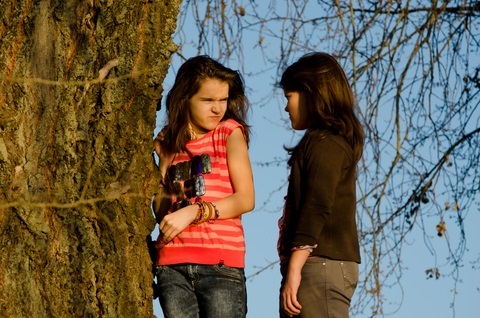
Bickering_siblings

The following entry is a response to an email asking about how to help siblings get along in the “together-time” of homeschool. My replies are interspersed with her situations.

Below are ideas for some common issues.

Caveat: It’s much much easier to give guidance now that my children are mostly out of the house! My memories are telescoped and not as present-to-me as your current very-alive-to-you frustrations. Just know this: some days just suck. Sometimes everything you try doesn’t work. Sometimes you need breaks from each other, from homeschool, from your house.

Sometimes you try all the “right approaches” and they feel like stiff shoes – not natural to you or how you are as a group. You know your family! The “together-style” homeschool is an option, not a requirement.

With that said, here are some things that worked for us when we faced some of these challenges:

My turn/no your turn: Two options—1) Have more “whatever” available so no turns need to be taken; 2) Don’t use this item/process/book during family homeschool time.

Examples—If your kids are fighting over Legos, you need more Legos. If they are wanting to look at the same book, you may need a second copy or you need another book of comparable interest. This option often requires extra cash and effort. If you don’t have either, go on to suggestion two.

If there is no way to expand the number of items (2-3 sets of binoculars, knitting needles for all, several cameras, a variety of writing implements, many clipboards, several iPads or Tablets, more than one computer), then save the individual item task for NOT family time. That’s not a time to do the activity as a group. Save it for independent time. If you have lots of kids, create a sign up sheet with time slots so that the kids can have a neutral third party hold them accountable—the sheet of paper.

Our biggest fights were over TV and computer time. We could not afford to have more computers or TVs. That meant we had to have “turns.” I refused to police these turns or even solve the “…but you started at 12:02 so that means…” arguments. For a long time, we had a sign up sheet and we agreed on a specific clock. Eventually, they were done with the sheet and used “time slots.” That didn’t eliminate all of the fighting, but by and large it did afford uninterrupted play time. We did discover after several months that 30 minutes was “too short” a turn. We changed it to 2 hour time slots so that it was possible to get immersed in a game.

Another predicament: 9-year-old gets annoyed with youngers who don’t know what he knows ( working on patience with him).

This one will be frustrating while it lasts but it will change. Maybe rather than annoyance you can feature his growth to him. You might acknowledge his diligence to learn or ask him to teach one of the younger ones. Find out if he’s needing a playmate who is of comparable skill (find one – if none are available then you are that playmate) or if he is frustrated because their lack of knowledge is thwarting his progress in some way. Fix THAT and his impatience will dissipate (usually).

Next: littlest interrupts which frustrates other two, everyone talks at once then gets upset.

Interruptions are frustrating to everyone! Hold a family meeting to discuss how interruptions may take place and how to all talk at once. Start with, “Have you ever noticed how when we all talk at once, we all get frustrated?” or “Have you ever noticed that when two kids are playing and a third joins, the first two get mad?” Then ask, “What can we do about that?” or “If it were up to you, how would you solve that problem?”

Get them involved in the process. They may have a good idea—like talking only when you have the stuffed bear in your hand and if you want to talk, picking it up first. Or maybe if the older two are busy and the younger one wants to interrupt, help the older two to know how to talk to an interrupter. Can they hold up a hand like a “stop” sign for a moment, and then turn and make eye contact and say, “What did you want?”

Sometimes a hand sign is much better than escalating voices.

Here’s the thing: these issues you are talking about? They are actually the most important lessons you can teach. Ignoring the tension or expecting a cure all–both unrealistic. It takes years of negotiating for peace before your kids learn to be peaceful with each other. You facilitate peace by hearing the real feelings of each participant and solving for a meaningful solution for each person. It takes time and work—and is worth skipping all home education for the day or week to get it right.

I hope that helps! Please “push back” if you have follow ups about how none of this has worked for you. We can keep solving here, too.

Posted in Homeschool Advice, Parenting | Comments Off on How to have a “together-style homeschool” if your kids bicker


« Older Entries
Newer Entries »
  • Search the Blog

  • Julie Bogart
  • Welcome, I’m Julie Bogart.

    I’m a homeschooling alum -17 years, five kids. Now I run Brave Writer, the online writing and language arts program for families. More >>

    IMPORTANT: Please read our Privacy Policy.

  • New to Brave Writer? START HERE

  • FREE Resources

    • 7-Day Writing Blitz
    • Brave Writer Lifestyle Program
    • Brave Writer Sampler: Free Sample Products
    • Freewriting Prompts
    • Podcasts
  • Popular Posts

    • You have time
    • How writing is like sewing
    • Best curriculum for a 6 year old
    • Today's little unspoken homeschool secret
    • Do you like to homeschool?
    • Don't trust the schedule
    • You want to do a good job parenting?
    • If you've got a passel of kids
    • You are not a teacher
    • Natural Stages of Growth in Writing podcasts
  • Blog Topics

    • Brave Learner Home
    • Brave Writer Lifestyle
    • Classes
    • Contests/Giveaways
    • Friday Freewrite
    • High School
    • Homeschool Advice
    • Julie's Life
    • Language Arts
    • Movie Wednesday
    • Natural Stages of Growth
    • One Thing Principle
    • Our Team
    • Parenting
    • Philosophy of Education
    • Podcasts
    • Poetry Teatime
    • Products
    • Reviews
    • Speaking Schedule
    • Students
    • Writing about Writing
    • Young Writers
  • Archives

  • Brave Writer is a participant in the Amazon Services LLC Associates Program, an affiliate advertising program designed to provide a means for sites to earn advertising fees (at no extra cost to you) by advertising and linking to amazon.com

    Content © Brave Writer unless otherwise stated.

What is Brave Writer?

  • Welcome to Brave Writer
  • Why Brave Writer Works
  • About Julie
  • Brave Writer Values
  • Frequently Asked Questions
  • Speaking Schedule

Brave Writer Program

  • Getting Started!
  • Stages of Growth in Writing
  • The Brave Writer Program
  • For Families and Students
  • Online Classes
  • Brave Writer Lifestyle

…and More!

  • Blog
  • Classroom
  • Store
  • Books in Brave Writer Programs
  • Contact Us
  • Customer Service
  • Brave Writer Staff
© 2026 Brave Writer
Privacy Policy
Children's Privacy Policy
Help Center