A Brave Writer's Life in Brief - Page 507 of 779 - Thoughts from my home to yours A Brave Writer's Life in Brief
  • Start Here
    • For Families
      Multiple Ages
    • Ages 5-7
      Beginning Writers
    • Ages 8-10
      Emerging Writers
    • Ages 11-12
      Middle School Writers
    • Ages 13-14
      High School Writers
    • Ages 15-18
      College Prep Writers
  • Shop
    • Product Collections
    • Bundles
    • Writing Instruction Manuals
    • Literature & Grammar/Punctuation
    • Composition Formats
    • Literature Singles
    • Homeschool Help
    • Book Shop
  • Online Classes
    • Class Descriptions
    • Class Schedule
    • Classroom
    • How Our Classes Work
    • Our Writing Coaches
    • Classes FAQ
  • Community
    • Brave Learner Home
    • What’s Happening
    • Blog
    • Podcast
    • Calendar
  • Cart
  • My Account
    • My Online Classes
    • My Account
  • My Account
    • My Online Classes
    • My Account
  • Start Here

    If you’re new to Brave Writer, or are looking for the best products for your child or family, choose from below:

    • For Families
      Multiple Ages
    • Ages 5-7
      Beginning Writers
    • Ages 8-10
      Emerging Writers
    • Ages 11-12
      Middle School Writers
    • Ages 13-14
      High School Writers
    • Ages 15-18
      College Prep Writers
  • Shop

    If you’re already familiar with Brave Writer products, go directly to what you’re looking for:

    • Product Collections Browse the full catalog in our shop
    • Bundles Everything you need to get started
    • Writing Instruction Manuals Foundational Writing Programs
    • Literature & Grammar/Punctuation Grammar, Punctuation, Spelling & Literary Devices
    • Composition Formats Writing Assignments for Every Age
    • Literature Singles Individual Literature Handbooks
    • Homeschool Help Homeschooling Tools and Resources
    • Book Shop Books associated with Brave Writer Programs
  • Online Classes
    • Class Descriptions
    • Class Schedule
    • Classroom
    • How Our Classes Work
    • Our Writing Coaches
    • Classes FAQ
  • Community
    • Brave Learner Home
    • What’s Happening
    • Blog
    • Podcast
    • Calendar
  • Search
  • Cart

Search Bravewriter.com

  • Home
  • Blog

A Brave Writer's Life in Brief

Thoughts from my home to yours

When has Worry Helped You?

I spoke with a mom who wanted to know when she should start worrying about her daughter’s writing skills. This daughter is in 7th grade.

I chuckled kindly (promise—it was a kind chuckle). I recognize the question. I’ve lived it, just like you have.

I said to her, “When has worrying helped you?”

I followed with, “If I tell you ‘not to worry’ until 10th grade, won’t you start worrying as soon as we hang up? Won’t you worry now about how to get your daughter to write well enough so you won’t have to worry in 10th grade? Aren’t you already worrying, about worrying?”

Worry has a way of expanding to fill all the spaces, like an oozing purple amoeba.

Ask yourself: how does it feel when someone is worried about you? I freeze and resist. I don’t like being the object of someone’s worry. I feel obligated to release them, but often their worries are “justified” in that I am not performing the way they wish I would. So now I’m not only disappointing myself and them, but I’m creating worry in a person I love which ricochets back to me and makes me feel small and deficient.

Worry is not helpful when it becomes the emotional context for your relationship with your child. If your kid can walk through the front door and feel your anxiety leap off of you onto her chest, I guarantee that your worry is not experienced as productive. Worse, it can feel like a loss of respect and a shriveling of love. We must rise above worry!

So is worry ever useful?

The most important thing to do with worry is to use it for research. Recognize that worry tells you: You are not omnipotent. You have no control. You are limited in how much you can help.

However, worry can alert you to this one truth: I need more information. I need help.

The goal shouldn’t be to fix the other person (to get the child to love writing or see it as fun or to progress to high school level). Rather, alleviate the worry through self-education. Become a student of all the ways you can enhance the context for your relationship—how to invest faith and hope, rather than worry and fear. Don’t stop your research until you have discovered the tools and steps that will give you solid ground to stand on. Sometimes the research leads to a “pause” – a respite, a letting go, a “not-doing” and that’s good too!

I applaud the mom who called me. She took action when her worry spiked—she sought another perspective, found a new way to see her daughter and writing, did the research to help her rise above the oozing purple amoeba-like worry.

The bottom line: you are not in control.

Man, that’s hard to swallow.

On the flip side: what a relief!

Let go of worry and foster a supportive, creative, resource-seeking relationship with your children. That’s the best any of us can do.
Posted in Parenting | 1 Comment »


The hardest part is apologizing

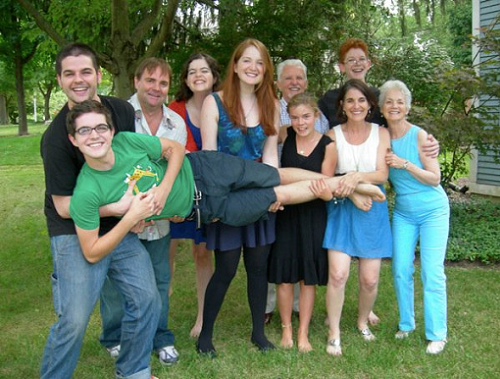
Jacob GraduationJacob’s graduation party, 2010

Listening when you are the target of someone’s angst or negative energy takes grit. You have to hold on through the discomfort to try to hear the words. Then you have to drop your defenses and find a way to match the intensity of the hurt one, recognizing the risk taken to tell you a painful “truth” (their truth, not THE truth).

I remember when Jacob, in 11th grade, told me that he regretted ever being homeschooled. He was convinced that that path had impaired his development in math, he thought I had been inattentive due to my philosophy of unschooling (not planning work for him to “do”), and he worried that he would not be able to “catch up” to his peers (whatever that meant to him at the time). He told me his disappointments in me and home education over an expensive Italian dinner I was paying for. He told his feelings to me with some intensity, and anxiety that he would push too far.

I sucked on a noodle. I breathed. I wanted him to know I had heard him. He didn’t choose to be homeschooled. He happened to emerge from the womb into a family that had already decided to home educate. It was a done deal before the placenta had even detached!

As he aged, what choice did he really have about his education? I was busy reading books, writing passionate posts to message boards, and cultivating a philosophy of education while he played with swords and dress up clothes, learned his ABC’s, and happily filled in workbooks.

As my philosophy evolved, so did our homeschool. I announced my grand unschool experiment over a family brunch one mid-week morning. Jon and I enthused about the opportunity to learn “whatever you want” with parental support and companionship. The toddler didn’t know what we were talking about. Two of the kids threw parties on the spot. Two of them panicked. Jacob was one of the panickers. What would happen to his education? Would he still learn?

After a couple of years of this unschooling lifestyle, Jacob asked to go to high school fulltime. Our first kid to want to. We accommodated and within two years, I found myself staring across a candlelit table at an emotional junior in high school who was explaining to me my failings as a mother.

Yeah—it’s hard to take it. But I had to. I had to for him. He should get to evaluate his childhood. Heck, I’ve evaluated mine! That’s what we all do. When that moment arrives, what we all need is a parent bigger than the eruption, bigger than the judgment passed, to take it. We want a parent who hears how it actually felt to be the kid in that circumstance, under that parent’s care.

The moment had come. I owed Jacob an apology—not for making a mistake, not for failing him, not for being a poor home educator. I didn’t believe any of that to be true, so I couldn’t apologize for that.

But what I could and did say went something like this:

“I’m sorry you felt like I abandoned your education when we chose to unschool. I’m sorry I didn’t see how alone you felt, how much you preferred structure to what I saw as a grand educational vision. I’m sorry, too, that you didn’t have a say in your education until high school. Sadly, it’s that way for all kids. They typically do follow the educational choices of the parents—no matter what path they choose and offer. How frustrating that must be to you to see that we chose such a different path than the one you are on now.”

I went on. I wanted him to know that I didn’t need him to defend homeschooling or to prefer it to his current schooling. I didn’t need him to homeschool his own future kids. I didn’t even need him to appreciate what I saw as gifts to his education that he gained through homeschooling, even if he couldn’t see them or didn’t or wouldn’t ever.

All I wanted him to know was that I “got it.” He was disappointed in his past education at my hands, and worried about his future in education because of it.

“I’m sorry” only began to cover it.

I did add one thing once I felt he had heard my apology. I told Jacob: “Even if it isn’t now, I do hope that some day, even if you continue to judge homeschooling as inadequate for educating your young, you will be able to at least understand my process—why I took that risk, why I believed in homeschooling, why I made a deliberate conscientious choice to buck the system and keep you kids home.”

He accepted that comment.

It’s been five years since that dinner. Jacob’s academic career is a rocket jet. He’s not been held back in the least by home education. But even more—he came to a much more rapid awareness of how it created the person he is today than I expected. I’m grateful, and humbled.

We can discuss this painful passage now because I took it then (and because he had the courage to risk telling me the truth).

I share this story because I’m aware of how difficult it is to simply stand in the strength of your choices while being blown back by the strength of a child’s disapproval of your decisions. Is there anything harder to hear? Anything you want more to defend against?

The most difficult part is the apology. It feels like you are denying your most deeply held convictions. But you’re not. You’re honoring the most deeply felt experiences of your child—the ones presenting themselves today (not for all time).

If you can hang in through the recounting of pain, if you can validate the perceptions by simply accepting them, and if you can then offer a sincere “I’m sorry,” you may be able to create space for new experiences and insights to grow…for both of you!

I did learn, too. Some of my decisions were not as well-conceived as others and I have reports from my kids that help me know which ones were mistakes.

It’s okay to admit that. I don’t have to defend every homeschooling decision I’ve ever made as the best one. We take risks. Some work out better than others.

Life is just like that!

We do the best we can, at the time, and adjust when we know to adjust. That’s all any of us do.

Go forth and apologize without fear. It’s good for all concerned.

Cross-posted on facebook.

Posted in Homeschool Advice, Julie's Life | 3 Comments »


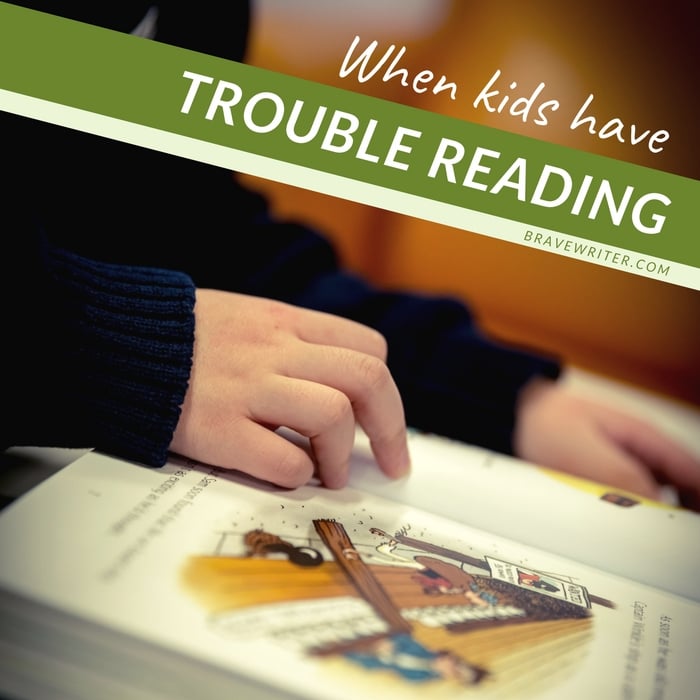
When Kids have Trouble Reading

When Kids have Trouble Reading

Abby asks:

Where would my 9 year old start? He really dislikes reading and writing. He also does not like books that are too young for him in content. He can read sort if, but doesn’t like to and seems to have trouble with the phonetics. I have tried the chunking method but I don’t know what I am doing and am met with much resistance by him. I am looking for help and a new direction.

Thanks!
Abby

Some kids just can’t get there as easily as others. My youngest was nearly 10 before reading clicked for her.

For Caitrin (my youngest), she got interested in Ancient Greek (I was studying it at the time). We learned the alphabet together. She suddenly saw how each letter had a sound in a way she didn’t grasp with English. Because I was sounding out with her and struggling with her, she started to match the sounds to the letters. Once she made that connection, something “clicked” and she started sounding out more easily for English. She never read readers and went straight to chapter books.

It may be that he is trying to “read” – to just breeze along in English the way all of us do, without realizing how he needs to patiently grasp the phonetics (painstaking, unnatural work). If you have a way to introduce a second alphabet (maybe even making your own code for the sounds – not the alphabet), he might see it as a game and start to see what reading actually is.

My other daughter had a different problem. She was struggling with all the different fonts. To her, an “a” in handwriting was not the same “a” as in typing. She couldn’t generalize and thought she was seeing multiple alphabets! She didn’t read until she was almost nine. When I figured out what was happening, I started having her circle the alphabet letter by letter in a variety of settings (books, articles, handwritten notes). I wanted her to recognize an “a” always sounded like an “a” no matter how it was written. Once she caught on to that, she read.

When Kids have Trouble Reading

Keep noticing what’s going on with your son. If he is struggling with the patience to sound out, see if there is some other way he can get there. You might try writing him notes (using simple language) each night at bed time – a single question. Let him read it on his own away from your eyes. If he can decipher it, he can “get” whatever the question offers.

For instance, maybe you write: “Do you want a cookie?”

If he can read it, the next day he gets it.

Maybe: “Do you want to take a walk in the park?”

Then if he can get it, you go for the walk. Maybe you go anyway!

No need to punish him, but you might help him have some space to read alone without your prying eyes and anxiety pressuring him (that’s how we all feel when we are sitting with a late reader). Reading aloud to him is important as well.

You might also try The Wand (you can download a sample so you can take a look and see if it would work for him). Sometimes the kinesthetic approach works well with boys.

–Julie

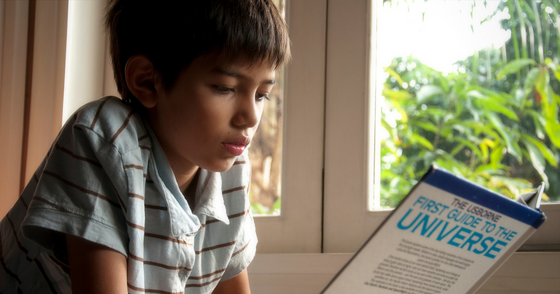
Image of boy reading by Brave Writer mom, Marsha

Posted in Email, Homeschool Advice, Reading | 6 Comments »


Friday Freewrite: Shopping

Art Piece 4Image by AForestFrolic

Describe a successful (or unsuccessful!) shopping trip.

New to freewriting? Check out our online guide.

Posted in Friday Freewrite | Comments Off on Friday Freewrite: Shopping


Trust your hunches

TrustYou’ve got that hunch: he’d do better if he __________.

She’d thrive if she had ___________.

My home would feel more alive and nurturing if __________.

I like to talk about the “fantasy homeschool” – the one that lives in your imagination and pops up when you rinse suds from your hair, alone in the shower. You know what it is the same way you know what you’d do to your kitchen if you had the money.

Occasionally you look across the room at your diligent children, painstakingly obeying you, and you wonder if this is it. Is this what you signed up for? Supervising the production of pages, the recitation of math facts, the completion of objectives laid out in a teacher’s manual.

Sometimes your kids aren’t even especially unhappy. When they are, you are more likely to make changes. Sometimes it’s the blank daily-ness of not-too-terrible, not-too-stimulating school work that eventually disappoints you, bores you, makes you doubt.

When you embarked on homeschooling, you imagined…not this. You thought it would feel like…something else.

Pause. Right now. What is it? What is the feeling (the felt sense) you imagined? What is the texture of learning you wished to experience with your kids?

Don’t let that go! It’s your deepest hunch—your most important aspiration.

The crazy thing about your homeschool environment: you do control it. You don’t need to spend yourself into debt to achieve it either. Sometimes a well-chosen piece of curriculum, or a set of tutorial lessons, or one tool like a microscope or telescope, or a change in how you structure the days, will be the difference between humdrum and energized optimistic.

What keeps us locked into “just okay” may be one of two things:

1) A lack of clarity about what it would take to get to the other side—how do I create an environment for invested, creative learning?

2) A fear that if you let go of the current pattern, you might get behind or make a regrettable mistake.

These are valid concerns. The first can be addressed fairly easily.

For number 1: Do this –> Get time alone. Make a list of all the fantasies you have for your homeschool. What would an ideal year be? An ideal month? An ideal week? An ideal day?

Drill down. What can you do now, today?

Of those fantasies, which single thing can you swap in now (don’t overhaul everything, just pick one thing)? Put it on the calendar. Buy the item, or do the research for the field trip, or check out the book to read to your children, or Google about how to soften your tone so that your kids feel your peacefulness. Whatever it is that is missing, add that one thing.

You can feather in other “one things” each month—one per month. Slowly reorient your home to the fantasy, but do it a little bit at a time. No big announcements—just a gentle following of your hunches.

For number 2: Do this –> Talk to veteran homeschoolers whose kids are on the other side. Discover that every single parent who embarks on this kind of education has taken side roads and weedy paths to the final moment of high school graduation. There is no one right way; there is only your way. Kids will have regrets and will tell you what didn’t work once they are off to college or working a job. But that’s how it is with every kid of every educational system. That’s perfectly okay.

You can’t homeschool by fear. You can educate yourself about all the options and test them with your children. If you learn to trust your “hunches” (not your fears), you will modify and adapt to what your children present to you as they react to the practices you adopt. If you live in fear, you will not even hear your kids’ feedback. You will be controlled by the ideology of the experiment or the belief system that says, “If you follow this way of educating and do it thoroughly, you will be okay. If you don’t, you can’t expect good results.”

Hogwash.

The system doesn’t create your homeschool. YOU do.

Fundamentally, your homeschool thrives when you are fear-free, and you have faith in your own judgment. These are not easy to achieve, but they are the right goals. Reinforce your choices by finding support from wise (non-ideological) people. Above all, pay attention to your inner sense. Do not let others tell you about you. Seek outside input from experts, veterans, and people who are not anxious, fearful, or judgmental.

You can do this…one hunch at a time.

Keep going.

Cross-posted on facebook.

Image © Nikolai Sorokin | Dreamstime.com

Posted in Homeschool Advice | Comments Off on Trust your hunches


« Older Entries
Newer Entries »
  • Search the Blog

  • Julie Bogart
  • Welcome, I’m Julie Bogart.

    I’m a homeschooling alum -17 years, five kids. Now I run Brave Writer, the online writing and language arts program for families. More >>

    IMPORTANT: Please read our Privacy Policy.

  • New to Brave Writer? START HERE

  • FREE Resources

    • 7-Day Writing Blitz
    • Brave Writer Lifestyle Program
    • Brave Writer Sampler: Free Sample Products
    • Freewriting Prompts
    • Podcasts
  • Popular Posts

    • You have time
    • How writing is like sewing
    • Best curriculum for a 6 year old
    • Today's little unspoken homeschool secret
    • Do you like to homeschool?
    • Don't trust the schedule
    • You want to do a good job parenting?
    • If you've got a passel of kids
    • You are not a teacher
    • Natural Stages of Growth in Writing podcasts
  • Blog Topics

    • Brave Learner Home
    • Brave Writer Lifestyle
    • Classes
    • Contests/Giveaways
    • Friday Freewrite
    • High School
    • Homeschool Advice
    • Julie's Life
    • Language Arts
    • Movie Wednesday
    • Natural Stages of Growth
    • One Thing Principle
    • Our Team
    • Parenting
    • Philosophy of Education
    • Podcasts
    • Poetry Teatime
    • Products
    • Reviews
    • Speaking Schedule
    • Students
    • Writing about Writing
    • Young Writers
  • Archives

  • Brave Writer is a participant in the Amazon Services LLC Associates Program, an affiliate advertising program designed to provide a means for sites to earn advertising fees (at no extra cost to you) by advertising and linking to amazon.com

    Content © Brave Writer unless otherwise stated.

What is Brave Writer?

  • Welcome to Brave Writer
  • Why Brave Writer Works
  • About Julie
  • Brave Writer Values
  • Frequently Asked Questions
  • Speaking Schedule

Brave Writer Program

  • Getting Started!
  • Stages of Growth in Writing
  • The Brave Writer Program
  • For Families and Students
  • Online Classes
  • Brave Writer Lifestyle

…and More!

  • Blog
  • Classroom
  • Store
  • Books in Brave Writer Programs
  • Contact Us
  • Customer Service
  • Brave Writer Staff
© 2026 Brave Writer
Privacy Policy
Children's Privacy Policy
Help Center