Julie Bogart, Author at A Brave Writer's Life in Brief - Page 244 of 481 A Brave Writer's Life in Brief
  • Start Here
    • For Families
      Multiple Ages
    • Ages 5-7
      Beginning Writers
    • Ages 8-10
      Emerging Writers
    • Ages 11-12
      Middle School Writers
    • Ages 13-14
      High School Writers
    • Ages 15-18
      College Prep Writers
  • Shop
    • Product Collections
    • Bundles
    • Writing Instruction Manuals
    • Literature & Grammar/Punctuation
    • Composition Formats
    • Literature Singles
    • Homeschool Help
    • Book Shop
  • Online Classes
    • Class Descriptions
    • Class Schedule
    • Classroom
    • How Our Classes Work
    • Our Writing Coaches
    • Classes FAQ
  • Community
    • Brave Learner Home
    • What’s Happening
    • Blog
    • Podcast
    • Calendar
  • Cart
  • My Account
    • My Online Classes
    • My Account
  • My Account
    • My Online Classes
    • My Account
  • Start Here

    If you’re new to Brave Writer, or are looking for the best products for your child or family, choose from below:

    • For Families
      Multiple Ages
    • Ages 5-7
      Beginning Writers
    • Ages 8-10
      Emerging Writers
    • Ages 11-12
      Middle School Writers
    • Ages 13-14
      High School Writers
    • Ages 15-18
      College Prep Writers
  • Shop

    If you’re already familiar with Brave Writer products, go directly to what you’re looking for:

    • Product Collections Browse the full catalog in our shop
    • Bundles Everything you need to get started
    • Writing Instruction Manuals Foundational Writing Programs
    • Literature & Grammar/Punctuation Grammar, Punctuation, Spelling & Literary Devices
    • Composition Formats Writing Assignments for Every Age
    • Literature Singles Individual Literature Handbooks
    • Homeschool Help Homeschooling Tools and Resources
    • Book Shop Books associated with Brave Writer Programs
  • Online Classes
    • Class Descriptions
    • Class Schedule
    • Classroom
    • How Our Classes Work
    • Our Writing Coaches
    • Classes FAQ
  • Community
    • Brave Learner Home
    • What’s Happening
    • Blog
    • Podcast
    • Calendar
  • Search
  • Cart

Search Bravewriter.com

  • Home
  • Blog

A Brave Writer's Life in Brief

Thoughts from my home to yours

Author Archive

« Older Entries
Newer Entries »

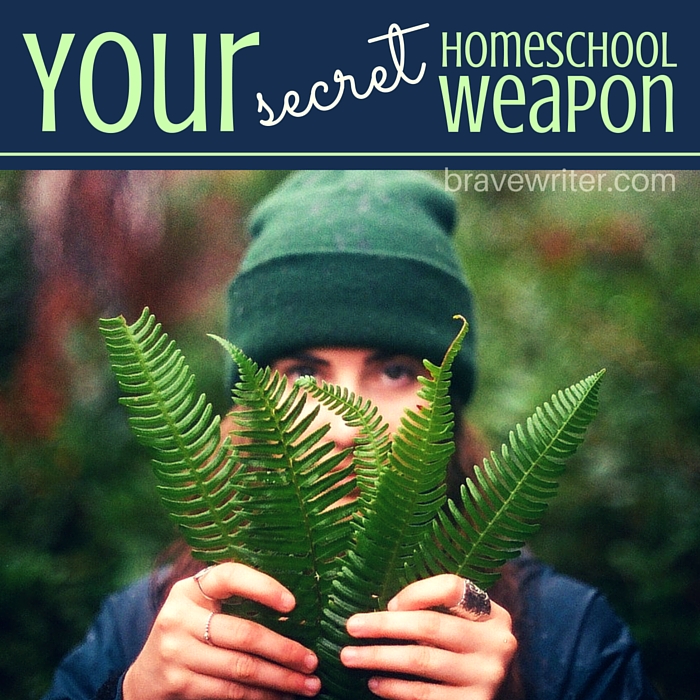
Your Secret Homeschool Weapon

Your secret homeschool weapon

You thought I’d tell you what your secret weapon is in the first sentence? Oh heaven’s no. You will have to read a bit to find out.

Do you have kids who don’t want to “do school” or resist a new curriculum or say they hate assignments or projects? Maybe you keep telling them that at some point they will just “have to learn to write” or they “can’t write fiction forever” or they “can’t play all day”?

It’s one of those things where you kinda sorta freak out a bit when that resistance really gets going—in the form of fights, tears, refusal to even write one sentence, a willingness to outlast you.

Are we on the same page?

The tendency is to view yourself in those moments as a teacher who deserves respect and authority by virtue of being the home educator. You think you have the right to expectations because you are in charge. You can’t understand why that sweet little munchkin is becoming such a curmudgeon!

Here’s the thing, though. You’re at home. You’re the parent. Your kids know that there is negotiating space. That’s what home is. It’s the one place where “have to’s” have less power. Home is supposed to be a relief from the stress of the outside pressures of life. Enforcing “school” at home feels so contrary to the natural untidiness, lack of schedule-ness that home represents in life.

You need to embrace home as a home educator first—really allow yourself to notice and enjoy its properties (you know, like waking up when you want, wearing pj’s until lunch, or cuddling with a blanket on the couch for read aloud time).

For those formats and practices and programs you wish to see flourish in your home, then, you need to embrace them through that lens.

You ready? Here’s your secret weapon:

Stop talking. Start doing.

In other words, if you want a child to write in a new form, stop telling your child to write in that form!

Wake up, gather paper and pencil, and after breakfast, without a word (that’s the key here), start writing. Write the kind of thing you are expecting your child to write. You might be:

  • crafting a thank you note.
  • creating a short essay on paper dolls.
  • copying a quote from a book you love.
  • composing a non-fiction paragraph about Pocahontas.

Your kids may hover around you saying, “What are you doing? When do we start math? Mom, can I have more orange juice?”

You might respond: “I’m writing about Pocahontas. In fact, I can’t remember: does anyone remember the name of her tribe? Can someone get me the book we were reading?”

Keep going.

Someone asks, “Mom what am I supposed to do while you are writing?”

You reply, “I don’t know. What do you feel like starting with today? I’m going to work on this. You’re free to help me. Or you can get going with math. But I’m doing this.”

Then do it. Keep going.

Some will join you.

And because YOU are doing the assignment, you will discover just how difficult it is, too. You’ll have some raw direct experience of just what it is you are asking your child to do!

At some point in the next few weeks of doing a couple of these, you will see that your kids start to participate. You don’t simply flip over to telling them to take over, but you can say, “If you want to work on your own version of this, I’m happy to help you while I complete mine.”

Be open to collaboration, to multiple children doing one project, to everyone helping you with your project. This is HOME. Not school. Not about grade levels. This is about giving your kids a chance to watch a process before they have to engage in it or learn how to do it. This is your chance to model and lead by silence, rather than lecture and enforcement.

Try it!

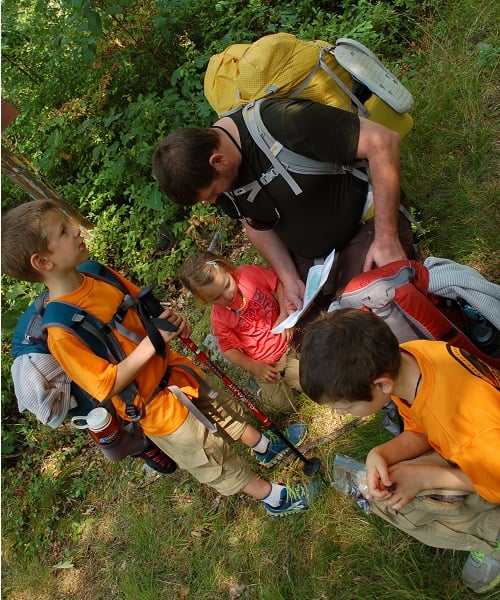
Image © Sergey Khakimullin | Dreamstime.com

Stages of Growth in Writing

Posted in Homeschool Advice, Writing about Writing | 2 Comments »

Focus on the Subject More than the Child

NaaD 34 Ariana blogI want to let you in on the fruit of a lot of late night reading and middle of the night insomnia. The question pawing at me like a nocturnal kitten: What works in parenting? I’m plum worn out from the sad accounts of kids who are clearly bright, sharp adults who rendered the verdict on their childhoods: thumbs down.

I know that we parents come into the task completely green. Sure, we were parented, but we rarely feel qualified to be parents on that basis alone. We head off to websites and books, retreats and conferences looking for models that will ensure that OUR children will have good lives and grow up to be responsible, cheerful, good people. We want guarantees, because life is fraught with chaos and surprises (both welcome and unwelcome).

We trust experts and friends and religious leaders and therapists and anyone who seems authoritative and successful in their own right. We trust methods untested. We hope we are doing right by our kids.

What I am starting to see, though, is this odd trajectory.

The kids who claim to have had happy childhoods were not their parents’ projects.

Rather, the children who grow to be successful, happy adults are the ones whose projects were absorbing to their parents.

See what I did there?

In other words—if you focus more on the stuff that you and your kids care about (the big wide world of learning—books, birds, boats, Beowulf, beauty, bobcats, Broadway, battles, buoyancy, bodies, baked goods, Barbies, Bilbo—and those are just some of the subjects starting with the letter ‘B’!), you will create a much more bonded relationship with your children and they will learn how to be competent adults, than all the character training you impose, expect, exact, and create through whatever parenting method you choose.

It turns out that focusing on how to parent your child is less powerful than joining your child in the shared adventure of living.

In the end, what leaves the best impression on your kids is your hearty, enthusiastic participation in the stuff of life—and sharing those experiences with your kids as though they are welcome and a constitutive part of your own experience!

Some of that exploration will be parent led, some of it will be child led, but all of it will be experienced with wide-eyed wonder, a lack of judgment (no more—does Minecraft really count? are Barbies dangerous?), and an investment of real time—time you don’t have—time that could go to other stuff like chores, bedtimes, math pages, and baths.

Our homeschools thrive when learning is what we care about more than parenting. Ironically, being a good parent gets tossed into the bargain, when we do. Punishment, teaching responsibility, lectures about character, holding kids accountable to adult standards of behavior—these don’t seem to produce the results we think they will.

But jumping into the middle of an adventure—reading, playing a video game, building a bonfire, hiking, calculating to produce a quilt, joining a dance company, visiting the zoo every week, playing with words, baking cookies, acting out scenes from Shakespeare—these do more to “parent” your kids than you realize.

Go forth and be interested in life…bring your kids along. They’ll thank you for it when they get older.

Partnership Writing
Top image by Brave Writer mom, Ariana (cc).

Posted in Homeschool Advice | 1 Comment »

Be kind, be gentle

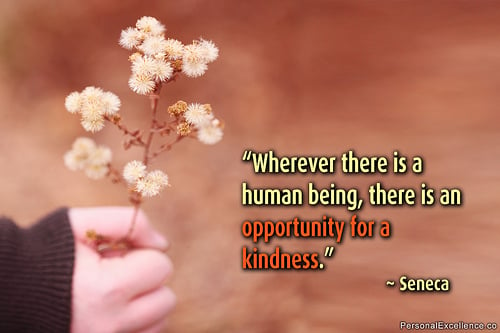
Opportunity for a kindness

I spent too much time today reading accounts of child abuse in homeschooling families. I couldn’t stop. It was like watching train wreck after train wreck in slow, horrible, inevitable motion. I didn’t want to keep reading; I couldn’t stop reading.

The dirty little secret in home education is how much control and anger get directed at our sweet young kids (and awkward fledgling teens) in the name of “helping” them to become self-disciplined models of character and academic achievement.

Be warned: A habit of hardness leaves lasting scars.

Certainly plenty of parents are the garden variety that offer big love and abundant support mixed with the occasional exasperated outburst and the daily hand-wringing (sometimes turned lecture) about how to ensure a successful education and smooth transition to adulthood—family jostling and bumping into each other as they make their way through the “we all live together” years.

But some of us bring that little bit extra—that zing, that pop, that over-zealous, over-functioning rigidity to our homeschools. We scream, we shame, we blame, we demean, we punish, we prophesy doom, we herald the end of the world… and sometimes, we even succumb to abuse—physical and verbal—in the name of love, in the name of homeschool, in the name of our ideology.

Tonight, I want to say: Shhhhhhhh.

Let it go.

Let your children be children. Let your teens struggle to emerge. Let yourself off the hook.

You don’t owe the world a model family. You don’t have to get it right. Neither do your kids.

Everyone gets better at growing up over time—including you, the parent.

Be the one who stands for kindness in your family. Be remembered for your gentleness. Wait an extra hour before acting and reacting.

Remember the kindness of your parents or significant adult caregiver—the stand-out memories that helped you through childhood. Be that person for your children.

And if you need it: get help. Today’s a great day to heal, to start over.

Your kids deserve peace, and so do you.

Cross-posted on facebook. Image by Celestine Chua (cc)

Posted in Parenting | 2 Comments »

Keeping it real at home

Keeping it real at home

I’m about to make a bold statement.

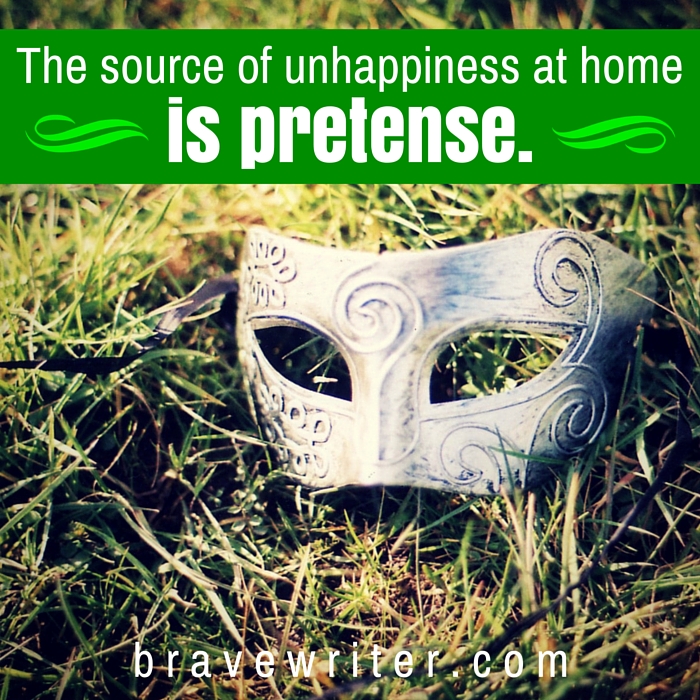
The source of unhappiness at home is pretense.

Pretending in homeschool looks like this:

  • Defending your homeschool to others when you secretly doubt your effectiveness.
  • Showing off the good parts, while hiding the parts that embarrass you.
  • Continuing to use the textbook even though you know it causes pain, just because you paid for it.
  • Endorsing a philosophy of education you don’t actually use (you say you believe in studying the classics, but never read them; you want to believe unschooling is the best way to educate, but you undermine your child’s self-directed learning when it doesn’t match what you thought it would look like).
  • Ignoring a child’s struggles because you don’t want to have to pay for specialists or tutors.
  • Telling yourself that the schools are really really bad so that you can justify your “very bad, no good” year, instead of facing it.
  • Letting your relationship with your kids wither instead of putting in the effort to hear what’s going on for them and making adjustments.
  • Slavish devotion to a method over caring about real learning.
  • Acting as though you are okay with a practice when you really really are not.
  • Ignoring abuse, conflict, disrespect, or volatility in the home, and assuming that those things don’t impact your homeschool.
  • Refusing to consider all options (including the ones you say you don’t believe in) when what you are doing is clearly not working any more.
  • Being more interested in the politics of homeschool (common core, legislation, rights) than in homeschooling.
  • Tweaking your vocabulary to fit the homeschool community’s approved language rather than being true to your own way of thinking.
  • Hiding your child’s behavior or educational failures from others (kids who are dangerous to themselves or others, kids who refuse to cooperate, kids who act out in embarrassing ways—drinking, theft, cyber bullying).
  • Withdrawing from “society” to avoid accountability.

I have often quoted a saying by Iris Murdoch (The Severed Head) without even knowing the source. A Brave Writer mom (Gail) helped me track it down. Let me post it here:

“You can’t cheat the dark gods.”

The truth will out!

Whatever is going on with you is going on with you. No amount of cover-up or smooth-over will fix the problems you face. Moreover, who you are is an essential part of your homeschool. If you hate the classics (no matter how much you persuade yourself that they are essential to education), you will sabotage your homeschool to avoid reading them.

If you do distrust gaming as a way to learn, you will never be happy when your child is on the computer. You will look for ways to manipulate the system to stop your child from doing the very thing you secretly hate and distrust. Which leads to tension and stress in the relationship—inevitably, absolutely, take that to the bank.

If the context of your family is “walking on eggshells” to keep the volatile member from exploding, the energy for learning will be used up by an attempt to control the out of control member—and then you’ll wonder why homeschool is not peaceful or happy or working.

You are not responsible for the reputation of homeschool.

Let me repeat that.

You, sincere-trying-really-hard homeschooler, are not responsible for how other people see you or homeschooling.

You have one responsibility: to create and hold the space for a peaceful environment in which your family can grow and learn.

Create and hold space for a peaceful environment
in which your family can grow and learn.

Click to Tweet

That’s it.

There are scads of ways to get there and as many as there are families. It is right and good to tell your public school mom friend that sometimes you worry that the work you’re doing with your kids is not on par with the local schools. If that’s a real fear, it’s absolutely humanizing and truthful to say it out loud. It doesn’t mean you will change course or decide to put your kids on the big yellow bus. It means you are facing the depth of your own anxiety—just like the public school mom who wonders if the second grade teacher is any good this year.

It is right and good to admit that one child’s ADD or behavior problems is impacting the health of the whole family. Once you admit it, you can begin to seek help for everyone. You are not blaming anyone. You are protecting everyone’s well being.

It is right and good to ditch the program that makes YOU unhappy no matter how many people say it’s the best thing since frosted cake!

Ditch the program that makes YOU unhappy no matter how many say it’s the best thing since frosted cake!

Click to Tweet

It is right and good to admit that it’s easier to fight for the right to homeschool than to homeschool. Start there.

Be real. Everyone wants to support a person who tells the truth. Everyone hates the person who pretends her way into perfection (right?).

You have a universe of choices—keep them all on the table. Be attentive to the muscles in your body. If you feel yourself tighten, you know something is not right. Find out what it is, say it out loud, do something about it.

Keep it real.

Image by Elliot Bennett (cc cropped)

Posted in Homeschool Advice, Parenting | 3 Comments »

Mother Tongue

Mother Tongue

I want to live in a world where the content of written communication is more important than spelling and punctuation.

I want to live in a world where people are generous about typos and the accidental homonym-switcheroo.

I want to write in a world where readers value the risk of self-disclosure that goes into all writing, even blog comments, even Facebook status updates, more than grammatical accuracy.

I want to read in a world where voices very different from mine have access to being published, in their natural writing voices—whether or not they use “prestige English.”

I wish for a world where communication of all forms is regarded as self-expression, and the vibrant ever-changing shape of language is appreciated, not judged as good or bad or in need of protection or preservation.

I like language and people and varieties of spellings and deliberate and accidental misuses of grammar and creative punctuation.

I love seeing the explosion of self-expression that is the Internet—the spontaneous need to share and express and be heard. I love that that hunger overcomes the endless drum beat for perfectly edited copy.

I am less fond of the pride that stems from “being a grammar snob.” But I’m trying to love and understand that impulse, too. After all, I know it takes quite a bit of work to master the prestige form of English, and most people who do so are passionate about language, and have been rewarded for that effort.

If there is one soapbox that I still mount occasionally, it is the one that says, “There’s no officially right way to say or write anything. There is only custom and convention—and these evolve all the time. In the meantime, please—hear the content before you eviscerate the copy.”

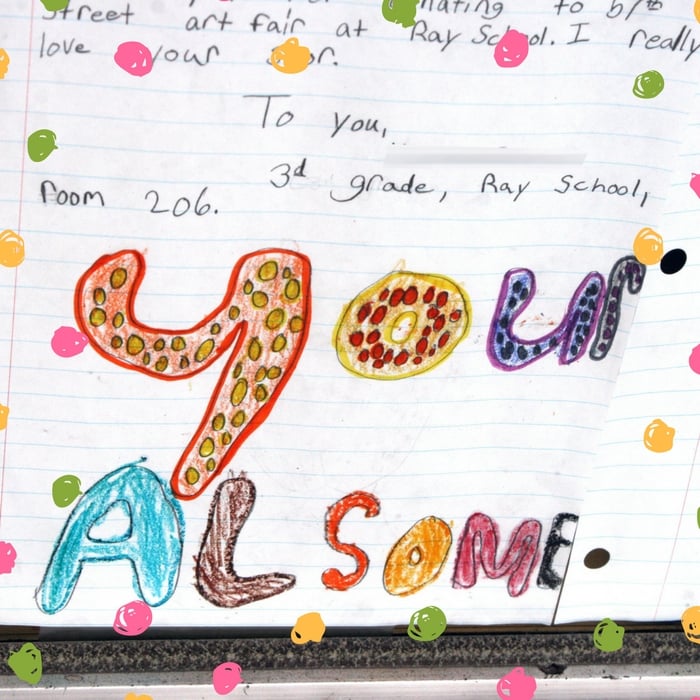
Image by Quinn Anya (cc  polka dots added)

Posted in Brave Writer Philosophy, Writing about Writing | 3 Comments »

« Older Entries
Newer Entries »
  • Search the Blog

  • Julie Bogart
  • Welcome, I’m Julie Bogart.

    I’m a homeschooling alum -17 years, five kids. Now I run Brave Writer, the online writing and language arts program for families. More >>

    IMPORTANT: Please read our Privacy Policy.

  • New to Brave Writer? START HERE

  • FREE Resources

    • 7-Day Writing Blitz
    • Brave Writer Lifestyle Program
    • Brave Writer Sampler: Free Sample Products
    • Freewriting Prompts
    • Podcasts
  • Popular Posts

    • You have time
    • How writing is like sewing
    • Best curriculum for a 6 year old
    • Today's little unspoken homeschool secret
    • Do you like to homeschool?
    • Don't trust the schedule
    • You want to do a good job parenting?
    • If you've got a passel of kids
    • You are not a teacher
    • Natural Stages of Growth in Writing podcasts
  • Blog Topics

    • Brave Learner Home
    • Brave Writer Lifestyle
    • Classes
    • Contests/Giveaways
    • Friday Freewrite
    • High School
    • Homeschool Advice
    • Julie's Life
    • Language Arts
    • Movie Wednesday
    • Natural Stages of Growth
    • One Thing Principle
    • Our Team
    • Parenting
    • Philosophy of Education
    • Podcasts
    • Poetry Teatime
    • Products
    • Reviews
    • Speaking Schedule
    • Students
    • Writing about Writing
    • Young Writers
  • Archives

  • Brave Writer is a participant in the Amazon Services LLC Associates Program, an affiliate advertising program designed to provide a means for sites to earn advertising fees (at no extra cost to you) by advertising and linking to amazon.com

    Content © Brave Writer unless otherwise stated.

What is Brave Writer?

  • Welcome to Brave Writer
  • Why Brave Writer Works
  • About Julie
  • Brave Writer Values
  • Frequently Asked Questions
  • Speaking Schedule

Brave Writer Program

  • Getting Started!
  • Stages of Growth in Writing
  • The Brave Writer Program
  • For Families and Students
  • Online Classes
  • Brave Writer Lifestyle

…and More!

  • Blog
  • Classroom
  • Store
  • Books in Brave Writer Programs
  • Contact Us
  • Customer Service
  • Brave Writer Staff
© 2026 Brave Writer
Privacy Policy
Children's Privacy Policy
Help Center