
Poetry Teatime Archives - Page 25 of 57 - A Brave Writer's Life in Brief A Brave Writer's Life in Brief
  • Start Here
    • For Families
      Multiple Ages
    • Ages 5-7
      Beginning Writers
    • Ages 8-10
      Emerging Writers
    • Ages 11-12
      Middle School Writers
    • Ages 13-14
      High School Writers
    • Ages 15-18
      College Prep Writers
  • Shop
    • Product Collections
    • Bundles
    • Writing Instruction Manuals
    • Literature & Grammar/Punctuation
    • Composition Formats
    • Literature Singles
    • Homeschool Help
    • Book Shop
  • Online Classes
    • Class Descriptions
    • Class Schedule
    • Classroom
    • How Our Classes Work
    • Our Writing Coaches
    • Classes FAQ
  • Community
    • Brave Learner Home
    • What’s Happening
    • Blog
    • Podcast
    • Calendar
  • Cart
  • My Account
    • My Online Classes
    • My Account
  • My Account
    • My Online Classes
    • My Account
  • Start Here

    If you’re new to Brave Writer, or are looking for the best products for your child or family, choose from below:

    • For Families
      Multiple Ages
    • Ages 5-7
      Beginning Writers
    • Ages 8-10
      Emerging Writers
    • Ages 11-12
      Middle School Writers
    • Ages 13-14
      High School Writers
    • Ages 15-18
      College Prep Writers
  • Shop

    If you’re already familiar with Brave Writer products, go directly to what you’re looking for:

    • Product Collections Browse the full catalog in our shop
    • Bundles Everything you need to get started
    • Writing Instruction Manuals Foundational Writing Programs
    • Literature & Grammar/Punctuation Grammar, Punctuation, Spelling & Literary Devices
    • Composition Formats Writing Assignments for Every Age
    • Literature Singles Individual Literature Handbooks
    • Homeschool Help Homeschooling Tools and Resources
    • Book Shop Books associated with Brave Writer Programs
  • Online Classes
    • Class Descriptions
    • Class Schedule
    • Classroom
    • How Our Classes Work
    • Our Writing Coaches
    • Classes FAQ
  • Community
    • Brave Learner Home
    • What’s Happening
    • Blog
    • Podcast
    • Calendar
  • Search
  • Cart

Search Bravewriter.com

  • Home
  • Blog

A Brave Writer's Life in Brief

Thoughts from my home to yours

Archive for the ‘Poetry Teatime’ Category

« Older Entries
Newer Entries »

Poetry Teatime: Brave Writer inspired!

Poetry TeatimeMarch, 2014–

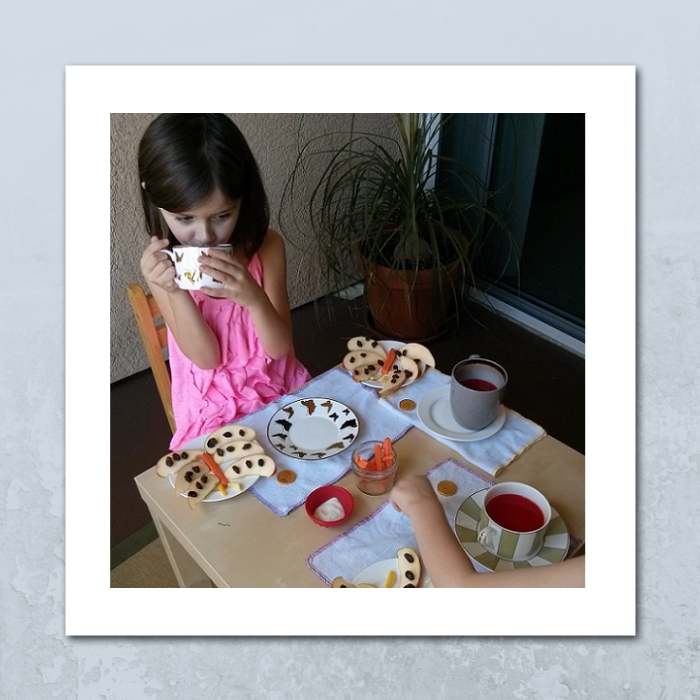
Since it was the first day of spring
, I thought it would be a great time to have our inaugural Brave Writer inspired Tea Time with my three youngest kids (7-12). I had kept some favourite scones hidden in the freezer which I was saving for this. Using my grandmother’s china tea cups with sugar cubes in our tea was fun!

I Googled ‘springtime poetry’ and printed off a couple of pages of very short poem’s. I tried to read them with great gusto (especially one by Shakespeare) but still felt like I was losing my kids’ attention. So I passed the paper to them and asked them to read and that helped a lot. I did get a few, ‘Why are we doing this?’ questions and general silliness, but once we all started reading that seemed to help.

Our favourite poem was written by Henry Van Dyke (1852-1933). It reads:

The first day of spring is one thing, and the first
spring day is another. The difference between them is
sometimes as great as a month.

These days of March have been very much like this poem and we often refer to it!

Thanks for the idea,
Joan

Image (cc)

Visit our Poetry Teatime website!

Posted in Poetry Teatime | Comments Off on Poetry Teatime: Brave Writer inspired!

Poetry Teatime: Intergenerational

Poetry Teatime

We hadn’t seen my folks in quite some time so I thought what better way to reunite than with divine treats and poetry.

My children picked modern silly poems, while my folks chose nursery rhymes and older selections! My father even recited on from memory from his childhood! Impressive!

My daughter usually gets right into reading and has to be reeled in to allow others to read! While my son, sits and builds his confidence to read and he did, TWICE!! Love the power of positive ‘peer’ pressure!!

This will be a treasured slice of divine for me and was a great experience for my children!!

Sarah

Image (cc)

Visit our Poetry Teatime website!

Posted in Poetry Teatime | Comments Off on Poetry Teatime: Intergenerational

The Value of Poetry

Poetry Teatime


The Value of Poetry

It is difficult
to get the news from poems
yet men die miserably every day
for lack
of what is found there.

—William Carlos Williams

As we celebrate National Poetry Month, I just finished teaching Brave Writer’s annual “Playing with Poetry Workshop.” And once again, I recognized the intrinsic value of reading, teaching, and learning to write poetry to and with our kids.

So why should we study poetry in our homeschools?

Poetry teaches us the beauty and potential of the English language. The innovative use of language—of diction (word choice), metaphor and simile, other figures of speech, punctuation and capitalization—encourages our fledgling writers to take a chance with language. Our kids (and we parents alongside them) learn to play with words and language: transforming a noun into a verb, altering the “correct” use punctuation to create a fresh result, comparing two extremely different objects that seem to have no connection whatsoever, using alliteration (repeating initial consonant sounds in a line/sentence) for emphasis, employing a certain rhythm and cadence to our writing, and experimenting with new ways to entice readers through language.

Take a look at this apparently simplistic poem by e.e. cummings, one of the most innovative poets of the 20th century:

maggie and milly and molly and may
went down to the beach(to play one day)

and maggie discovered a shell that sang
so sweetly she couldn’t remember her troubles,

and milly befriended a stranded star
whose rays five languid fingers were;

and molly was chased by a horrible thing
which raced sideways while blowing bubbles:

and may came home with a smooth round stone
as small as a world and as large as alone.

For whatever we lose (like a you or a me)
it’s always ourselves we find in the sea.

This poem, which seems to be intended for children, has a lovely rhythm, containing rhyme in only the first and last couplets (a two-line stanza or “paragraph” in poetry), alliteration (the repeating “m-” sound at the beginning of words in the first line), simile (a “stone/as small as a world and as large as alone”), metaphor (“a stranded star/whose rays five languid fingers were”), personification (“a shell that sang/ so sweetly”), and a theme (message): “For whatever we lose (like a you or a me)/ it’s always ourselves we find in the sea.”

In the wonderful book Painless Poetry by Mary Elizabeth, she sets forth some excellent ideas for learning to enjoy poetry:

1. LOOK AT THE POEM
Notice the overall way the poem fills (or doesn’t fill) the page. It doesn’t look like the usual prose paragraphs we read in textbooks or novels, does it? Lines of poetry don’t cover the entire page. Also, look for breaks between groups of lines. Poems are often written in collections of lines that are called STANZAS—kind of like paragraphs of poetry. Stanzas consist of short, long, or different lengths of lines, most of which have at least several words. Each poem looks different, depending on the number and length of lines and stanzas; each poem is a unique creation, and being aware of each poem’s appearance is important in appreciating it.

2. EVERY WORD COUNTS
The precise meaning of a poem depends on the precise meaning of the words in the poem. The more familiar readers of poems are with words in a poem, the easier understanding and analyzing poetry can be. We need to keep our eyes and ears open and resist skipping words or phrases that we don’t understand in a poem; instead, we should always research unfamiliar words in dictionaries or online. If we don’t thoroughly understand each word and phrase in a poem, we may miss an important clue to the overall tone (mood/emotion) or meaning of a poem. Poetry is all about the details!

3. READ POEMS ALOUD – ALWAYS!
Poems are meant to be read aloud even if we are studying poetry by ourselves. Poetry is more than just the meaning of words: sound is central to understanding poetry. Listen for repeated sounds, words, and phrases (circle or underline them)—repetition is always a key to the poem’s meaning or tone. Also consider how the sound of the poem adds to the meaning or tone of the poem. Take note of rhyming words and other sound effects that may emphasize certain words and/or phrases. Again, sound effects often provide clues to the meaning and tone of poems.

4. THE WHOLE ENCHILADA!
The relationship between sound and meaning may not always be obvious, but possible relationships between sound and meaning may lead us to a deeper understanding of a poem. Consider images or memories that may be triggered by a poem and decide if they are important to understanding the poem. Always read a poem at least three times, if not more. We need to give ourselves the chance to pay attention to all of the elements of a poem each time we read it, and remember to read it ALOUD—always! Jot down any ideas about meaning or tone, any questions, anything at all in the margins of the poem. If you happen to be squeamish about writings in books, then make a copy of the page the poem is on and write on that copy.

Copywork is very important in understanding poetry, and it’s not only for our younger students. Even now as an adult, I still copy poems that grab my attention into my journal or commonplace book. Somehow, the poems become so much clearer to me as I linger over what flows from the nib of my pen: word by word, phrase by phrase, line by line, stanza by stanza. Writing poems out by hand slows us down, allowing us to think more deeply about an image or a metaphor; in addition, writing a poem in our own cursive penmanship helps us to make poem more ours—it gives us a feeling of kinship and/or ownership of the copied poem. It’s also lovely to have a journal full of the poems that speak specifically to each of us.

Composing different forms of poetry also reinforces our study of poets and their work. In the Playing with Poetry Workshop, we teach the basics of poetry analysis and structure and how to read and truly enjoy poetry. Then we experiment with composing free verse including autobiographical and “I Am From…” free verse poems; visual poetry including shape poems, concrete poems, and acrostics; cinquain and diamante poems; the Japanese poetry forms of haiku and tanka; conventional poetry, including couplets, tercets (and terza rima), quatrains, and limericks; and finally alternative poetry which encompassed fragmented poems, “After…” poems, kennings, and then various types of “found” poems including black-out poems, highlighted poems, and book spine poems, among others.

Some of the families from the Playing with Poetry Workshop reinforce the value of studying and writing poetry:

Jeena writes,
“We see poetry everywhere now and you have opened our eyes to many poetic forms. Poetry is now a topic I feel comfortable discussing, I used to shy away from it. Josh has widened his writing range. Most of all I want to thank you for a writing class that didn’t seem like a writing class. Josh, my usually reluctant writer, wrote fast and enthusiastically and never once complained. That really is a miracle for us! He felt encouraged, understood and positively challenged.”

Linda shares,
“When I began this class I thought about poetry as something classical that I should have read or known about already but didn’t, as something silly and childish that rhymed, as something esoteric and mysterious. But now that I’ve taken this class I have fortunately had my eyes opened to new and amazing poetic possibilities. First of all anyone can write poetry, about anything. It just takes a willingness to play with sounds and words and ideas. Learning about free verse has been the most marvelous concept I have come across in a long time. I am so glad we began the course this way. I understand now why children find it so hard to write a poem (i.e., one that rhymes). All the effort goes into finding some unconvincing rhyme while all the lovely naturally spoken phrases and words that come unbidden out of a child’s mouth disappear unused into the ether. I also appreciate the fact that sometimes there isn’t anything to “get” about the poem. I can enjoy it as a delight of words instead of thinking I’ve missed some deeper meaning.

“By working every day with poems and poetry my children definitely had a jump start in their understanding of elements and artistry. We talk the poetry lingo more intelligently now, flipping off phrases like, ‘Oh yes this stanza has an abab rhyming scheme’ and other perspicacious verbalisms. Seriously though, we are noticing things like alliteration, personification, similes, etc., etc., and thinking about persona more readily in poetry we read as well as recognizing it in our own poetry (where it still mostly happens by happy accident). We have had good discussions about appealing to senses other than the overused one of sight. We are beginning to be able to express why we might like this poem but not that one. There is still so much to learn, but at least we are unfolding in the right direction.”

So how can we celebrate National Poetry Month?

The Academy of American Poets hosts all sorts of poetry fun at their site. Here’s their page devoted to National Poetry Month. And they even have a National Poetry Month FAQ, so check it out!

It was through Poets.org that I first started reading the Poem-a-Day e-mails. A free service, recipients receive contemporary poems, usually unpublished and written within the last year on weekdays while weekends are reserved for classic poems in the public domain, a.k.a. “old friends.”

You may sign up for this amazing gift of starting your day with poetry here: Poem-A-Day. And it was recently revealed that the American Academy of Poets “…signed a deal with King Features to syndicate Poem-a-Day. This means that the new, previously unpublished poems we are publishing during the week will be available to editors at a wide range of newspapers, news websites, and magazines…. It’s been a generation since new poems have been available to daily news readers.”

In addition, Poets.org started the annual celebration of Poem-in-Your-Pocket Day in which we are encouraged to tuck a favorite poem (written by us or by a favorite poet) into our pocket and share it with at least one other person during the course of our day. Which day? Thursday, April 24 is the official Poem-in-Your-Pocket Day, so prepare!! More information can be obtained on the page Poem-in-Your-Pocket Day.

Also in celebration of National Poetry Month, students may write poems in response to poems written by professional poets: 2014 Poet to Poet Project. Very cool!!

So whether you take a trip to the library and check out some poetry books to peruse together during Poetry Teatimes, or look up some poetry forms and try to write them together as a family (involve dads, too—they can write some awesome poems!), or share a Poem from Your Pocket on April 24, find a way to make poetry part of your week—even part of your day—in your homeschooling life.

“You will find poetry nowhere unless you bring some of it with you.” ~Joseph Joubert

~Susanne Barrett, Brave Writer Senior Instructor (MA Poetry and British Literature)

Photo Credit: Tammy Wahl Photography

Visit our Poetry Teatime website!

Posted in Poetry, Poetry Teatime | 1 Comment »

Poetry Teatime: Frilly dresses

Poetry Teatime

For our first teatime the girls got all dressed up. Frilly dresses, necklaces and rings. I didn’t expect them to do this but it was cute. They also invited along a few of their stuffed friends. In the beginning I selected some books of children’s poetry but now they look for books of poetry themselves.

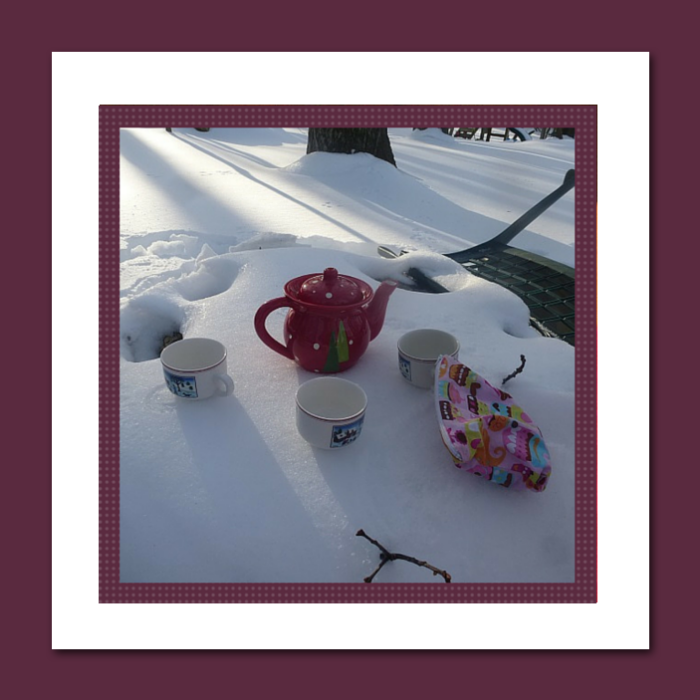
A few weeks ago when we had snow for three days. After playing outside in the snow we changed Tea Time Tuesday to Hot Chocolate Wednesday. The girls loved it.

We do not have Teatime every week but when we do we all seem to enjoy it and learn something in a relaxed and delicious environment.

~Becky

You can enjoy more photos of Becky’s teatime on her blog, Stain Stick Required.

Image (cc)

Poetry Teatime

Posted in Poetry Teatime | Comments Off on Poetry Teatime: Frilly dresses

First poem!

Hogwarts Poem Poetry TeatimePoetry Teatimes can lead to wonderful, unexpected results!

The following features the acrostic poem (when a word is spelled vertically then words or phrases that start with the same letters are added) of Brave Writer student, Natalie, who is a huge Harry Potter fan!

Hi Julie,

Our second tea time evolved into a poetry freewrite! We had watched a short BrainPop Jr. Video on poetry and this format obviously struck a chord with Natalie.

She proudly read it to me:


Howls echo from Lupin
Owls are coming
Grawp’s learning English
Waves coming from mermen
Amazing spells working
Ron’s daddy dies
Tests are done
Spells perfect.

Funny, just noticed she ended it with a single period. So glad she isn’t intimidated by writing a poem.

You’ve let me know more than anyone else that I’m doing the right thing. I’ve been reading through years of your blog entries and listening to your podcasts – your journey is filling me with the confidence I needed to keep us on our unknown path. I can’t wait to share more with you!

Cindy

Image (cc)

Visit our Poetry Teatime website!

Posted in Poetry, Poetry Teatime | Comments Off on First poem!

« Older Entries
Newer Entries »
  • Search the Blog

  • Julie Bogart
  • Welcome, I’m Julie Bogart.

    I’m a homeschooling alum -17 years, five kids. Now I run Brave Writer, the online writing and language arts program for families. More >>

    IMPORTANT: Please read our Privacy Policy.

  • New to Brave Writer? START HERE

  • FREE Resources

    • 7-Day Writing Blitz
    • Brave Writer Lifestyle Program
    • Brave Writer Sampler: Free Sample Products
    • Freewriting Prompts
    • Podcasts
  • Popular Posts

    • You have time
    • How writing is like sewing
    • Best curriculum for a 6 year old
    • Today's little unspoken homeschool secret
    • Do you like to homeschool?
    • Don't trust the schedule
    • You want to do a good job parenting?
    • If you've got a passel of kids
    • You are not a teacher
    • Natural Stages of Growth in Writing podcasts
  • Blog Topics

    • Brave Learner Home
    • Brave Writer Lifestyle
    • Classes
    • Contests/Giveaways
    • Friday Freewrite
    • High School
    • Homeschool Advice
    • Julie's Life
    • Language Arts
    • Movie Wednesday
    • Natural Stages of Growth
    • One Thing Principle
    • Our Team
    • Parenting
    • Philosophy of Education
    • Podcasts
    • Poetry Teatime
    • Products
    • Reviews
    • Speaking Schedule
    • Students
    • Writing about Writing
    • Young Writers
  • Archives

  • Brave Writer is a participant in the Amazon Services LLC Associates Program, an affiliate advertising program designed to provide a means for sites to earn advertising fees (at no extra cost to you) by advertising and linking to amazon.com

    Content © Brave Writer unless otherwise stated.

What is Brave Writer?

  • Welcome to Brave Writer
  • Why Brave Writer Works
  • About Julie
  • Brave Writer Values
  • Frequently Asked Questions
  • Speaking Schedule

Brave Writer Program

  • Getting Started!
  • Stages of Growth in Writing
  • The Brave Writer Program
  • For Families and Students
  • Online Classes
  • Brave Writer Lifestyle

…and More!

  • Blog
  • Classroom
  • Store
  • Books in Brave Writer Programs
  • Contact Us
  • Customer Service
  • Brave Writer Staff
© 2026 Brave Writer
Privacy Policy
Children's Privacy Policy
Help Center