Homeschool Advice Archives - Page 114 of 144 - A Brave Writer's Life in Brief A Brave Writer's Life in Brief
  • Start Here
    • For Families
      Multiple Ages
    • Ages 5-7
      Beginning Writers
    • Ages 8-10
      Emerging Writers
    • Ages 11-12
      Middle School Writers
    • Ages 13-14
      High School Writers
    • Ages 15-18
      College Prep Writers
  • Shop
    • Product Collections
    • Bundles
    • Writing Instruction Manuals
    • Literature & Grammar/Punctuation
    • Composition Formats
    • Literature Singles
    • Homeschool Help
    • Book Shop
  • Online Classes
    • Class Descriptions
    • Class Schedule
    • Classroom
    • How Our Classes Work
    • Our Writing Coaches
    • Classes FAQ
  • Community
    • Brave Learner Home
    • What’s Happening
    • Blog
    • Podcast
    • Calendar
  • Cart
  • My Account
    • My Online Classes
    • My Account
  • My Account
    • My Online Classes
    • My Account
  • Start Here

    If you’re new to Brave Writer, or are looking for the best products for your child or family, choose from below:

    • For Families
      Multiple Ages
    • Ages 5-7
      Beginning Writers
    • Ages 8-10
      Emerging Writers
    • Ages 11-12
      Middle School Writers
    • Ages 13-14
      High School Writers
    • Ages 15-18
      College Prep Writers
  • Shop

    If you’re already familiar with Brave Writer products, go directly to what you’re looking for:

    • Product Collections Browse the full catalog in our shop
    • Bundles Everything you need to get started
    • Writing Instruction Manuals Foundational Writing Programs
    • Literature & Grammar/Punctuation Grammar, Punctuation, Spelling & Literary Devices
    • Composition Formats Writing Assignments for Every Age
    • Literature Singles Individual Literature Handbooks
    • Homeschool Help Homeschooling Tools and Resources
    • Book Shop Books associated with Brave Writer Programs
  • Online Classes
    • Class Descriptions
    • Class Schedule
    • Classroom
    • How Our Classes Work
    • Our Writing Coaches
    • Classes FAQ
  • Community
    • Brave Learner Home
    • What’s Happening
    • Blog
    • Podcast
    • Calendar
  • Search
  • Cart

Search Bravewriter.com

  • Home
  • Blog

A Brave Writer's Life in Brief

Thoughts from my home to yours

Archive for the ‘Homeschool Advice’ Category

« Older Entries
Newer Entries »

Safe Space for Living = Safe Space for Writing

Create a safe space for writing by creating a safe space for living

It’s not enough to tell your kids they can take writing risks and you’ll be there to support them, no matter what. You can promise that you won’t criticize their mechanical errors or that you are “okay” with whatever they write as long as they move the pencil. These are good practices that help to make the act of writing less daunting.

Yet a child who is used to being managed, directed, and revised in daily life will carry that feeling into the writing life; those words will not carry the message you hope to convey.

Writing is a risk. There are styles of parenting that make risk-taking more difficult for the child. To facilitate freedom in risk, children need to have lots of experiences with you, the parent, that let them know they can make mistakes, or offer you something different than you envisioned for them, or that they need time to not write for a bit.

Emotional connection creates emotional safety.

For example, if your child descends the stairs after dressing herself in mismatched top and bottoms, do you comment? Do you send her back for the “right” shirt? Do you feel disappointment? Does it show?

When there’s a mess on the floor, do you find yourself focused on cleaning it up rather than seeing what it represents?

Think back to your parents or your spouse or a school teacher. What types of comments made you nervous or left you feeling blank or closed? When did you blossom and venture to some new space for thought or activity?

When a mother tells me her daughter is a perfectionist, I often ask: “Are you, too?”

When a father tells me, “I don’t want to live through my boy, but he is capable of so much!” and then proceeds to tell me his ambitions for his son, it’s not all that surprising to me when I discover that this same child seizes up in writing, afraid to disappoint this powerful man in his life that he admires.

A habit of commenting (even in a positive tone of voice) can become a second-voice in the child’s head. Your evaluations (even when positive) can rob the child of forming his or her own. Your child starts to measure him or herself by what he or she imagines you might say, rather than feeling free to explore.

Sometimes the best way to create emotional safety for a child is to be quiet (to say nothing, to not have an opinion ar all), and at other times, it’s helpful to point the child back to his or her own experience.

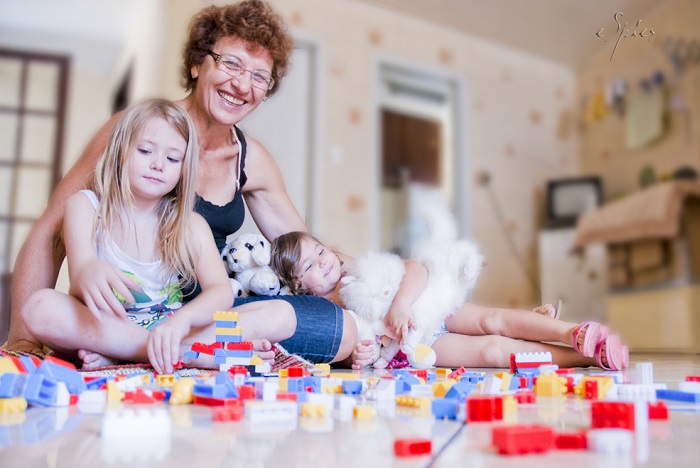
For instance, you might say nothing about the outfit of choice, but you might make a comment about a child’s big mess on the living room floor: “What a lot of creativity and fun we have here!”

How you say what you say is the most important feature of this dynamic. Your tone of voice creates or thwarts your relationship of trust with your child.

I want to repeat that.

The tone of voice you take with your child,
even more than the content of what you say,
will determine how open your child is with you.

A child’s felt experience of space and safety will translate into taking risks (of various kinds) throughout childhood. Some of those risks will show up in writing.

If you find that your child is not responding to the space-creating language you use for freewriting, ask yourself if a shadow hides in your communications. Do you convey through tone or words that you have expectations for the child that feel like pressure (not like support for growth)?

How can you free up space for calm, creative, patient progress and risk-taking instead of conveying the hidden expectation of a performance that reassures you?

There are lots of reasons for writer’s block, but I wanted to point out this dynamic today. It doesn’t show up in writing manuals, but in many cases is the primary struggle. Writing is not like math pages where you can assign them and measure the number of problems completed. Writing requires an unearthing of language from within. Any time a child goes within (to create), the child unconsciously checks the space to see if “that’s allowed.”

It’s your job to allow, allow, allow in lots of areas, with genuine interest, trust, and care. As you do, lots of good stuff will show up (and some stuff you don’t want too). But that’s all part of it! You get to show your kids that it’s okay to make mistakes, to take risks that don’t pan out, and to create their own way.

You do it together. Like writing. Life life.
The Homeschool AllianceHeader Image by Emanuele Spies (cc)

Posted in Homeschool Advice, Writing about Writing | Comments Off on Safe Space for Living = Safe Space for Writing

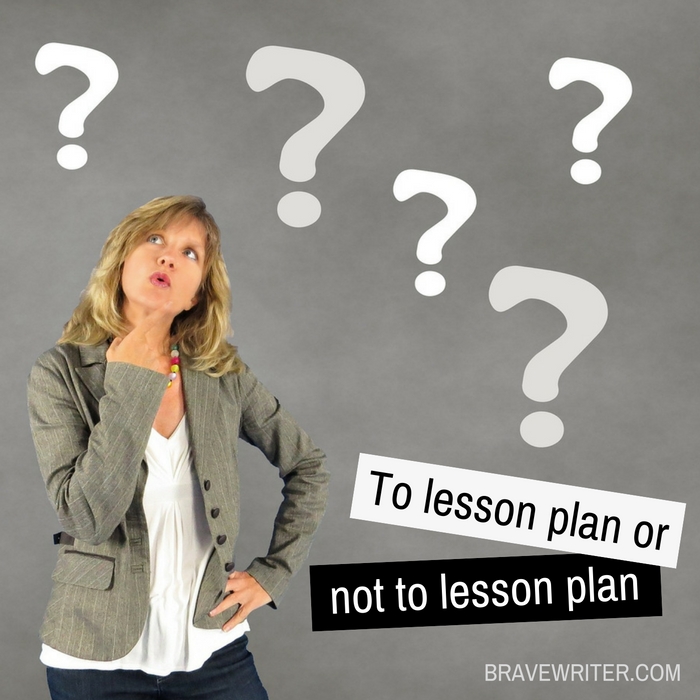
To lesson plan or not to lesson plan?

To lesson plan or not to lesson plan

One of the greatest pleasures in life is to have someone else prepare a pleasurable experience for you. For instance, when I eat dinner at someone else’s home, the food just tastes better, the whole experience is elevated to “special,” and I find myself relaxed and happy before the dinner begins, simply in anticipation.

Don’t get me wrong. I enjoy making a quality meal too. The tinkering with the ingredients, the paging through the cookbook, the skillful braising and simmering and broiling—these all help me invest in the meal, and I love the feeling of being a confident, competent cook. Still, even though I have taught myself to cook, and have enjoyed the effects of my cooking, I love meals cooked for me—whether at a friend’s home or a restaurant. There’s a different kind of happiness that comes from that experience.

Two modalities of learning

  1. Self-teaching to become a competent student of any subject area
  2. Benefiting from the well-prepared lesson offered by a caring parent.

In toggling between independent learning (the kind a child initiates and continues on his own) and lessons (the kind organized by you), your child will become a well-rounded, educated person. He’ll have the power and skill to teach himself (such a gift!), but he’ll also receive the gift of a lesson well-prepared.

Self-guided instruction is a popular motif in home education. It’s a fabulous goal of it, too. Anyone who realizes that a little concerted effort and a willingness to explore/read/test ideas without the badgering of a schedule or a series of pop quizzes and tests, discovers the joys of being an autodidact. We love that our kids can and do teach themselves all manner of subjects and skills.

What about the other end, though? While our goals may be to create independent learners, we might also want to consider how especially pleasurable it can be to learn according to a carefully considered plan put together with love by a parent. I’m not talking about lectures and note-taking. I am talking about a plan—

  • preparing in advance which books to read and how they will be read (aloud in a group or to one’s self),
  • considering field trips that might be coordinated with the books,
  • assembling materials for art or science projects that correlate with the time period of the books,
  • identifying music or artwork from that era in history that could be shared to enrich the experience of the reading and exploring, and so on.

In other words, one of the most generous acts you can give as a home educator is to prepare a well-thought-out course of study in at least one subject area for the coming school year each quarter. It may be difficult to give that level of development to every subject for all ages, but you can most certainly select literature or a historical time period that will address the bulk of your children. You can coordinate various activities, readings, outings, and experiences to go with that illuminate some aspect of the subject area you intend to explore.

Your preparation of a series of “lessons” that combine kinesthetic activities with more passive modes of learning (listening, watching, reading) are often not only a relief to your child, but may also trigger two other extremely valuable responses from your child: gratitude and motivation.

Your young students may thank you for being so invested in their learning, grateful for the enriching way you open this new field of study to them (they’ll say things like, “That museum was cool!” and “Thanks for having a party about the Gold Rush!”), and they may be more motivated to explore the topic further—to learn about other aspects of this subject area.

Don’t hold back from preparing rich, well-plotted lessons. You can intersperse periods of independence, space to explore without a guide, and freedom to pursue personal interests that don’t particularly draw your other children. But at least once each quarter, for a month or so, give your children the gift of a well-conceived unit of study. Take some time to create them, to think them through, to purchase supplies, and put dates on the calendar.

Share your plans with your kids, get their ideas. Catalyze their imaginations in advance, the way a menu gets you excited about the coming meal.

You can do it! You can create a feast of learning for your children. You feel so much better when you do, when you have thought ahead. Even if not every immersive experiences turns out to be as captivating as you had imagined, many of them will be swimming successes! Revel in those.

Make quality learning meals for your children as your gift to their education. In turn, they will find themselves hungry to teach themselves more, even without your lead. This is the balancing act and beauty of homeschool.

Embrace it.

The Homeschool Alliance

Posted in Homeschool Advice | 3 Comments »

Your fantasy homeschool

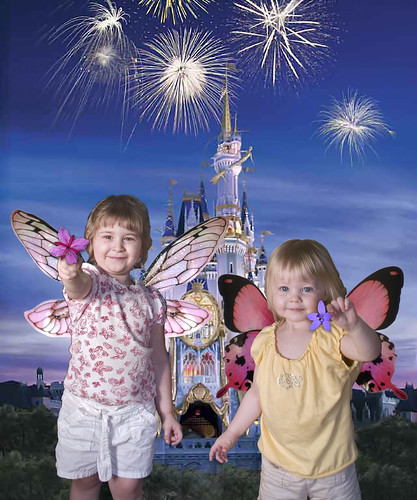
FairyKids


Image by stewartde

Each of us has one: the fantasy homeschool that lives inside our heads. I asked convention attendees one time to shout out words they associated with their fantasy homeschools. They suggested words like:

relaxed
creative
laughter
curiosity
real learning
family connection
activities that teach
going new places
trying new things
organized
books everywhere

You might have other words in mind. Some of mine were:

natural
includes nature and art study
lessons for things like violin, vintage dance, and acting Shakespeare
learning astronomy
everyone reads for pleasure
we all get along
days have order but aren’t so structured that we feel oppressed

Flesh out in your own mind (perhaps on paper) the fantasy homeschool you want to have. You might envision how your family feels about homeschool first and then discover that you also have specific scenarios playing in you mind’s eye. For instance, you might want relaxed, happy family interactions, and you also see everyone on the couch cuddling while watching a movie.

You might imagine children eagerly solving their own problems as they face a math challenge or reading for pleasure hours a day.

Perhaps you have a fantasy that a whole week will go by and no one will complain because everyone feels that he or she has had a satisfying week of play and work.

We can’t force our children to be happy and we can’t require them to eagerly learn anything (frustrating, isn’t it?). But what we can do is create a context that gives our fantasy homeschool the best chance to emerge and flourish. Practice this summer, when the pressure is off and you don’t need to “finish” anything.

For instance, when you see your children happy, take note of the conditions that created it. Were they well rested and fed? Were they in comfortable clothes? Were they engaged with something new? Look at all the factors.

Consider how you might ensure the success of one of your fantasies. If you want to introduce art, would it be better to introduce it with an outing or with tools (like paints and brushes or clay)? If you would love your children to explore nature, what conditions create the happiest campers? Snacks, early morning, good night’s sleep preceding, stuff to track or look for on the trail?

Use this summer to test-float your aspirations. Find out what happens when you play with math manipulatives and no textbook. What happens when you take time to read to yourself each day after lunch? Does anyone join you?

Go to the art museum without an agenda. Go to the movies in the afternoon. Is that fun? Wouldn’t that be great to do once in a while when it’s not summer?

If you want your fantasies to come true, take it a step at a time and live them out. Summer is a great time to play with what works since most of us are habituated from school to think that we can relax and not worry about “schoolish things.” You can flip the script and use summer to explore what kind of homeschool you really want to live.

Take risks.
Be intuitive.
Focus on joy and exploration.

Be good to you too. Your happiness matters just as much as your kids’.

Cross-posted on facebook.

Posted in Homeschool Advice | 1 Comment »

Choose your words

Magnetic Fridge Poetry

Instead of: You keep misspelling that same word, even though I’ve corrected it for you many times. You need to pay better attention and get it right.

This–>I’ve noticed this word causes you some spelling difficulty on your first pass. Have you noticed that? Do you catch it in editing? How can you help yourself remember it? I know for me, I rely on spell check, sometimes I ask my second reader to double check the specific word for me, sometimes I figure out which of my hard words repeat in the piece I’m about to write and I make a list ahead of time to consult.

Instead of: We have to get this done.

This–>I’m feeling pressure for us to finish this (page, project, copywork passage, exercise, paper) because (we have to turn it in at co-op, I want to move to the next project, we’ve worked on it a long time and I can feel our energy waning, we need to finish the book). How can we find a way to get this project completed by (next Tuesday, after lunch, before we go to Chicago for the weekend)? Ideas?

Instead of: You have to learn to care about your school work. I can’t be chasing you down to be sure you complete your assignments. It’s up to you to be more independent or you will not succeed in (college, the work force, someone else’s class, high school, as a human being).

This–>I’ve noticed that you aren’t keeping up with the schedule we agreed to for X subject. Wanted to point that out to you. Is there a way I can support you in completing your work in a timely way? Is there a reason you find it difficult to finish or sustain interest? Here’s what I can provide, here’s what needs to come from you. I won’t nag you, though. The final outcome will be determined by your efforts…and the help you would like from me that you articulate.

Instead of: Stop being so silly. This is school.

This–>**tickle tickle** **Jump on the trampoline** Okay, let’s get all the sillies out of our system and then we can buckle down for X minutes and then it’s lunch and we’ll be home free. Ready, set, go!

Instead of: No.

This–>Hmmm. Interesting. How might that happen?
Or this–>Cool! Can we do it after X?
Or this–>That doesn’t sound (safe, possible, affordable), but is there a way we can do a version of it that would be?

Instead of: Not now.

This–>Yes! Let’s ditch what our original plan was and do it right this minute!

Instead of:  YELLING

This–>I feel like yelling right now, so I’m going to (step into the bathroom, drink a cup of tea, take a five minute walk, nurse the baby) while I think about what I really want to say.

Cross-posted on facebook. Image by Steve Johnson

Posted in Homeschool Advice | 1 Comment »

Homeschool Carnival: Small World at Home

Carnival of Homeschooling

This week’s Homeschool Carnival on Small World at Home features my post, “Repeat After Me: Less more; less is more; less is more…”

Other highlighted posts address the start of a new year, how homeschooling changes one’s life, and educating kids with dyslexia.

Check it out!

Also, if you write a homeschool blog and would like to participate in future Carnivals go here.

Posted in Homeschool Advice | Comments Off on Homeschool Carnival: Small World at Home

« Older Entries
Newer Entries »
  • Search the Blog

  • Julie Bogart
  • Welcome, I’m Julie Bogart.

    I’m a homeschooling alum -17 years, five kids. Now I run Brave Writer, the online writing and language arts program for families. More >>

    IMPORTANT: Please read our Privacy Policy.

  • New to Brave Writer? START HERE

  • FREE Resources

    • 7-Day Writing Blitz
    • Brave Writer Lifestyle Program
    • Brave Writer Sampler: Free Sample Products
    • Freewriting Prompts
    • Podcasts
  • Popular Posts

    • You have time
    • How writing is like sewing
    • Best curriculum for a 6 year old
    • Today's little unspoken homeschool secret
    • Do you like to homeschool?
    • Don't trust the schedule
    • You want to do a good job parenting?
    • If you've got a passel of kids
    • You are not a teacher
    • Natural Stages of Growth in Writing podcasts
  • Blog Topics

    • Brave Learner Home
    • Brave Writer Lifestyle
    • Classes
    • Contests/Giveaways
    • Friday Freewrite
    • High School
    • Homeschool Advice
    • Julie's Life
    • Language Arts
    • Movie Wednesday
    • Natural Stages of Growth
    • One Thing Principle
    • Our Team
    • Parenting
    • Philosophy of Education
    • Podcasts
    • Poetry Teatime
    • Products
    • Reviews
    • Speaking Schedule
    • Students
    • Writing about Writing
    • Young Writers
  • Archives

  • Brave Writer is a participant in the Amazon Services LLC Associates Program, an affiliate advertising program designed to provide a means for sites to earn advertising fees (at no extra cost to you) by advertising and linking to amazon.com

    Content © Brave Writer unless otherwise stated.

What is Brave Writer?

  • Welcome to Brave Writer
  • Why Brave Writer Works
  • About Julie
  • Brave Writer Values
  • Frequently Asked Questions
  • Speaking Schedule

Brave Writer Program

  • Getting Started!
  • Stages of Growth in Writing
  • The Brave Writer Program
  • For Families and Students
  • Online Classes
  • Brave Writer Lifestyle

…and More!

  • Blog
  • Classroom
  • Store
  • Books in Brave Writer Programs
  • Contact Us
  • Customer Service
  • Brave Writer Staff
© 2026 Brave Writer
Privacy Policy
Children's Privacy Policy
Help Center