[Podcast #349] Preparing for the First Week of Homeschool
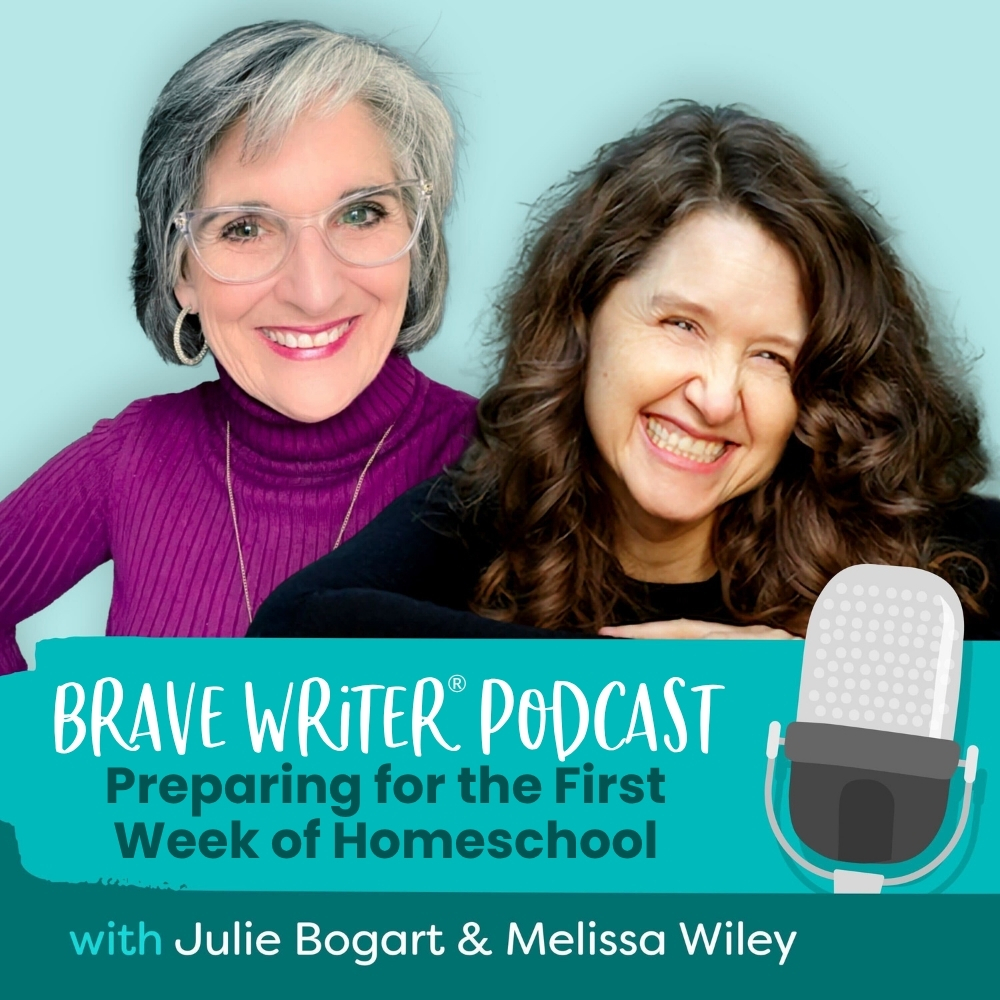
What if the best first day of homeschool begins long before the first lesson?
As summer stretches toward a new school year, we’re talking about the kind of preparation that actually supports family life: flexible routines, child-centered planning, cozy spaces, printed materials, backup plans, and first-day rituals that invite kids into learning with curiosity instead of pressure.
We explore how to:
- protect homeschool mornings,
- plan from behind,
- use Poetry Teatime as a reset,
- build in experiences your kids care about,
- and let the seasons of the year shape your energy.
Pour a cup of tea, grab your calendar, and begin imagining a homeschool year that feels both doable and alive.
Show Notes
The First Day of Homeschool Starts Before the First Lesson
There’s something irresistible about preparing for a new homeschool year.
Fresh notebooks. A clean table. A stack of books waiting to be opened. Maybe a map on the wall, a new set of pencils, or a candle ready to light before copywork. The first day carries a little sparkle, even for those of us who know that real life will eventually scatter math books across the couch and send toddlers climbing onto the table.
That’s why summer planning matters.
Not because we need a perfect schedule. Not because we can predict the whole year. We plan because it helps us imagine the kind of life we want to create with our children.
Start with your beliefs. What do you still believe about learning? What feels true this year that may not have felt true last year? Homeschooling changes as children grow, as family needs shift, and as we discover what actually works in our homes. Your philosophy does not have to be fixed forever. It can breathe.
A helpful way to think about planning is Thanksgiving dinner. You probably have favorite dishes that anchor the meal. You may also have a few new recipes you want to try. But you cannot make every delicious thing you’ve ever seen online. If you have three kinds of potatoes on the list, you will need to choose.
Homeschool works the same way.
Pick the reliable pieces. Add one or two experiments. Leave room to adjust.
Then imagine June. When you look back, what will make you feel glad? Maybe your child will not move from struggling reader to fluent reader in one year, but perhaps they will understand blends, digraphs, and vowel sounds with more confidence. That counts. Name the progress you hope to see in concrete terms so you can recognize it when it arrives.
Preparation also means reading the materials before the children use them. The parent notes, introductions, and front matter often hold the key to using a curriculum well. Sometimes the most important instruction is not on page one of the workbook. It is in the part that says, “Play with these rods first,” or “Create a language-rich lifestyle before beginning formal writing.”
Give your future self a gift, too. Print the PDFs. Gather supplies. Make the toddler basket. Create a backup plan for the day that goes sideways. Poetry Teatime, a homeschool bingo card, YouTube karaoke, drama games, a walk outside, or a pile of picture books can rescue a morning without making anyone feel like the day is lost.
Ask your children what they want from the year.
They may not say, “I want to complete third grade math.” They may say, “I want to go to the zoo,” or “I want to learn to ski,” or “I want to do experiments in the kitchen.” Those wishes are not interruptions to education. They are invitations.
Homeschooling thrives on routine more than rigid scheduling. Read aloud after breakfast. Do science twice a week. Protect mornings from appointments when you can. Let fall hold the ambitious projects, winter hold the cozy unit studies, and spring hold the outdoor curiosity that pulls everyone toward sunshine.
On the first day, consider doing less. Open the books. Page through them. Let kids say what looks fun and what looks boring. Begin the read-aloud. Eat the special breakfast. Write the note that says, “I see you. I’m excited to learn beside you.”
A first day is not a performance.
It is a doorway.
Resources
- Here’s where to find our Intuitive Planning Tool and our Bingo template
- Our free Brave Writer Summer Camp is happening now—July 22nd and 23rd!
- Find Julie’s beloved long-arm stapler (and a bunch of great read aloud and nonfiction suggestions!) in the Brave Writer Book Shop
- Check out the special offer at Talkbox.MOM/brave and start speaking a new language with your kids from day one!
- Did you know Brave Writer has a partnership with The Homeschool Printing Company? When you print with them, they give you a high-quality printed copy at a low price, and they put you at the front of the line for printing! (USA only) Here’s the special print form for Brave Writer products.
- LIsten to Julie and Melissa’s interview with Emily Glankler about her US History program for high-school students
- Registration begins July 20 for Gamers Write! Minecraft Edition, Becoming a Critical Thinker, and other awesome Brave Writer classes!
- Visit Julie’s Substack to find her special podcast for kids (and a lot more!)
- Purchase Julie’s new book, Help! My Kid Hates Writing
- Find community at the Brave Learner Home
- Learn more about the Brave Writer Literature & Mechanics programs
- Start a free trial of CTCmath.com to try the math program that’s sure to grab and keep your child’s attention
- Subscribe to Julie’s Substack newsletters, Brave Learning with Julie Bogart and Julie Off Topic, and Melissa’s Catalog of Enthusiasms
- Sign up for our Text Message Pod Ring to get podcast updates and more!
- Send us podcast topic ideas by texting us: +1 (833) 947-3684
- Interested in advertising with us? Reach out to media@bravewriter.com
Connect with Julie
- Instagram: @juliebogartwriter
- Threads: @juliebogartwriter
- Bluesky: @bravewriter.com
- Facebook: facebook.com/bravewriter
Connect with Melissa
- Website: melissawiley.com
- Substack: melissawiley.substack.com
- Instagram: @melissawileybooks
- Bluesky: @melissawiley.bsky.social
Produced by NOVA