The Importance of Handwriting in the Age of AI
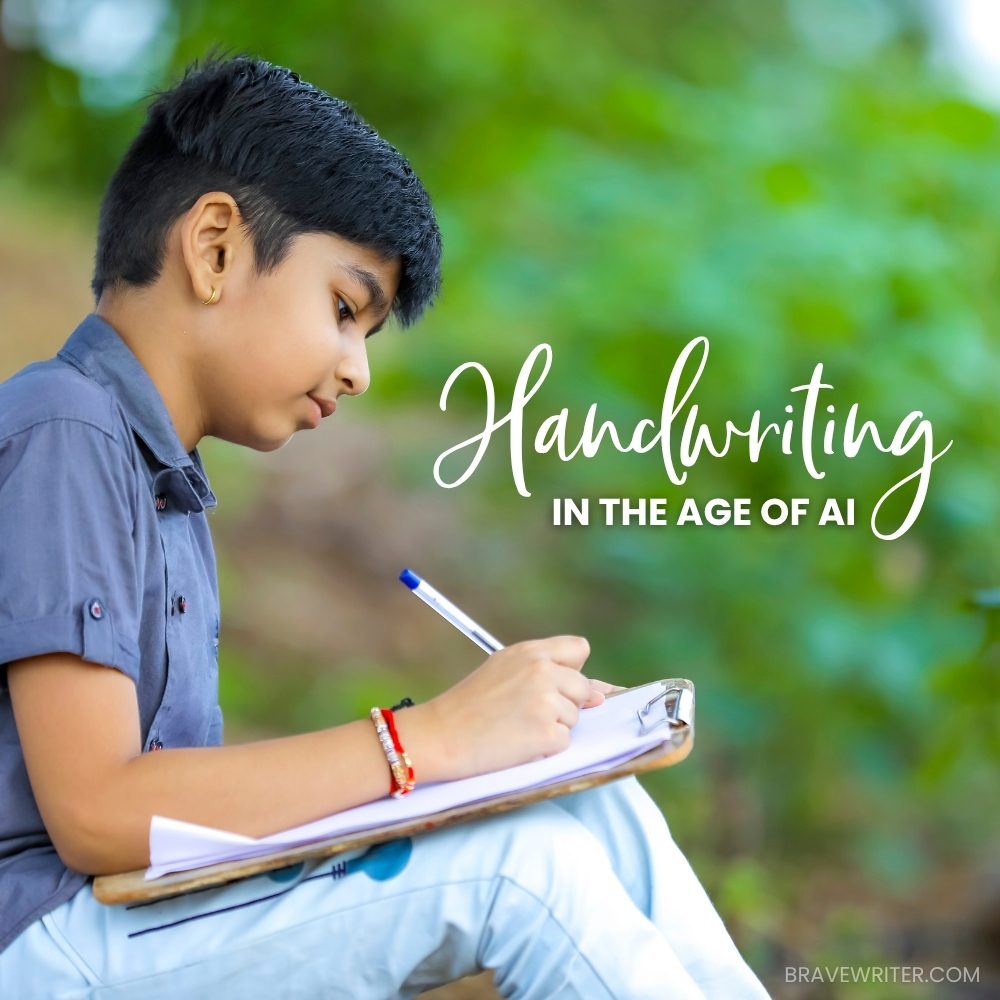
In this world of AI and voice to text, there’s one essential practice that connects your child to themselves effectively without technological interference. It’s not going outside hours a day or crafting or baking—even though those are great activities for kids.
It’s the power to put your own thoughts into honest words—privately, patiently, slowly, with skill and stamina. And while I’m a huge fan of typing, there’s a therapeutic benefit to writing by hand, old school, too.
Why bother teaching the art of handwriting?
What help is writing by hand to kids who refuse, cry, or complain that their fingers hurt?
Today, handwriting is one of the ways your child can learn about their own mind and thoughts without the suggestions of technology—no supplied words or ideas, no spelling corrections or improvements offered.
Amazingly, the brain loves it too! Handwriting lights up more areas of the brain than typing or voice to text. It anchors memory, focus, and creativity.
One of the ways we grow the handwriting skill is to make a little time and space for it each day. In Brave Writer, we do this through the rhythm of regular copywork and freewriting.
We recommend that you handwrite with your kids too.
- Put on some wordless music.
- Light a candle.
- Then simply write.
Slow the frenetic energy of life to patiently hook up a hand with a mind. See what you discover!
Even if your child struggles with dysgraphia, handwriting can be learned a little at a time. Involve a specialist for handwriting therapies tailored to your child if your child struggles excessively.
But, handwriting is now the key tool in the fight to ensure children and young adults are offering their own thinking. It’s a skill they need.
For parents of teens, check out our webinar:
High School Writing in the Age of AI